

REVIEW · GUIDED
Rome: Trevi Fountain District Underground Domus Guided Tour
Nine meters below the Trevi District, Vicus Caprarius reveals a side of Rome most people miss. You walk among ancient masonry, water channels, coins, amphorae, and the remains of a luxurious Roman home, all in a compact archaeological site beneath the modern city.
I like the way the tour connects the underground ruins to the water that still feeds the Trevi Fountain. I also like having an archaeologist guide to explain what you are seeing, since bare walls and broken pipes mean much more when someone brings their purpose and age to life.
The main catch is simple: this is not a tour underneath the actual Trevi Fountain. The archaeological site is nearby, and the tour ends at the fountain, where you receive an explanation and time to look around, but the fountain itself remains free and crowded.
Key points to know before booking

- Nine meters below street level: Vicus Caprarius gives you a close look at Roman and later remains beneath the Trevi area.
- The water system is the star: See how water moved through ancient masonry toward pools, pipes, and the fountain district.
- Small site, strong guiding: The rooms are not large, so the archaeologist’s explanations matter more than the number of objects on display.
- Ancient objects include coins and amphorae: Hundreds of coins and African containers once used for oil help connect the ruins to everyday life.
- The Trevi Fountain visit is brief: The final five minutes cover the fountain, but no private or skip-the-line access is provided.
- Good value at $50: The price makes the most sense if you want context and interpretation, not a long underground attraction.
What you actually see beneath Trevi
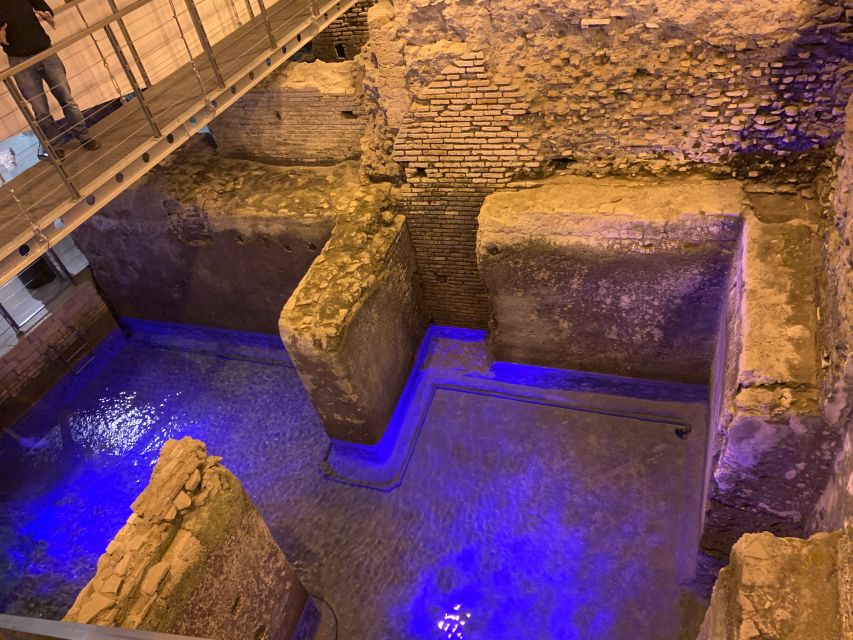
Rome rewards anyone willing to look below street level. The city you see above ground is only the latest layer, and Vicus Caprarius makes that idea concrete. At the entrance on Vicolo del Puttarello 25, you meet your guide and step into an archaeological area known as the City of Water.
The site is roughly nine meters below modern Rome. That change in height is part of the appeal. Within a few minutes, the traffic, cafés, and crowds around Trevi feel far away, replaced by old walls and a cooler underground atmosphere.
The tour moves through three sections of the excavation. You see the remains of a Roman domus, or private residence, along with evidence of the water infrastructure that served it. This was not simply a sewer or a forgotten basement. The remains point to a comfortable home with pools, pipes, and carefully built masonry.
I find the water story more interesting than a simple list of dates. The spring and channels associated with the Trevi area helped supply the Roman settlement, and the tour shows how water was managed, directed, and used. You are not just looking at ruins. You are tracing a working system.
The site is compact, and that is both a strength and a limitation. You get close to the remains, but you should not expect a huge underground complex with miles of tunnels. One visitor found the space smaller than expected, while still finding the facts and guiding worthwhile. That is a fair description.
More Guided Tours in Italy:
- Naples: Naples Underground Entry Ticket and Guided Tour
★ 4.4 · 21,781 reviews - Naples: Catacombs of San Gennaro Entry Ticket & Guided Tour
★ 4.6 · 7,941 reviews - Naples: Spanish Quarters Underground Guided Tour
★ 4.8 · 5,064 reviews
The domus and Rome’s everyday engineering
The luxurious domus gives the tour its human scale. Imperial Rome is often presented through emperors, armies, temples, and monuments. Here, you get a glimpse of private comfort and practical engineering.
The guide explains how water passed through the ancient structure and supplied pools and pipes. The masonry shows that Roman building was not only about grand arches and public monuments. It also supported daily routines inside private homes.
Several discoveries add detail:
- Polychrome marble points to decorative taste and expense.
- The head of Alessandro Helios adds a striking sculptural fragment.
- Hundreds of ancient coins help date activity and suggest the movement of people and money.
- African amphorae were used to transport oil, linking this Roman address to wider trade routes.
These objects are not arranged as a giant museum collection. They appear within the archaeological setting, so the guide has to do some of the work. That is why the quality of the explanation matters so much. A strong guide can connect a coin, a pipe, or a damaged wall to the broader story of Roman life.
The English-speaking guides are a major part of the experience. Erika is repeatedly praised for her enthusiasm and clear explanations, while Naomi is described as funny, warm, and an excellent storyteller. Noemi is also praised for combining useful historical detail with a relaxed sense of humor. Other guides, including Michelle and Alessia, have earned similar praise for answering questions and keeping the group involved.
The tour uses radios on some departures, which can make a real difference in the underground rooms. You may be standing close to the guide, but hard surfaces and several groups can make sound bounce around. If radios are provided during your departure, you should be able to follow the explanation more easily.
Why the water connection matters
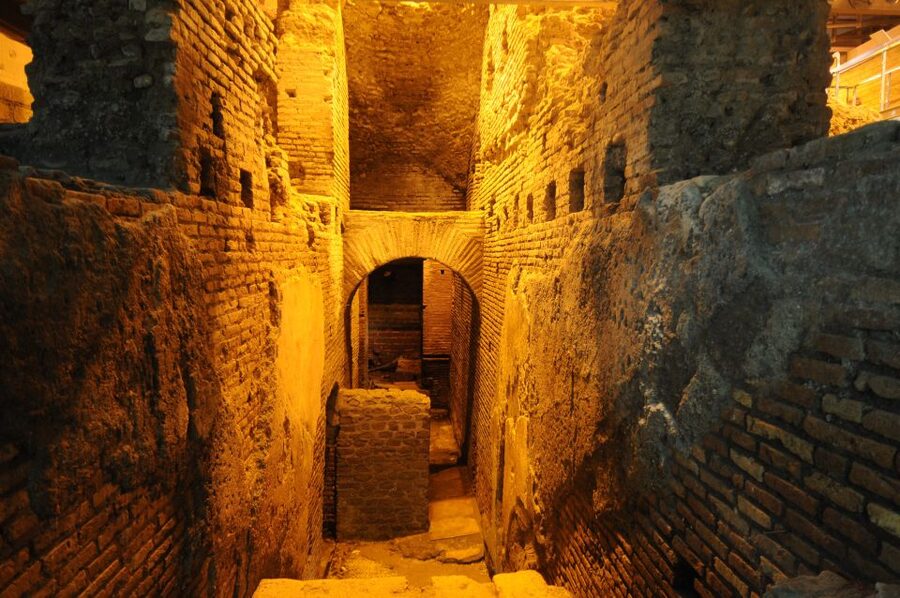
The most useful idea to take away is that the Trevi Fountain did not appear in isolation. Its setting is tied to a much older water supply system, and the underground remains help explain why this part of Rome became important.
The tour follows the path of water through ancient masonry. You learn how it could pass through the site and support pools and pipes linked to the domus. The details help you see the fountain district as a place shaped by water long before the famous Baroque monument was built.
This also makes the experience a smart choice early in your Rome visit. If you take it near the start of your stay, the explanation may help you understand other aqueducts, fountains, and Roman structures as you walk around the city. One useful tip from the experience is to schedule it during your first days rather than saving it for the final afternoon.
The underground setting offers another practical benefit in hot weather. One summer visitor described it as a cool place to visit, though you should still wear comfortable shoes. The route is not suitable for wheelchair users or people with mobility impairments, so check that the stairs and underground conditions work for you before paying.
The five-minute Trevi Fountain finish
After about 40 minutes at Vicus Caprarius, the tour continues to the Trevi Fountain for roughly five minutes. The guide explains the fountain’s history and points out aspects of its design before the tour ends.
This final stop is useful, but you should set your expectations carefully. The tour title can sound as if you will go under the fountain or receive a private visit. You do not. The archaeological site is next to the fountain district, not directly beneath the monument.
The fountain itself is free to visit, and this experience does not include skip-the-line access. The area can be extremely crowded. You may see the fountain after the guided portion, but you should not expect a quiet viewing area or reserved space close to the water.
That limitation does not ruin the tour. It simply means the underground site is the main event, while Trevi provides a short historical finish and a memorable place to make a wish. If you want extensive commentary on the Baroque fountain or time for photographs, plan to remain in the area after the tour.
Some guides have helped with photos outside the fountain, which is a pleasant extra when time allows. Still, this depends on the departure and guide, so I would treat it as a bonus rather than part of the promised experience.
A few more cave trips around Italy worth a look
- Colosseum: Underground and Ancient Rome Tour
★ 4.7 · 12,691 reviews - Rome: Capuchin Crypts and Catacombs Tour with Transfers
★ 4.6 · 6,456 reviews - Expert Guided Tour of Colosseum Arena OR Underground, and Forum
★ 4.5 · 5,041 reviews - The Original Roman Crypts and Catacombs Tour with Transfers
★ 4.5 · 4,896 reviews
Is $50 a fair price?

At $50 per person, this is not the cheapest way to see ruins in Rome. The tour lasts only 45 minutes, and the underground site is relatively small. If you prefer to wander slowly through a large museum or archaeological park, the price may feel high for the amount of time.
The value improves if you care about interpretation. Entry takes you into a reserved archaeological area, and an archaeologist guide explains the water system, domus, objects, and changes to the site. You can technically visit an archaeological site without a guide, but the walls and channels would be harder to understand on your own.
The tour also saves you from trying to fit the underground site into a busy Trevi visit without context. You arrive at a specific meeting point, receive a structured explanation, and finish at one of Rome’s best-known sights.
I would call the price fair for:
- Someone interested in Roman engineering and urban history.
- A first-time visitor who wants more meaning behind Rome’s fountains and aqueducts.
- Anyone looking for a short activity between other central Rome sights.
- A person who values a live specialist guide more than a large venue.
I would be less enthusiastic about the price if your main goal is private access to the Trevi Fountain, extensive time at the monument, or a large underground complex. Those are not what this tour provides.
Timing, meeting point, and comfort
The meeting point is the entrance to the Vicus Caprarius archaeological area at Vicolo del Puttarello 25. Arrive with enough time to identify the entrance and locate the guide. The route does not include hotel pickup or drop-off, and food and drinks are not included.
The scheduled experience lasts 45 minutes: about 40 minutes underground and five minutes at Trevi. That short format makes it easy to fit into a day of sightseeing, but it also means the guide has to move at a steady pace. One guide apparently had more to say than the time allowed, which tells you something about the depth of the subject.
Wear comfortable shoes. This is essential because you are walking through an archaeological site below street level, and the experience is not designed for wheelchair users or people with mobility impairments.
The underground rooms can become busy, especially when more than one language group is visiting at the same time. The space is not huge, so expect some close standing and limited room for photographs. That same scale lets you see the masonry and objects at close range.
English is the stated tour language. Small groups are available, which should make questions easier and give you a better chance to hear the guide. If you have several questions, ask them. The guides are praised for making time to explain details and for handling questions with patience.
Who will enjoy this most?
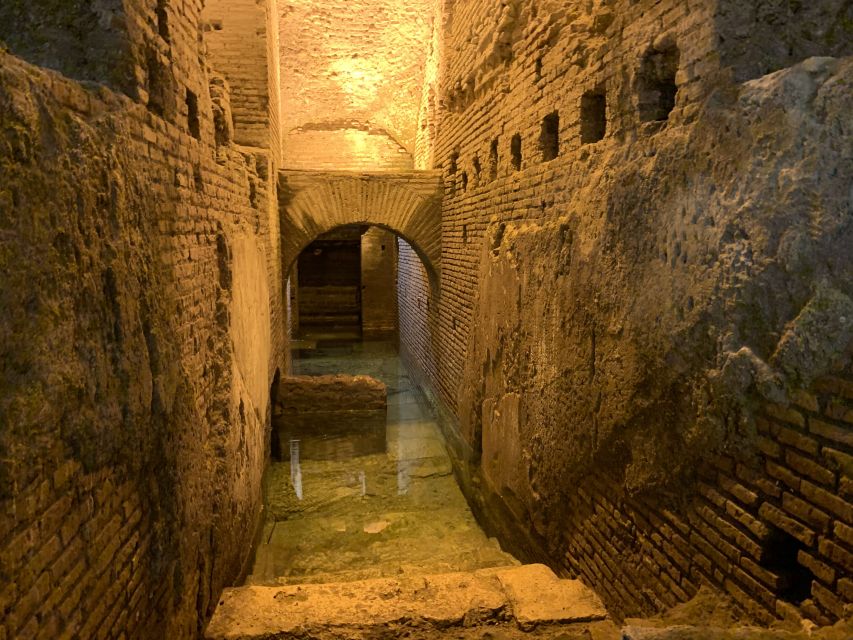
I would recommend this tour to you if Rome’s engineering interests you as much as its famous monuments. The water channels, pipes, pools, and building remains give you a different way to understand the city.
It also suits families with older children who can manage the underground walk and appreciate a short, object-focused visit. The compact format is easier to handle than a long museum tour, while the coins, amphorae, and sculptural fragments give the guide concrete things to point out.
History students and architecture fans will get the most from the archaeologist-led approach. The tour does not merely present a backdrop for photos. It explains construction, water use, trade, decoration, and changes from the Imperial period through later phases of Rome.
You may want to skip it if you have difficulty walking below ground, need step-free access, or dislike crowded enclosed spaces. You should also skip it if you are expecting to stand directly under the Trevi Fountain. The experience is nearby and closely connected, but it is not the same thing.
Useful booking tips
Free cancellation is available up to 24 hours before the start time, and you can reserve now and pay later. That helps if your Rome schedule is still shifting, especially around crowded central sights.
An ice cream option may be available with some bookings. One useful arrangement provides a voucher for ice cream at a place near the Trevi Fountain, usable at any time during your stay. If that option appears when you book, it is a sensible add-on because it fits naturally with the final stop.
Plan to visit Trevi again after the tour if you want photographs. The fountain is free, but access close to it can involve crowds and a line. Do not confuse the included visit with reserved entry to the monument.
If you are deciding between a self-guided visit and this tour, ask yourself how much explanation you want. The site may be viewed without a guide, but the water system and domestic remains are much easier to understand when someone explains how the pieces fit together.
Should you book the Vicus Caprarius tour?
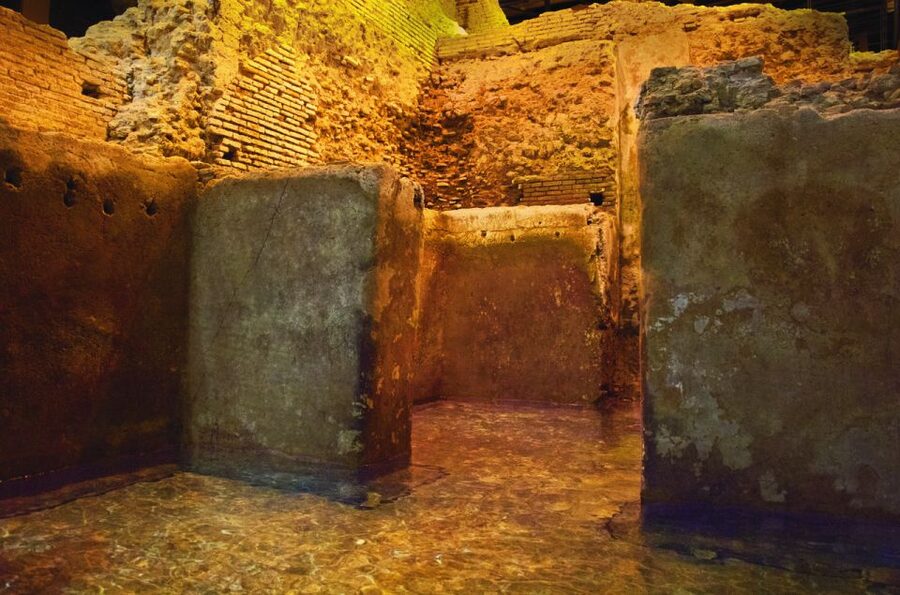
Yes, if you want a short, focused look at Rome below street level and you value a strong guide. The underground domus, water channels, coins, amphorae, and marble fragments offer a more personal picture of Roman life than another surface-level photograph of a monument.
Book it early in your Rome stay if possible. The explanation of water, construction, and urban development can sharpen what you see elsewhere in the city.
Just book with the right expectations. You are visiting an archaeological site near the Trevi Fountain, not going beneath the fountain itself, and the final fountain stop is brief and crowded. At $50, the tour earns its price through the guide and the setting, not through a long itinerary or exclusive access.
FAQ
Where does the tour meet?
Meet your guide at the entrance to the Vicus Caprarius archaeological area at Vicolo del Puttarello 25.
How long does the experience last?
The full experience lasts 45 minutes. About 40 minutes are spent at Vicus Caprarius, followed by about five minutes at the Trevi Fountain.
Is the tour conducted in English?
Yes. The live tour guide speaks English.
Does the tour go underneath the actual Trevi Fountain?
No. The underground archaeological site is next to the Trevi Fountain district. The tour ends at the fountain, but it does not take you beneath the monument.
Is entry to the Trevi Fountain included?
The tour includes access to the Trevi Fountain area, but the fountain itself is free. Skip-the-line access is not included, and the area can be crowded.
What can I see at Vicus Caprarius?
You can see Roman masonry, water channels, parts of a luxurious domus, polychrome marble, the head of Alessandro Helios, ancient coins, and African amphorae used to transport oil.
Is the tour suitable for wheelchair users?
No. The experience is not suitable for wheelchair users or people with mobility impairments.
What should I bring?
Wear comfortable shoes. Food, drinks, hotel pickup, hotel drop-off, and an audio guide are not included.
Just added around Italy
- Capri & Blue Grotto: Full-Day Tour with Guided Island Exploration★ 5.0 · 74 reviews
- Private Capri, Anacapri and Blue Grotto Tour from Capri★ 4.5 · 29 reviews
- Boat Tour of the Caves on the Island of Capri★ 4.5 · 463 reviews
- Paddleboard in Capri between caves and beaches. Photos included!★ 5.0 · 39 reviews
- Private Tour of the Island of Capri by Boat and Visit to the Caves★ 4.5 · 31 reviews
- Blue Grotto and Capri Boat Tour with Aperitivo Swim and Snorkel★ 4.5 · 47 reviews
- Capri Adventure Cruise: Sea Caves, Coastline & Blue Grotto Visit★ 5.0 · 18 reviews
- Small Group Tour to Blue Grotto, Anacapri and Capri★ 5.0 · 115 reviews
Guided, compared.

Naples: Naples Underground Entry Ticket and Guided Tour
Read our review →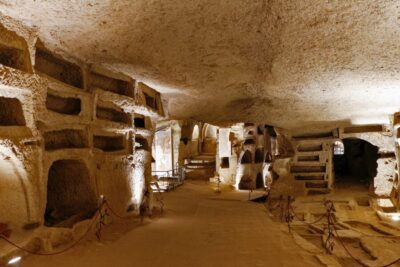
Naples: Catacombs of San Gennaro Entry Ticket & Guided Tour
Read our review →
Krakow: Wieliczka Salt Mine Fast-Track Ticket & Guided Tour
Read our review →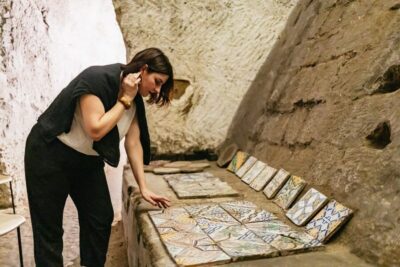
Naples: Spanish Quarters Underground Guided Tour
Read our review →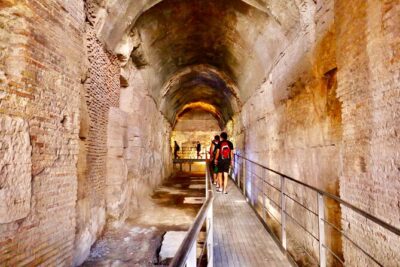
Expert Guided Tour of Colosseum Arena OR Underground, and Forum
Read our review →
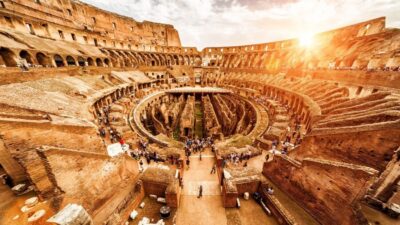
Rome: Colosseum Underground Small Group Guided Tour
Read our review →
Krakow to Wieliczka: Salt Mine Guided Tour with Ticket & Transfer
Read our review →Browse the lists this tour appears in