
REVIEW · NAPLES
Naples: Catacombs of San Gennaro Entry Ticket & Guided Tour
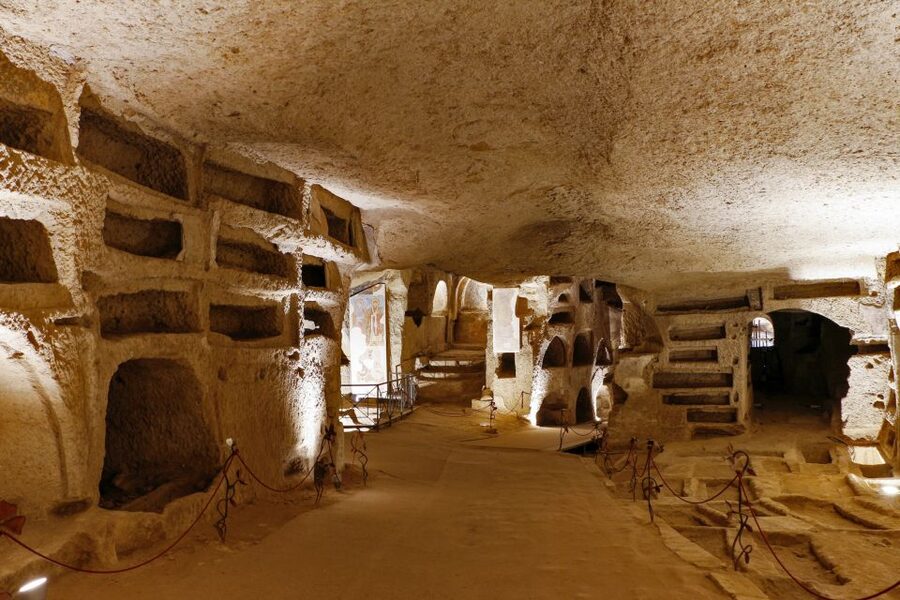
Naples keeps some of its most moving art below street level. In the Catacombs of San Gennaro, you pass through broad underground chambers, early Christian paintings, old mosaics, and a basilica carved into the city’s soft volcanic ground. I like the clear storytelling and the fact that your ticket also covers two more sites. The main drawback is the climb and stairs needed to reach the catacombs, plus a strict no-photography rule.
I also like the link to the Rione Sanità redevelopment project. Your admission helps support a local cultural effort rather than simply getting you through a historic door. Guides vary, but visitors have especially praised Nello, Emmanuel, Antonia, Antonio, and Valentina for warm, lively explanations in English. Plan carefully, though: you must arrive 15 minutes early, and a late arrival can mean missing the tour.
Key points to know before you go
- Ancient art underground: See Christian paintings from the 3rd century and Byzantine-style frescoes from the 9th and 10th centuries.
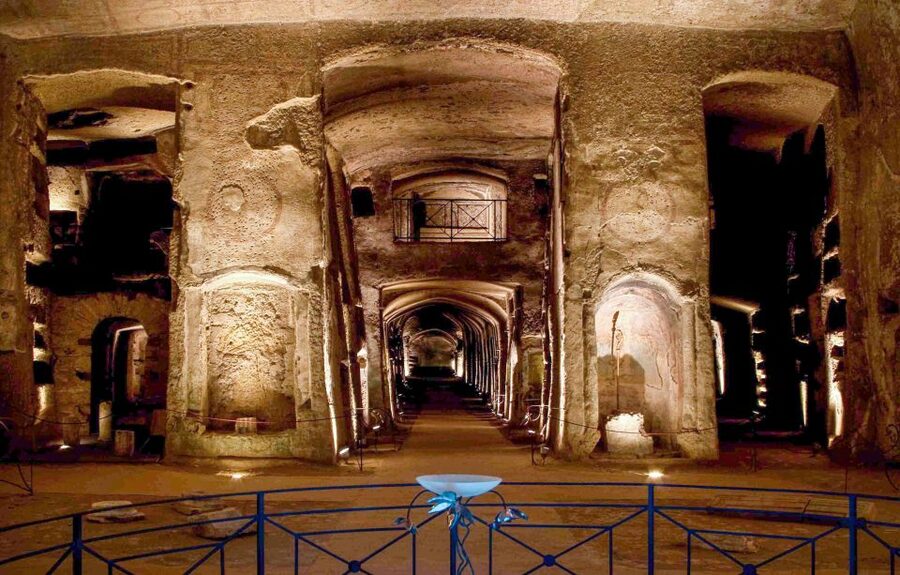
- A surprisingly large site: The catacombs are much broader than many first-time visitors expect, with basilicas, burial chambers, and open passages.
- A ticket with extra value: Admission also includes the Catacombs of San Gaudioso and Basilica di Santa Maria della Sanità for 12 months.
- Strong guide-led experience: English and Italian guides explain both the site and Naples’ religious and social history.
- A community-minded visit: Ticket income supports cultural work and the renewal of the Rione Sanità district.
- Allow for stairs: The route includes a descent before the tour begins, so it is not a good fit for anyone with mobility problems.
Why the Catacombs of San Gennaro feel different
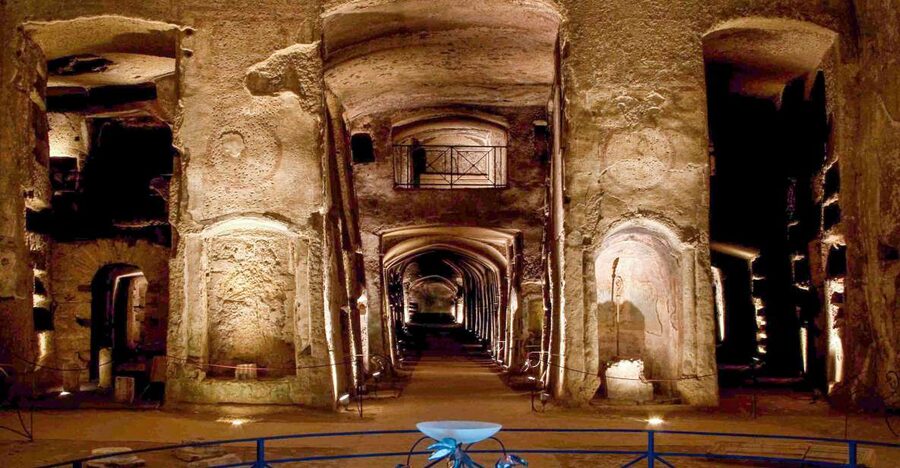
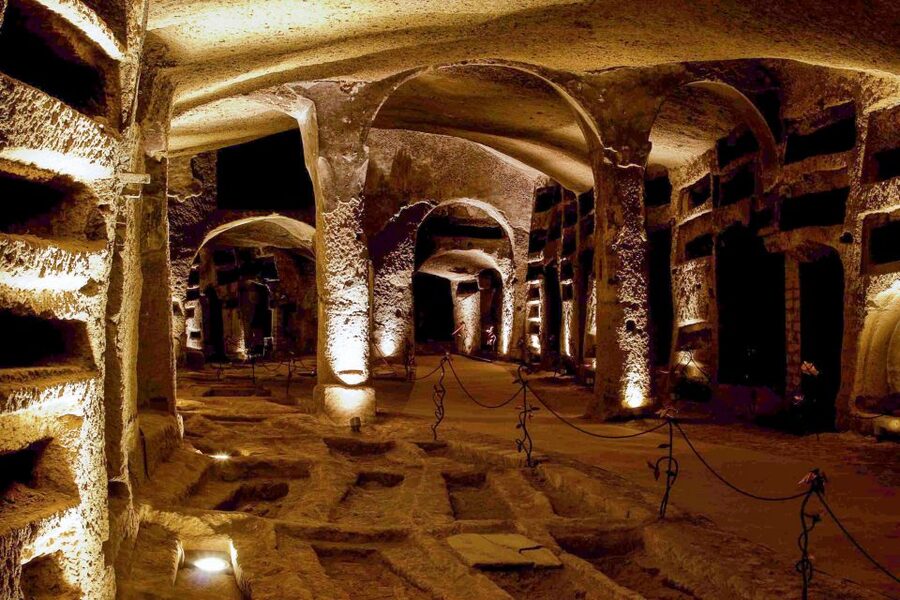
Many underground burial sites feel cramped, dark, and repetitive. San Gennaro has a different character. The spaces are large enough to read as early places of worship, not just rows of tombs. You see wide chambers, old passageways, painted surfaces, and the remains of an organized Christian community.
The name comes from Naples’ patron saint, San Gennaro. The site helps explain the close bond between the saint and the city, but the tour is not only about one figure. It covers more than 2,000 years of art, burial customs, faith, and local identity.
Your guide gives the visit its shape. Without an explanation, the paintings and stone chambers can blur together. With a good guide, the details become easier to read: why one room was enlarged, how a basilica was used, and what the images tell you about Christian life in Naples.
The tone is usually more relaxed than solemn. Guides such as Nello and Emmanuel have been praised for mixing solid facts with humor, while Antonia and Antonio have been noted for clear, careful explanations. That matters here. A long list of dates would make the underground rooms feel flat, but a well-paced guide helps you understand what you are seeing without turning the tour into a lecture.
More Catacombs and Underground City Tours in Italy
- Rome: Capuchin Crypts and Catacombs Tour with Transfers
★ 4.6 · 6,456 reviews - The Original Roman Crypts and Catacombs Tour with Transfers
★ 4.5 · 4,896 reviews - Rome: Catacombs of St. Callixtus Entry Ticket & Guided Tour
★ 4.6 · 3,037 reviews
Beginning at Via Capodimonte
You meet at the reception of the Catacombs of San Gennaro at Via Capodimonte 13. The ticket office opens at 9:30 AM, and you should arrive 15 minutes before your booked time. The ticket is tied to the date and time selected, so this is not a place to stroll in whenever you happen to reach the neighborhood.
The location sits above the historic center. If you are coming from the old town or the port, expect an uphill walk. One account describes the walk from the port as a serious climb, so I would not schedule this immediately after a tiring arrival with luggage. Give yourself extra time for Naples’ hills and confusing routes.
The site is reached through a church complex, and the underground route involves stairs before the main visit begins. That is manageable for many people, but the experience is not suitable for anyone with limited mobility. Wear shoes that feel secure. The catacomb floor has a carpet-like covering in parts of the route, which makes walking easier, but it does not remove the need for steps.
The upper catacomb and its Pompeian-style paintings
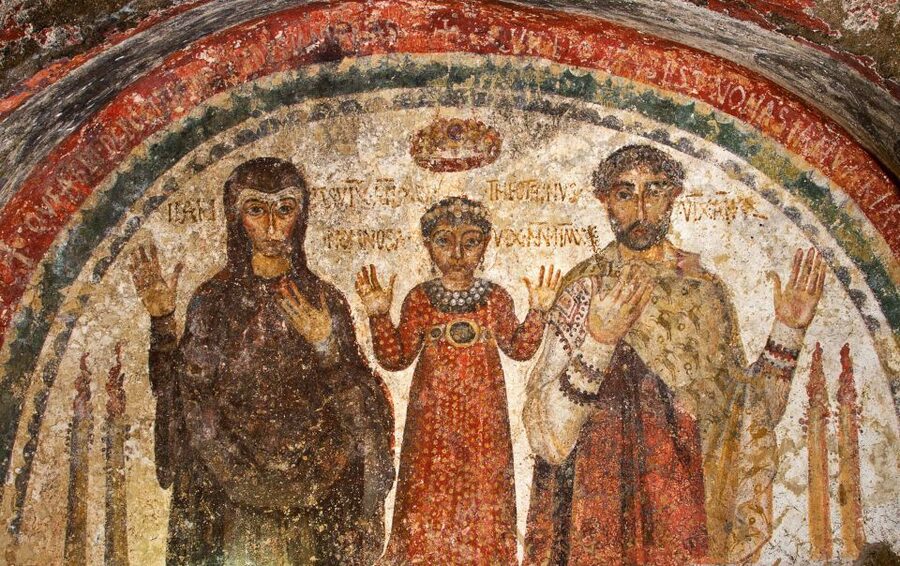
One of the earliest parts of the visit is the upper catacomb, decorated in the 3rd century in what is called the Pompeian style. These paintings are among the oldest Christian artworks in Italy.
This is where a guide earns the admission price. The images are not presented as decoration alone. You learn how early Christian art developed and how older Roman artistic habits shaped the way Christian scenes were painted. The connection to Pompeian style also links the catacombs to the wider visual culture of Campania.
The paintings have survived in an underground setting, but the atmosphere is not like walking through a modern gallery. Lighting is limited, and photography is not allowed. I know many people will find that disappointing, especially when a fresco catches the eye, but the restriction keeps the visit focused and helps protect the artwork.
You will need to look closely and listen carefully. The guide points out details that are easy to miss in the dim chambers, and the group usually pauses so everyone can see. A recent small-group visit was described as feeling personal, with room for questions and interaction. Group size can vary, so I would not count on a private experience, but the route is designed for explanation rather than a quick walk-through.
The 4th-century expansion and Basilica of Saint Agrippinus
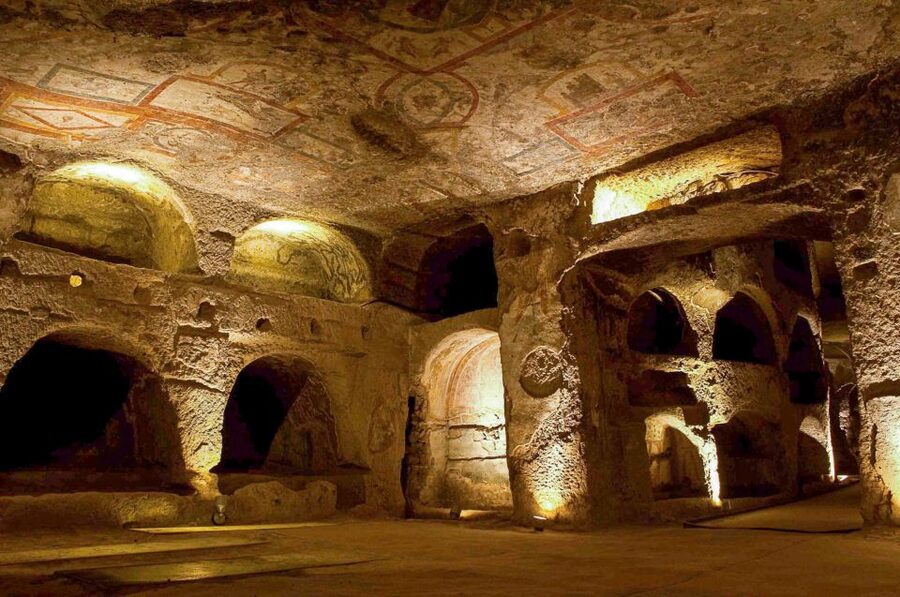
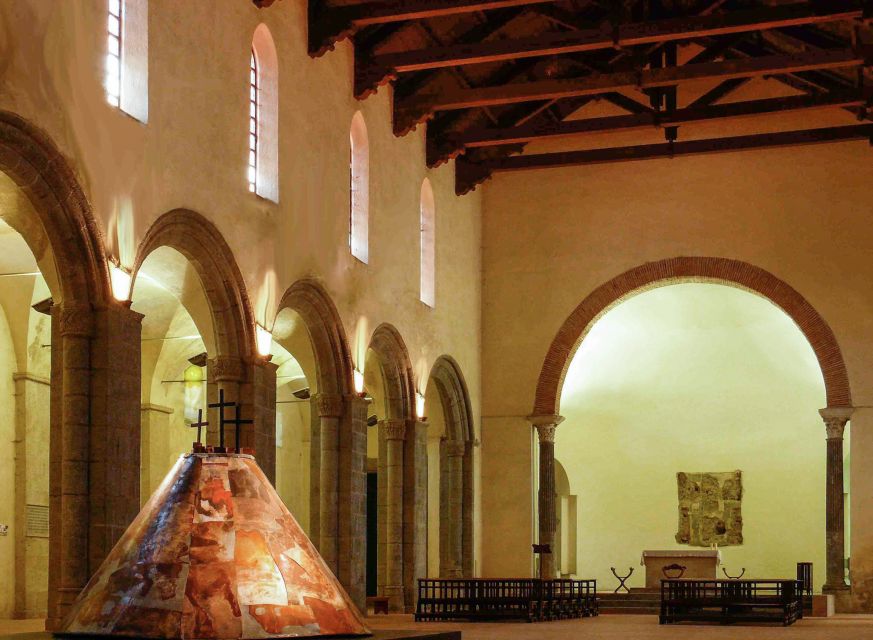
The catacombs grew in the 4th century after the remains of Saint Agrippinus were transferred to an underground basilica dedicated to him. This change gives the site a useful historical turning point. You are not just seeing a burial ground that slowly accumulated tombs. You are seeing how the arrival of an important saint changed the scale and purpose of the place.
The basilica is one of the most impressive parts of the visit. Its size helps you understand that Christian worship was taking place in a setting made for a community, not just for private mourning. The underground location also reflects the complicated history of Christianity in Naples, where worship, burial, and political pressure were closely connected.
Your guide fills in the religious background and explains the bond between Naples and its patron saint. I appreciate that the tour also connects the underground site to churches you may see above ground, including the Duomo. After hearing about the early Christian foundations beneath the city, later churches can look less like isolated monuments and more like part of a long local story.
Same corner of the map, a different way in:
- Naples: Naples Underground Entry Ticket and Guided Tour
★ 4.4 · 21,781 reviews - Colosseum: Underground and Ancient Rome Tour
★ 4.7 · 12,691 reviews - Naples: Spanish Quarters Underground Guided Tour
★ 4.8 · 5,064 reviews - Expert Guided Tour of Colosseum Arena OR Underground, and Forum
★ 4.5 · 5,041 reviews
The baptismal font and the age of religious conflict
The tour includes a baptismal font commissioned by Bishop Paul II. He took refuge in the catacombs in the 8th century during the iconoclastic struggles, a period marked by disputes over religious images.
That detail adds a human edge to the visit. The catacombs were not only places of burial or worship in the distant past. They also offered shelter during a period of danger and disagreement. The font gives you a physical point around which the guide can explain how Christian practice continued through political and religious conflict.
This part is especially useful if you want more than atmospheric ruins. The guide does not simply point out an object and move on. The surrounding story helps you understand why a baptismal font mattered, why a bishop would seek refuge underground, and how the catacombs remained part of Naples’ religious life over many centuries.
The Crypt of the Bishops and its 5th-century mosaics
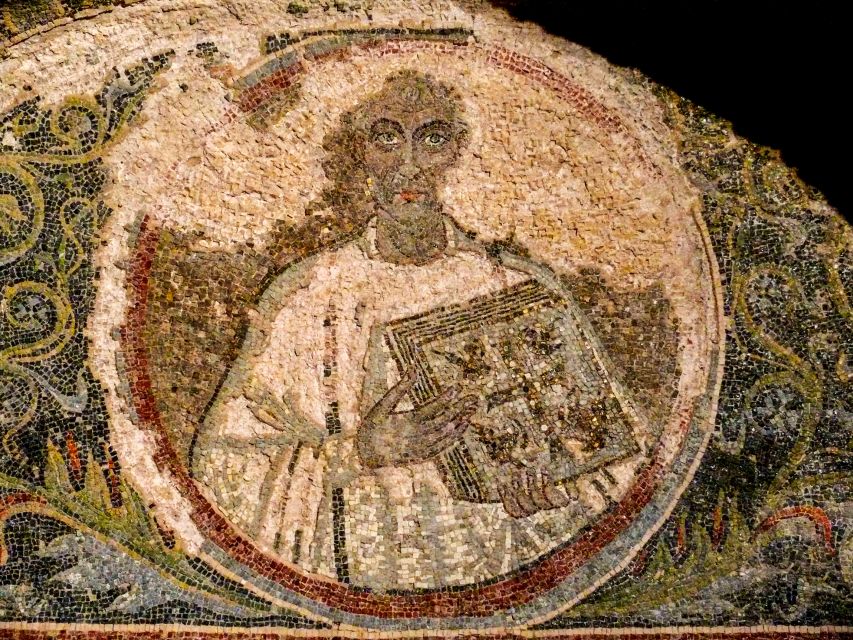
The Crypt of the Bishops is another major stop. It contains 5th-century mosaics, including one depicting Saint Quodvultdeus, the Bishop of Carthage.
The mosaics are valuable not only because of their age. They show the broad connections of early Christianity. A bishop from Carthage appearing here points to a world of religious links that reached well beyond Naples. Your guide gives the names and dates meaning, which is important because ancient mosaics can otherwise become a blur of faces, borders, and faded colors.
The catacombs contain Byzantine paintings from the 9th and 10th centuries as well. Taken together with the older paintings, mosaics, and basilicas, the site works like an underground record of changing artistic styles. You move through centuries rather than seeing one frozen moment.
Photography is prohibited, so I recommend taking a few minutes before the tour to read any available information at the entrance and then relying on your guide’s descriptions. The no-camera rule is a real limitation for anyone who likes to document every stop, but the guided explanation is strong enough to make the visit worthwhile without photographs.
What the 45-minute route feels like
The advertised duration is about 45 minutes, while the guided itinerary is also described as taking roughly 50 minutes. In practical terms, set aside about an hour for the visit, including arrival and getting organized.
The pace is generally steady. You descend, stop at key rooms, hear the story behind the art, and return to the starting point at the Catacombs of San Gennaro. The route is not designed as a strenuous hike, but the stairs and underground setting mean you should not rush.
The strongest part of the format is its balance. The guide gives enough detail to make the art meaningful without burying you in dates. Several guides have been praised for being funny and engaging, which helps keep the mood comfortable in a place that could otherwise feel heavy.
Small children may struggle with the quiet, listening-based format. I would choose this for older children who can follow a historical explanation, not for very young children under five. The catacombs are also better suited to people who enjoy cultural sites, religious history, archaeology, and unusual corners of a city.
The extra ticket: San Gaudioso and Santa Maria della Sanità
Your admission includes entry to the Catacombs of San Gaudioso and the Basilica di Santa Maria della Sanità. These visits can be made later, and the pass is valid for 12 months.
That changes the value calculation. At $15 per person, San Gennaro is already a fairly priced guided visit. Add the second catacomb and the basilica, and the ticket becomes one of the better culture buys in Naples, especially if you have time to explore the Rione Sanità properly.
The second catacomb is farther down the hill toward the city, making it a natural follow-up if you are already walking in that direction. Some people arrange both visits on the same day, while others use the 12-month validity to return later. I prefer the second option if your schedule allows it. San Gennaro contains a lot to absorb, and splitting the sites avoids turning the experience into an underground marathon.
The Basilica di Santa Maria della Sanità adds an above-ground counterpoint. It also connects the catacombs to the district’s living community. The project behind the visits supports local cultural work and youth development, so your ticket helps fund more than maintenance of ancient rooms.
One limitation is that the included sites do not mean you can enter them at any time without checking their arrangements. Use the pass as a valuable extra, but confirm the available visit times when you plan the second stop.
Price, value, and the local story
At $15 per person, this is inexpensive for a guided historic site in Naples. You receive entry to San Gennaro, a live guide in English or Italian, and access to San Gaudioso and the Basilica di Santa Maria della Sanità for 12 months.
I would not judge the value only by the 45-minute length. The site contains early Christian paintings, old mosaics, large worship spaces, and a baptismal font tied to a period of religious conflict. The extra admission makes the ticket even more useful for anyone spending more than a day in Naples.
There is also a social reason to choose it. The Catacombe di Napoli project is connected to the renewal of Rione Sanità, a district whose reputation has changed through local cultural work. Ticket income supports that effort. I like that the visit lets you see an important historic site while helping maintain a living neighborhood.
The price is less compelling if you dislike guided tours, cannot manage stairs, or mainly want photographs. With no photography and a fixed starting time, this is a structured visit. For the right visitor, that structure is a benefit. For a casual stop between other sights, it may feel less flexible.
Practical advice for a smoother visit
Book a time that leaves room for the uphill journey. Arriving 15 minutes early is required, and arriving after departure may mean losing the tour rather than joining a later group.
Wear comfortable shoes and bring only what you need. You will be walking underground and using stairs, so a light day bag is easier than a large pack. Keep your phone away during the tour because photography is not allowed.
If you come from the historic center, do not assume the route is flat. The walk toward San Gennaro can be tiring, especially in warm weather. If you are driving, parking has been reported near the meeting point, but I would still allow time to find a space rather than treating it as guaranteed.
English and Italian tours are available. Guides such as Nello, Emmanuel, Antonia, Antonio, and Valentina have all been associated with clear and personable tours, but the exact guide depends on your departure time. The important point is to choose the language you can follow comfortably, since the explanations are central to the experience.
Free cancellation is available up to 24 hours before the booked time, and you can reserve now and pay later when that option is offered. The ticket itself is not refundable after the relevant restrictions apply, so check the conditions before you confirm.
Who should book the Catacombs of San Gennaro?
I would book this if you want to understand Naples below its churches, streets, and palaces. It suits history fans, art lovers, and anyone who prefers a site with a strong local story rather than a polished attraction built only for sightseeing.
It is also a smart choice if you plan to visit San Gaudioso. The extra entry gives you a reason to explore Rione Sanità and makes the $15 price look especially good.
I would think twice if you have mobility limits, dislike enclosed underground spaces, or want to take pictures. Families with very young children may find the quiet, guided format hard to manage. For everyone else, this is a focused, affordable way to see some of Italy’s earliest Christian art and understand why Naples still feels closely tied to San Gennaro.
FAQ
How long does the Catacombs of San Gennaro tour last?
The activity is advertised as about 45 minutes, while the guided itinerary is also described as roughly 50 minutes. Allow about an hour in total for arriving, checking in, and completing the visit.
Where is the meeting point?
Meet at the reception of the Catacombs of San Gennaro at Via Capodimonte 13, 80136 Naples.
Which languages are available?
Live guided tours are available in English and Italian.
Does the ticket include other attractions?
Yes. The ticket includes entry to the Catacombs of San Gaudioso and the Basilica di Santa Maria della Sanità. This additional access is valid for 12 months.
Is photography allowed inside the catacombs?
No. Photography is not allowed during the visit.
Is the tour suitable for people with mobility problems?
The route includes several steps before reaching the main tour area, so it is not suitable for anyone with mobility problems. You should also allow for an uphill walk if coming from the old town or port.
Should you book it?
Book it if you want a guided look at Naples’ early Christian art, burial places, and religious traditions, and if you can handle the stairs. The combination of a strong local guide, ancient frescoes, broad underground basilicas, and entry to two additional sites gives this short tour unusually good value.
Skip it only if fixed times, underground spaces, or no photography would spoil the experience for you. For most culturally curious visitors, San Gennaro is one of Naples’ most worthwhile ways to spend an hour, with the added benefit of supporting the renewal of Rione Sanità.
Just added around Italy
- From Catania: trek on Mount Etna, Lava Cave & tasting Tour★ 4.8 · 563 reviews
- From Capri: Blue Grotto, Capri and Anacapri Guided Tour★ 4.8 · 91 reviews
- From Cala Gonone: Grotta del Bue Marino Boat Trip★ 4.4 · 189 reviews
- EXCURSION VISIT TO THE SANTA MARIA DI LEUCA CAVES★ 4.8 · 192 reviews
- Santa Maria di Leuca: Caves Boat Tour★ 4.6 · 211 reviews
- East Palermo: boat tour among caves and breathtaking landscapes★ 5.0 · 28 reviews
- Taormina and Giardini Naxos: 2 Hour Dolphin Tour & Grotto★ 4.6 · 63 reviews
- Rome: Colosseum Underground and Arena Floor Tour★ 4.4 · 59 reviews
Naples Cave Tours, compared.
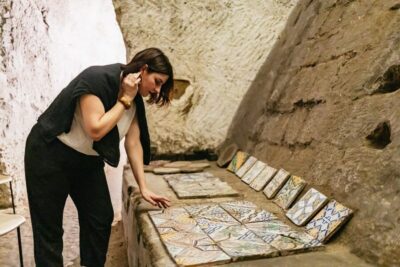
Naples: Spanish Quarters Underground Guided Tour
Read our review →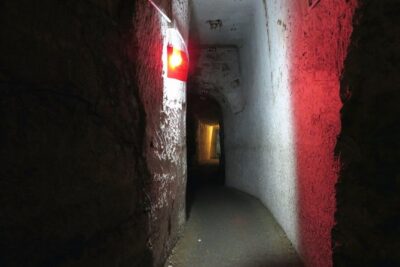
Naples Underground Spanish Quarters with Guide
Read our review →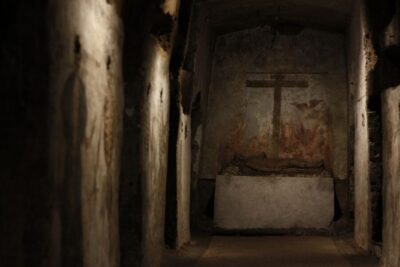
Day Trip to Capri and Blue Grotto From Naples & Sorrento
Read our review →

Private Capri Island and Blue Grotto Day Tour from Naples or Sorrento
Read our review →
Exclusive Capri, Anacapri & Blue Grotto Private Tour from Naples
Read our review →
From Naples: Blue Grotto, Capri, and Anacapri Group Tour
Read our review →Browse the lists this tour appears in