
REVIEW · NAPLES
Naples: Historic Center Guided Tour with Underground Ruins
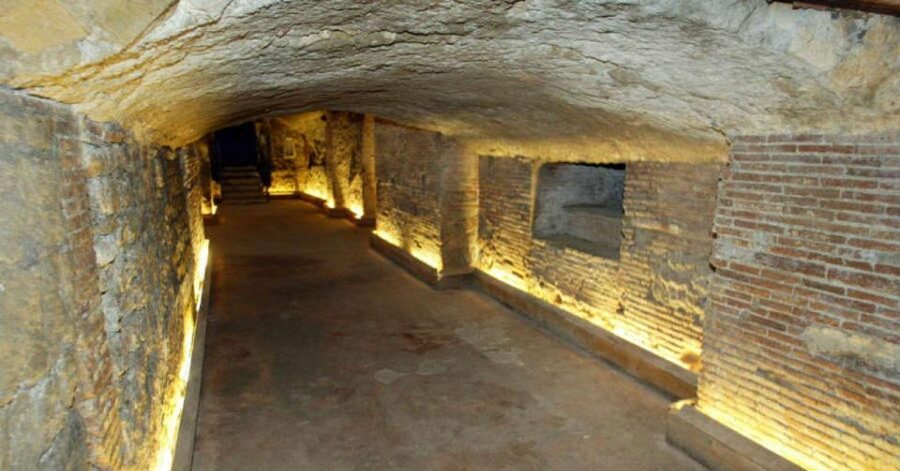
Beneath San Lorenzo Maggiore, the city changes character. Ten meters below the church, you find the remains of ancient Neapolis, including a Greek agora and the civic and religious Roman Forum. I like that this tour pairs that archaeological site with Naples as it lives today, from football shrines to noisy lanes and hand-built nativity figures. The four-hour route also brings together major sights such as Piazza del Plebiscito and the San Carlo Theatre without making you plan each stop yourself.
I especially like the walk along Via San Gregorio Armeno, where nativity scenes are a working Neapolitan craft rather than just a seasonal display. The main caution is the underground portion: narrow or enclosed spaces can be uncomfortable if you have claustrophobia, and you should bring cash.
Key points to know before booking
- The underground visit goes 10 meters below San Lorenzo Maggiore, revealing Greek and Roman remains beneath the church complex.
- The route covers central Naples on foot, beginning near the Neptune Fountain in Piazza Municipio and passing Via Toledo, the Spanish Quarter area, Spaccanapoli, and Via dei Tribunali.
- Via San Gregorio Armeno is a highlight for local craft, with detailed Neapolitan nativity figures and scenes.
- The guide makes a real difference, with Giorgia, Gianluca, and Alex specifically praised for clear history, local customs, and engaging storytelling.
- The tour costs $99 per person, including the €10 entrance fee to the underground archaeological site.
- English, Italian, and Spanish tours are available, with free cancellation up to 24 hours before the start.
Starting at Piazza Municipio and Via Toledo
Meet your guide near the Neptune Fountain in Piazza Municipio. This is a practical starting point for a first look at central Naples because the route quickly connects the waterfront side of the city with its grand civic center.
Your first main stretch is Via Toledo, Naples’ famous shopping street. It runs close to the Spanish Quarter and gives you an early look at the city’s split personality: elegant storefronts and major public buildings sit near narrow lanes, neighborhood shrines, and everyday street life.
The guide also points out the Maradona mural and its nearby altar. This is not simply a sports stop. Diego Maradona is treated by many Neapolitans as a beloved city figure, and the mural shows how football, local identity, and popular devotion overlap here. If you know little about Naples, this moment helps explain the emotional force of the city better than a formal museum label might.
The walk is on foot, so wear comfortable shoes. The route is built around seeing the city at street level, not moving from one attraction to the next by bus. That means you get more of the texture between the headline sights, but it also means four hours can feel long if you are not used to extended walking.
More History Tours in Naples:
- Prague: Oldtown, Medieval Underground & Dungeon History Tour
★ 4.3 · 10,277 reviews - Beneath The Streets Underground History Tour
★ 4.5 · 8,006 reviews - Prague Old Town, Medieval Underground and Dungeon Historical Tour
★ 4.5 · 3,227 reviews
Naples’ grand center: Galleria Umberto I to Piazza del Plebiscito
The tour continues past the exterior of Galleria Umberto I, an impressive historic arcade in the heart of Naples. You do not need a separate excursion to see this central landmark, and the stop gives your guide a useful setting for explaining the city’s grand public architecture.
You also see the outside of Castel Nuovo, better known as the Maschio Angioino. Its position near Piazza Municipio makes it one of the easiest major sights to connect with a walking route through central Naples. The tour does not include an inside visit, so consider this a strong exterior stop rather than a castle museum experience.
Next come the San Carlo Theatre and the Royal Palace. Again, the value is in the sequence. You see how theatre, monarchy, public squares, and urban power were concentrated in this part of the city. The guide supplies the historical thread while you move between the buildings, which is useful if you want context but do not want a full day of formal museum visits.
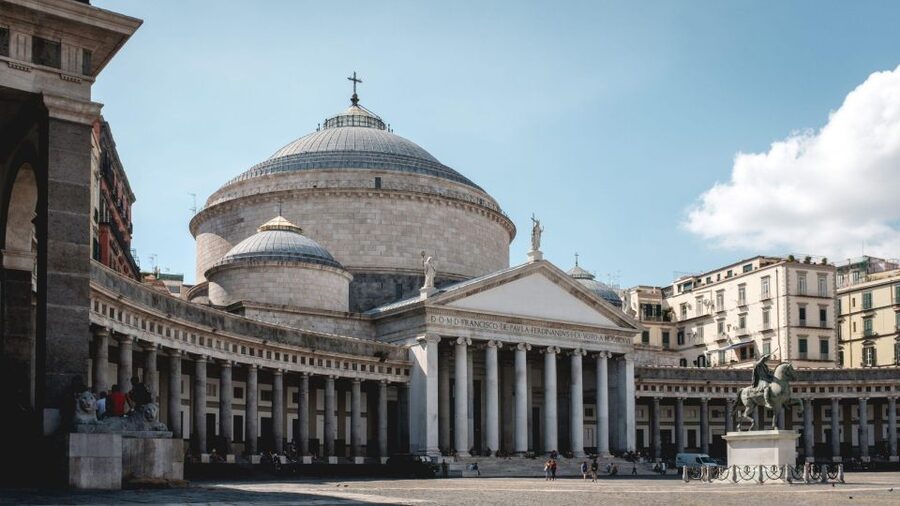
The route reaches Piazza del Plebiscito, one of Naples’ best-known public spaces. It functions as a meeting place and a setting for major events and concerts. The broad square provides a sharp contrast with the tight lanes you explore later. I like this change of scale because it shows Naples as both a monumental capital and a dense old neighborhood.
The activity information lists Piazza del Plebiscito as a guided stop, but it does not promise entry into the Royal Palace, San Carlo Theatre, Galleria Umberto I, or Castel Nuovo. You should expect exterior sightseeing unless your guide says otherwise.
Via dei Tribunali and the old city’s working streets

From the monumental center, the tour moves toward the historic center of Naples. This is where the pace and mood change. Via dei Tribunali is a historic street lined with churches, shops, food stops, and famous pizzerias. You walk through the part of Naples often described as its living center, where old buildings and daily routines share the same narrow space.
The tour does not include a meal, so do not count on a pizza tasting as part of the $99 price. Still, passing the historic pizzerias helps place Neapolitan food within the city itself rather than treating it as a separate attraction. If you plan to eat afterward, this area gives you plenty of ideas, though the tour data does not identify a particular restaurant.
This section is also where a guide’s personality matters most. Giorgia has been praised for explaining history alongside customs and local traditions. Gianluca was singled out for bringing personal affection for Naples into his storytelling and for adding details beyond basic dates and facts. Those qualities matter on streets that can otherwise seem crowded with similar-looking churches and alleys.
The route is offered in English, Italian, and Spanish. English-language feedback specifically describes the guides as friendly, clear, and easy to follow. That is important in Naples, where the best stories often involve social habits, symbols, and traditions that are not obvious from the buildings alone.
Via San Gregorio Armeno and the art of the nativity scene

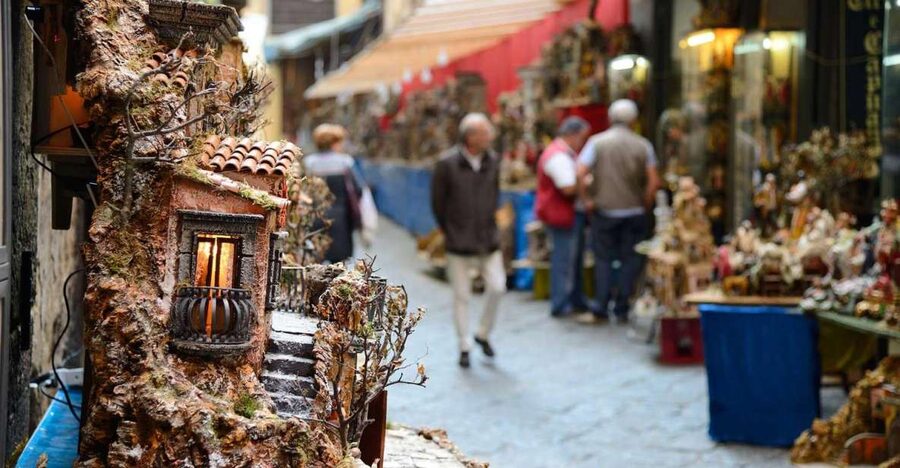
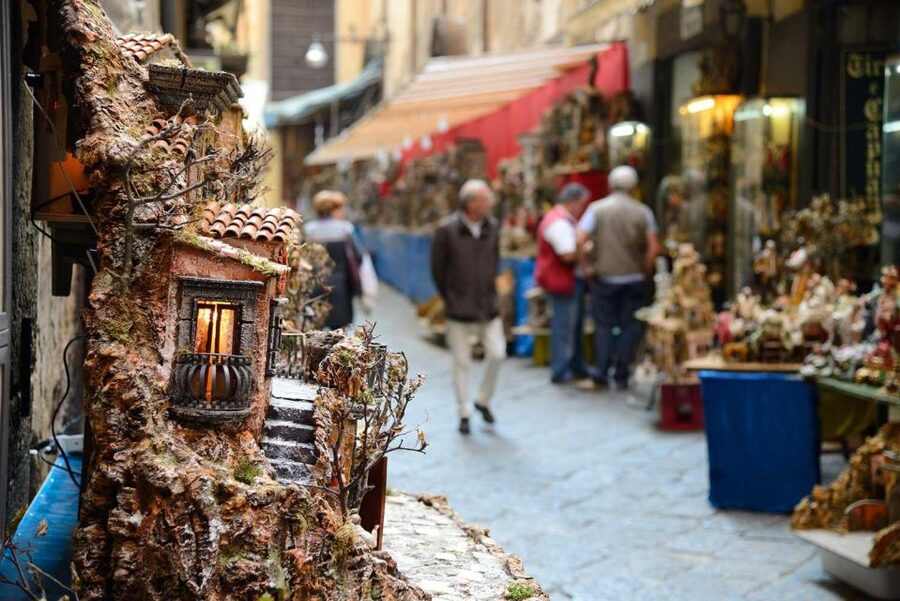
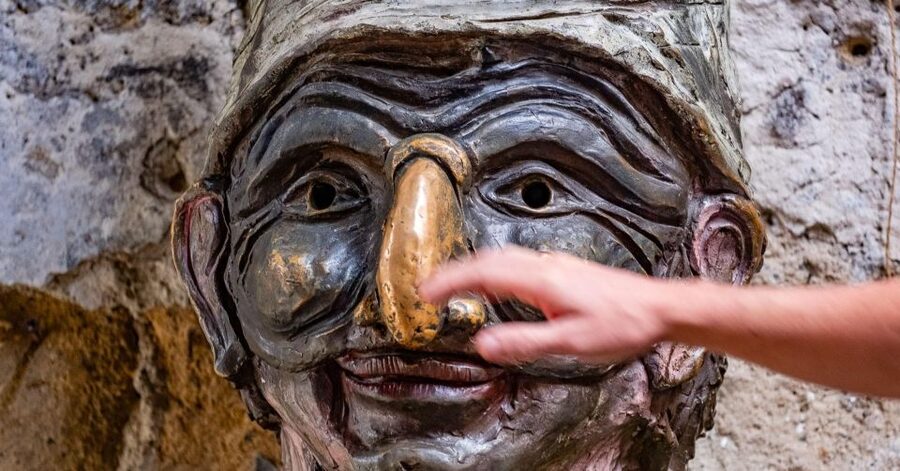
Via San Gregorio Armeno is one of the most distinctive stops on the route. The street is known for handcrafted nativity scenes and figures made by Neapolitan artisans. You see displays that go far beyond a basic stable, with detailed characters and scenes tied to local craft traditions.
This is a particularly good stop if you want something more specific than another grand church or palace. The figures reflect a living trade, and the street gives you a direct connection to the small workshops and makers associated with Naples. The tour describes the nativity tradition as folklore and handicraft, not just Christmas decoration.
The street can be interesting at any time of year, but the displays are especially tied to the nativity tradition. The activity details do not specify seasonal changes or individual workshops included in the visit, so think of this as a guided walk through the street and its craft displays rather than a guaranteed workshop demonstration.
I like this part because it gives the tour a human scale. You have already seen royal buildings and public monuments. Here, the focus shifts to objects made by hand and sold in a street where tradition remains part of the local economy.
More Guided Tours in Naples:
- Naples: Catacombs of San Gennaro Entry Ticket & Guided Tour
★ 4.6 · 7,941 reviews - Naples: Spanish Quarters Underground Guided Tour
★ 4.8 · 5,064 reviews - Naples Underground Spanish Quarters with Guide
★ 5.0 · 1,886 reviews - Naples: San Gaudioso Catacombs Guided Tour
★ 4.7 · 1,105 reviews
Spaccanapoli, San Domenico Maggiore, and Santa Chiara

The next section follows Spaccanapoli, the straight historic street that appears to split the old city in two. It is one of the most useful routes for understanding the layout of central Naples. You are not simply crossing from one attraction to another; you are following a major line through the old center and seeing how churches, squares, businesses, and neighborhood life fit together.
The tour includes the artistic complex around San Domenico Maggiore, an 18th-century church and square. It also passes Santa Chiara, a medieval church complex. The descriptions identify these as stops within the route, but do not promise interior admission to every church or complex. Your guide will provide the main context from the street and at the relevant sites.
This is a good portion of the tour for anyone who likes to connect architecture with city life. You get religious buildings, public squares, local folklore, and old streets in a compact area. The route also helps you decide where to return later if you want a slower visit or more time inside a church.
Do not expect the same quiet atmosphere at every point. Central Naples is an active urban area, and the tour takes place in streets still used by residents, shops, and visitors. That energy is part of the experience, but it can make it harder to hear if you fall behind the guide. Stay close enough to keep the explanation clear.
Going underground at San Lorenzo Maggiore

The tour ends with its most unusual stop, the underground site below San Lorenzo Maggiore. San Lorenzo is one of Naples’ oldest churches, and the archaeological remains beneath the complex reveal earlier layers of the city.
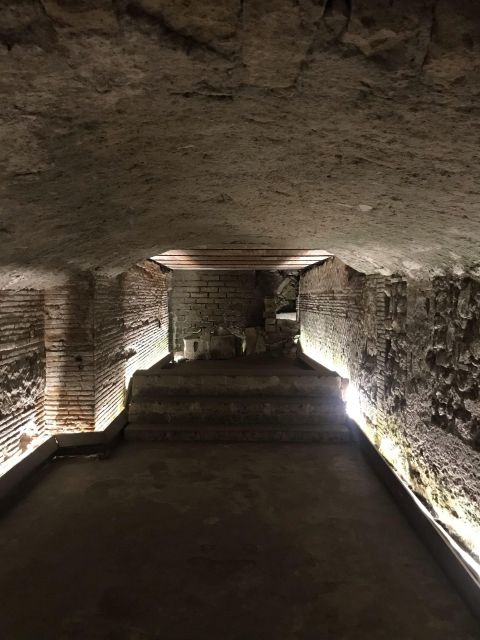
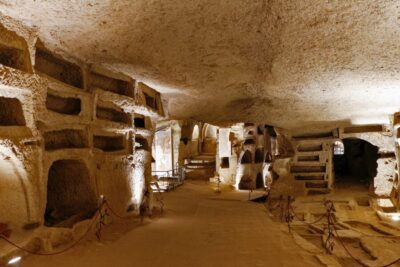
You descend about 10 meters below the church floors to see the ancient city of Neapolis. The remains include the Greek agora and the Roman Forum, with civic and religious functions represented below the modern church. This is the point where the tour’s street-level history becomes physical. Instead of only hearing that Naples was built over earlier cities, you see the layers below your feet.
The entrance fee to Underground Naples of Neapolis Sotterrata, listed as €10 per person, is included. The tour also offers skip-the-ticket-line access, which can save time at a site where a group visit is easier when the entry is already arranged.
The underground visit is not for everyone. The activity specifically warns that it is unsuitable for people with claustrophobia. If enclosed passages make you anxious, the above-ground walking route may still be appealing, but the tour is designed to finish with this descent, so you should not book it expecting to skip the main concluding feature.
Bring cash as requested in the practical information. The details do not specify exactly what the cash is needed for, so it is sensible to have some available rather than relying only on a card.
What the $99 price gets you
At $99 per person, this is not the cheapest way to see Naples. The price includes a certified multilingual guide and the €10 underground entrance, leaving roughly $89 of the listed cost for four hours of guiding and organization.
The value depends on how much context you want. If you only want to photograph Piazza del Plebiscito, Via Toledo, or Spaccanapoli, you can see those areas independently. You are paying here for a single route that links Naples’ royal center, historic streets, craft traditions, famous churches, and an archaeological site below ground.
I think the price makes more sense for a first visit, especially if you want someone to explain the city’s customs and connections rather than just point out buildings. Guides such as Giorgia and Gianluca have been praised for adding local traditions and personal details to the formal history. That kind of interpretation is the main reason to choose a guided walk.
It is less compelling if you prefer to spend an hour inside one museum or church. The route covers a lot of ground, and most of the major city sights are viewed from outside. You also do not receive a meal, hotel pickup, or transportation based on the stated inclusions.
Who should book this Naples walk
I would choose this tour if you want a first orientation to central Naples and prefer a guide to set the order and explain the connections. It suits people who enjoy walking, urban history, local craft, and a mix of famous landmarks with less formal street scenes.
It is also a good fit if the underground archaeology is high on your list. The Greek and Roman remains below San Lorenzo Maggiore give the tour a clear focus, rather than making it only a general city walk.
You should think twice if you have claustrophobia, dislike four-hour walking routes, or want extensive interior visits. Families and older visitors should also consider the length of the walk and the underground descent, though the available information does not provide a specific accessibility rating.
The guide language matters. Choose English, Italian, or Spanish according to availability at your selected time. The experience has received a 4.7 rating from 18 reviews, with the strongest praise focused on guides who explain Naples in a friendly, thoughtful way. The comments specifically mention Giorgia, Gianluca, and Alex, so guide assignment may be worth checking when you book.
Should you book it?
Book this tour if you want Naples explained as a complete city, not just a collection of famous buildings. The combination of Via Toledo, the Maradona mural, royal landmarks, Spaccanapoli, Via San Gregorio Armeno, and the ruins beneath San Lorenzo Maggiore gives you a useful first look at both public Naples and neighborhood Naples.
Skip it if your priority is independent wandering, restaurant time, or long interior visits. For most first-time visitors who can manage four hours on foot and are comfortable underground, the included archaeological entrance and strong guide focus make the $99 price reasonable.
FAQ
Where does the tour begin?
The meeting point is near the Neptune Fountain in Piazza Municipio.
How long does the tour last?
The tour lasts four hours.
What language is the tour offered in?
The live guide is available in Italian, English, and Spanish.
Is the underground entrance included?
Yes. The entrance fee to Underground Naples of Neapolis Sotterrata, listed as €10 per person, is included.
How far underground does the tour go?
You descend about 10 meters below the San Lorenzo Maggiore complex.
What can you see underground?
The archaeological site includes remains of ancient Neapolis, including the Greek agora and the civic and religious Roman Forum.
Is the tour suitable for people with claustrophobia?
No. The activity is specifically listed as unsuitable for people with claustrophobia.
Should I bring cash?
Yes. Cash is listed among the things you should bring.
Can I cancel the booking?
You can cancel up to 24 hours in advance for a full refund. A reserve-now, pay-later option is also available.
Just added around Naples
- Naples Top Sights & Underground small group tour★ 4.7 · 59 reviews
- Naples: City Walking Tour w/ Underground Roman Ruins Ticket★ 4.6 · 284 reviews
- From Naples: Full-Day Capri Island and Blue Grotto Tour★ 3.8 · 224 reviews
- From Naples: Blue Grotto, Capri, and Anacapri Group Tour★ 4.8 · 102 reviews
- Exclusive Capri, Anacapri & Blue Grotto Private Tour from Naples★ 5.0 · 121 reviews
- Private Capri Island and Blue Grotto Day Tour from Naples or Sorrento★ 5.0 · 311 reviews
- From Naples: Capri and Blue Grotto Day Tour★ 4.7 · 966 reviews
- Day Trip to Capri and Blue Grotto From Naples & Sorrento★ 5.0 · 1,023 reviews
Naples Cave Tours, compared.
Naples: Catacombs of San Gennaro Entry Ticket & Guided Tour
Read our review →
Naples: Spanish Quarters Underground Guided Tour
Read our review →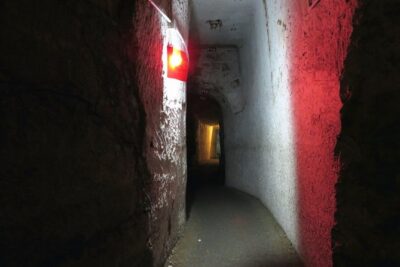
Naples Underground Spanish Quarters with Guide
Read our review →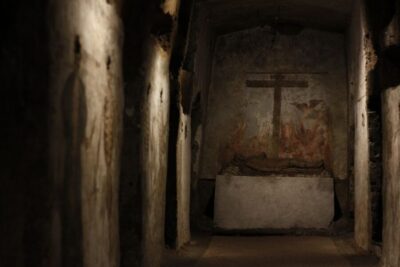
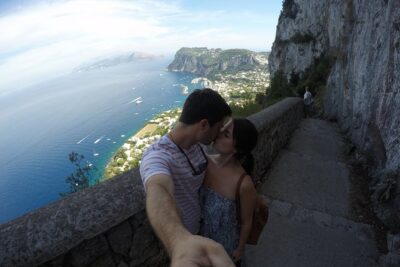
Day Trip to Capri and Blue Grotto From Naples & Sorrento
Read our review →

Private Capri Island and Blue Grotto Day Tour from Naples or Sorrento
Read our review →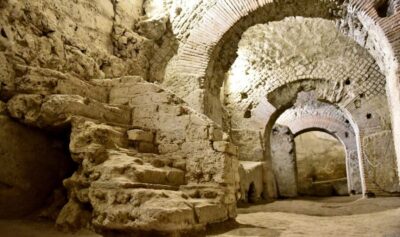
Naples: City Walking Tour w/ Underground Roman Ruins Ticket
Read our review →Browse the lists this tour appears in