
REVIEW · WALKING
Lecce: Baroque Architecture and Underground Walking Tour
Lecce’s best lesson is written in stone. This 90-minute walking tour connects the city’s extravagant Baroque façades with Roman ruins and the remains of its Jewish quarter, giving you a useful map of the old center rather than a string of disconnected photo stops. Guides such as Max, Massimiliano, Fabrizio, and Angela are praised for clear explanations, humor, and strong English.
I like the compact route and the underground Jewish Museum entry, which adds a quieter, less obvious layer to Lecce. I also like the way the tour links Santa Croce, Piazza Sant’Oronzo, the Roman amphitheater, Corso Vittorio Emanuele, and Piazza Duomo in one walk. The main catch is that the tour usually focuses on exteriors, so you should not book it expecting a full visit inside Santa Croce or several Baroque churches.
Key points at a glance
- A 90-minute history lesson: You cover Lecce’s Roman, Jewish, and Baroque past without giving up half a day.
- Santa Croce begins the story: The church’s exterior shows why Lecce is famous for carved local stone and theatrical Baroque decoration.
- Roman remains in the modern city: Piazza Sant’Oronzo includes the Roman Column and the partially excavated amphitheater.
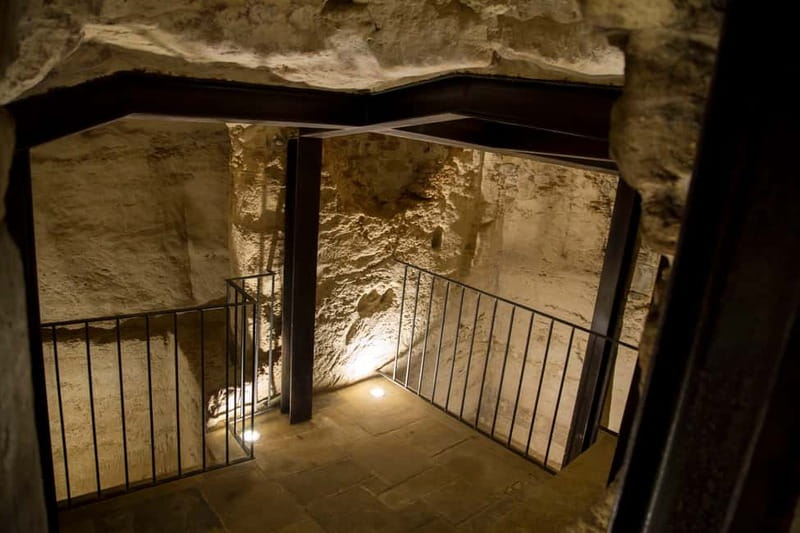
- The underground museum changes the mood: You leave the bright piazzas to explore Lecce’s Jewish past below street level.
- Guide quality matters: Max, Massimiliano, Fabrizio, Angela, and other local guides have earned praise for clear English, humor, and detailed explanations.
- Good value, with one limit: At $29, the guide and museum ticket make sense, but extra church admissions may cost more.
Why this short Lecce tour works
Lecce can feel confusing at first. One corner gives you Roman ruins, the next presents a honey-colored church covered in stone figures, and a few minutes later you are in a broad square framed by palaces. A good guide helps you see the connections.
This tour is built around that connection. You start with Lecce’s celebrated Baroque style, move back to the Roman period, pass through the central streets, and finish with Jewish history underground. The route gives you a useful first look at the city before you return on your own to see the interiors, climb the bell tower, or revisit the squares at a slower pace.
The group option keeps the cost at $29 per person, while a private option gives you more room for questions and a pace shaped around your party. The tour is also offered in English, Italian, and French. Since the meeting point can change according to the option you book, check your confirmation carefully rather than walking straight to the first landmark.
More Walking Tours in Italy:
- Cagliari: Underground Cagliari Walking Tour
★ 4.7 · 2,329 reviews - Matera Walking Tour with Casa Grotta & Rock Church Entry
★ 4.7 · 1,078 reviews - Underground Vaults Walking Tour in Edinburgh Old Town
★ 4.5 · 8,506 reviews
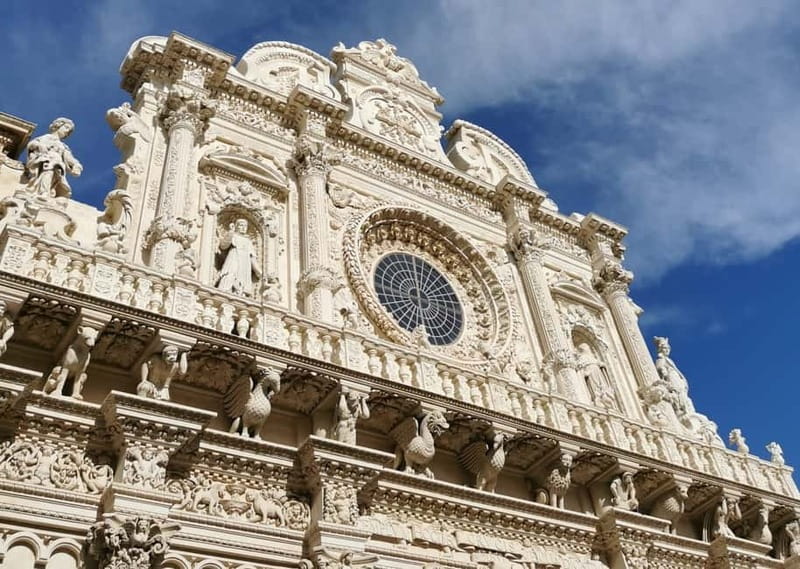
Santa Croce and Lecce’s carved Baroque style
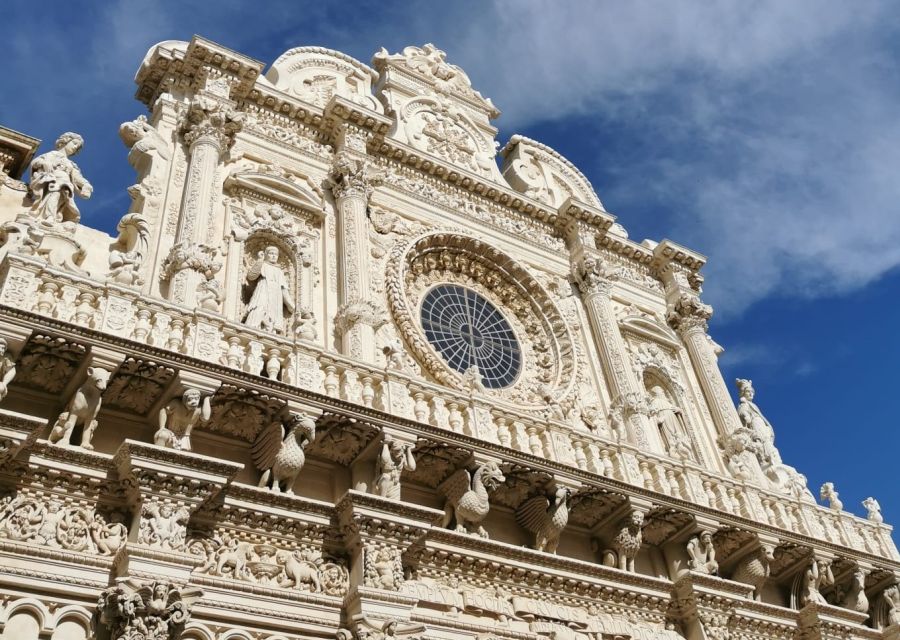
The opening stop is an outside look at the Basilica of Santa Croce, one of Lecce’s most striking façades. The attraction here is not simply the size of the church. It is the amount of detail packed into the stonework: ornament, figures, columns, and decorative flourishes that reward a guide’s explanation.
I find this a smart place to begin because Lecce’s Baroque style can look excessive until someone explains how to read it. Your guide can point out the features that make the façade different from a plain church front and explain how local stone made such detailed carving possible.
Keep your expectations clear. The standard description calls for an external visit, and several people who enjoyed the tour still wished the interior of Santa Croce had been included. If entering the church is important to you, plan a separate visit or ask whether an additional church ticket is available on your date.
Some tours have included access to churches at the end, and some have included a small olive oil or wine tasting. Those extras are pleasant surprises when they happen, but they are not part of the guaranteed inclusions. The reliable feature is the outside explanation and the walking route.
Piazza Sant’Oronzo and the Roman city below
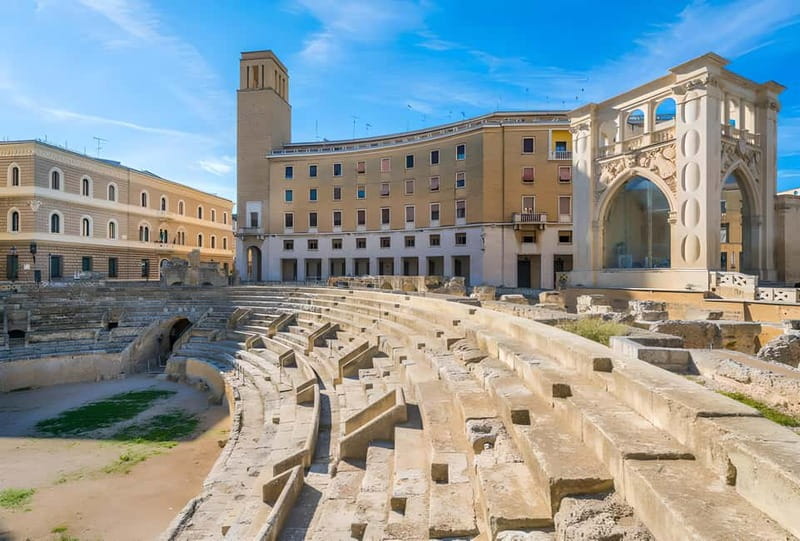
From Santa Croce, the route continues to Piazza Sant’Oronzo, once a market square and now one of Lecce’s main meeting places. Here you see the Old Town Hall, the Roman Column, and the remains of a large Roman amphitheater.
This is one of the tour’s most useful stops because it puts ancient Lecce right beside the modern city. The amphitheater is not an isolated archaeological park. It sits in the middle of the urban center, partly below the surrounding streets and buildings. Your guide helps you understand what you are looking at and why the excavation remains incomplete.
The Roman Column adds another clue to Lecce’s earlier importance. You do not need a long archaeology lecture to appreciate the contrast: modern cafés and traffic nearby, ancient stonework underfoot, and a Roman monument rising in the same square.
Restoration work around the amphitheater and nearby buildings has affected views at times. That is worth remembering if you are hoping for a perfectly open archaeological site. The point of this stop is the setting and the explanation, not a long examination of every surviving stone.
Corso Vittorio Emanuele and the Baroque palaces
The walk along Corso Vittorio Emanuele shifts the focus from ancient ruins to the city’s later wealth and style. Look up as you go. The street is lined with Baroque palaces, and the façades can be easy to miss if you focus only on shop windows and street signs.
The recently restored Sant’Irene Church is another key exterior stop. This is where a local guide earns the fee. A guide can show you the shape of the façade, explain the decoration, and point out details that blend together when you explore alone.
The pace appears to be one of the tour’s strengths. It is not a sprint between monuments, but it is also not a slow architectural seminar. The route normally takes about the advertised hour and a half, with time for questions and photos. One person expected two hours and found the tour ended after 90 minutes, so treat the listed duration as firm.
On hot days, the guide may keep the group in the shade while explaining a landmark. That matters in Lecce, where pale stone and open squares can make midday walking feel hotter than expected. Comfortable shoes and water are sensible, even though the route is not a strenuous hike.
A few more cave trips around Italy worth a look
- Naples: Naples Underground Entry Ticket and Guided Tour
★ 4.4 · 21,781 reviews - Colosseum: Underground and Ancient Rome Tour
★ 4.7 · 12,691 reviews - Naples: Catacombs of San Gennaro Entry Ticket & Guided Tour
★ 4.6 · 7,941 reviews - Rome: Capuchin Crypts and Catacombs Tour with Transfers
★ 4.6 · 6,456 reviews
Piazza Duomo, Lecce’s grandest ensemble
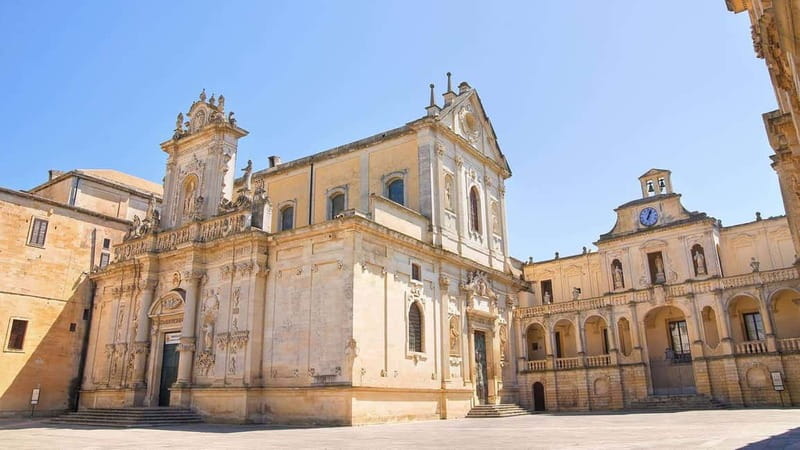
Piazza Duomo is the architectural high point of the walk. Unlike a square framed by unrelated buildings, this space works as a single composition. You see the cathedral, the Archbishop’s Residence, the Seminary, and the Bell Tower arranged around the piazza.
The tour focuses on the exteriors, so listen for the explanation of how the buildings relate to one another. The square is especially rewarding after the earlier stops because you have already seen individual Baroque details. Here you can take in the larger plan and understand how the city used architecture to create a sense of ceremony.
The Bell Tower gives the square its vertical anchor. You may want to return later if a separate ticket allows you to go up. One visitor specifically paired the walking tour with LecceEcclesiae tickets for churches and the tower, finding that the two experiences worked well together. That is a useful strategy if you want both context and interior access.
The tour itself does not promise entry to the cathedral, Archbishop’s Residence, Seminary, or Bell Tower. You can admire the exteriors during the walk, then decide which paid sights deserve your extra time.
The underground Jewish Museum
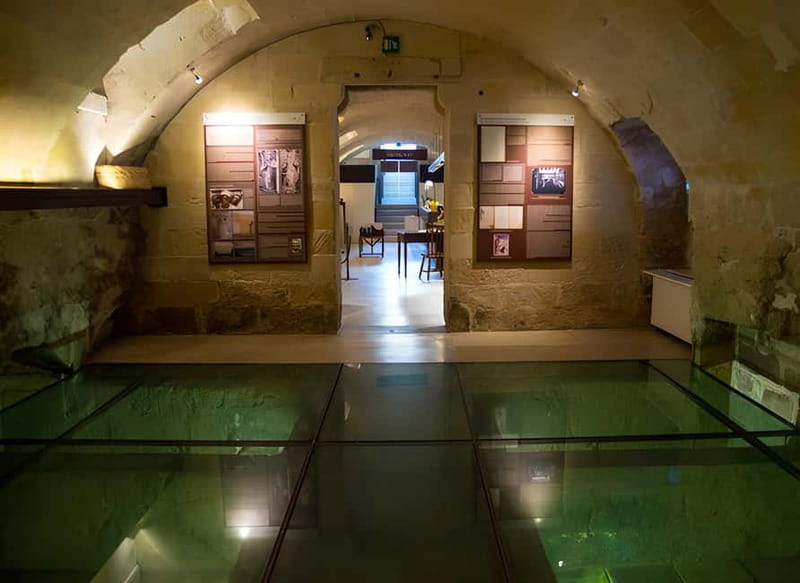
The final stop is the underground Jewish Museum, which gives the tour a welcome change of scale and subject. Instead of another grand façade, you move below street level and learn about Lecce’s Jewish past.
The museum is not presented as a purely religious visit. The emphasis is on the town’s Jewish community and its place in Lecce’s wider story. That makes it useful even if your interests are mainly architecture, archaeology, or urban history.
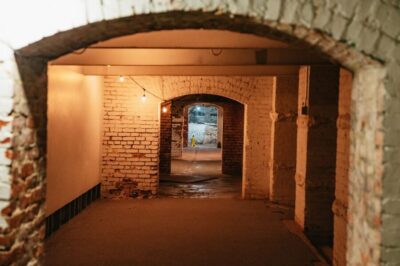
The underground setting also helps explain why this stop feels different from the rest of the walk. Above ground, Lecce’s Baroque architecture is loud and theatrical. Below ground, the mood is more contained. You are looking at a less visible part of the city, one that is easy to miss if you only follow the main piazzas.
The museum ticket is included in the tour price, which improves the value. The underground portion is fairly brief, and one person found it less impressive than the churches. I would treat it as an important historical supplement rather than the tour’s main visual attraction.
The order can vary. The planned description places the museum at the end, while some outings have begun there before moving through the city. That change does not alter the main sights, but it is another reason to focus on the meeting instructions and guide’s plan on the day.
What the guides add to the walk
The guides are the strongest part of this experience. Max is repeatedly singled out for his humor, energy, and ability to attach an anecdote to each monument. Massimiliano has been praised for connecting Lecce’s past with daily life in the city. Fabrizio, Angela, Alex, Mario, Ilena, and other guides have also led highly regarded outings.
The style is not identical from guide to guide. Some are serious and exact, while others use dry humor or a more personal approach. That variety is normal for a local walking tour, and the common thread is strong command of Lecce’s architecture and history.
English ability has generally been described as excellent, and the guide is expected to answer questions. The experience is particularly useful if you want more than dates and names. You may hear why a façade looks the way it does, how Roman remains fit into the present city, and where to return for a fuller visit.
A shared group may include people with different interests and walking speeds. The reported groups have not been described as unwieldy, but the private option is the better choice if you want to linger over architectural details or ask many questions.
Price, timing, and what is included
At $29 per person, the tour offers a fair introduction to Lecce. You receive a local guide, the walking route, and admission to the underground Jewish Museum. For a first visit, that combination is more useful than paying separately for a string of sights without knowing what you are seeing.
The value is less clear if your main goal is entering churches. The route generally covers exteriors, and church admission is not included in the basic package. Some outings have added church visits or tastings, but you should not build your budget around those possibilities.
The tour lasts 1.5 hours. That makes it easy to fit before lunch, dinner, or a separate museum visit, but it also limits how much detail the guide can offer. You get a strong orientation, not a full-day study of Lecce.
Food and drinks are not included. Occasional olive oil, wine, or food tastings have taken place, but consider them a bonus rather than a promised part of the booking. Hotel pickup and drop-off are also not included, so you make your own way to the changing meeting point.
Cancellation is free up to 24 hours before the start for a full refund, and you can reserve now and pay later. The tour is listed as wheelchair accessible, though the underground museum and historic streets can make exact conditions worth confirming when you book.
Who should book this Lecce walk
I would choose this tour for a first day in Lecce, especially if you want the city’s main story in a short time. It suits you if Roman archaeology, Baroque architecture, and local history all sound appealing, but you do not yet know which sights deserve a longer visit.
It also works well for families with older children and teenagers who need variety. The route shifts between dramatic façades, an open archaeological site, a large piazza, and an underground museum. That is more engaging than spending 90 minutes inside one church.
You should look elsewhere, or adjust your expectations, if you want extensive interior access, a slow photography walk, or a specialized art-history lecture. This is an orientation tour with good historical range, not a complete survey of Lecce’s churches.
The summer heat is another practical factor. A guide can seek shade during explanations, but you will still be outdoors for much of the route. An early or late starting time may feel more comfortable, depending on availability.
Should you book it?
Yes, if you want a well-priced introduction to Lecce that joins the city’s Roman remains, Baroque streets, and Jewish history in one clear route. The strongest reason to book is the guide: Max, Massimiliano, Fabrizio, Angela, and their colleagues bring detail and personality to places that can otherwise blur together.
Book it with one clear expectation: you are mainly seeing exteriors and receiving context. If Santa Croce’s interior, the cathedral, or the Bell Tower matters to you, add those visits separately. At $29, this is a sensible first look at Lecce, especially when you use the remaining time to return to the places that caught your eye.
FAQ
How long does the Lecce walking tour last?
The tour lasts 1.5 hours, or about 90 minutes.
What languages are available?
The live guide is available in English, Italian, and French.
Is the Jewish Museum ticket included?
Yes. Entry to the underground Jewish Museum is included in the tour price.
Does the tour enter Santa Croce Church?
The standard tour includes an external visit to Santa Croce Church. Interior access is not generally included.
Does the tour include other church admissions?
Church admissions are not listed as included. Some outings have offered extra church access, but you should confirm this for your selected option.
Is the tour wheelchair accessible?
Yes, the activity is listed as wheelchair accessible.
Are food and drinks included?
No. Food and drinks are not included, though an occasional oil, wine, or food tasting may be offered as an extra surprise.
Can I cancel the booking?
Yes. You can cancel up to 24 hours in advance for a full refund. Reserve now and pay later is also available.
Just added around Italy
- From Catania: trek on Mount Etna, Lava Cave & tasting Tour★ 4.8 · 563 reviews
- From Capri: Blue Grotto, Capri and Anacapri Guided Tour★ 4.8 · 91 reviews
- From Cala Gonone: Grotta del Bue Marino Boat Trip★ 4.4 · 189 reviews
- EXCURSION VISIT TO THE SANTA MARIA DI LEUCA CAVES★ 4.8 · 192 reviews
- Santa Maria di Leuca: Caves Boat Tour★ 4.6 · 211 reviews
- East Palermo: boat tour among caves and breathtaking landscapes★ 5.0 · 28 reviews
- Taormina and Giardini Naxos: 2 Hour Dolphin Tour & Grotto★ 4.6 · 63 reviews
- Rome: Colosseum Underground and Arena Floor Tour★ 4.4 · 59 reviews
Walking Tours, compared.
Underground Vaults Walking Tour in Edinburgh Old Town
Read our review →
Edinburgh: Witches & Haunted History Walking Tour
Read our review →
Waitomo Caves: Ruakuri Glowworm Cave Guided Walking Tour
Read our review →
Malta: Mdina and Rabat Walking Tour with Catacombs
Read our review →
Matera Walking Tour with Casa Grotta & Rock Church Entry
Read our review →Browse the lists this tour appears in