
REVIEW · WALKING
Chicago: Underground Pedway & Downtown Secrets Walking Tour
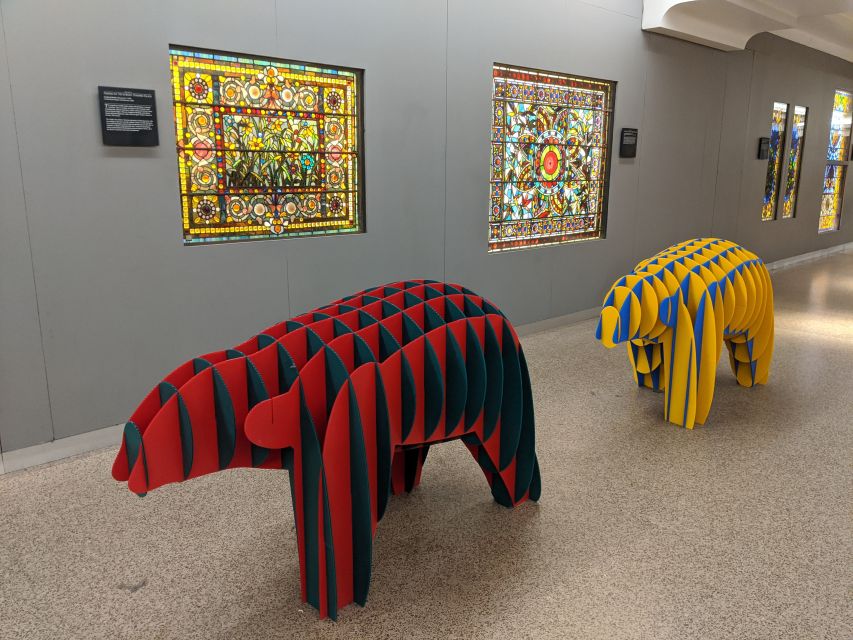
Chicago’s Pedway is not one neat underground tunnel. It is a patchwork of passageways, staircases, building interiors, and connected corridors beneath downtown. This tour teaches you how the system works, then leads you into the newer, more confusing section that even many Chicago residents have never explored. Stained-glass hallways and underground swimming pools are among the surprises.
I especially like two things here. First, the tour gives you a useful skill, not just a story: how to move through downtown while staying warm, dry, or cool. Second, it adds architecture, public art, and bits of city history to spaces you could otherwise walk past without noticing. The main drawback is physical access. You cover about 1.5 miles and several staircases, and the tour is not suitable for wheelchair users, people with mobility impairments, or anyone uncomfortable in enclosed spaces.
Key points at a glance
- A practical introduction to the Pedway: Learn how Chicago’s underground connections fit together and how to use them after the tour.
- Unexpected interiors: Reach corridors with stained glass, underground swimming pools, and other spaces that appear behind ordinary downtown entrances.
- A second, less familiar section: The latter half takes you through a newer and more complicated part of the system.
- Architecture and public art: Guides explain the meaning behind famous works and point out details easy to miss on your own.
- Strong local guiding: Heath, Kaylee, Adam, Colleen, and other guides are praised for clear explanations, humor, and enthusiasm.
- Weather-smart sightseeing: The route stays mostly indoors in rain, cold, or heat, though you still need comfortable shoes.
Why Chicago’s Pedway is worth two hours
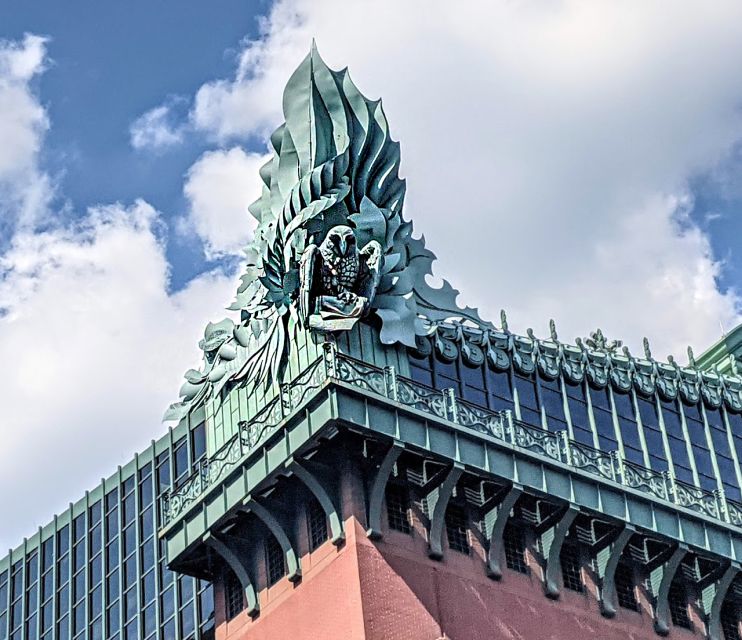
Chicago is famous for grand buildings at street level, but the Pedway tells a different story. It shows how the city handles weather, crowds, office workers, shoppers, transportation, and access between large buildings. You are not simply walking below the streets. You are learning how downtown functions behind its public face.
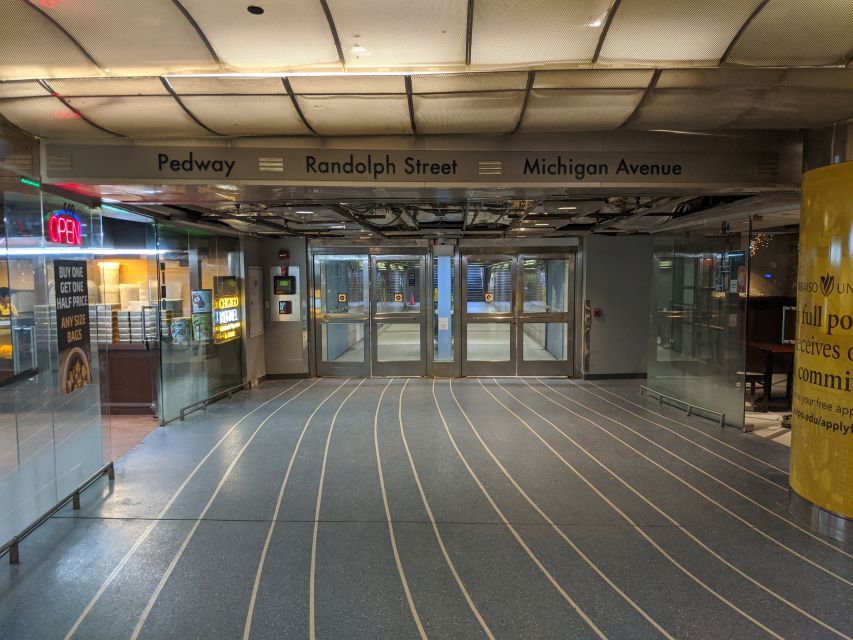
The system can feel confusing because it is not a single, uniform network with one style or one owner. You may move through a stairwell, cross a building lobby, follow a corridor, and then take another set of stairs into a different interior. The tour makes sense of this odd arrangement.
That practical lesson is one of the best reasons to book. After two hours, you should understand how the Pedway can help you cross downtown without spending the whole time outside. One person even used the knowledge afterward to reach the train station and continue toward O’Hare International Airport. The tour is not an airport transfer, but it can give you another option for getting around central Chicago.
The route also adds a pleasant sense of discovery. You might pass a corridor that looks like an ordinary office connection, only to find stained glass or an unusual piece of design. The fun comes from the contrast between the plain entrance and the interior waiting behind it.
More Walking Tours in the USA:
- Seattle: Guided Underground Walking Tour
★ 4.6 · 2,144 reviews - Underground Vaults Walking Tour in Edinburgh Old Town
★ 4.5 · 8,506 reviews - Cagliari: Underground Cagliari Walking Tour
★ 4.7 · 2,329 reviews
Starting at 120 North LaSalle Street

Meet your guide in front of 120 N. LaSalle Street, where a large mosaic mural sits above the front door. Give yourself time to find this address. The tour begins promptly, so arriving at the last minute is a poor plan in a part of downtown filled with large buildings, busy sidewalks, and multiple entrances.
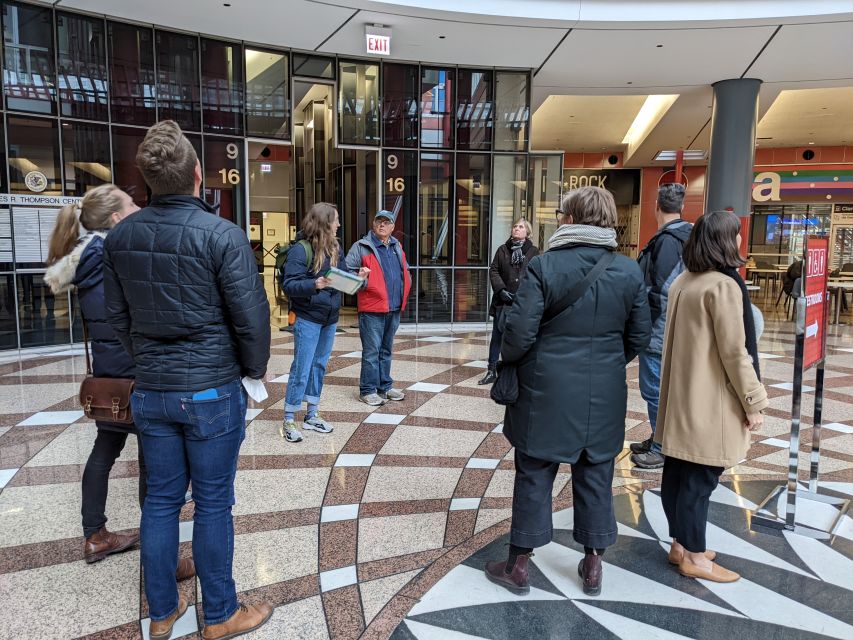
Check in with your guide as soon as you arrive. The guide is the key to the experience from the first minute, since the starting point is not presented as a grand tourist attraction. You begin with orientation: what the Pedway is, how it developed, and how to recognize the connections as you move through downtown.
Guides have different personalities, but the strongest pattern is clear. Heath is praised for being entertaining and direct about the good, bad, and awkward parts of the system. Kaylee is repeatedly described as warm and well prepared. Adam brings humor and a strong sense of local pride. Colleen is especially good at adding practical Chicago suggestions, including food and transportation ideas. Henry’s background in architecture also made the tour particularly useful for visitors interested in design.
You may not receive the same guide on every departure, but you can expect an English-speaking live guide who handles the route and explains what you are seeing.
Learning to read the underground network
The first part of the tour is a lesson in orientation. You walk beneath full blocks of buildings, use staircases, and pass through the interiors of several properties. The guide shows you how one connection leads to another and why finding the right passage is not always obvious.
That matters because the Pedway is easy to misunderstand. You can see a map and still have trouble matching it to the actual corridors. Entrances may look like building access rather than public connections, and the route may change character from one block to the next. A guide saves you the frustration of wandering around a basement or taking the wrong staircase.
The route includes about 1.5 miles of walking, with a handful of staircases. This is not a strenuous hike, but it is active enough to matter. Comfortable shoes are essential. You will spend time standing while the guide explains a building or artwork, then walk again, so supportive footwear will make the two hours much easier.
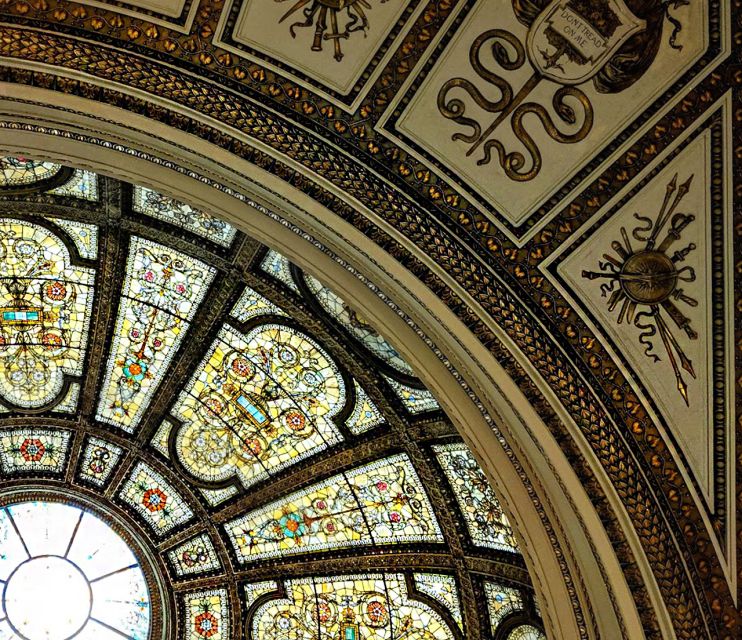
The interiors provide the visual payoff. Expect hallways with stained glass and views into or near underground swimming-pool areas, along with other architectural details that are easy to miss without someone pointing them out. The information supplied for the tour does not promise a particular building at every departure, so treat the route as a guided look at a changing urban system rather than a fixed museum checklist.
Stained glass, swimming pools, and buildings from the inside
The most memorable moments are likely to come from places that do not advertise themselves from the sidewalk. A downtown entrance can lead to a corridor with color, pattern, or scale that feels out of place beneath a busy office district. That small surprise is the point.
The stained-glass interiors give the tour a visual lift. You are not only hearing about Chicago architecture in the abstract. You are looking closely at materials and spaces that make the city’s private or semi-public interiors worth noticing.
The underground swimming pools add another layer. They show how the Pedway is tied to working buildings and their everyday facilities, not only to grand civic design. These are the sorts of details you would almost certainly miss while hurrying along street level.
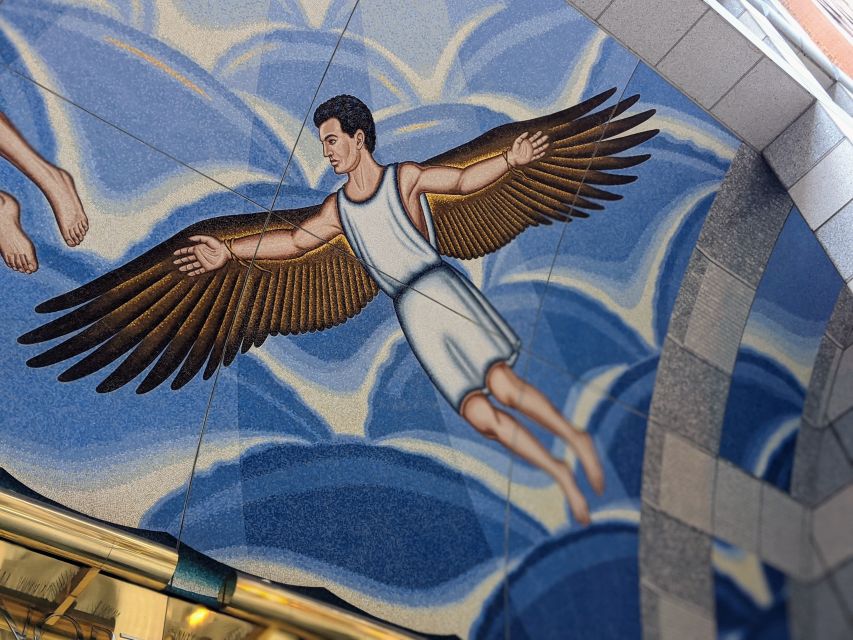
The tour also spends time on public art, including the meanings behind famous works. This is useful for visitors who have already seen Chicago’s better-known art but felt they were missing the story. The guide gives you context for what the art is doing and why it belongs in the city’s public spaces.
One guide also used a binder with old photographs and supporting images while explaining Chicago’s past. That kind of visual aid can help you picture how downtown has changed, especially when you are standing in a space that does not immediately reveal its purpose.
A few more cave trips around the USA worth a look
- Best Niagara Falls US Tour W/Boat Ride, Cave & More Wonders!
★ 5.0 · 8,372 reviews - Beneath The Streets Underground History Tour
★ 4.5 · 8,006 reviews - Half-Day Emerald Cave Kayak Tour with Optional Hotel Pickup
★ 5.0 · 4,978 reviews - Niagara Falls USA: Maid of the Mist & Cave Adventure
★ 5.0 · 3,924 reviews
The newer section that even locals can miss
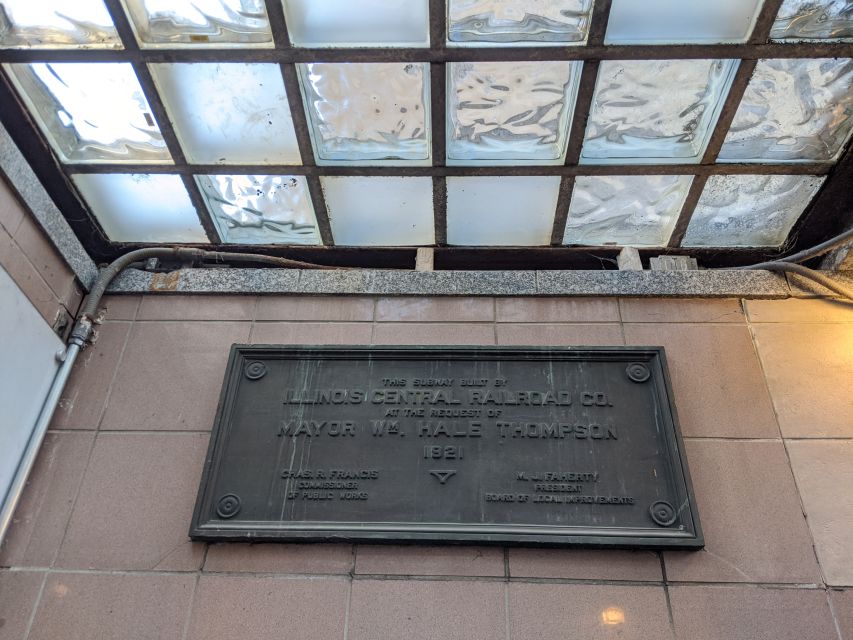
The second half moves into a newer and more complicated section of the Pedway. This is where the tour changes from basic orientation to a small navigation exercise. You use what you learned earlier to follow a less familiar chain of connections.
I like this structure because it gives the tour a natural progression. You first learn the idea, then test it. Instead of being led through a corridor with no sense of direction, you begin to understand why the route works as it does.
This section may feel less polished or less intuitive than a regular museum visit. That is part of the experience, but it is also a reason to keep your expectations sensible. The Pedway is not a single dramatic underground attraction. Some portions are plain, functional, or a little bleak. A good guide turns those stretches into useful explanations about the city, its buildings, and the limits of the system.
The final stop is near Millennium Park, in a striking interior with a distinctive architectural design. The ending is well chosen. You come back into the center of downtown with plenty of options for continuing your day, including Millennium Park and nearby attractions. The tour does not leave you stranded at an obscure corner.
What the guides add to the experience
The guide makes a major difference here. Without one, you could perhaps find parts of the Pedway, but you would spend time guessing which entrances are connected and what you are looking at. The tour turns a potentially confusing walk into a story about design, infrastructure, and Chicago life.
The best guides mix facts with local observation. Heath has been praised for his humor and for speaking frankly about the system. Kaylee is especially strong at keeping the group engaged while explaining buildings and history. Adam’s pace and jokes help the walk feel relaxed. Colleen combines city background with practical advice about where to eat, what to do, and how to get around afterward.
You should also feel free to ask questions. Several guides are described as patient and willing to answer questions from both adults and children. The pace is generally easy, with enough time to stop and listen rather than rush from one corridor to the next.
There is a slight language and humor consideration. The tour is offered in English, and one international visitor noted missing a few jokes. If English is not your first language, the historical and architectural information should still be accessible, but fast humor or local references may occasionally pass by.
The value of a $35 ticket
At $35 per person, this is a fair price for a two-hour guided walk if you want more than a simple introduction to downtown. You are paying for route-finding, access to interiors you might not locate alone, and a guide who can connect the Pedway to Chicago’s buildings, art, and past.
The value is strongest for first-time visitors, architecture fans, and anyone visiting in poor weather. A rainy or cold day makes the indoor route especially useful. On a hot day, the Pedway also offers relief, though you should not assume every portion will be air-conditioned or equally comfortable.
The value is lower if you want a dramatic underground attraction with grand rooms throughout. Some corridors are practical rather than beautiful, and the network can feel patched together. You are buying insight and access, not a polished subterranean palace.
Free cancellation up to 24 hours before the start and the reserve-now, pay-later option make it easier to fit into a changing Chicago schedule. Those policies are helpful, but the real question is whether you enjoy learning how a city works. If you do, the ticket earns its keep.
Who should book, and who should skip it
I would recommend this tour to:
- First-time Chicago visitors who want a different view of downtown
- Repeat visitors who have already seen the major street-level sights
- Architecture and public-art fans
- People visiting in cold, rainy, or very hot weather
- Families with older children who can manage stairs and steady walking
- Anyone curious about practical city infrastructure
I would skip it if you dislike enclosed spaces or prefer open-air sightseeing. The tour is also a poor fit if stairs are difficult, if you use a wheelchair, or if 1.5 miles of walking feels like too much. The route remains mostly indoors, but it is not fully accessible.
Families can make it work, especially since guides have handled questions from children, but the experience is not designed as a children’s attraction. Younger kids may find some of the functional corridors dull between the more surprising interiors.
Practical details for a smoother walk
Wear comfortable shoes and arrive early at the mosaic mural outside 120 N. LaSalle Street. Bring enough time to check in before the prompt starting time.
Dress for the forecast even though most of the walk is indoors. You may be outside briefly, and interior temperatures can vary. Rain or cold will not normally cancel the experience, since the route is planned to stay mostly under cover.
Keep your schedule flexible after the tour. The route ends near Millennium Park, a central location for continuing on foot. You can use the guide’s suggestions to plan lunch, another attraction, or a return through the Pedway on your own.
The route has moderate physical demands, not extreme ones. You will handle a handful of staircases, walk about 1.5 miles, and stand for explanations. That is manageable for many people, but it should not be treated as a quick, effortless indoor stroll.
Should you book the Chicago Pedway tour?
Book it if you want to see Chicago from a working, lesser-known angle and you like having a guide make sense of confusing places. The combination of secret passages, stained glass, public art, city stories, and practical navigation makes this more useful than a standard sightseeing walk.
I would especially choose it early in a Chicago visit. You can use what you learn later when moving between downtown buildings, and the ending near Millennium Park puts you in a good place for the rest of the day.
Skip it if your main goal is skyline views, famous exteriors, or a completely open-air walk. But if you are curious about what happens below the sidewalks, $35 buys two focused hours and a skill you can keep using after the tour ends.
FAQ
How long is the Chicago Pedway tour?
The tour lasts two hours and includes about 1.5 miles of walking.
Where does the tour meet?
Meet your guide in front of 120 N. LaSalle Street. A large mosaic mural is located above the front door.
What language is the tour offered in?
The tour is conducted in English with a live guide.
What should I bring?
Wear comfortable shoes. The tour includes walking and a handful of staircases.
Is the tour suitable for people with mobility impairments or wheelchair users?
No. The tour is not suitable for people with mobility impairments or wheelchair users. It is also not recommended for people with claustrophobia or a low level of fitness.
Does the tour operate in bad weather?
Yes. It takes place rain or shine and remains mostly indoors, helping you stay warmer in cold weather, drier in rain, or cooler in hot weather.
Just added around the USA
- Door County: Peninsula Park Caves & Ephraim North Cruise★ 4.7 · 35 reviews
- Boston: Underground Railroad History Tour of Beacon Hill★ 4.9 · 38 reviews
- From Las Vegas: Emerald Cave Guided Kayaking Tour★ 4.9 · 456 reviews
- Dolphin, Sea Cave & Captain Cook Snorkel Combo in Kealakekua Bay★ 4.5 · 220 reviews
- Kauai: Nā Pali Coast Zodiac Raft Sea Caves + Snorkel★ 4.9 · 166 reviews
- Ultimate Na Pali Coast Zodiac Boat Snorkeling and Sea Cave Tour★ 4.5 · 101 reviews
- Niagara Falls: Cave of the Winds, Boat Ride, & Trolley Tour★ 4.7 · 680 reviews
- Emerald Cave Kayak Tour with Lunch & Las Vegas Shuttle Option★ 5.0 · 733 reviews
Walking Tours, compared.
Underground Vaults Walking Tour in Edinburgh Old Town
Read our review →
Edinburgh: Witches & Haunted History Walking Tour
Read our review →
Waitomo Caves: Ruakuri Glowworm Cave Guided Walking Tour
Read our review →
Lecce: Baroque Architecture and Underground Walking Tour
Read our review →
Malta: Mdina and Rabat Walking Tour with Catacombs
Read our review →Browse the lists this tour appears in