
REVIEW · CATACOMBS & UNDERGROUND CITY
Malta: Mdina and Rabat Walking Tour with Catacombs
Mdina’s quiet lanes make more sense when someone explains what you are seeing. This tour links the old capital’s palazzos, churches, bastion views, and famous gates with Rabat’s underground catacombs and wartime shelters. It is a compact way to connect Malta’s Roman, medieval, religious, and military past.
I like the strong guiding most. Guides including Matthew, Carmel, Mario, and Dylan are praised for clear stories, humor, and patience with questions. I also like that the $29 fee includes the catacombs, St. Paul’s Grotto, and World War II shelters, rather than leaving you to buy several separate tickets.
The main consideration is the amount of walking and standing. The tour is scheduled for 2.5 hours, but some groups take close to three, and the underground sections can feel airless to some people. Bring water, sun protection, and proper shoes, and check the accessibility details carefully if you have limited mobility.
Key points to know before you go
- Mdina and Rabat in one outing: You see the former capital and its neighboring town, not just the postcard streets of Mdina.
- Three included underground sights: The admission covers the catacombs, St. Paul’s Grotto, and World War II shelters at the Wignacourt Museum.
- A guide-led history lesson: Matthew, Carmel, Mario, Dylan, and other English-speaking guides bring dates, buildings, and local stories together.
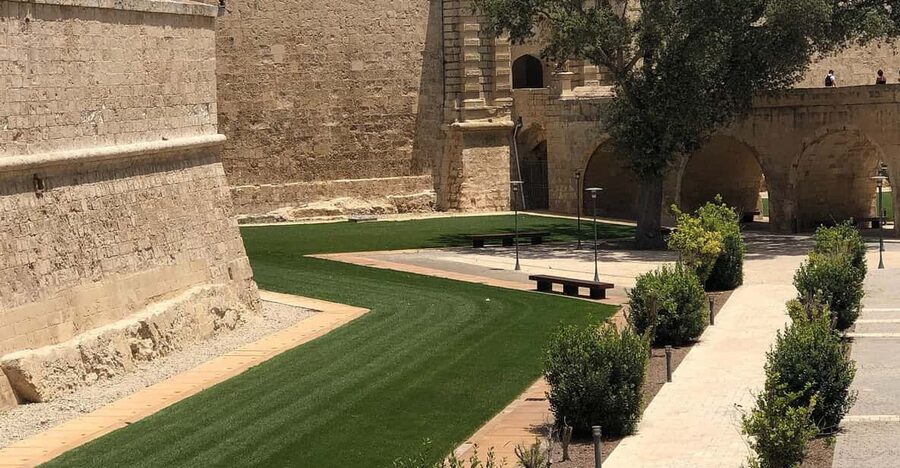
- Meeting point in plain sight: Meet outside Mdina Gate, beside the playing field. There is no hotel pickup.
- Good value at $29: The price includes a licensed guide and the listed entrance fees, with no food or drinks included.
- Plan for a real walk: Comfortable shoes, water, sunscreen, a hat, and light clothing matter, especially in warm weather.
Why Mdina makes a better first stop with a guide
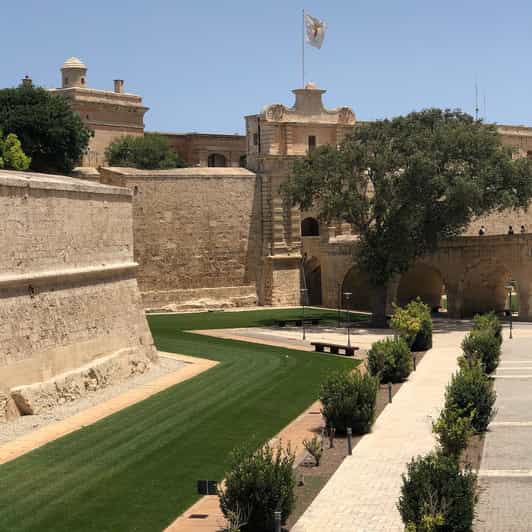
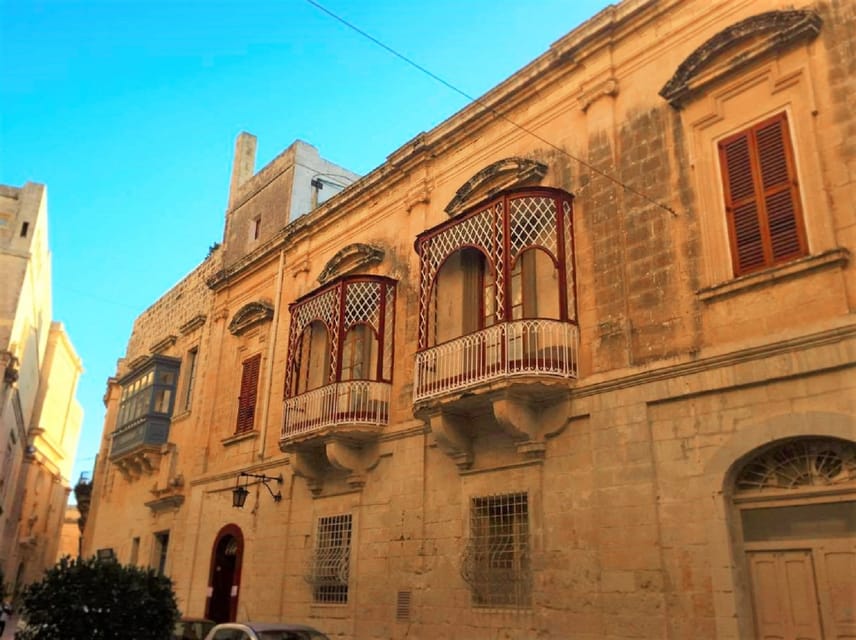
Mdina sits on a plateau in the middle of Malta, and its bastions give the city a commanding position over the island. It was once Malta’s capital, and its old name, Città Notabile, means the noble city. That title fits the grand churches and palaces, but the city feels more intimate than grand when you walk its narrow lanes.
The tour begins at the Mdina Gate, outside the entrance beside the playing field. That meeting point is worth locating early, since one person had trouble finding the group and needed help through WhatsApp. Once everyone is together, the guide leads you into the old city and provides the context that can be hard to find on your own.
Mdina’s story reaches back at least to the Bronze Age. Phoenicians and Romans settled here, while Arab rule shaped the city’s name and much of its layout. The Normans later made Mdina Malta’s capital, and the city remained important until Valletta took that role.
That sequence matters because Mdina is not simply an untouched medieval set. Its buildings reflect several periods layered one over another. You will hear about Arab influence, Norman rule, the later baroque rebuilding, and the 1693 earthquake that led to major reconstruction.
More Catacombs and Underground City Tours in Malta:
- Naples: Catacombs of San Gennaro Entry Ticket & Guided Tour
★ 4.6 · 7,941 reviews - Rome: Capuchin Crypts and Catacombs Tour with Transfers
★ 4.6 · 6,456 reviews - The Original Roman Crypts and Catacombs Tour with Transfers
★ 4.5 · 4,896 reviews
Walking Mdina’s narrow streets and noble palaces
The city is small enough to explore on foot, but its quiet lanes can make the place feel like a maze. A guide helps you understand the buildings rather than simply passing them as attractive golden-stone façades.
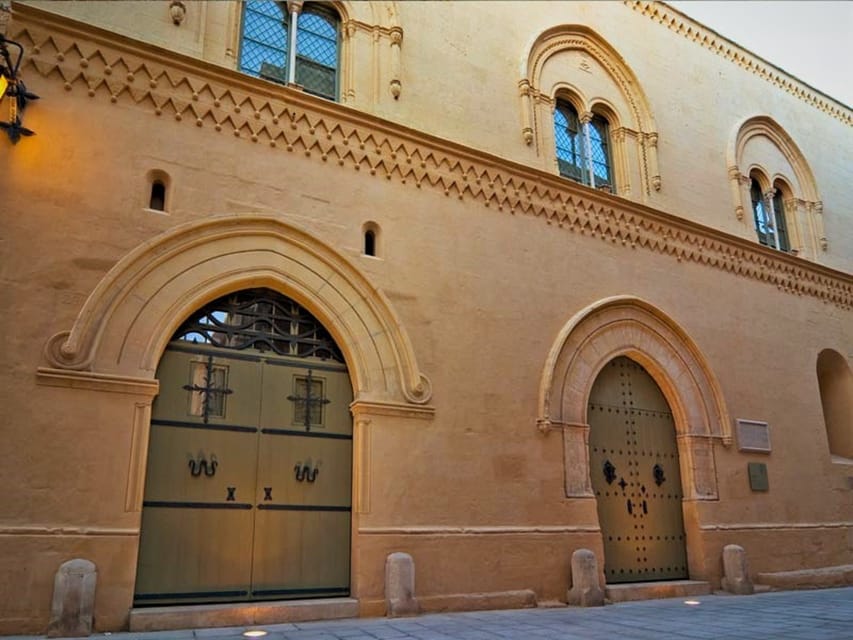
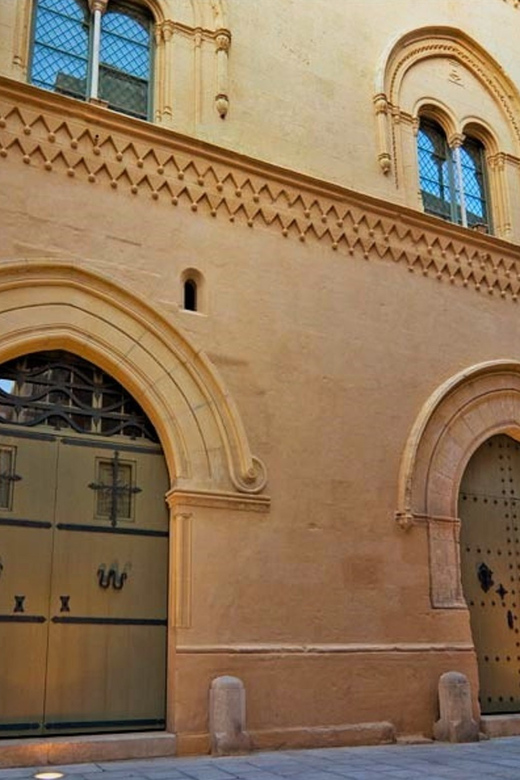
The route includes Vilhena Palace, St. Agatha’s Chapel, the Banca Giuratale, and Palazzo Falzon. Each gives you a different view of Mdina’s changing role. Palaces point to Malta’s ruling families and institutions, while churches and chapels show how strongly religion shaped public life.
Palazzo Falzon is one of the better-known historic houses in Mdina. You should not expect the tour to function as a full interior museum visit there, but seeing the building in its setting helps explain the city’s aristocratic character. The Banca Giuratale adds another civic note, showing that Mdina was a place of government as well as worship.
The guide also takes you toward the Greeks Gate. This is one of Mdina’s notable entrances and a useful reminder that the city’s walls were not decorative. They controlled movement into the capital and protected the settlement on its raised ground.
At St. Agatha’s Chapel and the Mdina Cathedral, the emphasis is on the city’s religious and artistic identity. The cathedral is among Mdina’s defining sights, and its position within the old streets gives it more impact than a quick photograph from outside. Confirm the exact interior access on your chosen departure, since the information describes the cathedral as a stop to see rather than promising a separate cathedral entry.
Mdina Cathedral and the view from the bastions
The bastion walls are one of the strongest parts of the outing. From this elevated edge, you get broad views across central Malta and a clearer sense of why this plateau mattered for defense and government.
The view also gives you a break from the close quarters of the streets. That is useful on a sunny day, though it means you are exposed to the weather. Bring a hat, sunscreen, and water rather than assuming the old city will provide shade whenever you need it.
Your guide’s explanation is especially useful here. Without context, Mdina can seem like a beautiful but nearly empty old town. With the political story in place, the walls, gates, palaces, and cathedral begin to work as parts of one city rather than isolated sights.
Several guides have been singled out for making that context easy to follow. Mario is described as having the approach of a history teacher, while Matthew is praised for answering many questions without losing track of the route. Carmel is often noted for combining humor with local detail. These names are not a promise about who will lead your departure, but they give you a sense of the guiding style used by ColourMyTravel.
Crossing into Rabat for Malta’s underground past

Rabat changes the mood. Mdina gives you stone lanes, formal buildings, and bastions. Rabat adds religious traditions, burial chambers, wartime survival, and the stories of ordinary people who used spaces below ground.
The tour visits the Wignacourt Museum, where the included admission covers three key parts of the experience: the catacombs, St. Paul’s Grotto, and World War II shelters. This is a useful arrangement because the underground sights are not treated as an optional add-on at the end. They form a central part of the tour.
St. Paul’s Grotto connects Rabat to Malta’s Christian tradition. The grotto is associated with the apostle Paul and gives the guide a chance to explain how religious memory shaped the town. The visit is more valuable when you listen for the link between the site itself and the wider history of Rabat.
The catacombs offer a different kind of historical evidence. Instead of grand facades, you see spaces cut below the town and learn how burial customs and community life once worked. One useful feature of this tour is that the guide explains what you are looking at, rather than leaving you to wander through dark passages without a sense of purpose.
The underground sections are not described by every participant as frightening, but they are not ideal for everyone. One account found the catacombs fascinating and comfortable, while another found the area airless and a little claustrophobic. If confined spaces bother you, tell the guide before descending and consider whether you want to enter every section.
More Walking Tours in Malta:
- Underground Vaults Walking Tour in Edinburgh Old Town
★ 4.5 · 8,506 reviews - Cagliari: Underground Cagliari Walking Tour
★ 4.7 · 2,329 reviews - Seattle: Guided Underground Walking Tour
★ 4.6 · 2,144 reviews - Edinburgh: Witches & Haunted History Walking Tour
★ 4.8 · 1,290 reviews
World War II shelters add a modern layer
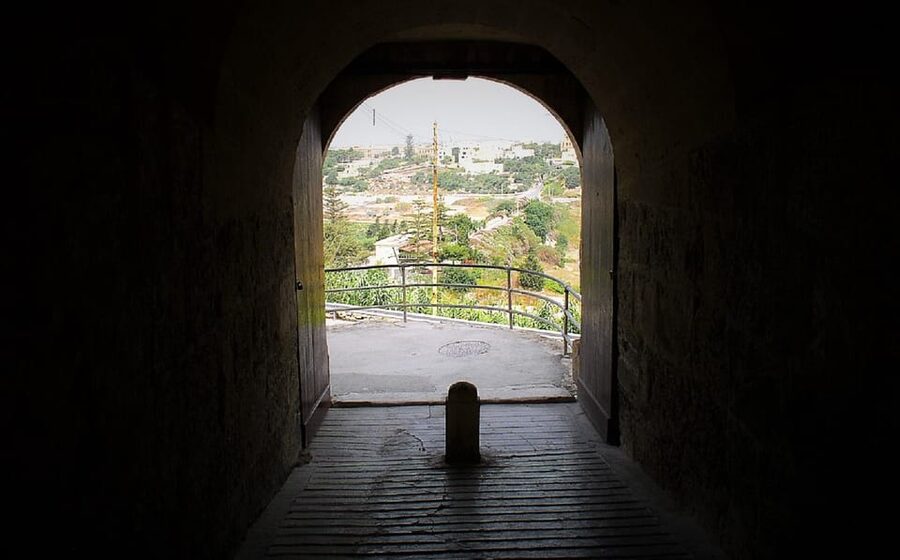
The World War II shelters are perhaps the most striking contrast with Mdina’s palaces and medieval streets. They show how Malta’s historic towns remained part of modern military life, and how residents sought protection below ground.
This stop also keeps the tour from becoming a march through distant centuries. You move from ancient settlements and Roman-era connections to medieval rule, baroque rebuilding, Christian tradition, and wartime Malta. That range is a major reason to choose this tour over a simple Mdina photo stop.
The shelters are included in the entrance fee, so you do not have to decide at the door which underground attraction is worth paying for. Your guide can tie the spaces to Malta’s wartime story and help you understand why they belong in the same outing as the catacombs and grotto.
The tour is information-heavy. That suits me, especially in a place where the buildings can look similar after an hour of walking. It may be less suitable for small children who are unlikely to enjoy extended explanations, standing, and underground visits.
How the 2.5-hour schedule feels
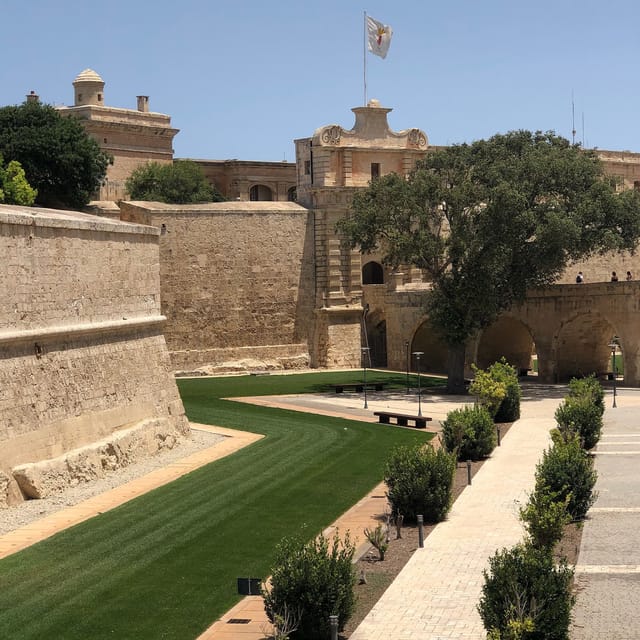
The advertised length is 2.5 hours, which makes this a manageable half-day activity. It is long enough to cover Mdina, Rabat, and the included underground sights, but short enough to leave time for lunch, shopping, or additional museums afterward.
In practice, you should allow some flexibility. One group described the experience as taking around three hours, while another felt that 2.5 hours was barely enough for everything the guide had to explain. The exact pace can depend on questions, group size, and how long the guide spends inside each site.
The tour usually balances Mdina and Rabat rather than giving the old capital the entire morning. That is a strength if you want the wider story of the area. If you mainly want quiet photographs of Mdina, you may prefer to return independently after the tour and explore at your own pace.
The walk is generally described as easy, but the experience still involves plenty of time on your feet. Wear comfortable shoes, not your smartest holiday footwear. Carry water and sunscreen even if the weather looks mild at the start.
The activity is offered in English with a live licensed guide. The guiding is the main reason to book instead of simply arriving at Mdina and reading signs. Guides such as Mario, Matthew, Carmel, Dylan, and Allysia have been praised for humor, local insight, and answering questions without rushing the group.
What $29 includes and what it does not
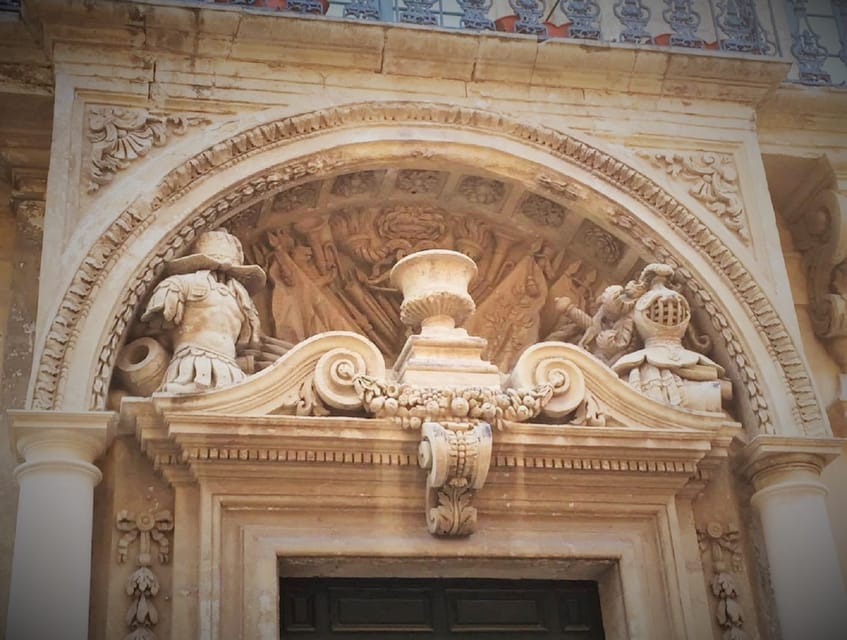
At $29 per person, the price is fair if you want both guided walking and paid underground sights. The entrance fees to the catacombs, World War II shelters, and St. Paul’s Grotto are included, along with the professional guide.
That inclusion matters. A cheaper-looking self-guided visit can become less cheap once you add separate admissions, and it will not give you the historical links between the sights. You are paying for the guide’s interpretation as much as for the tickets.
Food and drinks are not included. There is also no hotel pickup or drop-off, so you need to reach Mdina Gate yourself and arrange your own return. The meeting point is outside the gate next to the playing field, which is specific enough, but arrive with time to spare.
A practical benefit is the flexible booking policy. You can reserve and pay later, and cancellation is allowed up to 24 hours before the tour for a full refund. That is useful when your Malta plans depend on weather or transport.
Who should book this Mdina and Rabat walk
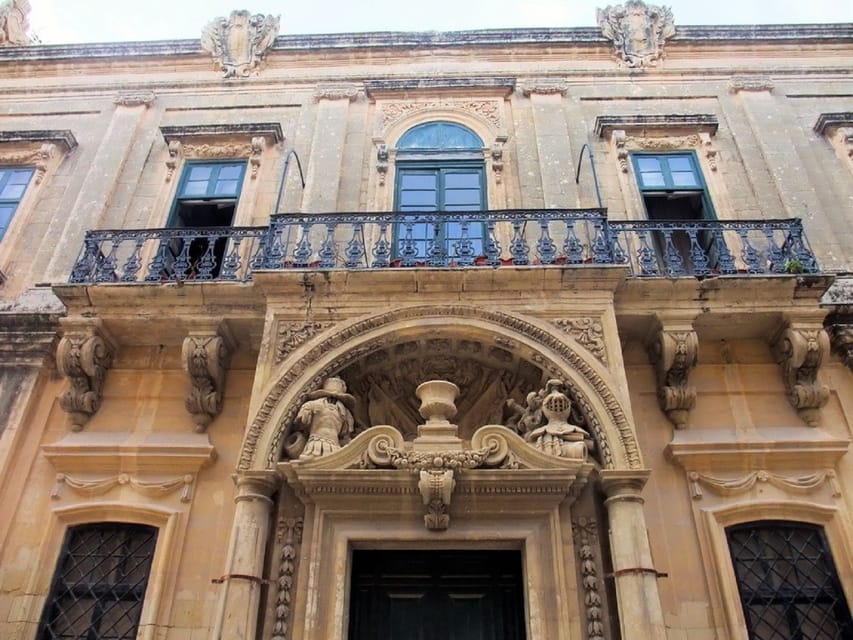
I would choose this tour if you are visiting Malta for the first time and want a clear introduction to Mdina and Rabat. It is especially useful if you enjoy history but do not want to spend a full day inside museums.
It also suits people who like asking questions. The guides are repeatedly described as open, engaging, and willing to explain local culture, family stories, wartime events, and the connection between the two towns. If you have already visited Mdina, a strong guide can still give you a fresh reading of familiar streets.
The tour is less suitable if you need frequent sitting breaks, dislike underground spaces, or want a slow photography walk. The published information also gives conflicting accessibility signals: the activity is marked wheelchair accessible, yet it is listed as unsuitable for people with mobility impairments and wheelchair users. Contact ColourMyTravel before booking if this affects you.
For evening departures, keep your expectations realistic. One useful tip is to choose an earlier time if possible, since Mdina and the surrounding area can feel quite deserted later in the day. Earlier also helps with heat and gives you more time to explore afterward.
Should you book it?
Book this Mdina and Rabat tour if you want the history explained, the main sights covered efficiently, and the underground admissions handled in one $29 package. The best guides turn a pretty old town into a readable story, and the Rabat portion gives the outing more substance than a standard Mdina stroll.
Skip it if you want complete independence, dislike a set pace, or cannot manage extended walking and some time below ground. For most first-time visitors who want a practical introduction to central Malta, this is a strong-value choice. Bring water, wear sensible shoes, and leave a little extra time after the scheduled finish.
FAQ
How long does the Mdina and Rabat tour last?
The stated duration is 2.5 hours. Some groups have taken closer to three hours, so avoid scheduling an immediate appointment afterward.
Where does the tour meet?
Meet your guide outside the Mdina Gate, next to the playing field.
What sights are included in the admission?
The admission includes the catacombs, World War II shelters, and St. Paul’s Grotto at the Wignacourt Museum.
Is the tour conducted in English?
Yes. The activity includes a live English-speaking guide.
Does the tour include hotel pickup?
No. Hotel pickup and drop-off are not included, and you must make your own way to Mdina Gate.
What should I bring?
Bring comfortable shoes, water, sunscreen, a sun hat, food, and comfortable clothing. Be prepared for walking and standing, as well as time in underground spaces.
Just added around Malta
- Explore Malta’s Blue Grotto by SUP★ 4.9 · 20 reviews
- Comino: Mystic Caves, Blue and Crystal Lagoon Boat Cruise★ 4.9 · 37 reviews
- Gozo: 20-Minute Cave Tour and Blue Lagoon Stop★ 4.5 · 42 reviews
- From Gozo:Around Comino, Blue Lagoon, Crystal Lagoon & Caves★ 4.7 · 639 reviews
- Comino: Blue Lagoon, Crystal Lagoon and Sea Caves Boat Tour★ 4.8 · 506 reviews
- Blue lagoon, Crystal Lagoon & Comino Island & Caves★ 4.4 · 43 reviews
- Gozo: 1 Hour Kayak plus +Cave Tour + Drop off Blue Lagoon★ 4.9 · 67 reviews
- Blue Lagoon, Comino and Caves Tour with Private Rib Boat★ 5.0 · 46 reviews
Catacombs & Underground City Tours, compared.
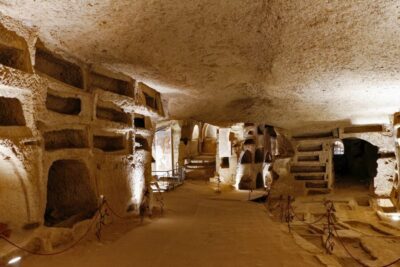
Naples: Catacombs of San Gennaro Entry Ticket & Guided Tour
Read our review →
Rome: Capuchin Crypts and Catacombs Tour with Transfers
Read our review →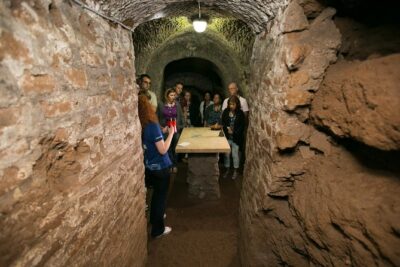
The Original Roman Crypts and Catacombs Tour with Transfers
Read our review →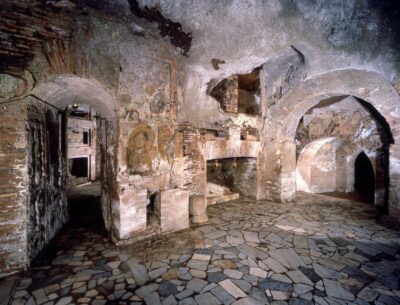
Rome: Catacombs of St. Callixtus Entry Ticket & Guided Tour
Read our review →

Full Day Cappadocia Tour( Red Tour + Underground City )
Read our review →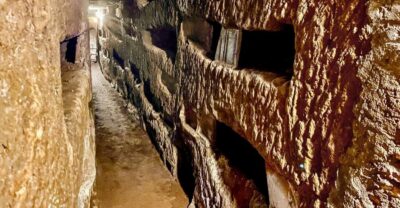
Rome: Guided Roman Catacombs Tour with Transfers
Read our review →
Browse the lists this tour appears in