
REVIEW · AUDIO
Self-Guided Boston’s Beacon Hill Underground Railroad Audio Tour Walking Tour
Boston’s Beacon Hill hides a powerful story in plain sight. This self-guided walk leads you from the Charles Street Meeting House through homes, schools, boarding houses, and meeting places tied to the Underground Railroad, ending at the African American Meeting House. The tour does not show an underground train line, of course. It explains the network of people, homes, and quick decisions that helped freedom seekers move toward safety.
I like the location-aware audio and the freedom to stop, rewind, or begin at a time that suits you. I also like the focus on specific people, including John J. Smith, Lewis Hayden, Leonard Grimes, John Coburn, and John Sweat Rock, rather than a broad, blurry history lesson. The main caution is the app: most people find the directions clear, but a few have had trouble activating the tour or finding the route again after leaving it.
Key points
- Nine meaningful Beacon Hill stops: Visit places connected with Underground Railroad conductors, abolitionists, schools, and community support.
- A 45 to 55 minute audio walk: You set the pace and can pause, rewind, or listen again.
- A theatrical approach: Multiple voices and dramatized narration give the stories more emotional force than a basic recorded lecture.
- A real walking workout: Beacon Hill has hills, and you should bring water and wear comfortable shoes.
- A strong finish: The route ends at the African American Meeting House, the oldest surviving Black church building in the United States.
- Good value at $9.75: The low price makes this a useful choice for independent history-minded visitors, provided your phone and app are ready before you arrive.
Start at the Charles Street Meeting House
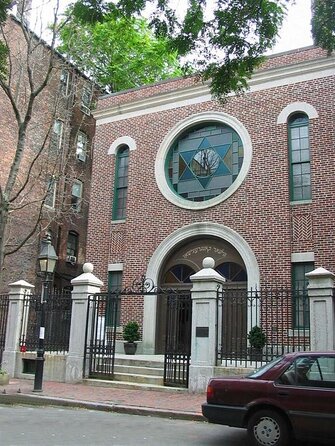
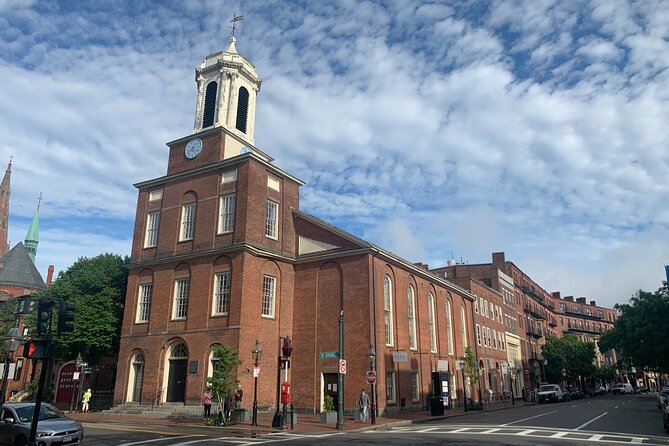
The tour begins at the Charles Street Meeting House, at 70 Charles Street. This is a useful starting point because you are already in Beacon Hill, close to streets and buildings connected with Boston’s Black abolitionist community.
You use your own phone to access the WalknTours app and follow the narration from one location to the next. The app uses GPS and an arrow to point toward the next stop. That matters on a self-guided walk, since Beacon Hill’s compact streets can make it easy to turn the wrong way.
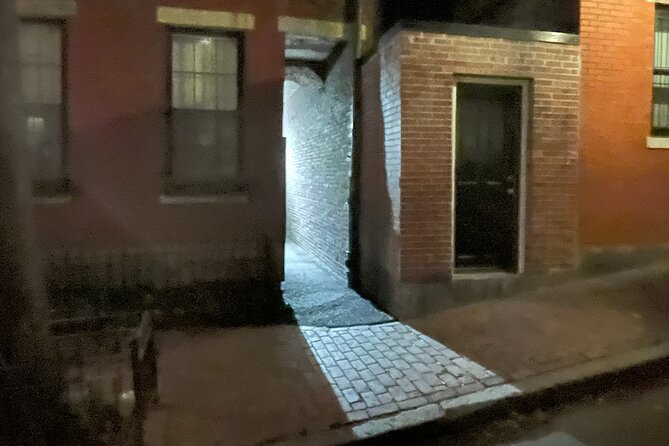
The tour runs at any time during the stated operating hours, from midnight to 11:30 p.m. daily. That gives you plenty of control. You can walk in daylight for easier navigation, or take it at night if that fits your plans. One person found an evening walk added to the mood, though darkness can make route finding less comfortable if you are already having app trouble.
Before leaving the starting point, open the ticket instructions and confirm that you have the correct app and access code. This is the most important practical step. Several codes or confirmation messages can be confusing, and an activation problem is especially unpleasant when you are standing outdoors in winter. Downloading or opening the tour before you reach Charles Street can save you time.
More Walking Tours in the USA:
- Seattle: Guided Underground Walking Tour
★ 4.6 · 2,144 reviews - Chicago: Underground Pedway & Downtown Secrets Walking Tour
★ 4.7 · 268 reviews - NYC: History of Slavery & Underground Railroad Walking Tour
★ 4.7 · 87 reviews
How the Underground Railroad worked in Boston
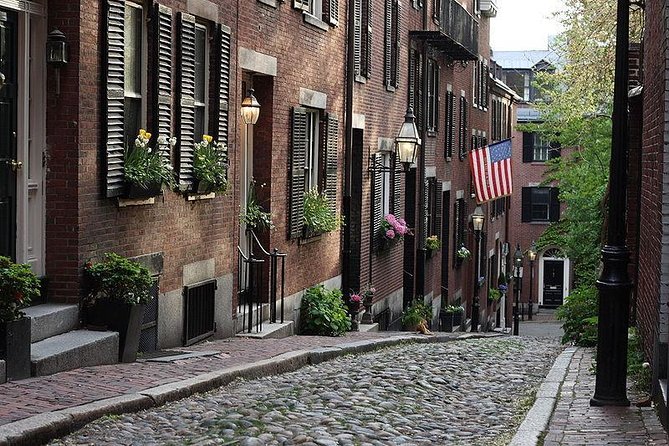
The first part explains how the Underground Railroad operated. The name can mislead you, since this was not a literal railroad beneath the city. It was a loose, secret network of people who offered shelter, information, money, transportation, legal help, or a place to hide.
Boston’s role becomes easier to understand when you connect the national story to actual buildings. Instead of hearing only about famous abolitionists, you stop outside places where people lived and worked. The tour asks you to picture how a private home, boarding house, school, or business could become part of a dangerous escape system.
The narration is produced with several voices, giving the walk a more dramatic feel. You can also access extra material about the people you meet along the way. That feature is useful if one figure catches your interest and you want more context without slowing the main route for everyone else. Since this is a private activity for your own group, you do not need to match another group’s pace.
John J. Smith House and the personal side of resistance
One early stop is connected with John J. Smith, whose home served as a station on the Underground Railroad. Here, the story shifts from the idea of a national movement to the practical work of helping individual people.
You hear about the people Smith assisted and the risks involved in giving them shelter or guidance. This kind of stop is valuable because it shows that resistance was often carried out through ordinary domestic spaces. A house could become a place where someone rested briefly, received directions, or waited for the next safe connection.
The tour is strongest when it links a name to a place. You are not simply asked to remember John J. Smith as an abolitionist. You are standing near the site associated with his work, listening to how that work fit into the wider network.
Harriet Tubman and 83 Phillips Street
The route then brings Harriet Tubman into the story before taking you to 83 Phillips Street, once the home of John Sweat Rock. Tubman is the best-known name on the tour, but the stop does not treat her as the only important figure.
At Rock’s former home, you hear about his many firsts in American history. His career shows how Black professionals and civic leaders contributed to the fight for freedom through more than one path. The Underground Railroad story was not only about secret movement. It also involved education, law, public leadership, medicine, business, and organized resistance.
This stop also helps place Harriet Tubman in a larger circle of people working toward freedom. If you already know Tubman’s basic story, the value here is the connection to Boston’s local figures. If her story is new to someone in your group, the narration offers a clear entry point into the subject.
More Self-Guided Tours in the USA:
- Nerja: Caves of Nerja Entry Ticket with Audio Guide
★ 4.6 · 1,616 reviews - Paris: Catacombs Entry & Seine River Cruise with Audio Guide
★ 4.4 · 1,150 reviews - Paris: Catacombs, Audio Guide, and River Cruise Option
★ 4.6 · 966 reviews - Palma: Caves of Genova Ticket & Digital Audio Guide
★ 3.9 · 820 reviews
Lewis Hayden’s home and the risks of shelter
At Lewis Hayden’s former home, the audio explains how he served as a station master and helped save people fleeing slavery. This is one of the most important stops because it brings the danger of the work into focus.
A station master was not simply a host offering a spare room. Helping freedom seekers could bring legal punishment, financial loss, violence, or public attack. The tour presents Hayden’s house as a place where courageous choices were made under pressure.
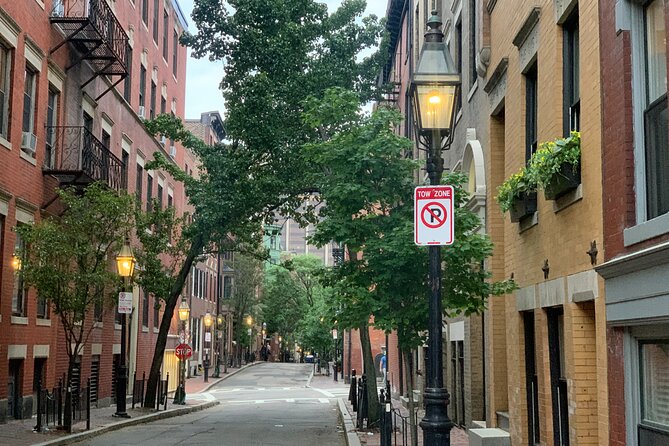
The stop also gives you a better sense of how close these stories are to everyday Beacon Hill streets. You are not visiting an isolated memorial site. You are walking through a neighborhood where homes once carried secret responsibilities. The present-day streets are calm, but the audio asks you to imagine the uncertainty that could surround a knock at the door.
Leonard Grimes and the work of a conductor
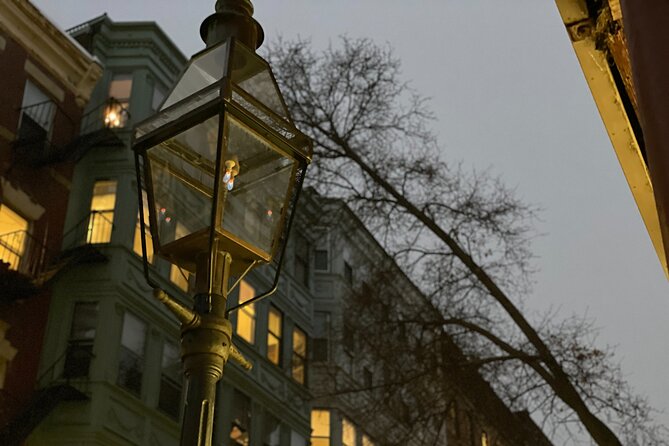
The next stop is associated with Leonard Grimes, a conductor on the Underground Railroad. The word conductor describes someone who helped guide freedom seekers from one point to another, often through a chain of contacts.
This part of the walk reinforces an important fact: escape required more than one brave person. It depended on coordination. A conductor needed information, trusted allies, and a way to move people without drawing attention.
You may find that the audio works best when you pause for a moment at each location instead of rushing to the next arrow. The buildings and streets are not presented as a museum exhibit with large signs explaining everything. The narration supplies the context, so giving each stop a little time makes the physical setting more useful.
The Old Temperance Boarding House
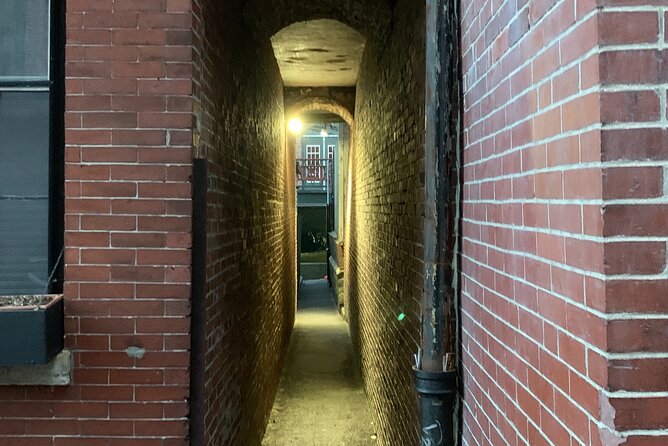
The Old Temperance Boarding House was another stop on the Underground Railroad. A boarding house could offer a less obvious place for someone to stay than a private family home. It also shows how public reform movements and antislavery work sometimes overlapped.
The tour uses this location to broaden the story beyond individual conductors. A network needs places where people can rest, meet, or pass through without immediate notice. The boarding house helps you picture the practical side of an escape, including the need for temporary shelter.
This is also a good point to remember that you are walking in an active city neighborhood. You may be listening closely while other people are moving around you. Keep the volume at a safe level, pause the audio before crossing streets, and use the app’s route arrow rather than relying only on memory.
The Phillips School and integrated education
The route passes the former site of the Phillips School, described as the first integrated school in Boston. It also had the first African American teacher to teach in an integrated school.
This stop adds education to the tour’s larger story. Schools were not just places for children. They reflected arguments about citizenship, equality, race, and who had the right to participate fully in public life.
The school’s place in the walk helps you see that freedom work did not end when someone escaped slavery. Education and equal treatment were part of the longer struggle. The tour makes that connection without leaving Beacon Hill, using a former school site to show how local institutions could become battlegrounds.
For families, this may be one of the easiest stops to discuss. Children may connect more readily with the idea of a school than with the legal or political details of the Underground Railroad. The audio’s mix of narration and extra information also lets adults continue learning without turning the whole walk into a formal lecture.
Vilna Shul and Jewish assistance
You also pass the Vilna Shul, the oldest immigrant synagogue in Boston. Here, the story turns to the Jewish community and the help it provided to the Underground Railroad.
This stop is important because it resists the idea that the movement belonged to one group alone. Abolitionist work depended on cooperation across communities, even when that cooperation carried real danger.
The Vilna Shul itself adds another layer to Beacon Hill’s past. You are hearing about Black freedom seekers, abolitionists, and Jewish immigrants within the same neighborhood walk. That combination makes the route feel less like a list of famous names and more like a picture of overlapping communities.
The tour takes you past the building rather than promising an interior visit. Plan on an exterior history walk throughout. The value is in the story tied to the location, not in entry to each site.
John Coburn’s home and gaming house
At the former home of John Coburn, the narration explains his role as a station master. The location also housed his gaming house, an unexpected detail that makes the stop memorable.
Coburn’s business and abolitionist work show how people could occupy several roles at once. He was not presented as a figure who lived only inside a formal reform organization. His public life included a commercial space that became connected with the Underground Railroad.
This stop gives the walk a useful change of pace. After homes, schools, and religious sites, you encounter a place tied to business and social activity. It reminds you that the network could pass through ordinary public life, not just quiet rooms.
Charles Sumner’s birthplace
The route also stops near the birthplace of abolitionist Charles Sumner. Sumner represents the political side of the antislavery movement, adding a public voice to the private acts of shelter and transport described elsewhere.
By this point, the tour has introduced conductors, station masters, teachers, community supporters, and political figures. The birthplace helps connect those local stories to the national debate over slavery and freedom.
You should not expect a long indoor visit at each location. The tour is designed as an outdoor walk, with the audio doing most of the interpretation. That makes it efficient and affordable, but it also means you will want to read building plaques or arrange separate visits if you want extensive architectural or museum detail.
Ending at the African American Meeting House
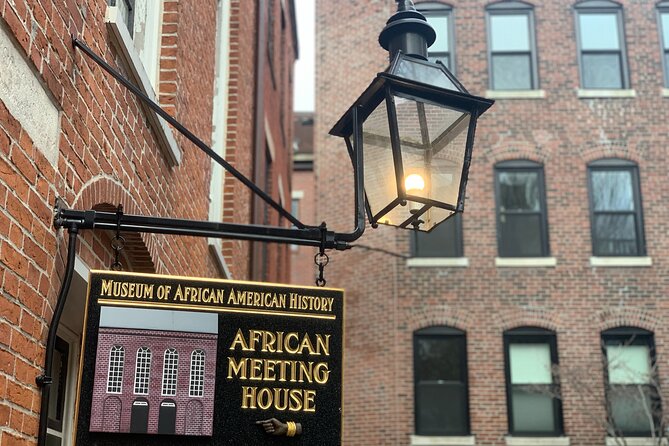
The walk ends at 46 Joy Street, at the African American Meeting House. It is identified as the oldest surviving Black church building in the United States.
This is a fitting final stop because the building brings together faith, community organizing, abolitionism, and Black civic life. After hearing about people using private homes and informal stations, you finish at a place that represents an established institution with a public role.
The ending also gives you a clear sense of progress. You begin at the Charles Street Meeting House and finish at a major site of Black history in Beacon Hill. The route is compact enough to fit into a morning or afternoon, yet full enough to provide a focused look at Boston’s Underground Railroad connections.
Price, timing, and practical value
At $9.75 per person, this is an inexpensive way to spend about 45 to 55 minutes in central Boston. You are paying for location-aware audio, scripted narration, route guidance, and extra information rather than for a live guide.
I see the strongest value for independent visitors who like to stop often, listen again, or fit a tour between other plans. You can begin whenever you want, and your group does not have to wait for a scheduled departure. That flexibility is especially useful if you are combining Beacon Hill with nearby sights.
The tradeoff is that you are responsible for your phone, app, battery, internet access as needed, and navigation. The app’s arrow can help you recover if you drift off course, but the experience is less forgiving when you have not activated the ticket correctly.
Wear comfortable shoes. The route includes hills, and you should bring water and perhaps a snack, especially in warm weather. Boston’s weather can change quickly, so dress for the conditions rather than assuming a short walk will feel easy.
The tour is offered in English only. Service animals are allowed, public transportation is nearby, and most people can participate. Since this is a private activity, only your group takes part, but there is no live guide to answer questions on the spot.
Who should book this Beacon Hill walk?
I would choose this tour if you want a focused introduction to Black history in Boston and prefer controlling your own pace. It suits families, friends, and couples who enjoy listening while walking and pausing to discuss what they hear.
It is also a good pick for someone who has already walked Boston’s better-known historic routes and wants a narrower subject. The emphasis on Underground Railroad locations, Black abolitionists, the Phillips School, and community support gives the walk a distinct purpose.
I would hesitate if you dislike smartphone tours, need a live guide, or want access to the interiors of historic buildings. You should also allow a little setup time before reaching the starting point. Most route problems can likely be avoided by opening the ticket instructions, installing the correct app, and testing the access code in advance.
Should you book it?
Book this Beacon Hill audio walk if you value specific places and personal stories more than polished museum displays. For $9.75, it offers a useful, flexible history lesson with a strong route and a meaningful final stop at the African American Meeting House.
Skip it if app setup sounds stressful or if your group needs constant live guidance. For everyone else, bring comfortable shoes, water, a charged phone, and enough patience to let the locations and voices do their work.
FAQ
Where does the tour begin?
The tour begins at the Charles Street Meeting House, located at 70 Charles Street in Boston.
Where does the tour end?
It ends at 46 Joy Street, at the African American Meeting House.
How long does the walking tour take?
The tour takes approximately 45 to 55 minutes.
How much does the tour cost?
The listed price is $9.75 per person.
Is the tour guided by a person?
No. It is a self-guided audio tour accessed through your phone and the WalknTours app.
What language is available?
The tour is offered in English.
Can I start the tour whenever I want?
Yes. The tour is available daily from 12:00 a.m. to 11:30 p.m., so you can choose your start time within those hours.
What historic places are included?
The route includes locations connected with John J. Smith, John Sweat Rock, Lewis Hayden, Leonard Grimes, the Old Temperance Boarding House, the former Phillips School, Vilna Shul, John Coburn, Charles Sumner, and the African American Meeting House.
Is the tour suitable for most people?
Most people can participate, but the route includes walking and hills. Comfortable shoes, water, and attention to the weather are sensible.
Can I cancel for a full refund?
Yes. You can receive a full refund if you cancel at least 24 hours before the experience start time. Cancellations or changes made within 24 hours are not refunded.
More Audio Tours in the USA
- Rome: Navona Square Underground Ticket with Audio Guide
★ 4.0 · 518 reviews - Rome: Guided Catacombs Tour & Capuchin Crypt (Audio Guide)
★ 4.3 · 191 reviews - Margaret River: Self-Guided Audio Tour of Mammoth Cave
★ 4.7 · 48 reviews
Just added around the USA
- Peninsula Park Caves Scenic Boat Tour★ 4.5 · 88 reviews
- Cave Point Kayak Tour★ 4.5 · 92 reviews
- Cave Point Kayak Tour★ 5.0 · 281 reviews
- Cave Point Kayak Tour★ 5.0 · 24 reviews
- Flagstaff Underground★ 5.0 · 39 reviews
- Snowshoe Hike to Castner Glacier Ice Cave★ 5.0 · 35 reviews
- Castner Glacier Ice Cave Adventure from Fairbanks★ 5.0 · 40 reviews
- Glacier Hiking & Geothermal Cave Pools Tour★ 5.0 · 139 reviews
Audio Tours, compared.

Nerja: Caves of Nerja Entry Ticket with Audio Guide
Read our review →
Paris: Catacombs Entry & Seine River Cruise with Audio Guide
Read our review →
Paris: Catacombs, Audio Guide, and River Cruise Option
Read our review →
Palma: Caves of Genova Ticket & Digital Audio Guide
Read our review →
Rome: Navona Square Underground Ticket with Audio Guide
Read our review →
Rome: Guided Catacombs Tour & Capuchin Crypt (Audio Guide)
Read our review →
Browse the lists this tour appears in