
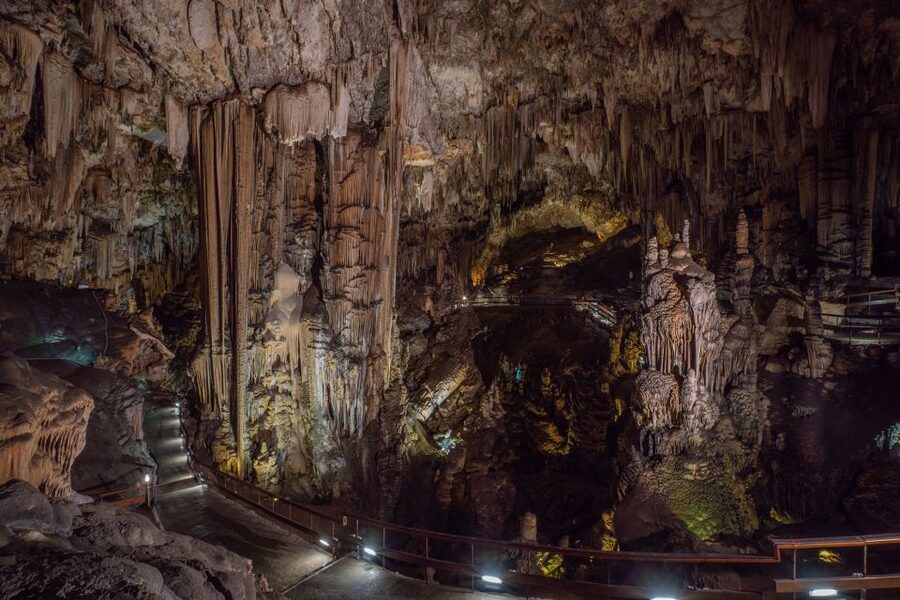
REVIEW · TICKETS
Nerja: Caves of Nerja Entry Ticket with Audio Guide
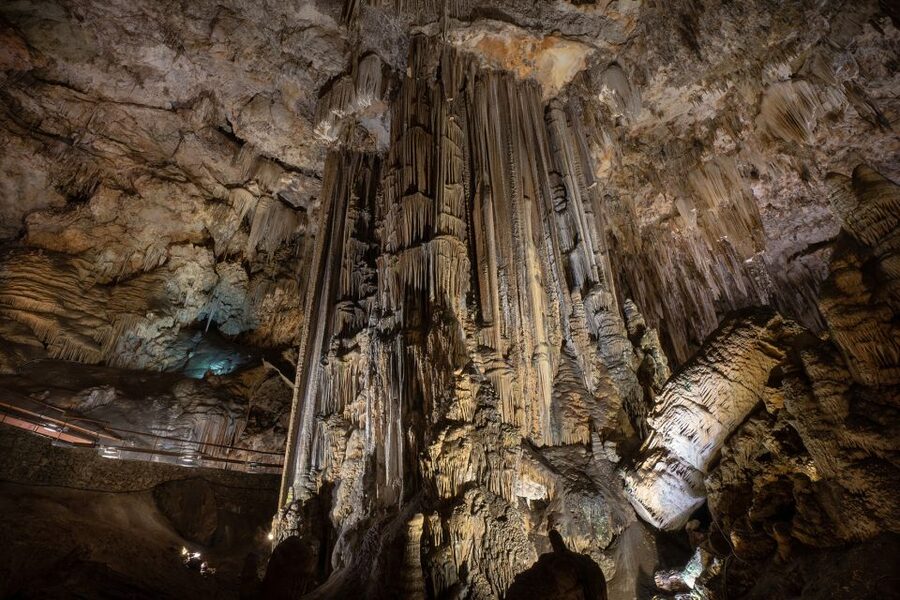
The biggest surprise here is the scale. The Nerja Caves are not a quick peek into a narrow tunnel, but a grand sequence of chambers filled with towering columns, hanging formations, and ceilings that make you feel very small. I love that you can move at your own pace, and I love that the $18 ticket also includes the museum and 360º virtual reality room.
The one catch is the audio guide. It runs through a phone app rather than automatically handing you a device, so download it before arrival and bring earbuds. You also need to be comfortable with many stairs, including a steep climb out of the caves.
Key points to know before you go
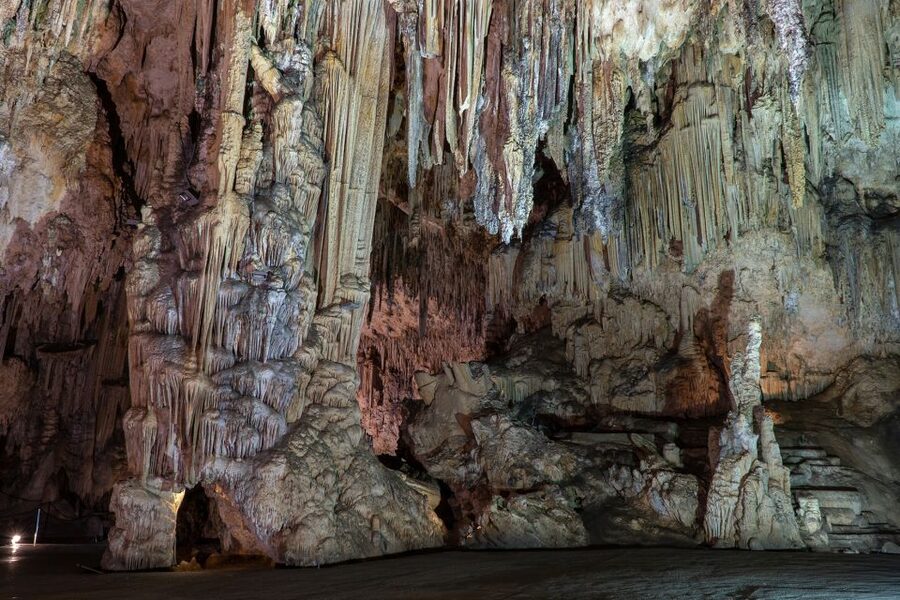
- The Cataclysm Room is the star of the visit: This huge chamber contains the world’s largest cave column, formed where a stalactite and stalagmite met.
- Your phone is the audio guide: Download the app on Wi-Fi before entering, and bring headphones or earbuds.
- The museum adds the human story: It explains the cave’s archaeology, geology, biology, and long record of human use.
- The cave paintings are not easy to see: Preservation rules mean the paintings are not lit for close viewing, so the museum helps fill that gap.
- The VR room is included: A 360º presentation recreates life on Earth 35,000 years ago.
- Plan for stairs and uneven walking: This is not suitable for wheelchair users or people with limited mobility.
Why Nerja’s caves feel so much bigger than expected
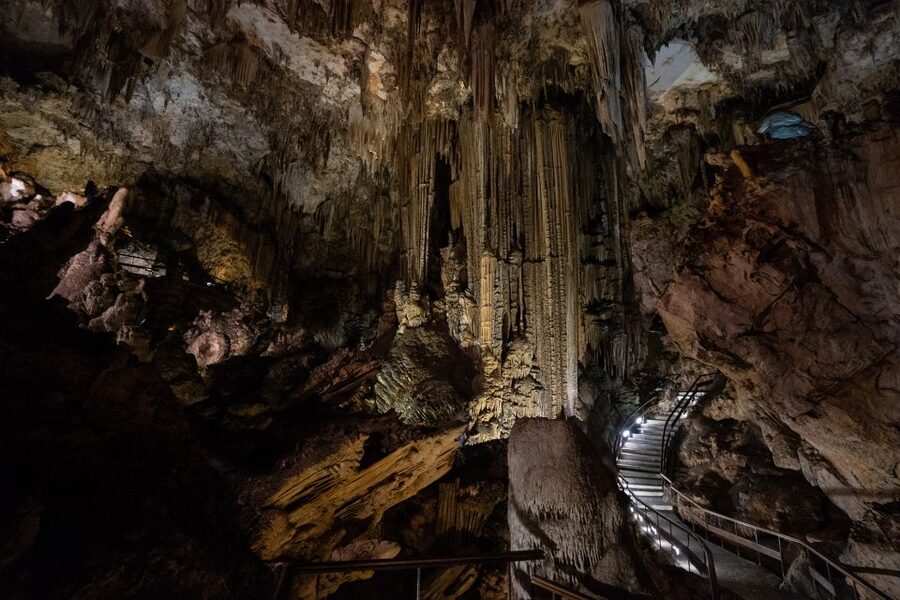
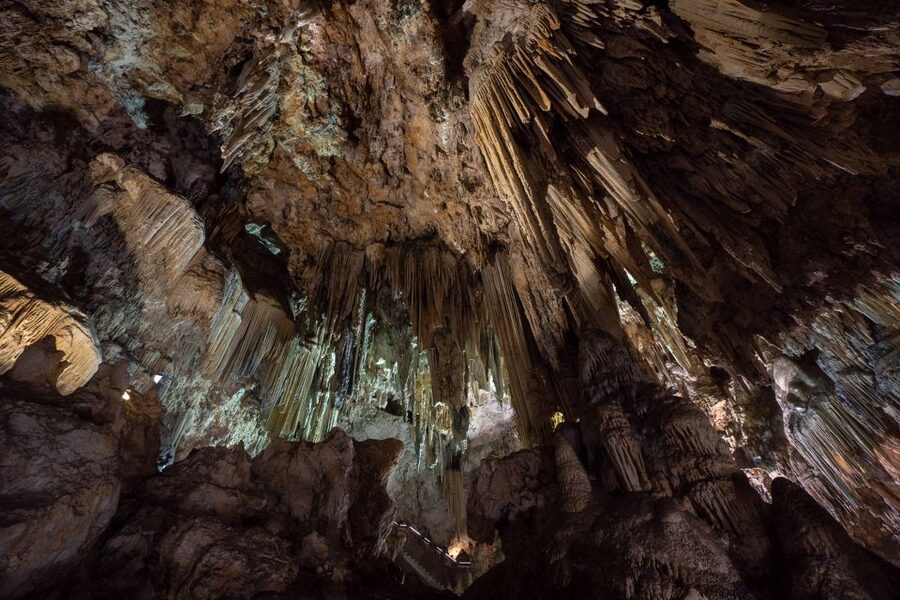
Many cave visits offer one chamber, a few formations, and a quick walk back outside. Nerja is different. The public route leads through a chain of enormous rooms, with high ceilings and formations that look more like frozen waterfalls than ordinary rock.
The caves were discovered in 1959 and have since become an important site for archaeological, geological, and biological study. Some areas remain closed to protect them, so you are seeing only part of the underground system. That restraint is a good thing: these formations took vast amounts of time to develop, and careless lighting, touching, or extra foot traffic could damage them.
You begin with a route through the cave chambers, following marked walkways and numbered points for the audio commentary. The path is maintained and lit, although one section may feel dim to visitors who prefer bright walkways. The low light helps preserve the atmosphere, but you should watch your footing and use the handrails where needed.
The scale keeps changing. One room may feel intimate, then the next opens into a space with ceilings around 20 meters high. The contrast makes the cave memorable. You are not simply looking at stalactites and stalagmites in a display case. You are walking through the place where they formed.
More Self-Guided Tours in Spain:
- Palma: Caves of Genova Ticket & Digital Audio Guide
★ 3.9 · 820 reviews - Paris: Catacombs Entry & Seine River Cruise with Audio Guide
★ 4.4 · 1,150 reviews - Paris: Catacombs, Audio Guide, and River Cruise Option
★ 4.6 · 966 reviews
The Cataclysm Room and the giant central column
The route builds toward the Cataclysm Room, the largest and highest chamber open to the public. This is where the cave’s headline formation appears: a massive column created when a stalactite growing down from the ceiling met a stalagmite rising from the floor.
The term column matters. A stalactite hangs from the ceiling, a stalagmite rises from the ground, and when the two join, they form a column. At Nerja, this feature reaches an extraordinary scale and gives the chamber its sense of drama.
Take your time here. It is easy to walk through while looking only at the biggest formation, but the walls and ceiling are packed with smaller shapes. Look for rippled surfaces, thin mineral curtains, ridges, and clusters of pointed forms. The audio commentary helps you notice how the cave developed instead of treating every formation as the same.
Photography is allowed along the public route, but the low light can make pictures less impressive than the real thing. I would use your camera as a record, then put it away for a few minutes. The size of the rooms is easier to appreciate with your own eyes than through a small screen.
Using the audio guide without losing the quiet
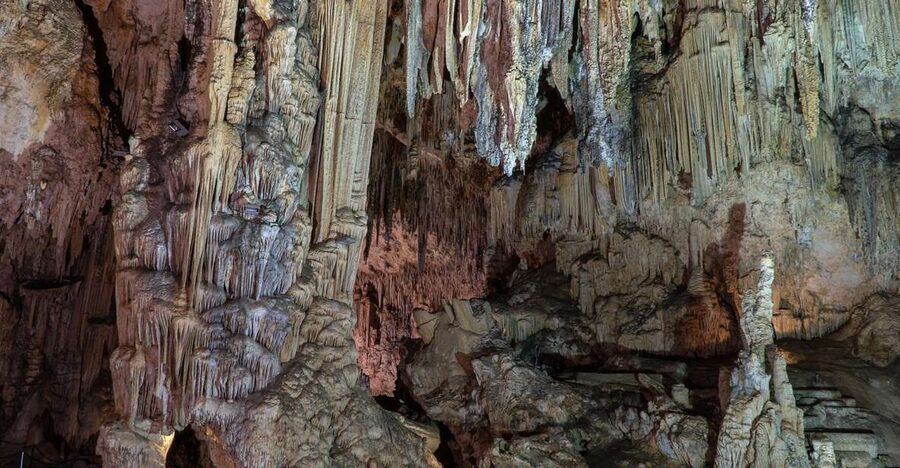
The self-guided format is one of the best parts of this ticket. You do not have to stay beside a guide or move with a fixed group. Stop when a formation catches your attention, listen to the relevant number, and continue when you are ready.
The commentary is available in English, Spanish, German, Arabic, Chinese, French, Dutch, Italian, Japanese, Korean, Norwegian, Polish, Portuguese, Russian, and Swedish. A children’s audio guide is offered in Spanish and English, which gives families a way to make the visit more approachable for younger children.
The system does require a little preparation. The audio guide is accessed through an app on your phone, and the connection or download may be unreliable inside the cave. Download everything before you arrive, test it while you still have Wi-Fi, and bring earbuds. If you rely on your phone speaker, you may disturb the quiet atmosphere and struggle to hear the commentary.
The numbered stations can be easy to miss if you are walking quickly. Keep an eye out for them, and do not assume the audio will start on its own. A few minutes of preparation makes the whole visit much smoother.
There is a useful balance here. You get facts about the cave’s formation, discoveries, and human past, but you can still enjoy long stretches without commentary. That quiet matters. You hear your footsteps, notice the damp air, and take in the size of the chambers without a guide talking over every moment.
Cave paintings, archaeology, and what you can actually see
The caves contain archaeological evidence and paintings linked by some sources to Neanderthal-era humans. That claim makes the site more than a geological attraction. It connects the rock formations to people who lived in this region thousands of years ago.
Do not expect to walk up to brightly lit cave art. The paintings are difficult to see on the public route because lighting them can speed up their deterioration. Some people may not see any at all, even after listening to the commentary.
That is not a reason to skip the site, but it is worth adjusting your expectations. The most visible wonder is geological, while the human evidence is easier to understand through the museum. If you arrive expecting a gallery of clear prehistoric drawings, you may be disappointed. If you treat the paintings as part of a larger archaeological story, the visit makes more sense.
The cave is described as a natural laboratory because several fields meet here. Water shaped the rock, minerals formed the columns and draperies, animals and plants contributed to the underground environment, and humans used the space over long periods. The audio guide gives you a way to connect those pieces.
Same corner of the map, a different way in:
- Porto Cristo: Caves of Hams Entry Ticket
★ 4.2 · 6,548 reviews - Mallorca: Caves of Drach Day Trip & Optional Caves of Hams
★ 4.3 · 2,720 reviews - Madrid: La Cueva de Lola Flamenco Show Tickets with Drink
★ 4.8 · 2,567 reviews - Lanzarote: Timanfaya Park, Jameos Agua, & Cueva Verdes Tour
★ 4.5 · 2,393 reviews
The Museum of Nerja fills in the missing details
The museum is included in the ticket and is worth setting aside real time for. It provides context that the dark cave cannot easily deliver, especially regarding excavation, human occupation, and the paintings.
I would visit it either before or after the cave, depending on your schedule. Seeing the museum first can give you a framework for the underground route. Visiting afterward lets you make sense of details you noticed below ground.
Do not rush through it simply because the cave is the main attraction. One visit can take around half an hour if you walk briskly, but you can spend much longer if you listen to the audio and stop at the numbered points. The museum deserves at least a thoughtful visit, especially if archaeology interests you.
The museum is also the better place to understand the cave art. Since the original paintings are kept in very low light, the exhibits can give you a clearer sense of what was found and why the site matters.
The 360º virtual reality room
The virtual reality presentation is a strong addition to the ticket because it changes the kind of experience you are having. Inside the cave, you observe the physical space around you. In the VR room, you are given a first-person view of life on Earth 35,000 years ago.
The presentation lasts only a short part of the day, but it helps connect the cave to its ancient human setting. Instead of seeing the site only as a geological wonder, you get a visual idea of the people and conditions associated with its past.
This is particularly useful for children, who may not have the patience for a long explanation about mineral deposits and excavation. Adults tend to appreciate it too, though you should not confuse it with a live archaeological demonstration. It is a digital presentation, not a reconstruction you can physically explore.
Several visitors have found the VR room one of the best-value parts of the ticket. I would not skip it simply because the cave itself is the main event. It provides a different way to understand the place.
Timing your visit for a quieter cave
Your ticket is valid for one day, with an assigned starting time selected from the available schedule. Going early is a smart choice if you want the public route to feel calmer and less rushed.
The site manages entry times, which helps control crowding inside the chambers. Still, the caves can feel busier at popular times, and a quieter route gives you more freedom to stop for the audio points and take photographs.
If you arrive late in the day, leave enough time for the museum and VR room. Some facilities may close after the final cave entry, so an early or mid-morning visit gives you more breathing room.
The cave temperature can feel warm and humid, though conditions vary by person. A light jacket is sensible because it is listed among the recommended items, but do not expect a cold mountain cavern. Comfortable clothes, sturdy shoes, and water are the practical basics.
The site also has a café and terrace with views toward Nerja and the Mediterranean. This makes a useful pause before or after the cave, particularly if you have climbed the stairs and want to sit down. Gardens and a large play structure add appeal for families.
Getting around and handling the stairs
The cave route includes many steps and walkways. The exit involves a steep climb, with roughly 100 steps in one section according to on-site experience. You should be able to manage stairs comfortably before booking.
This experience is not suitable for wheelchair users or people with mobility impairments. Even visitors who normally walk without trouble should wear comfortable shoes and avoid treating the route as a quick sprint.
If you are staying in Nerja, you may see a red tourist train used to connect the town and the cave area. Walking is possible, but the final hill toward the caves can be steep. If you are driving, allow time for parking and check the payment instructions before leaving, since the exit process may not be immediately obvious.
The public route is well marked and has handrails in places. That makes it manageable for able-bodied visitors, but it does not remove the physical demands. You should also keep children close on the stairs and darker sections.
Is $18 good value?
At $18 per person, this is a strong-value admission for a major natural site. The price includes the cave, the multilingual phone audio guide, the Museum of Nerja, and the VR room. If you use all four parts, you are getting more than a single walk underground.
The value depends on how you visit. Someone who rushes through the cave in 30 minutes, skips the museum, and misses the VR presentation is leaving part of the ticket unused. Someone who spends an hour or two examining the chambers, then visits the museum and digital presentation, gets much more for the same price.
The pre-booked entry also saves you from relying on tickets being available at the gate. It does not remove every bit of preparation, since you still need to handle the audio app, but it makes the main admission simpler.
Parking may cost extra, so include that in your budget if you are driving. The café, transport, and any photographs or extras are also separate considerations. Even with those costs, the core admission remains reasonable for the size of the site and the extra museum and VR access.
The ticket is non-refundable, so check your plans carefully before booking. That matters most if your schedule depends on weather, transport, or a large group.
Who will enjoy this most?
I would recommend this experience to anyone interested in natural formations, archaeology, or unusual family activities. The giant chambers impress adults, the audio gives structure to the visit, and the VR presentation helps keep children interested.
It also works well on a rainy day because most of the visit takes place indoors. The cave stays visually impressive in any weather, though reaching it may require a walk or drive through changing conditions.
You may want to choose another activity if you have limited mobility, dislike stairs, or want a fully guided tour with a person leading the group. The audio guide gives you information, but it does not offer the same direct help as a guide standing beside you.
I especially like this ticket for independent visitors. You can walk slowly, pause at the formations, and decide how much time to give the museum. The freedom is useful, but only if you prepare the app and accept responsibility for following the numbered stations.
Should you book the Nerja Caves ticket?
Book it if you want to see one of Andalusia’s most dramatic natural sights without paying for a long guided excursion. The cave’s size, the Cataclysm Room, and the giant column justify the visit on their own. The museum and VR room make the $18 price even easier to recommend.
Go early, download the audio guide before arrival, bring earbuds, and allow more than 30 minutes if you want to appreciate the formations. Skip it only if stairs are a serious problem or if you are looking for a personal, live guide rather than a self-guided route.
FAQ
What does the Nerja Caves ticket include?
The ticket includes entry to the Nerja Caves, a mobile audio guide, a children’s audio guide in Spanish and English, entry to the Museum of Nerja, and access to the 360º virtual reality room.
How much does the experience cost?
The listed price is $18 per person.
How long is the ticket valid?
The ticket is valid for one day. You choose from the available starting times when checking availability.
Which languages are available for the audio guide?
The audio guide is available in English, Spanish, German, Arabic, Chinese, French, Dutch, Italian, Japanese, Korean, Norwegian, Polish, Portuguese, Russian, and Swedish.
Do I need to download an app for the audio guide?
Yes. The audio guide is accessed through a phone app. Download it before you arrive, preferably while connected to Wi-Fi, and bring earbuds or headphones.
Is the cave suitable for wheelchair users?
No. The experience is not suitable for wheelchair users or people with mobility impairments, and the route includes many stairs.
Are the cave paintings easy to see?
No. The paintings are not brightly lit because lighting can contribute to their deterioration. The Museum of Nerja offers a better way to understand the cave art and its archaeological setting.
Just added around Spain
- From Granada: Skip-the-Line Nerja Cave and Frigiliana★ 4.9 · 22 reviews
- Granada: Sacromonte Caves Flamenco Show★ 4.5 · 84 reviews
- From Denia: Boat Trip to Tallada Cave with Optional Swim★ 3.6 · 376 reviews
- Jalon Valley and The Cave of Skulls Tour★ 4.3 · 35 reviews
- Explore Málaga and the Treasure Caves by Electric Car★ 4.9 · 26 reviews
- Estany d’en Mas: Coastal Hike, Abseil & Sea Cave Exploration★ 4.9 · 162 reviews
- Moraig: Kayak Excursion to Moraig & Cave peces-testos★ 4.9 · 148 reviews
- E-Bike Mountain Tour in Natural Park +Option Tapas in a Cave★ 4.7 · 63 reviews
Tickets, compared.
Naples: Naples Underground Entry Ticket and Guided Tour
Read our review →
Krakow: Wieliczka Salt Mine Tour with Entry Ticket
Read our review →
Naples: Catacombs of San Gennaro Entry Ticket & Guided Tour
Read our review →

Krakow: Wieliczka Salt Mine Fast-Track Ticket & Guided Tour
Read our review →
From Krakow: Wieliczka Salt Mine Tour & Skip the Line Ticket
Read our review →
Krakow to Wieliczka: Salt Mine Guided Tour with Ticket & Transfer
Read our review →
Rome: Catacombs of St. Callixtus Entry Ticket & Guided Tour
Read our review →Browse the lists this tour appears in