
REVIEW · WALKING
Budapest: Street Art and Underground Movements Walking Tour
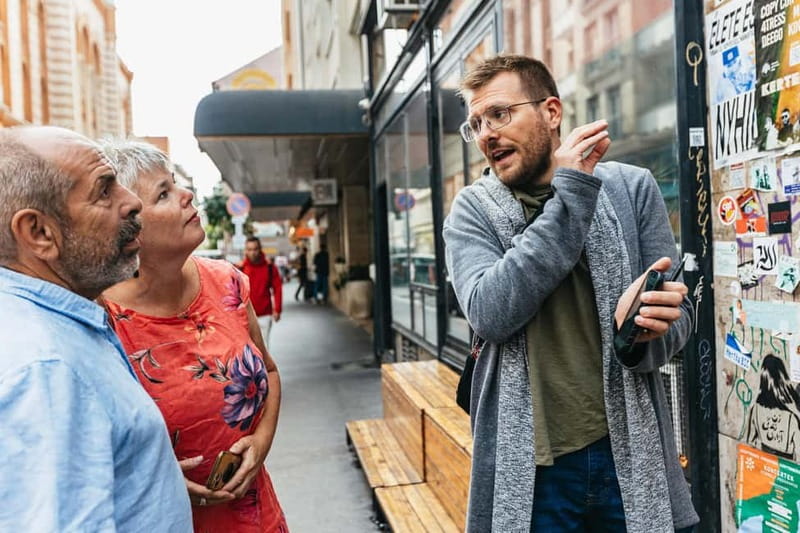
Budapest’s street art is easy to miss. A tiny sticker, paste-up, stencil, or bronze figure may say as much about the city as a grand building. This two-hour walk with ET or Suzie trains your eye to notice those small details, then connects them to local politics, culture, and underground movements.
I like the small group, limited to eight people, because it keeps the walk conversational. I also like the practical follow-up: ET may provide artist names, social links, an interactive map of Kolodko mini sculptures, and tips for the rest of your stay. The main drawback is that street art changes constantly, so the exact works and route can vary.
Key points at a glance
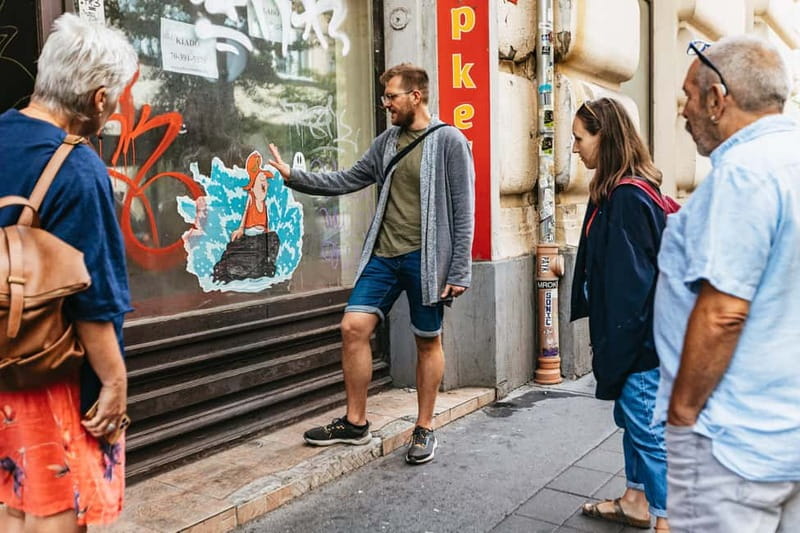
- Look beyond murals: The walk includes stickers, paste-ups, graffiti, public art, lettering, sculptures, and other small works.
- Meet at Telep-Art Galéria: Begin in a distinctive bar and gallery covered with stickers, a fitting launch point for the subject.
- Explore the Jewish and Elizabeth quarters: These streets provide the setting for much of the tour’s art and social commentary.
- Ask questions freely: Groups are capped at eight, and ET shapes the discussion around the people in front of him.
- Get useful extras: Depending on the guide and day, you may visit a bookshop, café, or ruin bar, then receive a summary after the walk.
- Book early in your stay: The guide’s suggestions for food, art, and further stops can help shape the rest of your Budapest visit.
Why Budapest street art is worth two hours
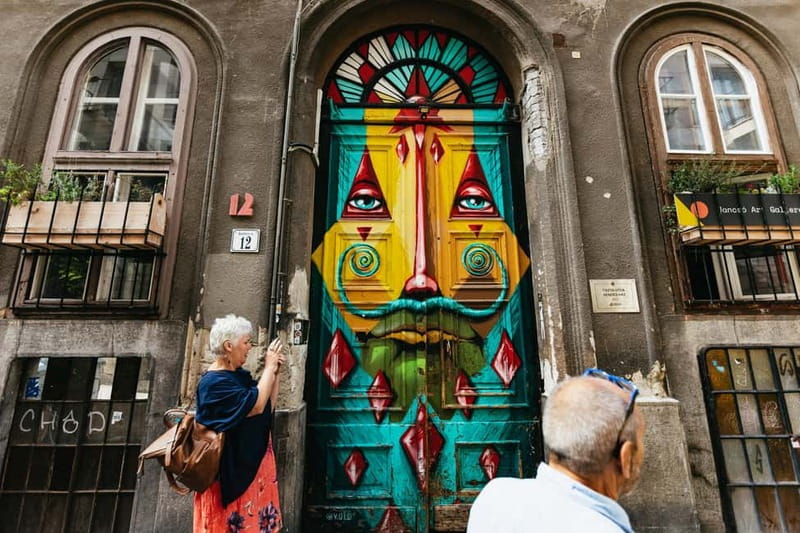
The best reason to take this tour is simple: it changes how you walk through Budapest. You may arrive expecting large painted walls. Instead, you learn to watch for stickers on signposts, paste-ups near doorways, small sculptures, and lettering that can vanish under a new coat of paint.
That matters because street art is not fixed museum art. It can be altered, removed, covered, or replaced. The guide explains the work in front of you, but also gives you a way to read the next piece you find on your own.
The subject reaches beyond decoration. The walk covers social, cultural, and political messages, along with the artists and movements behind them. It offers a different view of Budapest’s recent culture, especially in parts of Pest where nightlife, old Jewish Quarter streets, tourist businesses, and local creative scenes all meet.
I would not choose this as your only introduction to Budapest. It does not replace the Parliament, Buda Castle, thermal baths, or the city’s major museums. But it makes a fine companion to those sights because it shows the city at street level, where public debate and humor often appear in small, easily missed forms.
More Street Art Tours in the world:
- Granada: “Street Art & The Caves” Unique Guided Walking Tour
★ 5.0 · 27 reviews
Starting at Telep-Art Galéria
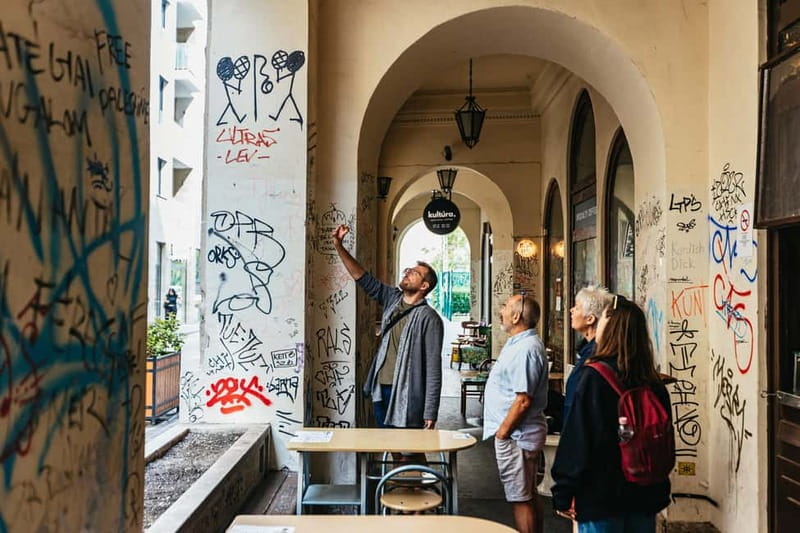
The meeting point is Telep-Art Galéria, a bar and gallery with stickers across its walls. That setting does useful work before the walk even begins. You start surrounded by the kind of visual language the tour will ask you to notice outside.
The group is small, with no more than eight participants. That limit is important here. Street art requires pointing out details, moving close to walls, and pausing for questions. A large group would make that harder. With eight or fewer, you can hear the guide and take part in the discussion without feeling like you are in a parade.
ET leads many departures, and Suzie also guides the experience. ET brings an academic background in street art movements, along with personal links to the local scene and community work. Suzie’s tours receive the same kind of praise for friendly explanations and a clear grasp of the subject.
The tone is informal, but the material is not shallow. ET is known for opening conversations, learning a little about the group, and adjusting the walk to the people present. That can make the outing feel personal rather than rehearsed.
Through Erzsébetváros and the old Jewish Quarter
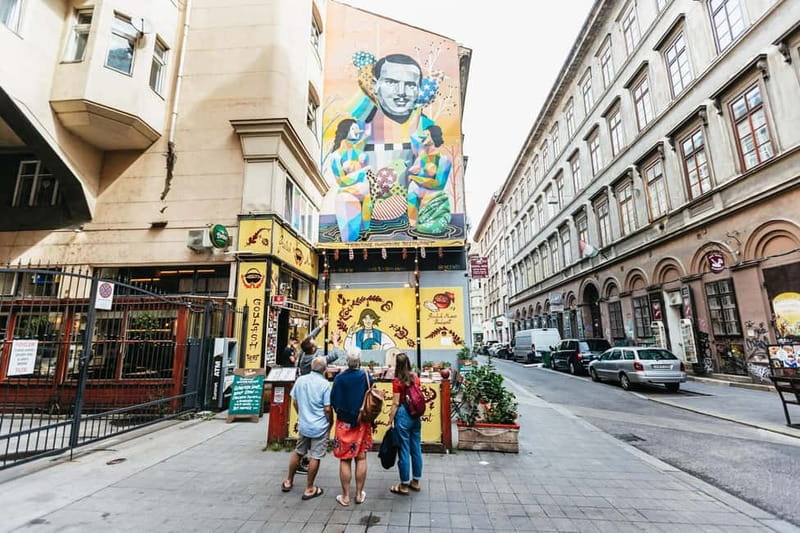
Much of the walk takes place around Erzsébetváros, often called the Jewish Quarter. This is a useful area for the subject because its streets combine historic buildings, nightlife, independent businesses, public art, and a large amount of unofficial work.
You may stop for a large mural, but do not expect the tour to focus only on commissioned walls. ET points out the quieter pieces that many people walk past. Stickers and paste-ups are especially important because they are small, quick to place, and often carry a sharp message in very little space.
The tour also puts the art into local context. A symbol or phrase can mean more when you know something about the neighborhood, a public debate, or the wider movement it belongs to. You are not simply told that a work is attractive. You learn who made it, how it was produced when that information is available, and what it may be trying to communicate.
The exact route is not guaranteed, and that is a strength as much as a limitation. Street art changes. A wall may be painted over, a sticker may disappear, and a new work may appear overnight. The experience is best understood as a guided reading of the city rather than a fixed checklist of permanent monuments.
From stickers to bronze sculptures
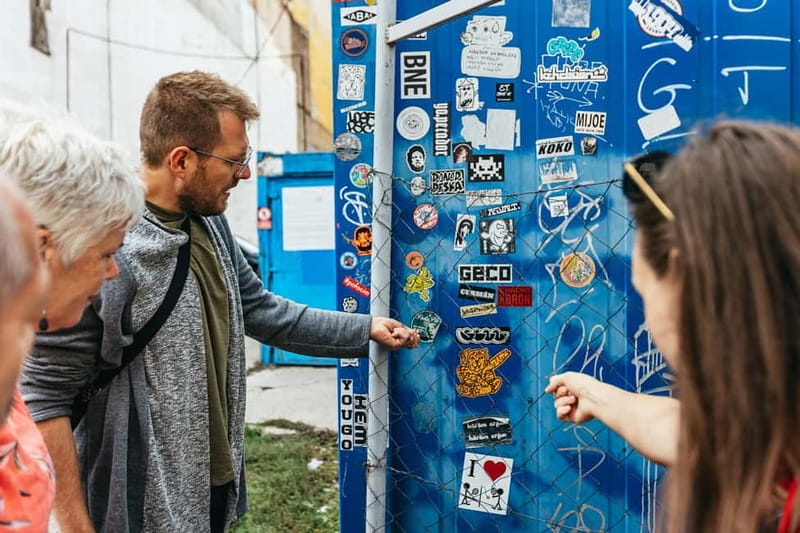
One of the tour’s most useful lessons is that street art has no single look. You can see stickers, graffiti, paste-ups, public art, lettering, and bronze sculptures in the same outing.
That range suits beginners. If you know little about urban art, you do not need to arrive with a list of artists or a vocabulary of techniques. The guide gives you enough background to understand what you are seeing, then encourages you to look more closely.
It also helps experienced art lovers. A person who has taken mural walks in other cities may find Budapest’s sticker culture and local movements different from the usual large-scale painting route. The emphasis on small works gives the walk a more investigative feel.
Kolodko mini sculptures receive special attention in the follow-up material. These small figures are easy to seek out after the tour, and an interactive map can help you plan your own hunt. That is a good example of the experience’s value: the two-hour walk can continue for the rest of your trip without adding another guided activity to your schedule.
More Walking Tours in the world:
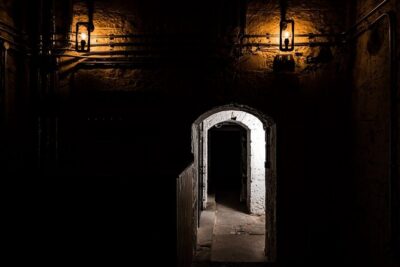
- Underground Vaults Walking Tour in Edinburgh Old Town
★ 4.5 · 8,506 reviews - Cagliari: Underground Cagliari Walking Tour
★ 4.7 · 2,329 reviews - Seattle: Guided Underground Walking Tour
★ 4.6 · 2,144 reviews - Waitomo Caves: Ruakuri Glowworm Cave Guided Walking Tour
★ 4.7 · 1,249 reviews
The social and political side of the walk
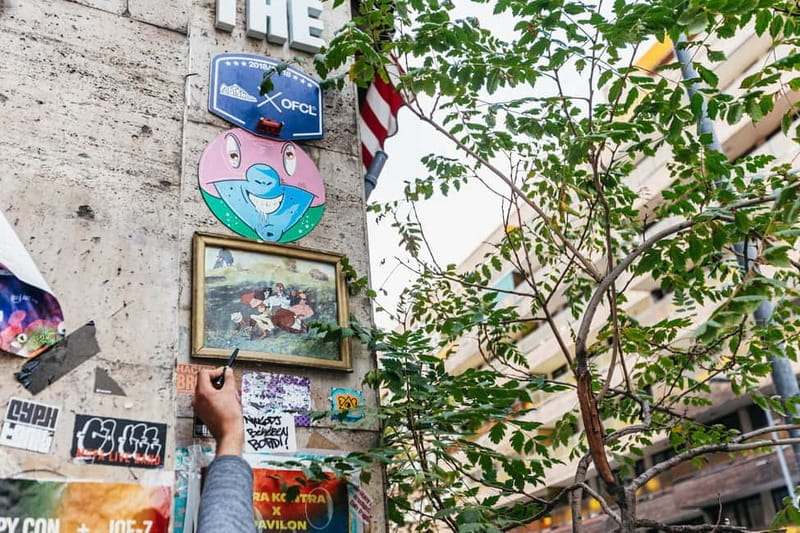
The title promises underground movements, and the tour takes that part seriously. Street art often works as public commentary. It can question authority, respond to current issues, support a group, mock a social habit, or simply claim space in a city where commercial messages fill many walls.
You should expect discussion, not a lecture on every major event in Hungarian history. The guide uses the art as a way into Budapest’s contemporary culture and recent past. That is especially useful if you want to understand how younger artists and local communities express themselves outside formal galleries.
The experience also raises a practical question about tourism. Urban art can bring attention to neighborhoods, but it can also turn local creative work into a backdrop for quick photographs. ET’s approach includes respect for the urban environment and the people who live there. That perspective gives the walk a useful ethical edge without making it heavy or academic.
Because the group includes people from different countries, conversation can become part of the outing. ET encourages questions and international discussion, so you may hear how similar art functions in other cities. If you prefer a quiet walk with little interaction, this may feel more social than expected.
Extra stops that make the route memorable
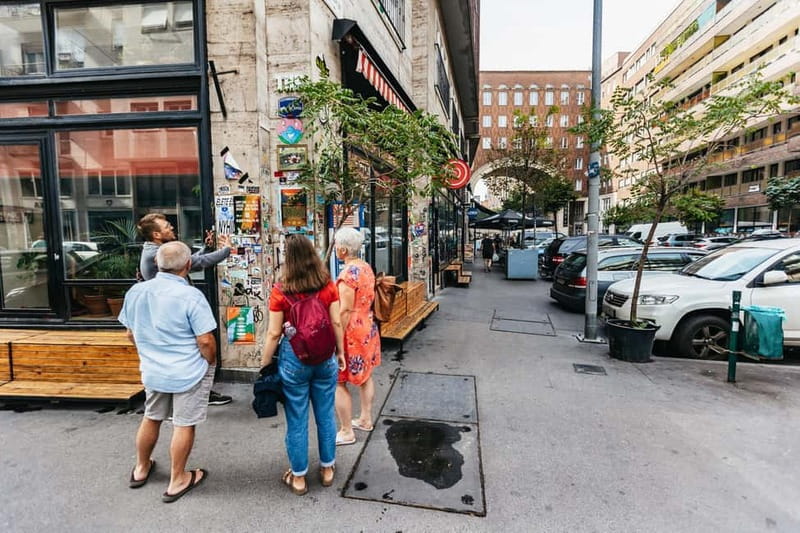
The main value is the art, but the occasional side stop adds texture. Depending on the group and day, the walk may include a café, local bookshop, or ruin bar.
A stop at Szimpla Kert has been particularly useful in the daytime, when the space is easier to examine without the usual evening crowd. Its walls and objects become part of the visual story. You can look around instead of simply ordering a drink and moving on.
A café break may be brief, and food and drinks are not included in the $28 price. Treat these stops as informal additions rather than a meal or tasting experience. If you want lunch afterward, the tour ends near Központ, leaving you in a useful central area to continue exploring.
ET has also been known to add small surprises, a gift, or a clever bit of entertainment such as solving a Rubik’s Cube. These details are not the reason to book, and they may not appear on every departure. Still, they help explain why the walk feels more like time spent with a local creative guide than a standard sightseeing circuit.
What the $28 price buys you
At $28 per person, this is reasonably priced for a two-hour English-language walk with a live guide and a group capped at eight. You are paying less for transportation or entry tickets, since there are no major paid attractions built into the route, and more for interpretation.
That distinction matters. You could walk through the same streets alone for free. You would probably see some murals. You would likely miss many stickers, sculptures, and small works, and you would have no reliable way to connect them to local artists or social movements.
The value improves if you use the material after the tour. A summary, artist names, social media links, and a map of Kolodko sculptures can guide your independent walks. The guide also offers recommendations for other places in Budapest, which is useful when you have several days in the city.
Food and drinks cost extra. The exact art and side stops may change. If you want a guaranteed visit to a particular mural or a formal gallery admission, this is not the right product. If you want context, conversation, and a sharper eye for the streets, the price is fair.
Who will enjoy this tour most
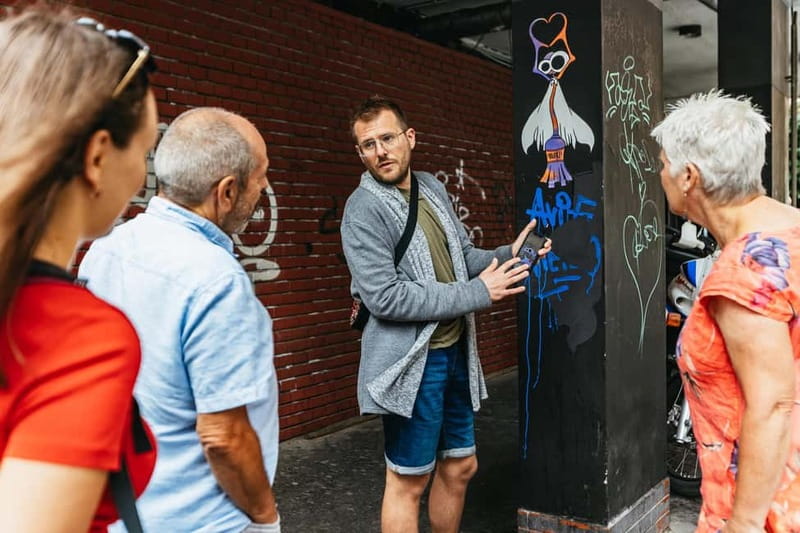
I would recommend it to first-time visitors who want a fresh orientation to Pest, especially those interested in contemporary art, local culture, photography, design, or politics.
It also suits repeat visitors. You may have already seen the main sights and want a reason to walk familiar streets differently. After this experience, you will likely notice small images and stickers that previously blended into the background.
Families can take part because the tour is interactive, though the subject may suit older children and teenagers better than very young ones. The guide encourages questions, and the variety of small works can keep curious children involved.
The tour works well for solo visitors, too. The group size makes it easier to meet other people without the outing becoming a large social event. Couples and friends should enjoy it if they are happy to trade some famous sights for a more local view of the city.
It is less suitable if you want a fast list of landmarks, a strictly academic art lecture, or a route made entirely of giant murals. You should also allow for two hours on foot and wear sensible shoes. The activity is listed as wheelchair accessible, but no detailed information is provided about every surface or stop, so it is wise to confirm route specifics if access is a major concern.
Timing, cancellation, and practical details
The walk lasts two hours and is offered at various starting times, subject to availability. I would schedule it near the beginning of your Budapest stay so you can use the neighborhood, food, and art suggestions afterward.
English is the stated tour language. Food and drinks are not included. The tour begins at Telep-Art Galéria and finishes at Központ, so you should plan to continue your day from the central finish rather than return to the starting point.
You can cancel up to 24 hours before the activity for a full refund. A reserve-now-and-pay-later option is also available, which helps if your Budapest plans are still shifting.
Should you book the Budapest street art walk?
Book it if you want to understand the city through its unofficial visual culture, not just photograph its grand buildings. ET and Suzie bring warmth, strong subject knowledge, and a personal connection to Budapest’s art scene, while the small group keeps the walk open to questions.
The strongest reason to go is the lasting effect. You do not simply spend two hours looking at walls. You leave with a method for spotting stickers, paste-ups, sculptures, and political messages on your own.
Skip it if you want a fixed collection of famous murals, included food, or a major museum-style presentation. For most curious visitors, though, $28 is a sensible way to see Budapest from a less obvious angle, especially when booked early enough to use the guide’s recommendations for the rest of your trip.
FAQ
How long is the Budapest street art tour?
The guided walk lasts two hours.
What language is the tour conducted in?
The live tour is conducted in English.
Where does the tour begin?
The meeting point is Telep-Art Galéria, a bar and gallery known for its sticker-covered walls.
Where does the tour finish?
The walk finishes at Központ.
What types of art can I see?
The tour can include murals, graffiti, stickers, paste-ups, lettering, public art, and bronze sculptures.
Does the walk focus only on murals?
No. A key part of the experience is learning to notice smaller forms of street art, including stickers and paste-ups.
How many people are in the group?
The group is limited to eight participants.
Can I book a private version?
Yes. A private version is available through the experience provider’s profile.
Is the tour wheelchair accessible?
Yes, the activity is listed as wheelchair accessible.
Are food and drinks included?
No. Food and drinks are not included in the price.
Can I cancel for a full refund?
Yes. You can cancel up to 24 hours in advance for a full refund.
Can I reserve now and pay later?
Yes. The reserve-now-and-pay-later option allows you to hold a place without paying immediately.
Just added around the world
- Hanoi to Ninh Binh 1 day: Trang An – Tam Coc – Mua Cave – Hoa Lu★ 4.5 · 99 reviews
- Trang An grottoes – Bai Dinh Pagoda Day Tours★ 4.5 · 73 reviews
- Ninh Binh Full Day Tour from Hanoi to Hoa Lu, Trang An & Mua Cave★ 5.0 · 31 reviews
- Luxury small Group Hoa Lu – Tam Coc – Mua Cave Max 6 – 8 pax/tour★ 5.0 · 479 reviews
- Halong Islands, Caves, Kayak, Lunch day tour w Dragonfly Cruise★ 5.0 · 159 reviews
- Hanoi – Hoa Lu – Tam Coc – Mua Cave – 1 Day / By Luxury Limousine & Small Group★ 5.0 · 18 reviews
- Ninh Binh Daily Tour: Hoa Lu -Mua Cave -Tam Coc- Bike-Swimming with Sunset Party★ 5.0 · 163 reviews
- Ninh Binh Full Day Tour with Hoa Lu, Trang An and Mua Cave★ 5.0 · 93 reviews
Walking Tours, compared.
Underground Vaults Walking Tour in Edinburgh Old Town
Read our review →
Edinburgh: Witches & Haunted History Walking Tour
Read our review →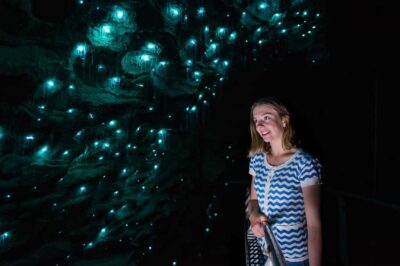
Waitomo Caves: Ruakuri Glowworm Cave Guided Walking Tour
Read our review →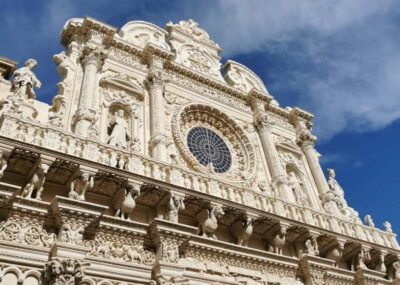
Lecce: Baroque Architecture and Underground Walking Tour
Read our review →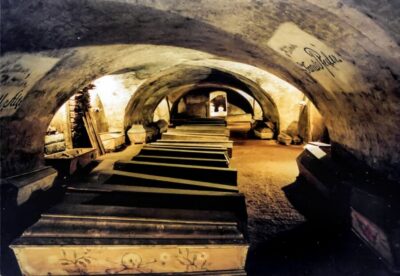
Malta: Mdina and Rabat Walking Tour with Catacombs
Read our review →Browse the lists this tour appears in