
REVIEW · GUIDED
Savona: Guided Tour of the Priamàr Underground
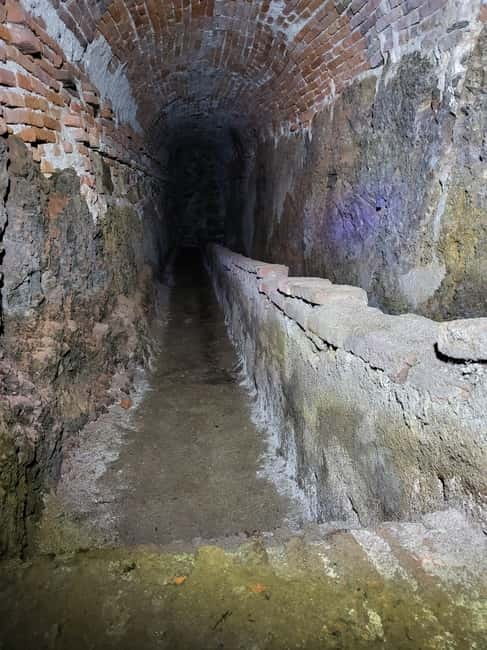
Savona’s Priamàr Fortress has a second life below ground. This one-hour tour takes you through old tunnels, cisterns, dungeons, and air-raid shelters built across four centuries. I like the layers of military history and the fact that archaeologists lead the visit, not just a guide reading dates from a script.
I also like the compact format: the tour lasts about an hour, costs $17, and packs a lot into a short visit. Guides such as Diego have been praised for their enthusiasm and clear explanations. The main drawback is practical: tight, uneven underground spaces make this a poor choice for wheelchair users, anyone with claustrophobia, and people with mobility or visual impairments.
Key points to know before you go
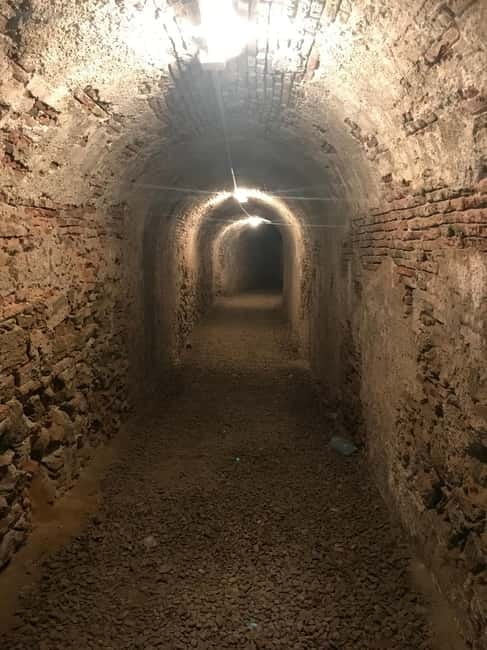
- Four underground routes: Follow the passages of St. Bernard, St. Francis, St. Catherine, and the Holy Conception.
- A fortress built in layers: The underground network dates from 1542 through 1943, with tunnels, cisterns, counter-mines, and wartime shelters.
- Archaeologists lead the visit: Guides speak English, French, Spanish, Italian, or German, with Diego receiving special praise for his clear and warm approach.
- A short, focused experience: Allow about five minutes for the safety briefing and one hour for the guided tour.
- Bring proper footwear and a flashlight: Comfortable sports shoes are recommended, and a flashlight can help in darker passages.
- Not suitable for everyone: Baby strollers, wheelchairs, and visitors with serious mobility, vision, pregnancy, or claustrophobia concerns are not permitted.
Why Priamàr’s underground matters
From above, Priamàr Fortress is a substantial military complex in Savona. Below it, you find something less polished and more revealing: the working infrastructure that helped the fortress function.
The underground spaces were not all built at once. They developed over a long period, from the first large tunnels of the 16th century to the air-raid shelters used during the Second World War. That span is what gives the tour its appeal. You are not looking at one tidy historic room. You are moving through a record of changing military needs.
The earliest large tunnels were built after the fortress began in 1542. Many were later closed and walled up in the 17th century, which hints at how quickly defensive plans changed. Other sections were added in 1683, including narrow connecting walkways. The result is a network with different widths, purposes, and periods.
I like this kind of visit because it makes history physical. A date on a sign can tell you when something was built. A narrow passage tells you something about movement, defense, and the limits of the technology available at the time.
More Guided Tours in Italy:
- Naples: Naples Underground Entry Ticket and Guided Tour
★ 4.4 · 21,781 reviews - Naples: Catacombs of San Gennaro Entry Ticket & Guided Tour
★ 4.6 · 7,941 reviews - Naples: Spanish Quarters Underground Guided Tour
★ 4.8 · 5,064 reviews
Meeting beneath the Piazza del Maschio
The tour begins at the Civic Archaeological and City Museum, inside Priamàr Fortress. The museum entrance is under the portico in Piazza del Maschio, so you should allow a little time to find the right spot within the fortress.
You can also reach the museum using the lifts at the foot of the fortress. The lifts arrive at the first floor, and the approach is along a flat walkway near the car park. This is useful for orientation, but it does not make the underground tour accessible to wheelchair users or people with mobility impairments. The lift helps you reach the museum, not overcome the physical conditions below.
Before entering the passages, the guide gives a safety briefing of about five minutes. That small pause matters. The underground routes are not presented as an ordinary museum corridor, and you should listen closely to instructions about footing, space, and movement.
The meeting point is also convenient because the visit begins and ends in the same place. You do not need to arrange a separate pickup or find your way to another side of Savona afterward.
Four routes through the fortress
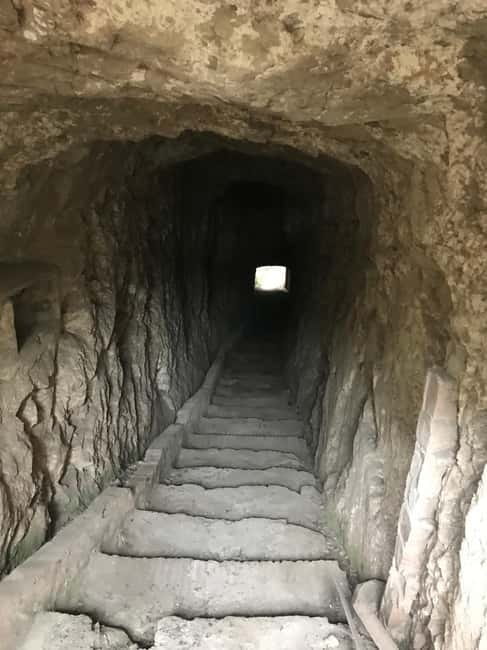
The underground visit follows four named routes: St. Bernard, St. Francis, St. Catherine, and the Holy Conception. The available information does not assign a separate theme or exact feature to each route, so you should think of them as connected sections of the wider underground system rather than four entirely separate attractions.
Together, they reveal the fortress from below. You may pass through sections created for movement, storage, defense, water supply, or protection from attack. The guide’s role is important here because the spaces alone may not explain how the pieces fit together.
The tour covers several distinct kinds of underground construction:
- Large 16th-century tunnels, many of which were closed and walled up in the following century
- Narrow connecting passages dating from 1683
- Small counter-mine tunnels
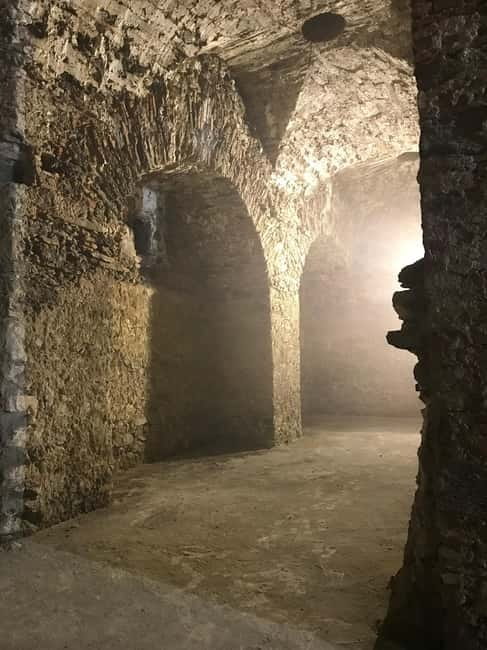
- Large rooms beneath the late 17th-century ramparts
- Two cisterns and connecting tunnels between the Maschio and the Citadel
- Exits toward the sea or the large outer moat
- Large air-raid shelters from the Second World War
That list gives you a sense of the visit’s range. You are not simply walking through one cellar. The tour links defensive engineering, water storage, access routes, and civilian protection.
From counter-mines to cisterns
The counter-mine tunnels are among the more unusual parts of the experience. Their narrow size reflects their defensive purpose. They were part of the fortress’s response to attack from below, when an enemy might try to undermine a wall or rampart.
The large rooms under the late 17th-century ramparts offer a different feeling. After narrow passages, broader chambers help you understand the scale of Priamàr’s construction. The contrast between confined walkways and large underground rooms is one reason comfortable shoes matter.
The two cisterns show that a fortress needed more than thick walls and weapons. It also needed water. The connecting passages between the Maschio and the Citadel point to the practical problem of linking separate sections of a military site below ground.
You should not expect every section to feel dramatic in the same way. Some areas may interest you for their engineering, while others may seem plain until the guide explains their role. This is an experience where interpretation adds real value.
A few more cave trips around Italy worth a look
- Colosseum: Underground and Ancient Rome Tour
★ 4.7 · 12,691 reviews - Rome: Capuchin Crypts and Catacombs Tour with Transfers
★ 4.6 · 6,456 reviews - Expert Guided Tour of Colosseum Arena OR Underground, and Forum
★ 4.5 · 5,041 reviews - The Original Roman Crypts and Catacombs Tour with Transfers
★ 4.5 · 4,896 reviews
Sea exits, moats, and wartime shelters
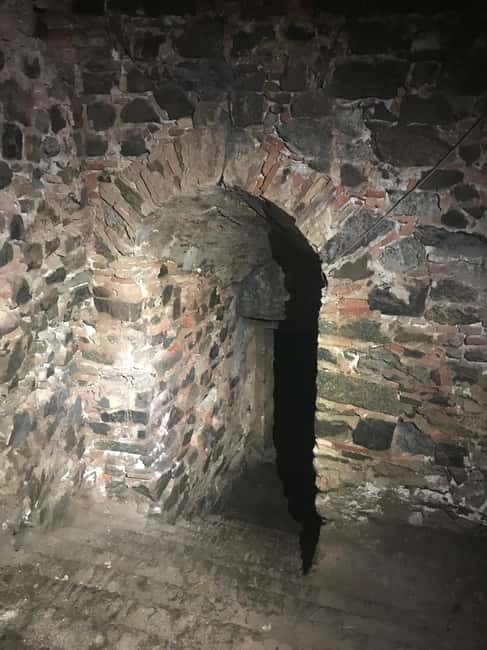
Some underground passages lead toward the sea or the large outer moat. These exits help explain how the fortress connected to its surroundings without relying only on open routes above ground.
The Second World War air-raid shelters bring the story much closer to the present. They belong to a later phase of Priamàr’s life and show that the underground spaces were adapted when the nature of danger changed. Earlier tunnels were made for fortress defense. Later shelters protected people from aerial attack.
That shift gives the tour a useful sense of time. Priamàr was not frozen in the 16th century. Its underground spaces continued to be changed, closed, reused, and adapted through 1943.
I find this broad time span more interesting than a visit focused on one single period. You can see how the same fortress answered different problems over hundreds of years.
What the guides add
The tour is led by archaeologists, and that is one of its strongest features. An underground complex can be difficult to read without help. A guide can explain why a passage is narrow, why some tunnels were sealed, and how separate parts of the fortress relate to one another.
Diego is one guide specifically associated with the visit, and the feedback about his work highlights two traits: strong subject knowledge and a friendly manner. The most useful kind of guide in a place like this is not simply someone who knows many dates. You want someone who can make the architecture understandable and keep children and adults interested at the same time.
The tour is offered in English, French, Spanish, Italian, and German. Some content may be presented in its original language, so the exact balance of translated explanation can matter if you are not comfortable with the language selected at booking.
The praise for the guides is unusually consistent. The experience has a 4.8 rating from 52 reviews, and the strongest comments focus on the staff’s preparation, enthusiasm, and ability to spark curiosity across different ages. That tells me the guide is not a minor part of this activity. It is central to its value.
Is $17 a fair price?
At $17 per person, the tour is reasonably priced for a specialist guided visit. The ticket covers admission to the underground passages and the guide, so you are paying for access to areas that are not simply open for independent wandering.
The one-hour length also makes the price easy to fit into a day in Savona. You are not committing half a day to a single attraction. If you are spending time around Priamàr already, this adds a focused experience without taking over your schedule.
The value depends on your interests. If you prefer broad city views, grand interiors, or self-guided museum displays, the underground passages may feel too specific. If you like military engineering, archaeology, and places where the physical setting carries the story, $17 is a sensible price.
There is also good booking flexibility. You can cancel up to 24 hours before the visit for a full refund, and you can reserve now and pay later. Those policies are useful when your Savona plans depend on a changing port schedule or a full day of sightseeing.
Shoes, flashlights, and the physical demands
Take the footwear advice seriously. Comfortable shoes, ideally sports shoes, are recommended. Underground routes can involve surfaces and spaces that are less forgiving than a paved museum floor.
A flashlight is also listed among the items to bring. Even if parts of the route have lighting, a small flashlight can help you see details and feel more secure in darker sections. It is a practical item, not a decorative extra.
Baby strollers are not allowed. The same restrictions apply to people who need wheelchair access or have mobility impairments. The visit is also unsuitable for pregnant women, people with claustrophobia, and people with visual impairments.
These limits are not minor booking notes. They affect who can safely and comfortably enjoy the experience. If you are traveling with a young child, plan to carry the child if needed, since a stroller cannot enter. If anyone in your party dislikes narrow enclosed spaces, choose a different Priamàr activity.
Who will enjoy this most?
I would recommend the tour to adults and older children who enjoy places with a strong sense of physical discovery. The changing tunnel sizes, named routes, and mix of old and modern military uses give children something concrete to picture.
It is also a good fit for anyone who has already seen the fortress above ground and wants another angle on it. The underground visit adds practical details that open courtyards and exterior walls cannot show.
History fans will find plenty to discuss, but you do not need specialist knowledge. The guide explains the spaces, and the one-hour format keeps the subject from becoming too heavy.
I would be cautious about booking it for a group with mixed interests. Someone who wants only panoramic scenery may not appreciate a dark underground route. Someone who dislikes confined spaces may spend the hour worrying about the next passage instead of listening to the guide.
Planning the visit at Priamàr
Start at the Civic Archaeological and City Museum in Piazza del Maschio, beneath the portico. If you are using the lifts from the foot of the fortress, remember that you still need to reach the museum entrance on the first floor.
Check the available starting times before booking because the visit runs at set times. The stated duration is one hour for the guided tour, plus about five minutes for the safety briefing. Since the tour returns to the museum, it is easy to continue exploring the fortress afterward.
Wear shoes you trust and bring a flashlight. Avoid bringing a baby stroller, and consider the restrictions carefully before booking for anyone with mobility, vision, pregnancy, or claustrophobia concerns.
The tour is offered by Màr, the Civic Archaeological and City Museum of Savona. That setting gives the visit a clear connection to the archaeology and history of the fortress rather than treating the tunnels as a stand-alone thrill attraction.
Should you book the underground Priamàr tour?
Book it if you want to see the practical, less polished side of Savona’s fortress. The combination of 16th-century tunnels, 17th-century connecting passages, cisterns, counter-mines, sea exits, and Second World War shelters gives you a clear sense of how Priamàr changed over time.
The strongest reason to go is the guide. Archaeologists lead the visit, and Diego has earned particular praise for his enthusiasm and ability to explain the site. At $17 for a focused hour, the tour offers good value for people who enjoy archaeology and military history.
Skip it if you need step-free accessibility, dislike enclosed spaces, or are looking for grand views rather than underground construction. For the right visitor, though, this is one of the more distinctive ways to understand Priamàr Fortress.
FAQ
Where does the underground Priamàr tour start?
The tour starts at the Civic Archaeological and City Museum of Savona, inside Priamàr Fortress. The museum entrance is in Piazza del Maschio, under the portico.
How long does the activity last?
The guided tour lasts one hour, with a safety briefing of about five minutes before entering the underground passages.
What does the tour cost?
The price is $17 per person. The ticket includes the guided visit to Priamàr’s underground passages.
Which languages are available?
The live guide is available in English, French, Spanish, Italian, and German. Some content may be presented in its original language.
Which underground routes are included?
The visit follows four routes: St. Bernard, St. Francis, St. Catherine, and the Holy Conception.
What will I see underground?
The passages include large 16th-century tunnels, narrow connecting walkways from 1683, counter-mine tunnels, rooms beneath late 17th-century ramparts, two cisterns, connecting tunnels between the Maschio and the Citadel, exits toward the sea or outer moat, and Second World War air-raid shelters.
What should I bring?
Bring comfortable shoes, sports shoes if possible, and a flashlight.
Are baby strollers allowed?
No. Baby strollers are not allowed on the tour.
Is the tour suitable for wheelchair users?
No. The tour is not suitable for wheelchair users or people with mobility impairments.
Can I cancel the booking?
Yes. You can cancel up to 24 hours in advance for a full refund. You can also reserve now and pay later.
Just added around Italy
- Capri & Blue Grotto: Full-Day Tour with Guided Island Exploration★ 5.0 · 74 reviews
- Private Capri, Anacapri and Blue Grotto Tour from Capri★ 4.5 · 29 reviews
- Boat Tour of the Caves on the Island of Capri★ 4.5 · 463 reviews
- Private Tour of the Island of Capri by Boat and Visit to the Caves★ 4.5 · 31 reviews
- Paddleboard in Capri between caves and beaches. Photos included!★ 5.0 · 39 reviews
- Blue Grotto and Capri Boat Tour with Aperitivo Swim and Snorkel★ 4.5 · 47 reviews
- Capri Adventure Cruise: Sea Caves, Coastline & Blue Grotto Visit★ 5.0 · 18 reviews
- Small Group Tour to Blue Grotto, Anacapri and Capri★ 5.0 · 115 reviews
Guided, compared.
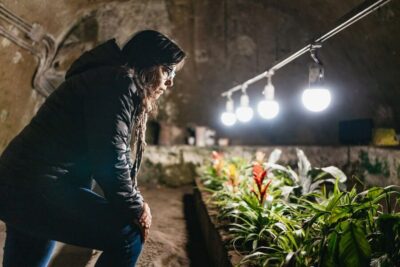
Naples: Naples Underground Entry Ticket and Guided Tour
Read our review →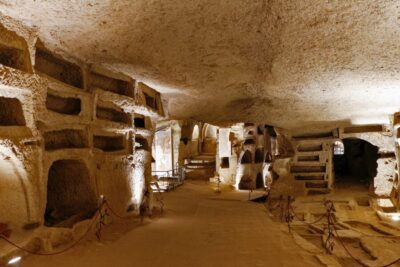
Naples: Catacombs of San Gennaro Entry Ticket & Guided Tour
Read our review →
Krakow: Wieliczka Salt Mine Fast-Track Ticket & Guided Tour
Read our review →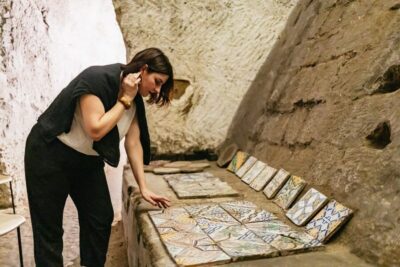
Naples: Spanish Quarters Underground Guided Tour
Read our review →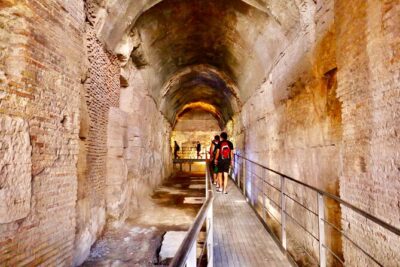
Expert Guided Tour of Colosseum Arena OR Underground, and Forum
Read our review →
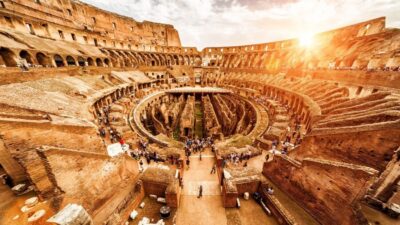
Rome: Colosseum Underground Small Group Guided Tour
Read our review →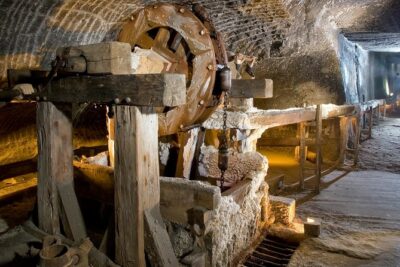
Krakow to Wieliczka: Salt Mine Guided Tour with Ticket & Transfer
Read our review →Browse the lists this tour appears in