
REVIEW · PARIS
Paris: Small-Group Catacombs Tour with Skip-the-Line Entry
Paris keeps its grandest secrets underground. This 90-minute catacombs tour leads you down 133 steps into old limestone quarries, bone-lined galleries, wartime hideouts, and passages linked to the city’s darker legends. The small group, limited to six people, gives your guide room to explain details you could easily miss on your own.
I like the restricted-area access and the way guides such as Maria, Leo, Remi, and Michelle turn a walk through bones into a story about Paris. I also like the compact timing: long enough to cover the main ideas, but not so long that the cold, narrow tunnels wear you down.
The catch is the price: $227 per person is a serious outlay for an hour and a half. You are paying for the guide, skip-the-line entry, and access beyond the usual route, so this makes the most sense if you want context and a small-group experience rather than the lowest-cost entrance.
Key points to know before you book
- Only six people per group: You get a much better chance to hear the guide and ask questions than in a large walking tour.
- The tour begins with 133 steps down: Expect a steep descent before the underground route starts.
- Restricted areas are part of the appeal: The tour includes sections not available on the standard public visit.
- The bones have a story: Your guide explains why remains were moved here and points out unusual arrangements, including The Barrel.
- Parisian history continues underground: The route connects the catacombs with quarrying, the French Revolution, World War II, and modern cataphiles.
- The meeting point is easy to identify in theory: Look for the guide with a LivTours sign in front of the main entrance at 1 Avenue du Colonel Henri Rol-Tanguy.
Starting beneath the main entrance on Avenue du Colonel Henri Rol-Tanguy
Meet your guide in front of the main catacomb entrance at 1 Avenue du Colonel Henri Rol-Tanguy. The guide will be holding a LivTours sign, and the activity ends back at the same meeting point.
One practical tip matters here: arrive with enough time to find the guide. One participant had trouble spotting the sign because it was small and not prominently displayed. If you arrive early, check the area directly in front of the entrance rather than wandering off toward another Paris sight.
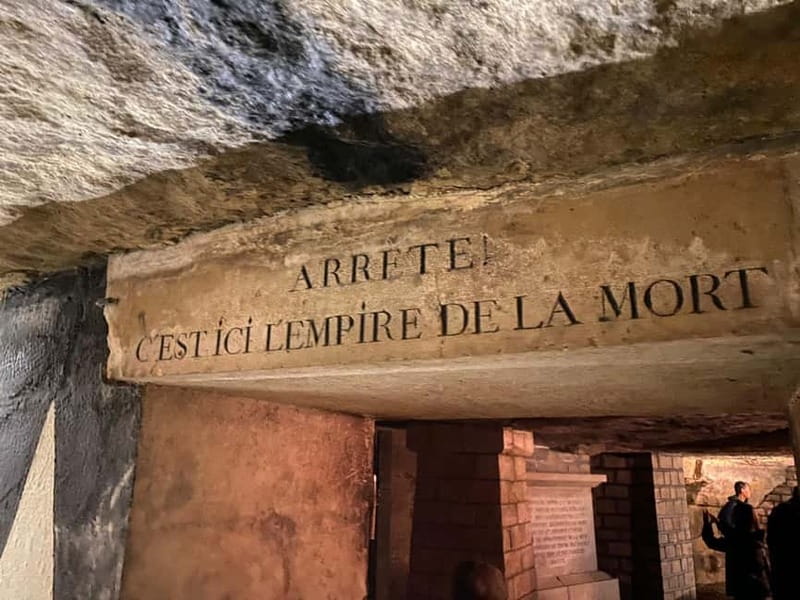
The tour is offered in English with a live guide. That matters in the catacombs because the setting alone tells only part of the story. Without explanation, you see corridors, bones, plaques, and decorations. With a guide, the route becomes a sequence of decisions made by city officials, quarry workers, cemetery managers, soldiers, and underground explorers.
Skip-the-line entry is another practical benefit. The catacombs are popular, and avoiding the regular queue saves time in a city where every spare hour counts. Still, skip-the-line access does not make the experience fast-paced. The main value is getting underground with less waiting, then spending your limited time listening and looking.
More Catacombs and Underground City Tours in France:
- Paris: Catacombs Entry & Seine River Cruise with Audio Guide
★ 4.4 · 1,150 reviews - Paris: Catacombs, Audio Guide, and River Cruise Option
★ 4.6 · 966 reviews - Paris: Catacombs Ticket and Seine River Cruise
★ 4.1 · 853 reviews
The 133-step descent into old Paris
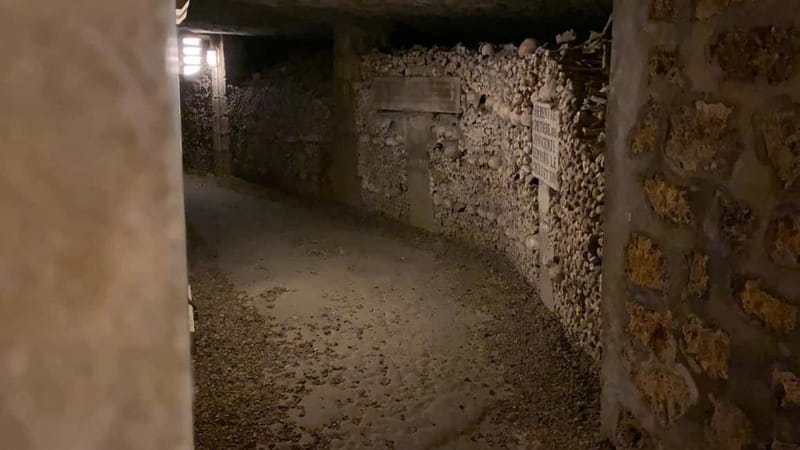
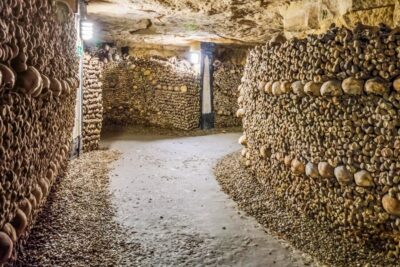
The first major moment is the staircase. You descend 133 steps into the former quarry system, leaving daylight behind as the city above becomes harder to imagine.
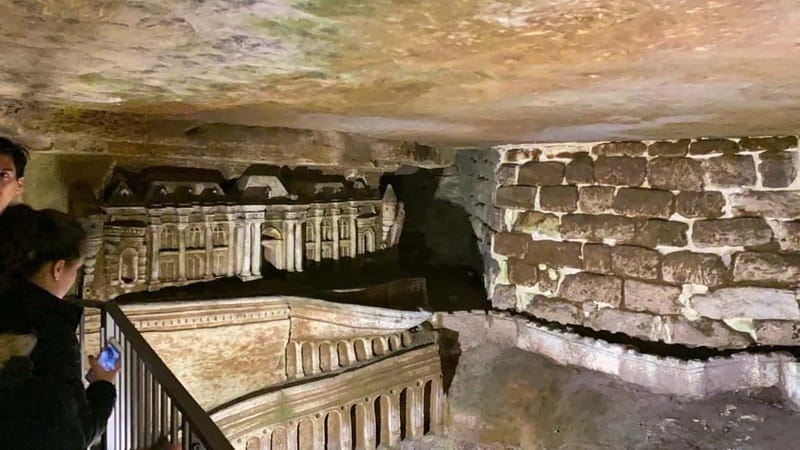
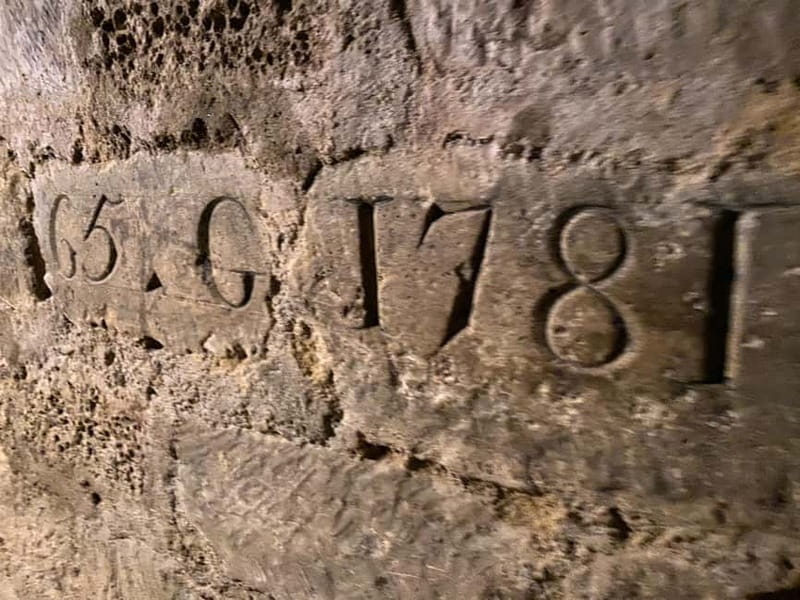
The tunnels began as limestone quarries in the 13th century. Paris needed building stone, and these underground works supplied material for major construction, including Notre Dame. Your guide explains how quarrying shaped the ground beneath the city and why the catacombs are more than a burial site.
That opening context is useful because the catacombs can otherwise feel like one continuous tunnel. The stone was removed long before the bones arrived. The route shows how one underground world was adapted for another purpose.
The stairs deserve attention when you decide who should join you. The supplied information specifically highlights the 133-step descent, and a participant recommended making the steep steps clearer in the booking details. This is not a small point for anyone who finds stairs difficult. The tour also takes place in narrow passages, so you should be comfortable with that kind of setting before paying the premium price.
Why six million people were moved underground
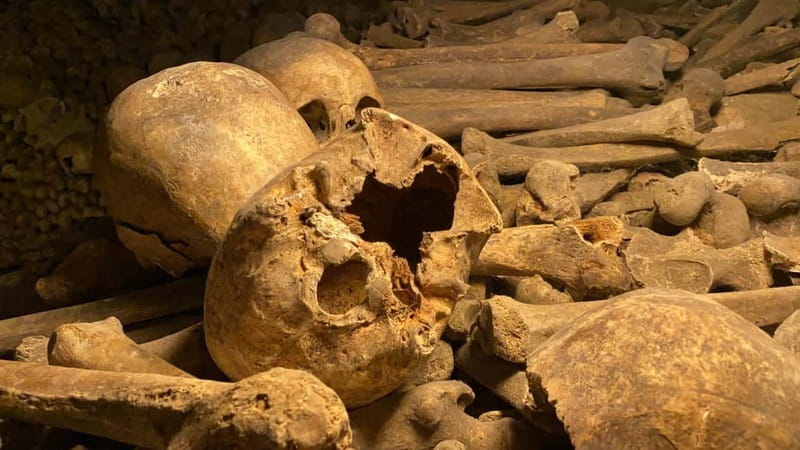
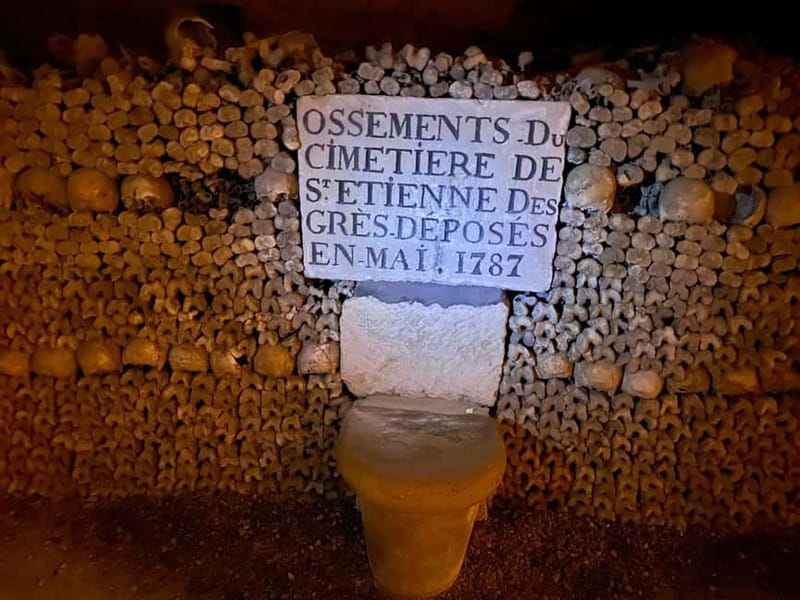
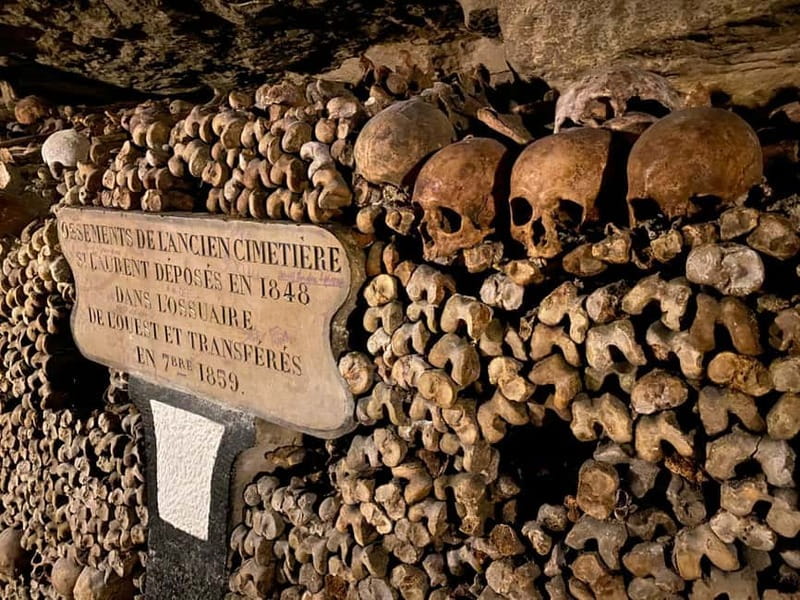
The burial chambers exist because Paris had a serious public-health and space problem in the 1780s. Bad weather made conditions around cemeteries worse, and officials moved human remains into the former quarries.
Your guide connects the decision to the city’s crowded burial grounds and changing attitudes toward sanitation. The remains represent roughly six million Parisians, though you should not expect an individual biography for each person. The power of the place comes from the scale, the silence, and the careful arrangement of bones.
The small group helps here. With only six people, you can stop without blocking a large procession, and your guide can answer questions about what you are seeing. Guides have pointed out details such as differences between male and female bones, signs of age, children’s remains, and disease. These observations add a human dimension, but they also make the visit emotionally heavy.
This is not a lighthearted attraction. Some people find the sight of children’s remains especially difficult. If you prefer your sightseeing cheerful and polished, the catacombs may not suit you. If you can handle a solemn setting, the experience gives you a direct sense of how Paris dealt with death on a citywide scale.
Bone arrangements, religious symbols, and The Barrel
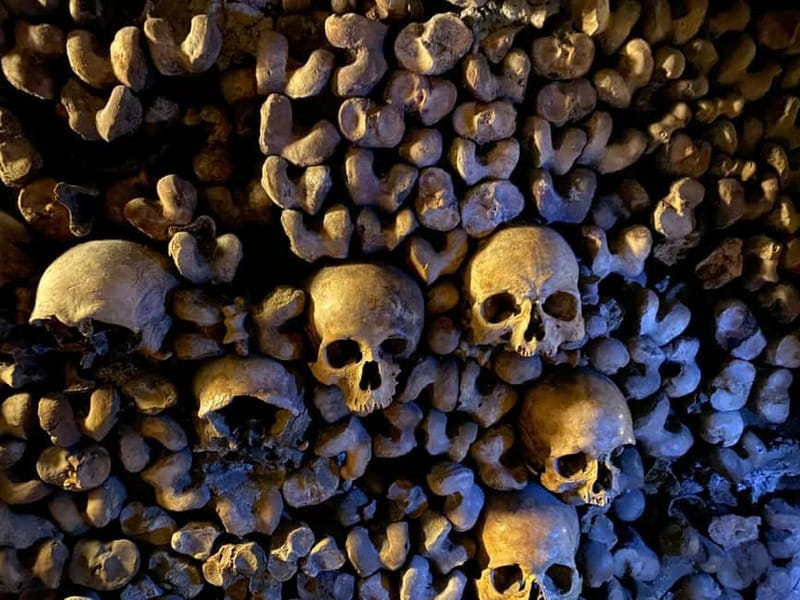
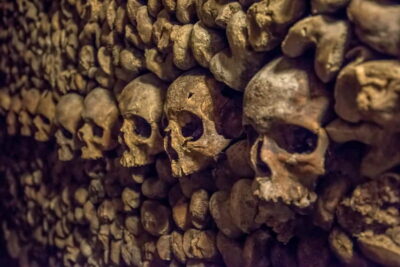
The catacombs are not simply a pile of bones. Workers arranged many of the remains into patterns and decorations, including religious imagery and heart shapes. These designs give the galleries a strange visual order, but they should not make you forget that the material is human.
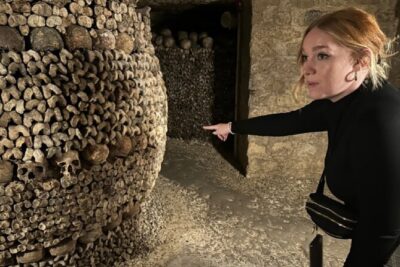
The most memorable feature is in the Crypt of the Passion. Known as The Barrel, it is constructed from skeletal remains and forms one of the tour’s most unsettling sights. Your guide can explain the decoration and point out details that are easy to overlook when you are moving through a crowded public route.
This is where guided access earns its keep. A self-guided visit can show you the bones, but it cannot always explain why particular arrangements were made or how the sections fit into the larger story. Guides such as Leo have been especially good at identifying details in the remains and explaining the purpose of different sections.
The experience also benefits from the smaller group in a simple way: you can hear. In a confined tunnel, voices from a larger party would make it harder to follow a detailed explanation. Six people is still a group, but it is small enough for a more personal pace.
More Skip-the-Line Tickets in France:
- From Krakow: Wieliczka Salt Mine Tour & Skip the Line Ticket
★ 4.4 · 3,925 reviews - Skip the Line Chichen Itza Private Tour, Sacred Cenote & Lunch
★ 5.0 · 1,089 reviews - Wieliczka Salt Mine Guided Tour with Skip the Line Tickets
★ 4.6 · 999 reviews - Wieliczka Salt Mine Tour from Kraków – Skip the Line Entry
★ 4.4 · 878 reviews
From the French Revolution to World War II
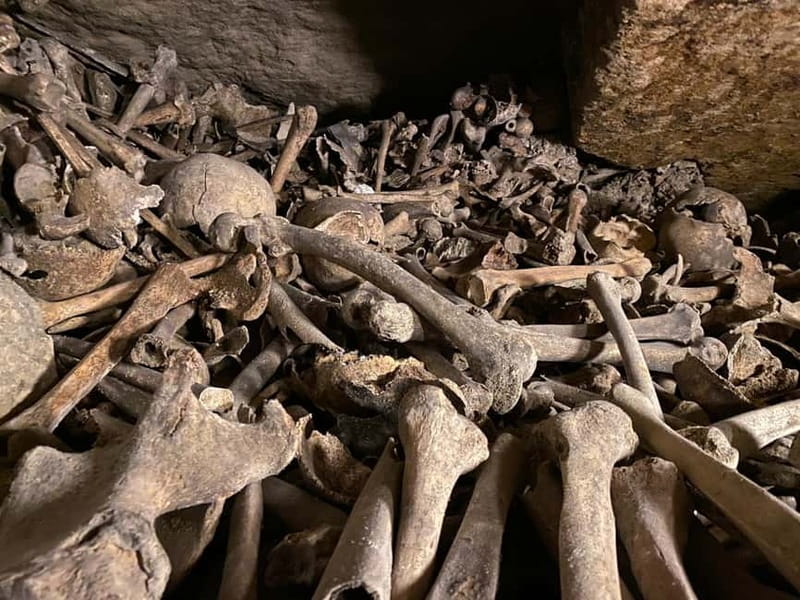
The catacombs are tied to more than burials. Your guide discusses their connection to the French Revolution and explains how sections of the underground network were used during World War II.
Both the German Wehrmacht and the French Resistance used parts of the catacombs as wartime bunkers. This adds a sharp change of focus to the tour. The galleries are not only a memorial to the dead; they also became useful spaces in moments when people needed concealment, protection, or routes beneath the city.
The route may also introduce you to the story of Philibert Aspairt, an 18th-century doorman who died in the catacombs. His grave is one of the site’s most haunting details, especially when your guide explains the risks of getting lost in the underground maze.
This is a good reason to choose a live tour instead of treating the catacombs as a simple visual attraction. A guide can move between the practical, the historical, and the unsettling without leaving you to piece the story together from wall text.
Cataphiles, graffiti, and the unofficial underground city
Modern Paris has its own underground characters. Cataphiles have explored areas beyond the official visitor route and have caused a stir with large parties, swimming events, and gatherings in the old quarry network.
Your guide may point out graffiti left by cataphiles. These marks show that the underground world is not frozen in the past. It remains a place of secret routes, private discoveries, and behavior that city authorities do not officially endorse.
The cataphile material is one of the tour’s more unusual elements because it links the historic catacombs with modern Paris. Guides also explain the illegal activity rather than presenting it as a fun invitation. You should treat the information as part of the site’s social history, not as a suggestion to explore restricted tunnels independently.
The restricted sections are a major reason to book this particular format. The experience is not just a standard public walk with a larger group. It includes access to areas not generally open to ordinary visitors, subject to the operator’s route and conditions on the day.
What the guides add to the experience
The guides are central to the quality of this tour. Maria has been praised for vivid illustrations and stories, including a favorite tale she tells with real enthusiasm. Leo, also referred to as Eleonore, has explained bone details, restricted sections, and the emotional side of seeing so many remains.
Remi brings strong energy and a clear grasp of both Paris and the catacombs. He has also been singled out for giving the right amount of information without turning the tour into an overload of facts. Michelle combines humor, warmth, and historical explanation, which can help families and younger visitors stay engaged.
Other guides, including Lavinia, Alex, Melvin, and Angelo, have also been praised for friendly presentation and strong storytelling. Guide assignments can change, so you should not book on the assumption that one named guide will lead your visit. The useful point is that the experience depends heavily on the person guiding it, and the small group gives that person room to shape the visit around your questions.
A good guide also controls the pace. One participant appreciated a measured route and help with onward transport needs after the visit. That kind of attention is valuable in Paris, where the catacombs sit within a busy sightseeing day.
Is $227 worth it for 90 minutes?
At $227 per person, this is not a bargain attraction. The public entrance alone would be a different proposition, and the premium here comes from three things: skip-the-line entry, a group of no more than six, and restricted-area access with a professional local guide.
I think the price can be justified for a first visit if you care about history, want to ask questions, and dislike moving through a major sight without understanding it. The experience also works well for a family group that wants a guide to keep the information clear and engaging. A small group makes it easier for children and adults to hear the stories, though younger children should be comfortable with bones, dark passages, and a serious subject.
The price is harder to defend if you mainly want to see the famous bone walls and take a quick look. The tour lasts 1.5 hours, and there is no food, drink, hotel pickup, or drop-off included. You are responsible for reaching the entrance and continuing on your own afterward.
Free cancellation is available up to 24 hours before the start time, and you can reserve now and pay later. Those terms help if your Paris schedule is still shifting, but they do not change the basic value question: this is a guide-led experience for people who want access and interpretation, not the cheapest possible visit.
Who should book this catacombs tour?
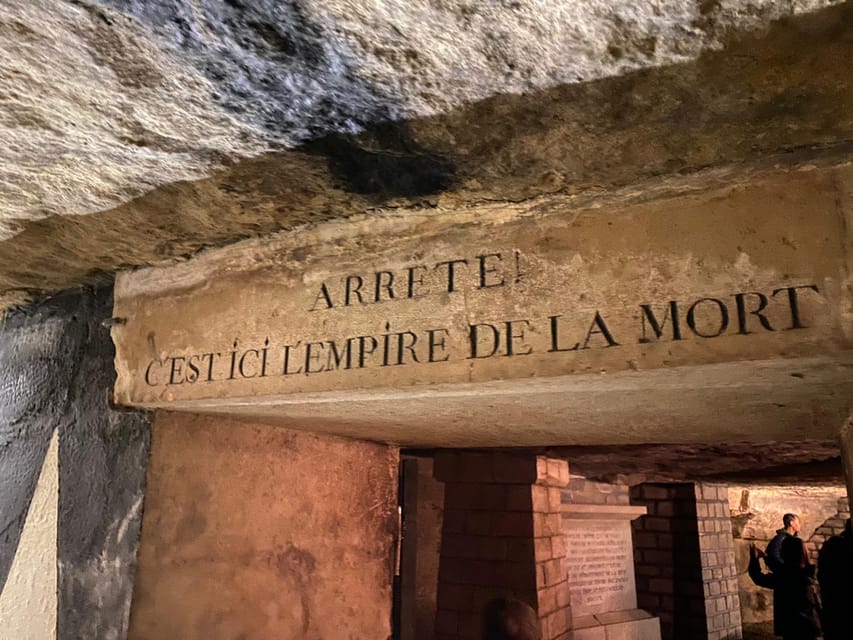
I would choose it for a first visit to the Paris Catacombs, especially if you want the history to connect across several periods. It suits people interested in architecture, public health, war, burial customs, urban legends, and the less polished side of Paris.
It is also a good fit if you value a quiet, intimate group. The six-person limit has been one of the strongest features of the experience, since you can hear the guide and stop for questions without being lost in a crowd.
Think twice if steep stairs, narrow tunnels, or human remains are a problem for you. The route starts with 133 steps down, and the subject matter includes children’s bones and stories of death underground. The tour is fascinating, but it is not gentle sightseeing.
FAQ
How long does the Paris Catacombs tour last?
The tour lasts 1.5 hours. Starting times vary, so you need to check availability when booking.
What is the group size?
The group is limited to six participants. On rare occasions, the operator may make an exception to keep people traveling together in the same group.
Is skip-the-line entry included?
Yes. The tour includes skip-the-line entry through a separate entrance.
Is the tour offered in English?
Yes. The tour has a live English-speaking guide.
Where does the tour meet?
Meet in front of the main Catacombs entrance at 1 Avenue du Colonel Henri Rol-Tanguy, Paris. Your guide will hold a LivTours sign.
Where does the tour end?
The activity ends back at the meeting point.
Are restricted areas included?
Yes. The experience includes exclusive access to restricted areas that are not available on the standard public route.
How many steps are involved?
The tour begins with a descent down 133 steps.
Is hotel pickup included?
No. Hotel pickup and drop-off are not included.
Can I cancel for a refund?
Yes. You can cancel up to 24 hours in advance for a full refund.
Should you book it?
Book this tour if you want the catacombs explained rather than simply displayed. The small group, restricted-area access, and guides such as Maria, Leo, Remi, and Michelle give the visit a personal feel, while the stories of quarrying, burial, war, revolution, and cataphiles give the bones their proper setting.
Skip it if $227 feels too high for 90 minutes or if you want a quick, low-cost look. For the right visitor, though, this is one of Paris’s most unusual history experiences, and the guide-led format makes the extra cost easier to understand.
Just added around France
- CAVES of CERDON and Prehistoric Leisure Park – Entrance ticket★ 4.5 · 76 reviews
- Cave Museum Village Troglodyte of Rochemenier Admission Ticket★ 4.5 · 143 reviews
- Full-day Saint-Emilion: Village, Undergrounds and Châteaux★ 4.5 · 55 reviews
- Dordogne Day Tour : Prehistory and The Art of the Caves from Sarlat★ 4.5 · 105 reviews
- The Napoleon Cave – complete package (Corsican meal)★ 5.0 · 68 reviews
- Porto-Vecchio : Boat Trip to Lavezzi, Caves & Bonifacio★ 4.7 · 61 reviews
- Paris: Catacombs Tour with Restricted Areas★ 4.8 · 64 reviews
- From Sarlat-la-Canéda: Lascaux IV and Cave Art Full-Day Tour★ 4.9 · 122 reviews
Paris Cave Tours, compared.
Paris: Catacombs Entry & Seine River Cruise with Audio Guide
Read our review →
Paris: Catacombs, Audio Guide, and River Cruise Option
Read our review →
Paris: Les Caves du Louvre Guided Tour with Wine Tastings
Read our review →
Paris: Catacombs Ticket and Seine River Cruise
Read our review →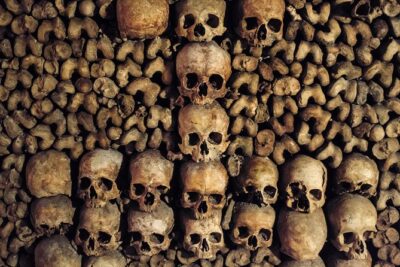
Browse the lists this tour appears in