
REVIEW · FRANCE
From Sarlat-la-Canéda: Lascaux IV and Cave Art Full-Day Tour
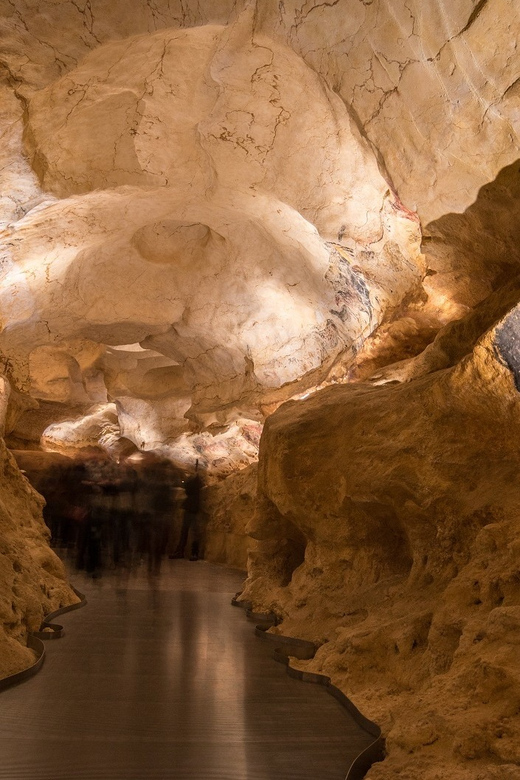
Lascaux IV is the star here: a painstaking recreation of one of Europe’s great prehistoric art sites, built so you can see the paintings without harming the original cave. I like that the day also includes Rouffignac, where the cave itself gives you a different, more authentic feeling, and the National Prehistory Museum, which supplies the human story behind the art. The catch is that English tours inside Lascaux IV are limited, so your guide explains the cave before and after rather than translating inside it.
I also like the small group, capped at eight, and the fact that your guide handles the driving between scattered sites. Guides such as Anne, Marion, Benoit, Lena, and Florence have been praised for their clear explanations, local tips, and calm driving. La Roque Saint-Christophe adds a dramatic cliffside stop, but its stairs make this a poor choice for wheelchair users or anyone with mobility problems.
Key points to know before booking
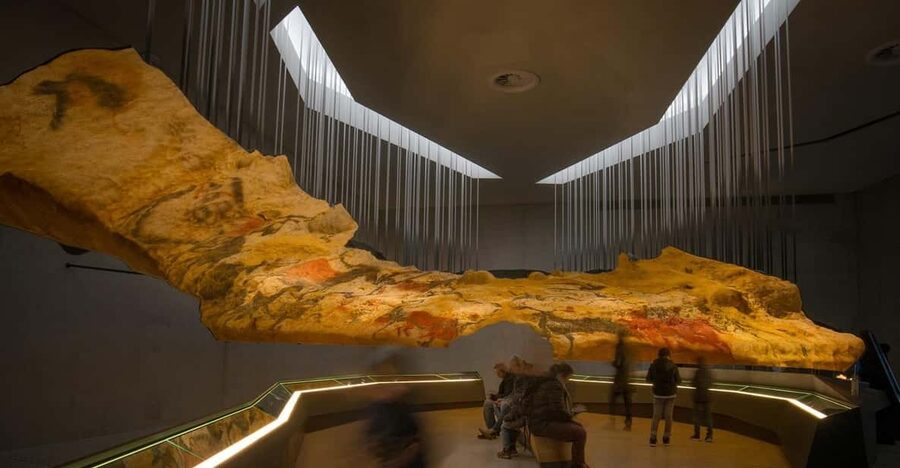
- Lascaux IV uses a full-scale, highly detailed replica with paintings recreated using natural pigments.
- Rouffignac gives you a real cave experience, including an underground route that has been described as a small electric-train ride.
- The National Prehistory Museum at Les Eyzies has one of the world’s largest collections of prehistoric artifacts.
- La Roque Saint-Christophe combines archaeology with cliffside engineering, but requires stair climbing.
- The van carries no more than eight participants, making the long day easier to manage than a large coach tour.
- Bring a warm layer, since the caves remain around 14°C, or 57°F, even in summer.
Why this Dordogne prehistory day works so well
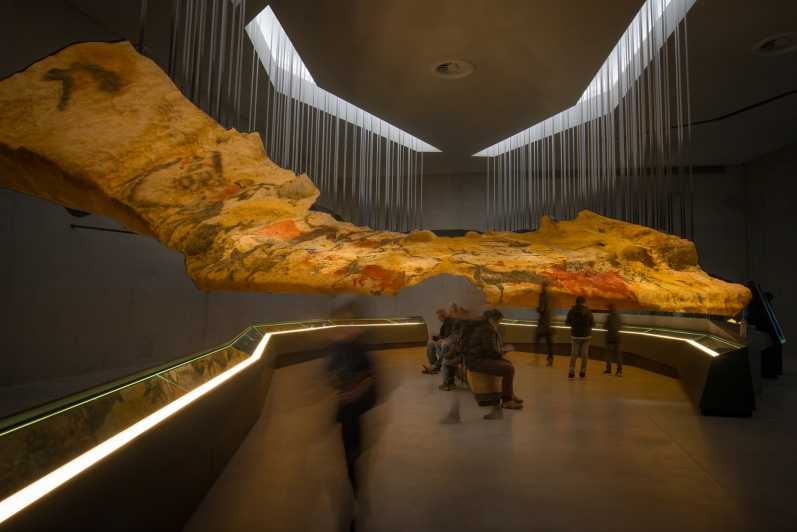
The Dordogne is one of the best places in Europe to connect prehistoric art with the people who made it. You are not simply looking at painted animals in a dark room. Across this day, you see where early modern humans lived, how archaeologists study them, how cave art has been preserved, and how the region’s limestone cliffs shaped daily life.
The tour lasts about nine hours, leaving Sarlat from the Place Pasteur bus stop near La Maison Secrète. That length is useful because the sites are spread across the Vézère Valley. Trying to combine them by public transport would be awkward, and driving yourself means keeping one eye on the clock and another on narrow local roads.
Your English-speaking driver-guide provides the thread connecting each stop. Guides including Anne, Marion, Benoit, Lena, and Florence have been singled out for making the subject clear without turning the day into a lecture. That matters here. Prehistoric art can seem mysterious when you view it alone, but a good explanation helps you notice the animals, pigments, carving methods, and cave settings.
The group limit of eight is another real advantage. You travel in a comfortable van rather than a full-size bus, and the small size gives the guide room to answer questions. One practical point: some past participants have been seated in the last row for the full day, with no seat rotation. If you are prone to motion sickness or simply prefer a particular seat, arrive early and ask politely.
More Full-Day Trips in France:
- Full-day Saint-Emilion: Village, Undergrounds and Châteaux
★ 4.5 · 55 reviews - Full-day Saint-Emilion: Village, Undergrounds and Châteaux
★ 4.7 · 41 reviews - Ninh Binh Full-Day Tour from Hanoi to Hoa Lu, Tam Coc & Mua Cave Via Boat & Bike
★ 5.0 · 4,384 reviews
Les Eyzies and the National Prehistory Museum
The first major stop is Les Eyzies-de-Tayac, where the first five Cro-Magnon skeletons were found in 1868. The name refers to early modern humans, not a separate species in the casual sense, and this discovery helped put the Dordogne at the center of prehistoric study.
The National Prehistory Museum opened in 2004 and holds an enormous collection of prehistoric objects. Your guide leads you through the main displays, giving shape to what could otherwise be an overwhelming number of tools, bones, sculptures, and other finds.
I like this stop because it prepares you for the caves. You learn about the people, materials, and time periods before standing in front of their artwork. Without that context, Lascaux can become a quick parade of beautiful animals. With it, you begin to understand the long human story behind the images.
You should also know that the museum takes time away from outdoor stops. One past participant would have preferred less museum time and more time at sites such as the troglodyte village or Grotte du Grand Roc. That is a fair criticism if your main interest is being outdoors or seeing natural cave formations. If you care about archaeology and human origins, the museum earns its place.
The exact time here may shift because Lascaux IV ticket slots control the day. You might visit the museum first, as described in the usual schedule, or see another site before arriving at Les Eyzies.
Rouffignac, the real cave experience
Rouffignac offers an important contrast with Lascaux IV. Lascaux is a replica created for public access, while Rouffignac is an actual cave with prehistoric engravings and animal drawings. The two sites answer different questions, so seeing both is more useful than choosing between them.
The underground route has been described as a ride on a small electric train. That makes the cave more accessible than a long walking route, though you still need to follow the site’s instructions and manage a full day of movement. Your guide sets up what you are about to see and helps you understand the drawings and engravings once you are inside.
Rouffignac’s art is different in character from the famous painted panels at Lascaux. You may see engraved outlines and images linked to the animals of the last Ice Age. The simpler marks are not lesser art. They show another way prehistoric people used cave walls, and the genuine setting gives the experience a special weight.
This is also where the limits of language can matter. The tour provider has arranged English guidance for the day, but individual cave presentations may not always be in English. The guide’s preparation is therefore important. Past guides have used the drive and time before each visit to explain the main ideas, so you are not left trying to guess what you are seeing.
Lascaux IV and the power of a careful replica
Lascaux IV opened in 2016 and recreates the original cave with remarkable precision. A reinforced concrete shell was made using shipbuilding methods, and the cave’s curves and relief were copied in detail. The paintings were recreated with natural pigments to match the originals from about 17,000 years ago.
A replica may sound like a compromise, but here it is the reason the public can experience Lascaux at all. The original cave was closed to protect its fragile environment. Lascaux IV lets you see the arrangement, scale, and atmosphere without exposing the real paintings to constant human breath, heat, and contact.
The building itself is part of the visit. This is not just a painted tunnel. The complex uses modern technology and careful reconstruction to show how the cave works as a space. The result is both an archaeological presentation and a piece of contemporary design.
The major warning is language. English tours inside Lascaux IV are very limited, and most scheduled visits are in French. Simultaneous translation is not allowed inside the cave. Your guide explains the key material before and after the official visit, but you should not expect a continuous English commentary while walking through the reproduction.
That arrangement works best if you are willing to look closely and listen to the guide around the cave visit. If every explanation must be in English at the exact moment you see each panel, this tour may frustrate you. If you can accept a French-led visit with English preparation and follow-up, the art itself remains the main event.
The skip-the-line access is valuable, especially during busy periods. Lascaux is one of the Dordogne’s most popular attractions, and a reserved time slot keeps the day moving. It also explains why the order of stops can change.
A few more cave trips around France worth a look
- Paris: Catacombs Entry & Seine River Cruise with Audio Guide
★ 4.4 · 1,150 reviews - Paris: Catacombs, Audio Guide, and River Cruise Option
★ 4.6 · 966 reviews - Paris: Les Caves du Louvre Guided Tour with Wine Tastings
★ 4.7 · 932 reviews - Paris: Catacombs Ticket and Seine River Cruise
★ 4.1 · 853 reviews
La Roque Saint-Christophe and life on the cliff
La Roque Saint-Christophe is a long limestone cliff with shelters used since Paleolithic times. People later adapted the natural ledges and cavities for homes, work areas, and defensive purposes. The site shows how a rock face could become both shelter and built environment.
This stop gives the day a needed change of pace. After museum cases and cave walls, you are outside looking at the scale of the Vézère Valley and the practical ways people used the cliff. Your guide explains the prehistoric shelters and the engineering that allowed later inhabitants to work with the rock rather than against it.
You need to be ready for stairs. La Roque Saint-Christophe is not suitable for wheelchair users and is not a good fit if climbing is difficult. Comfortable shoes are essential, and a warm jacket is still useful for the cave portions. The activity runs in rain or shine, so bring sensible outdoor clothing even if the forecast looks kind.
The supplied schedule lists a guided visit of about two hours in the Peyzac-le-Moustier area. The exact sequence can change, and the tour description connects this portion with La Roque Saint-Christophe. Check the final schedule if this site is especially important to you.
The van ride and the nine-hour rhythm
The day includes roughly 30 minutes of driving at the beginning and another 30 minutes at the end, with additional short transfers between sites. The countryside is part of the pleasure. Guides point out features of the Dordogne and explain the region as you go, rather than treating the van as dead time.
The vehicle has received a very strong transport rating, and specific feedback praises the comfortable van, clear microphone, and safe driving. That last detail is not trivial. Some roads around the caves are narrow, and you can enjoy the scenery instead of concentrating on directions.
The schedule includes about two and a half hours of free time in Montignac. This is your chance to eat lunch and take a short walk. Meals and drinks are not included, so budget for lunch separately. The break also gives you time to talk with the other people in the van, which is useful on a small-group day.
Nine hours sounds long, but the stops divide it into manageable sections. You alternate between museum displays, an underground visit, a meal break, a major reconstructed site, and a cliffside setting. Still, this is a full day. You should not book it if you want a slow morning or plenty of unplanned time in Sarlat.
Departure is listed as 8:30 a.m. in July rather than 9 a.m. The activity is not available in August, requires at least two adults to operate, and does not accept children under four. If you are bringing a child, give the child’s age when booking so an appropriate car seat can be arranged.
Is $265 a fair price?
At $265 per person, this is not a budget outing. The price makes more sense when you consider the geography and the number of moving parts. You get an English-speaking driver-guide, small-group transport, planned visits to the National Prehistory Museum, Lascaux IV, and La Roque Saint-Christophe, plus the chance to include Rouffignac.
You are also paying for time saved. The guide manages the route, ticket timing, cave schedules, and explanations. Several sites are difficult to combine efficiently by yourself in one day, particularly if you are unfamiliar with the area.
The value depends on your interests. If prehistoric art is a main reason for visiting the Dordogne, this is a strong use of a day. If you only have a passing interest in archaeology, the price may feel high, especially once you add lunch and drinks.
Check exactly which entrance fees are covered when booking. The activity information includes the named visits and Lascaux access, while also noting that attractions outside the program are not included. The safest reading is that the three listed sites are part of the planned package, but any extra monument or museum is your responsibility.
Free cancellation up to 24 hours before departure and reserve-now, pay-later booking make the commitment easier. Those policies do not change the price, but they help if your Dordogne plans are still moving.
Who should book this experience?
I would choose this tour for anyone staying in Sarlat who wants a serious introduction to Dordogne prehistory without renting a car or building a complicated schedule. It is especially good for adults, older children over four, and anyone who wants explanations while traveling between sites.
It suits you if you value:
- Prehistoric art, archaeology, and human origins
- Small groups rather than large coaches
- A guide who can add local stories and restaurant tips
- A mix of museum, real cave, replica cave, and cliffside sites
- A carefully planned day with little logistical work
It is less suitable if you need full wheelchair access, dislike stairs, or require English commentary at every moment inside Lascaux IV. It may also be too structured if your ideal holiday means lingering at one site for hours.
The overall rating is 4.9 from 122 ratings, and the strongest recurring praise goes to the guides. Anne, Marion, Benoit, Lena, Florence, Martin, and others have been described as warm, clear, well organized, and skilled behind the wheel. Guide quality can vary from one departure to another, but the format gives a good guide plenty of room to improve the day.
Should you book it?
Book this tour if Lascaux is high on your list and you want to understand more than the famous paintings alone. The combination of a real cave at Rouffignac and the precise Lascaux IV replica gives you two different kinds of experience, while Les Eyzies and La Roque Saint-Christophe fill in the human and geographic context.
Skip it if you want a cheap, flexible outing, cannot manage stairs, or would be disappointed by a French-led Lascaux visit with English explanations before and after. For most history-minded visitors based in Sarlat, though, the convenience, small group, and strong guide-led format make the $265 cost reasonable.
FAQ
Where does the tour start?
The meeting point is the Place Pasteur bus stop in Sarlat-la-Canéda, near La Maison Secrète.
How long does the experience last?
The tour lasts about nine hours, including transportation between Sarlat and the Dordogne prehistory sites.
What sites are visited?
The planned program includes Les Eyzies-de-Tayac and the National Prehistory Museum, Lascaux IV, and La Roque Saint-Christophe. Rouffignac is also included in the described cave-art experience and past route details.
Is the tour conducted in English?
The driver-guide speaks English, and the activity language is English. English visits inside Lascaux IV are limited, so the guide explains the cave before and after the official visit.
Is transportation included?
Yes. Transportation is provided in a small van with an English-speaking driver-guide. The group is limited to eight participants.
Are meals and drinks included?
No. Meals and drinks are not included. Free time is provided in Montignac, giving you an opportunity to arrange lunch.
How cold are the caves?
The caves are around 14°C, or 57°F. Bring a warm jacket even if you visit during summer.
Is La Roque Saint-Christophe accessible for wheelchair users?
No. The site includes stairs and is not suitable for wheelchair users or people with significant mobility issues.
Can children join the tour?
Children under four cannot join. You should provide a child’s age when booking so an appropriate car seat can be arranged if needed.
What happens if the weather is poor?
The tour operates rain or shine. Bring comfortable walking shoes and clothing suitable for outdoor conditions.
Can the order of visits change?
Yes. The order may change because Lascaux IV operates with reserved time slots. July departures begin at 8:30 a.m., and the activity is not available in August.
What is the cancellation policy?
You can cancel up to 24 hours before the tour for a full refund. Reserve-now, pay-later booking is also available.
Just added around France
- CAVES of CERDON and Prehistoric Leisure Park – Entrance ticket★ 4.5 · 76 reviews
- Cave Museum Village Troglodyte of Rochemenier Admission Ticket★ 4.5 · 143 reviews
- Full-day Saint-Emilion: Village, Undergrounds and Châteaux★ 4.5 · 55 reviews
- Dordogne Day Tour : Prehistory and The Art of the Caves from Sarlat★ 4.5 · 105 reviews
- The Napoleon Cave – complete package (Corsican meal)★ 5.0 · 68 reviews
- Porto-Vecchio : Boat Trip to Lavezzi, Caves & Bonifacio★ 4.7 · 61 reviews
- Paris: Catacombs Tour with Restricted Areas★ 4.8 · 64 reviews
- Paris: Small-Group Catacombs Tour with Skip-the-Line Entry★ 4.9 · 110 reviews
France Cave Tours, compared.
Paris: Catacombs Entry & Seine River Cruise with Audio Guide
Read our review →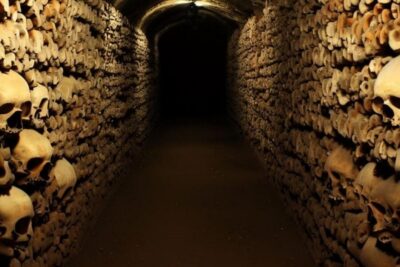
Paris: Catacombs, Audio Guide, and River Cruise Option
Read our review →
Paris: Les Caves du Louvre Guided Tour with Wine Tastings
Read our review →
Paris: Catacombs Ticket and Seine River Cruise
Read our review →
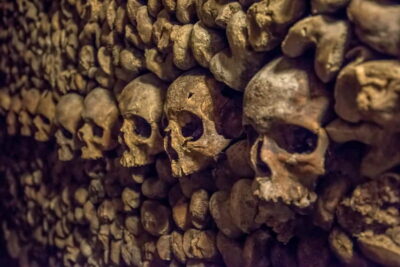

From Geneva: Chamonix, Mont Blanc & Ice Cave Guided Day Tour
Read our review →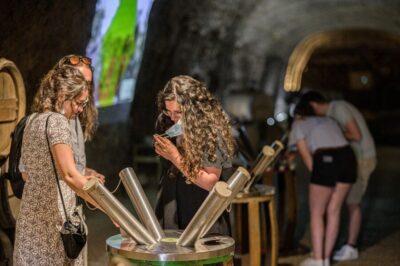
Browse the lists this tour appears in