
REVIEW · SPAIN
Guided Tour of Toledo Underground
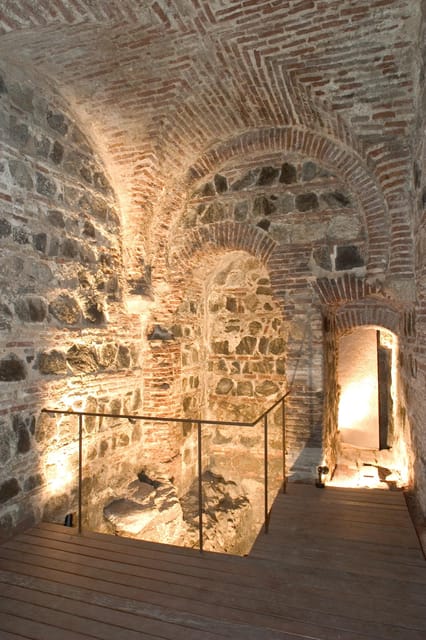
Toledo keeps much of its past below street level. For two hours, you’ll move through five underground places tied to Roman, Muslim, Jewish, and medieval life, including a 10th-century hammam and the city’s only preserved Holy Brotherhood dungeons. I like the clear focus on everyday life, from washing rituals to water storage, and the chance to enter spaces that require an accredited guide. The main drawback is that the tour is Spanish only, and it is not suitable for wheelchair users or people with mobility impairments.
I also like the price: $15 gets you five guided sites, which is strong value if you want more than Toledo’s grand churches and viewpoints. Guide Mónica receives especially warm praise for her clear voice, humor, and ability to make each underground layer feel connected. Arrive 15 minutes early at Plaza de Zocodover, look for the green flag, and remember the tour needs at least four people to run.
Key points at a glance
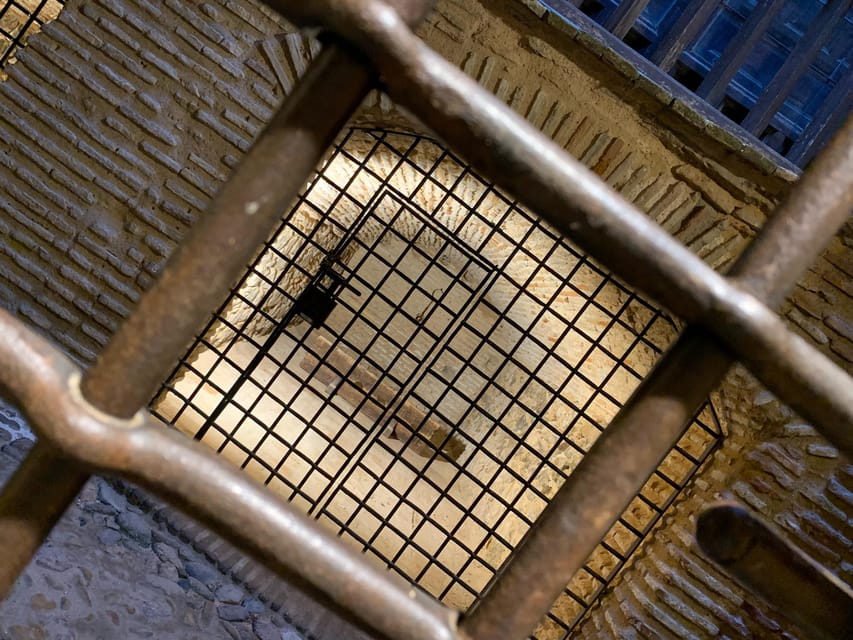
- Five different underground sites: See medieval dungeons, Arab baths, a water well and cistern, a Jewish mikvah, and Roman baths in one compact walk.
- A tour about daily life: The focus is not only on rulers and monuments, but also on hygiene, prayer, water shortages, prisoners, and neighborhood life.
- Exclusive access: Some spaces can only be entered with an accredited guide.
- Strong value at $15: Two hours and five included sites make this an inexpensive way to add depth to a Toledo visit.
- Spanish-language storytelling: Mónica is especially praised for her engaging explanations, but you should be comfortable following a live tour in Spanish.
- Plan for access limits: The experience is not suitable for wheelchair users or people with mobility impairments.
Toledo’s story begins beneath Plaza de Zocodover
Meet at Plaza de Zocodover, Toledo’s central gathering place. You’ll recognize the guide by a green flag, and arriving 15 minutes early matters because the group moves on foot through several stops rather than waiting around at one single attraction.
The meeting point is a good starting place for this subject. Above ground, Toledo can feel like a city of churches, towers, stone lanes, and grand views. Below ground, the story becomes more practical. You’ll look at where people bathed, how they handled water, what religious customs shaped a Jewish home, and how prisoners were held in the Middle Ages.
That change of scale is the real strength of the tour. You are not simply admiring old walls. You are asking how people lived in a city built on a rocky hill, where water, privacy, sanitation, and security were daily concerns.
The route lasts about two hours, with roughly 20 minutes at each listed site. That gives the guide enough time to explain the purpose of each place without turning the outing into a long archaeological lecture. It also means you should expect a steady pace. This is a walking tour through historic streets and underground rooms, not a seated museum visit.
The tour is conducted in Spanish. Some original-language content may be shown, so this experience suits you best if you can follow spoken Spanish or are traveling with someone who can help interpret.
More Guided Tours in Spain:
- From Valencia: Cueva de Sant Josep Boat Tour with Guide
★ 4.6 · 2,319 reviews - Nerja: Caves of Nerja Entry Ticket with Audio Guide
★ 4.6 · 1,616 reviews - Palma: Caves of Genova Ticket & Digital Audio Guide
★ 3.9 · 820 reviews
The Holy Brotherhood dungeons and medieval Toledo
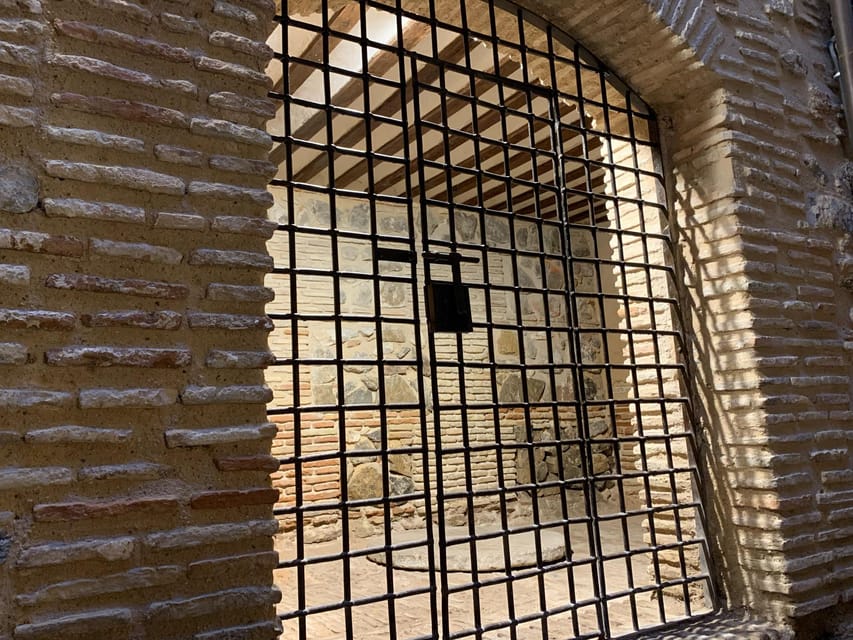
The first stop is Posada de la Hermandad, home to the dungeons of the Holy Brotherhood. These are described as the only Holy Brotherhood dungeons still preserved in Toledo, which gives the site a special role in the city’s medieval story.
Here, the guide turns from public squares and religious buildings to punishment and confinement. You’ll hear about prisoners’ daily lives and the people who watched over them, including the Mangas Verdes, the famous jailers connected with the site.
This stop works best when you think of it as a social-history visit. A dungeon can be easy to treat as a quick, gloomy photo stop. A good explanation gives it more weight by showing how justice operated and what imprisonment meant before modern systems of law and detention.
The guide’s storytelling matters a great deal here. Mónica is praised for creating a strong narrative and for making the past easy to picture. Her clear voice and lively delivery are useful qualities in a room where the atmosphere alone cannot explain what happened.
The limitation is simple: this is not a large museum with a long display of objects. The value comes mainly from the preserved space and the guide’s interpretation. If you prefer grand architecture or extensive collections, this will feel modest. If you want to understand Toledo through ordinary people and institutions, it is a sharp opening to the tour.
Cenizal Baths: a look at Muslim daily life
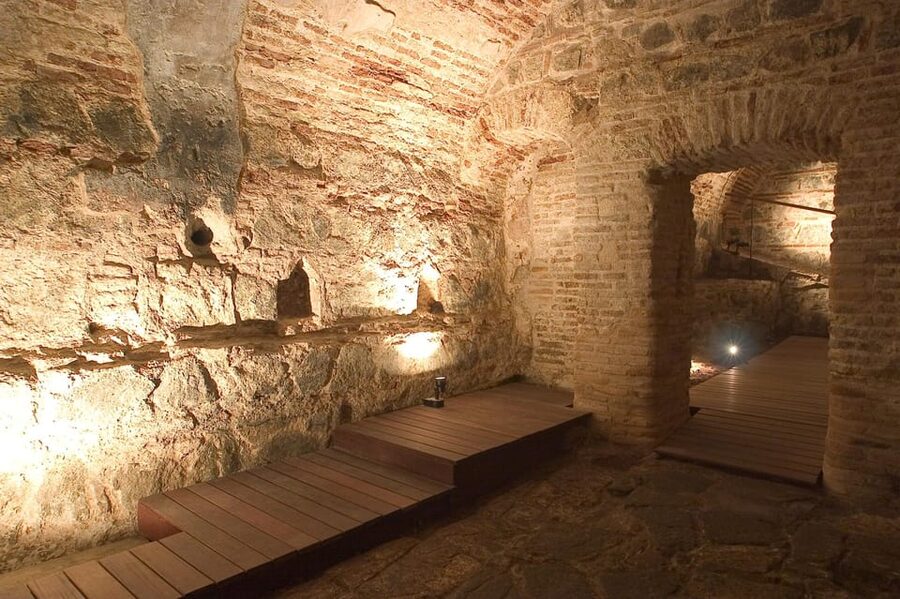
Next comes the Baños Árabes del Cenizal, associated with Tulaytula, the Muslim-era Toledo. The site takes you back to the 10th century and introduces the role of the hammam in hygiene, religious practice, and social life.
This is one of the tour’s most useful stops because it gives context to the word Arab baths. These were not simply places to wash. The guide explains how bathing connected with religious customs and community life, helping you picture the routines of Muslim residents rather than treating the period as a distant chapter in a textbook.
The building itself is an underground archaeological space, so expect atmosphere more than polished presentation. You may find the rooms feel spare compared with Toledo’s major monuments. That is part of the point. The guide helps you read the space and imagine how it functioned.
At about 20 minutes, the visit should feel focused. You get the basic layout, the cultural setting, and the reason hammams mattered without losing half a day to one small site.
I especially like this part for visitors who have already seen Toledo’s famous Christian landmarks. The baths add another layer to the city and help explain how the Three Cultures shaped the same urban setting. The tour does not present Muslim, Jewish, Christian, and Roman Toledo as isolated attractions. It places them one after another, beneath the same streets.
Pozo del Salvador and Toledo’s water problem
At Plaza del Salvador, the tour turns to the Pozo del Salvador. The guide explains the difference between a well and a cistern, two basic but important tools for obtaining drinking water at the top of Toledo’s rocky site.
Water is one of those subjects that can disappear behind the city’s grand image. Toledo’s beauty comes with a practical challenge: the old city occupies high ground, and water shortages could become serious during droughts. The Pozo del Salvador gives you a concrete way to understand how residents managed that problem.
This stop is valuable because it connects archaeology with engineering. You are not only looking at an old opening in the ground. You are learning how people collected, stored, and accessed water, and why a well and a cistern served different purposes.
The 20-minute format is about right. The topic is specific, and the guide’s explanation supplies the meaning. Without that context, the site could be easy to pass by. With it, you begin to notice how much of city life depended on systems that modern visitors rarely see.
This may be the least dramatic stop visually, especially if you are expecting grand chambers. Its reward is practical understanding. I would keep it on the route because it makes Toledo feel like a functioning city rather than a collection of old monuments.
A few more cave trips around Spain worth a look
- Porto Cristo: Caves of Hams Entry Ticket
★ 4.2 · 6,548 reviews - Mallorca: Caves of Drach Day Trip & Optional Caves of Hams
★ 4.3 · 2,720 reviews - Madrid: La Cueva de Lola Flamenco Show Tickets with Drink
★ 4.8 · 2,567 reviews - Lanzarote: Timanfaya Park, Jameos Agua, & Cueva Verdes Tour
★ 4.5 · 2,393 reviews
The Casa del Judío and a 14th-century mikvah
The tour then reaches the Jewish Quarter and the Casa del Judío, where you’ll see a mikvah dating from the 14th century. This is one of the most distinctive stops because it brings Jewish religious life into the underground route through a private or domestic setting.
A mikvah is connected with ritual immersion, and the guide uses the space to discuss the Jewish community that lived in Toledo at the time. The site blends legend and history, but the important point is that you are looking at a place tied to belief and daily practice, not only a decorative monument.
This stop also helps explain the city’s Three Cultures in a more grounded way. The phrase can sound like a tourist slogan when it is used loosely. Here, it becomes specific: a Muslim bath, a Jewish ritual space, Roman public bathing facilities, and a medieval Christian institution all appear within one short route.
The Casa del Judío is not presented as a vast attraction. Its interest comes from its rarity and setting. A small underground room can tell you a great deal when the guide explains who used it and why.
If you have a strong interest in religious history, this may be one of the tour’s highlights. If you prefer large-scale ruins, it could feel understated. Give it time, listen closely, and you’ll get more from it than from a quick glance.
The Roman baths of Toletum finish the route
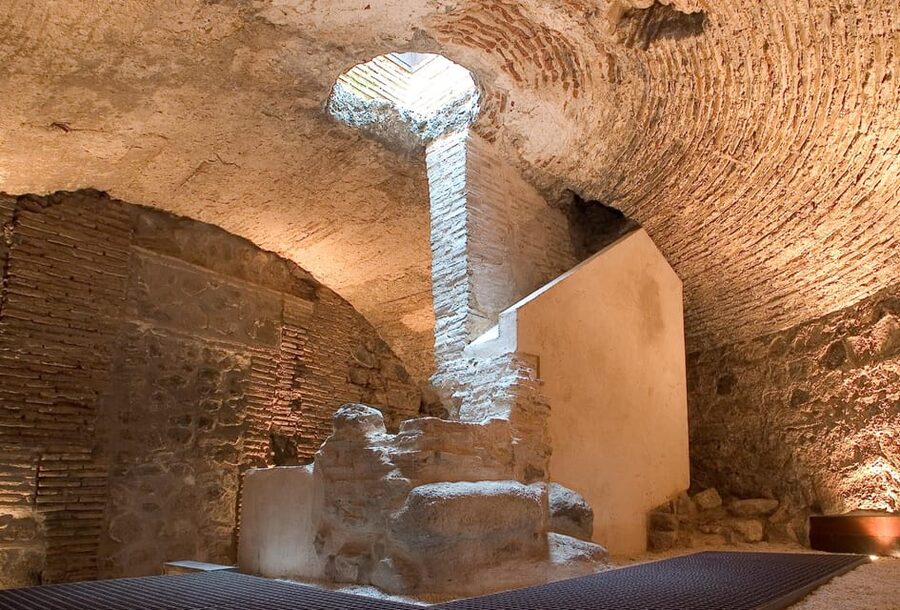
The final stop is the Roman baths of ancient Toletum. The tour describes these as among the largest in Hispania, which gives the site a fitting sense of scale after the smaller medieval and religious spaces earlier in the route.
Roman baths were social and civic places as well as facilities for washing. The guide helps you picture Toledo in its Roman period and consider how public bathing fit into a city at the height of its Roman development.
Ending here works well. You move from medieval confinement, to Muslim bathing culture, to water supply, to Jewish ritual practice, and finally to Roman public life. The sequence gives the tour a broad time span without requiring a full day.
As with the other sites, the remains are underground and archaeological. Do not expect a fully reconstructed Roman complex. The experience depends on reading surviving spaces with the guide’s help. Mónica’s style, described as clear, warm, and highly evocative, is particularly suited to this kind of visit.
The tour finishes at Plaza Amador de los Ríos. That endpoint is useful for continuing your walk through Toledo, though no onward transport or additional activity is included.
Why the $15 price makes sense
At $15 per person, this is an easy tour to justify if you want a focused introduction to Toledo’s less visible past. You receive an official guided visit to five underground sites, and some of those spaces can only be entered with an accredited guide.
The value is not based on spending hours inside one famous monument. It comes from variety. In two hours, you cover Roman, Muslim, Jewish, and medieval subjects, with each stop offering a different question:
- How did people bathe and observe religious customs?
- How did residents secure drinking water?
- How did Jewish ritual life fit into the city?
- What did Roman public life look like?
- How were medieval prisoners treated?
A private guide or a longer specialist tour would cost more, while a self-guided walk might leave you standing in front of small sites without knowing what you are seeing. This tour fills that gap at a modest price.
The main value question is language. If you cannot follow Spanish, the five-site price will not automatically make it a good purchase. The tour is live and Spanish-speaking, and the meaning of these places comes largely through explanation. For Spanish speakers, the price is excellent. For others, check your ability to understand the guide before booking.
You also get free cancellation up to 24 hours before the start and the option to reserve now and pay later. Those policies make planning easier, but the more important practical point is the four-person minimum. The tour needs at least four participants to operate.
What the praise for Mónica tells you
Several comments single out Mónica by name. She is praised for her professional approach, clear and pleasant voice, humor, and ability to bring emotion and imagery to the sites.
That matters more here than it would on a simple city transfer. Underground archaeology can be quiet and visually restrained. A guide has to explain what is no longer visible, connect separate periods, and keep the route moving. A strong storyteller turns a well, a bath, or a dungeon into a place with a human purpose.
The praise is also consistent about the tone: engaging, interesting, and fun rather than dry. You should still remember that guides can vary, and Mónica may not lead every departure. The experience provider is Toledo a pie, and the tour is described as led by an official accredited guide.
Practical details before you book
Wear something suitable for a two-hour walking route through Toledo. The activity is not suitable for wheelchair users or people with mobility impairments, so consider that restriction seriously before paying.
Meet at Plaza de Zocodover 15 minutes early and look for the green flag. The tour ends at Plaza Amador de los Ríos, not back at the starting point.
Audio recording is not allowed. The tour language is Spanish, and some content is shown in its original language.
The route requires a minimum of four people. Check the available starting times when booking, since the tour length is fixed at two hours but departure times vary.
Who should book the Toledo Underground tour?
I would choose this experience if you have at least one night in Toledo and want to go beyond the standard cathedral and viewpoint circuit. It suits curious visitors who enjoy archaeology, religious history, city engineering, and stories about ordinary routines.
It is especially good for Spanish speakers who want a lively explanation rather than a printed guide. Mónica’s praised storytelling makes the experience feel personal and connected, not like a string of unrelated ruins.
I would skip it if you need step-free access, cannot follow Spanish, or want a relaxed attraction with plenty of time at each site. The route is compact and purposeful, and the underground spaces are modest rather than grand.
For most suitable visitors, the decision is easy: five unusual places, two hours, an accredited guide, and a $15 price. Toledo’s famous monuments show you the city’s public face. This tour helps you understand what happened below it.
FAQ
Where does the Toledo Underground tour begin?
The tour begins at Plaza de Zocodover. Look for the guide carrying a green flag.
Where does the tour finish?
The tour finishes at Plaza Amador de los Ríos.
How long does the tour last?
The tour lasts two hours.
How much does the tour cost?
The listed price is $15 per person.
Which underground sites are included?
The tour includes the Holy Brotherhood dungeons at Posada de la Hermandad, the Cenizal Arab baths, the Pozo del Salvador, the Jewish mikvah at Casa del Judío, and the Roman baths of Toletum.
What language is the tour in?
The live tour guide speaks Spanish. Some content is shown in its original language.
Is the tour suitable for wheelchair users?
No. The tour is not suitable for wheelchair users or people with mobility impairments.
Can I cancel the booking?
Yes. You can cancel up to 24 hours in advance for a full refund. You can also reserve now and pay later.
Just added around Spain
- Flamenco show at Cueva Los Amayas, in Sacromonte★ 4.5 · 140 reviews
- Nerja Caves, Tropical Coast Day Trip From Granada with Opt Lunch★ 4.5 · 50 reviews
- Climbing + Zipline + Via Ferrata + Cave. Adventure route in Gran Canaria★ 5.0 · 149 reviews
- Flamenco Show in the Caves of Sacromonte★ 4.5 · 26 reviews
- Flamenco Show in Cueva Zincalé★ 4.5 · 24 reviews
- e-Bike Mountain Tour inside a Natural Park+option Tapas in a Cave★ 5.0 · 26 reviews
- Kayaking Adventure Route with Snorkeling in Mogan Caves★ 5.0 · 316 reviews
- Barranco de las Vacas, caves & village by Sky Rebels local guides★ 5.0 · 103 reviews
Spain Cave Tours, compared.
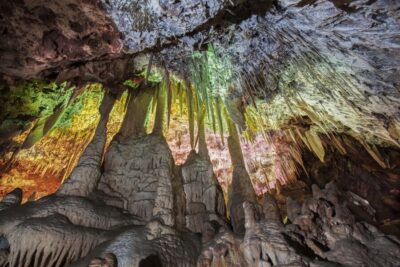

Mallorca: Caves of Drach Day Trip & Optional Caves of Hams
Read our review →
Madrid: La Cueva de Lola Flamenco Show Tickets with Drink
Read our review →
Lanzarote: Timanfaya Park, Jameos Agua, & Cueva Verdes Tour
Read our review →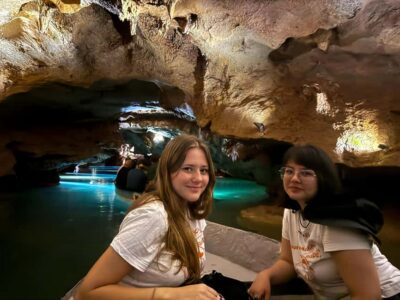
From Valencia: Cueva de Sant Josep Boat Tour with Guide
Read our review →
From Málaga: Caves of Nerja, Nerja and Frigiliana Day Tour
Read our review →
Sacromonte: Flamenco Show at Cuevas Los Tarantos Tickets
Read our review →
Mallorca: Cova des Coloms Caving Trip with Hotel Transfer
Read our review →Browse the lists this tour appears in