
REVIEW · SALT MINE
From Cusco: Moray, Maras Salt Mines & Chinchero Weavers Tour
The best moment comes at the Maras Salt Mines, where thousands of small white pools cling to the mountainside like a giant stairway. Add Moray’s sunken Inca terraces and a Chinchero weaving demonstration, and you get a strong half-day taste of the Sacred Valley without committing to a full-day circuit.
I like the smart mix of sights: one stop explains Andean craft, another shows Inca farming, and the last reveals an ancient salt industry still in use. I also like the price, just $15 before entrance fees, which makes the tour a useful choice for budget-minded visitors.
The main catch is that the low price does not include the Moray ticket of 70 soles or the 20-sole Salt Mines fee. Some stops also include shopping, so this suits you best if you enjoy local demonstrations and can politely browse without feeling pressured to buy.
Key points to know before you go
- Moray reaches 11,318 feet: Expect striking terraces, thin air, sun, and a short walk with little shade.
- The salt pools are still productive: This is not just an archaeological stop, but a working pre-Inca salt-making site.
- Chinchero adds living culture: You see Quechua weaving, plant-based dyes, alpaca products, and local craft traditions.
- The tour lasts about 390 minutes: It packs several stops into roughly six and a half hours.
- Entrance fees are extra: Budget 70 soles for Moray and 20 soles for the salt mines.
- Guides are a major strength: Guides such as Felipe, Julio, Edi, Manuel, John, and Roy have been praised for clear explanations and personal care.
Why this half-day route works from Cusco
This is a compact Sacred Valley outing built around three different ideas: food production, salt production, and Andean craft. You are not simply ticking off ruins. You are seeing how people used altitude, water, plants, and local materials to support daily life.
The route also helps you avoid an exhausting full-day tour. Several stops last between 20 and 60 minutes, and the longest walks are manageable for most people who are comfortable on uneven ground. One guide may give a talk, then leave you time to take photos and look around.
The advertised duration is 390 minutes, so allow about six and a half hours from pickup to return. A common schedule begins around 8:30 in the morning and reaches central Cusco in the afternoon, though your exact pickup time depends on the departure you book.
Pickup is available from hotels outside Cusco’s Centro Histórico, while central meeting points include the historic center. At the end, drop-off is in the Centro Histórico area, including Plaza Regocijo. Hotel drop-off is not included, so plan for a short walk or local ride if needed.
More Salt Mine Tours in the world:
- Krakow: Wieliczka Salt Mine Tour with Entry Ticket
★ 4.6 · 10,927 reviews - From Krakow: Wieliczka Salt Mine Tour
★ 4.6 · 9,393 reviews - Krakow: Wieliczka Salt Mine Fast-Track Ticket & Guided Tour
★ 4.5 · 5,872 reviews
Chinchero: weaving, dyes, and a first look at Andean culture
The first main stop is Chinchero, at about 3,762 meters. The altitude is already serious here, especially if you have just arrived in Cusco, so take the opening part of the morning slowly.
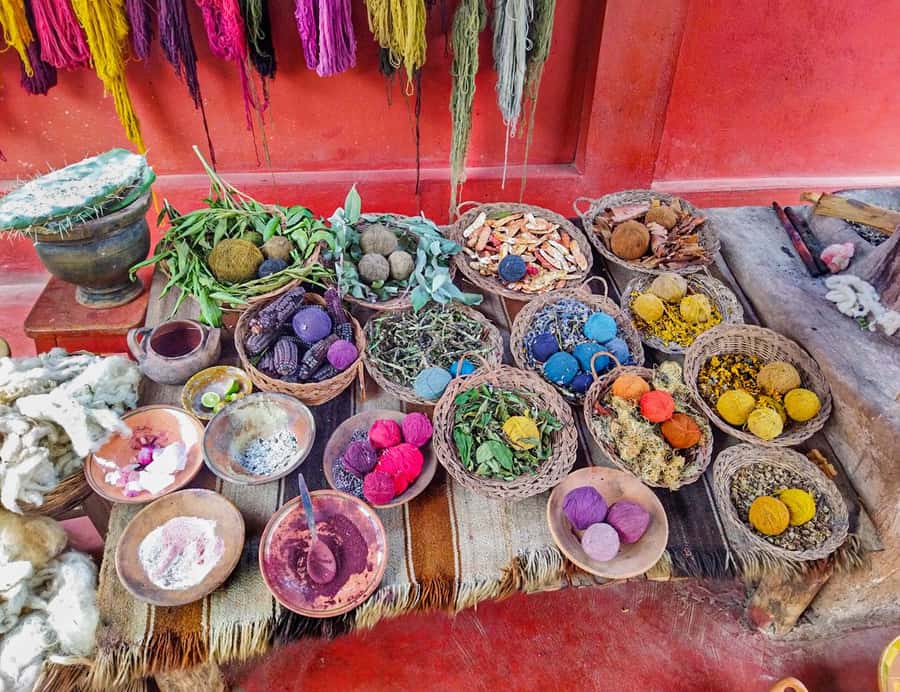
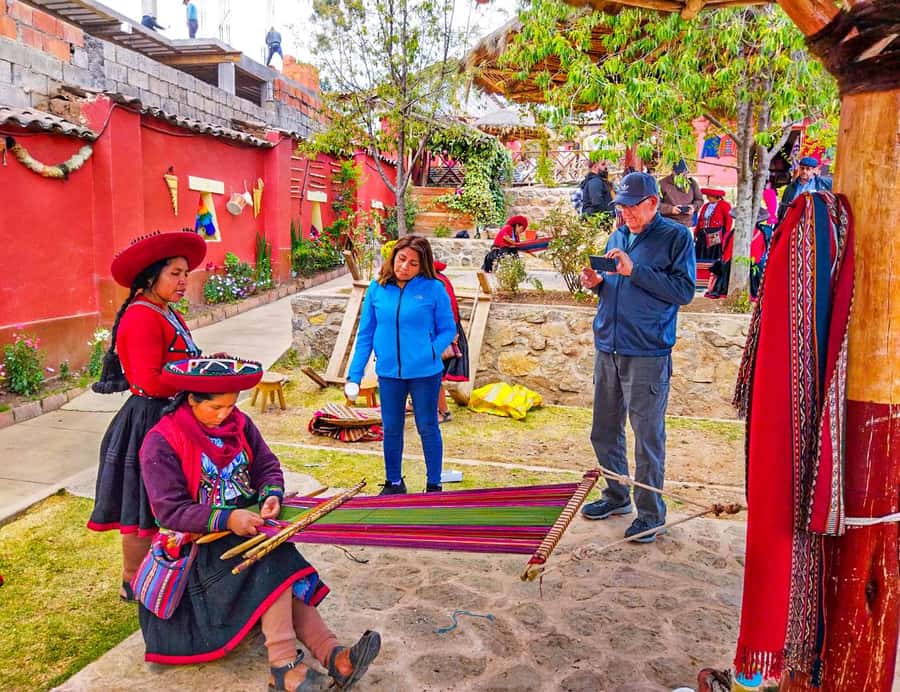
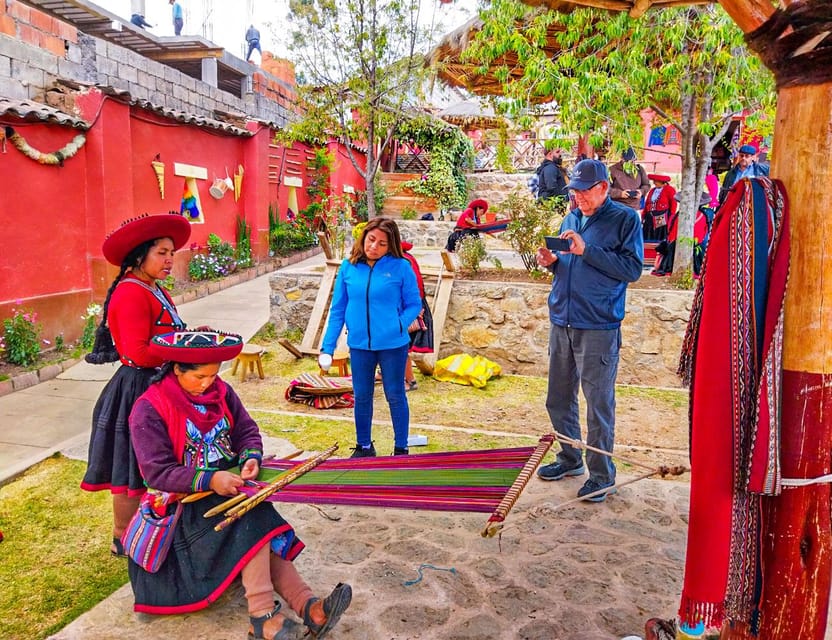
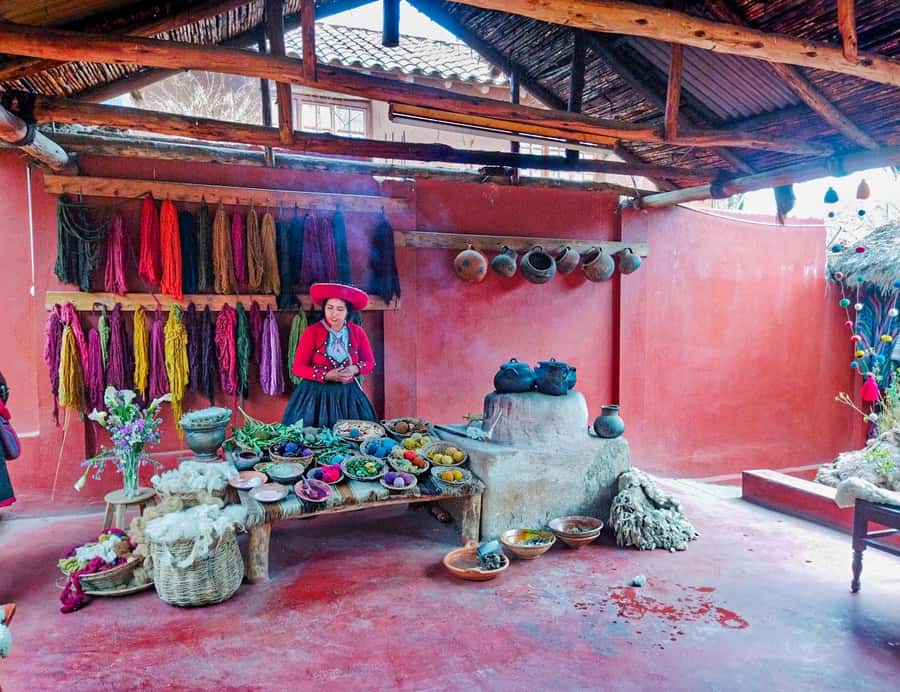
At the weaving workshop, local artisans demonstrate Quechua textile traditions. You can see how natural plants are used to create colors for Andean cloth. The demonstration gives useful context to the alpaca scarves, hats, blankets, and other goods you may see for sale later.
This stop is partly educational and partly commercial. That is not automatically a problem. The workshop connects the craft to real local work, and several guides add explanations about alpaca fiber, dyeing, and regional traditions. Still, you should expect time for shopping.
The stop lasts about an hour, which is long enough to watch the demonstration and browse. If you are not interested in buying textiles, you can focus on the process rather than treating the shop as an obligation. Guides have been praised for keeping these visits friendly and relatively low-pressure.
A few departures also include small cultural touches, such as explanations of Andean herbs or a short ritual. These details depend on the guide, but Felipe has been singled out for making cultural traditions easy to understand and for adding personal stories to his explanations.
Bring cash if you hope to shop. The activity information specifically recommends it, and you will also need cash for the entry fees, snacks, or small purchases.
Moray at 11,318 feet: an Inca farming puzzle
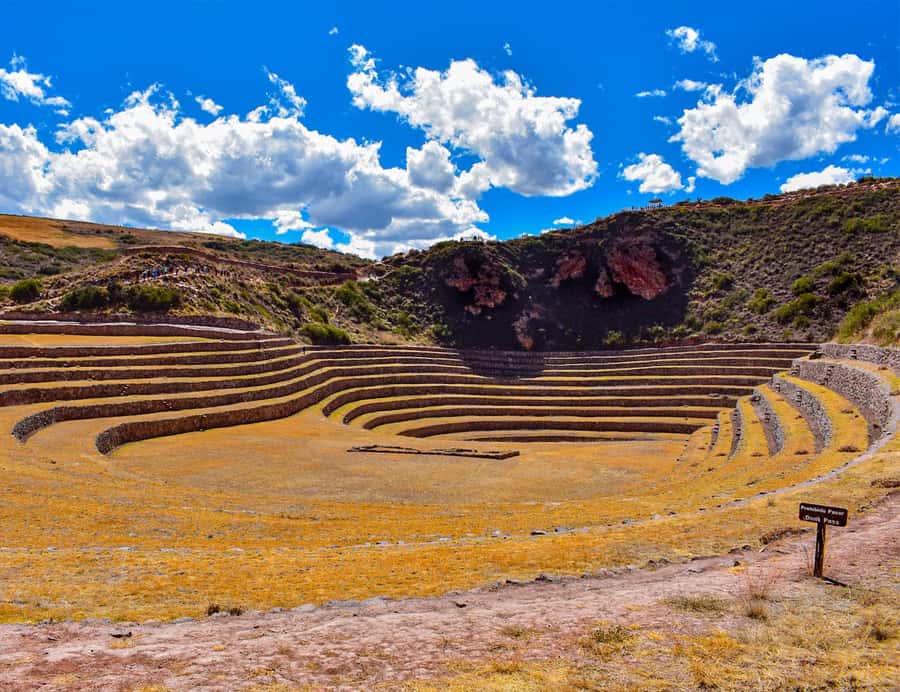
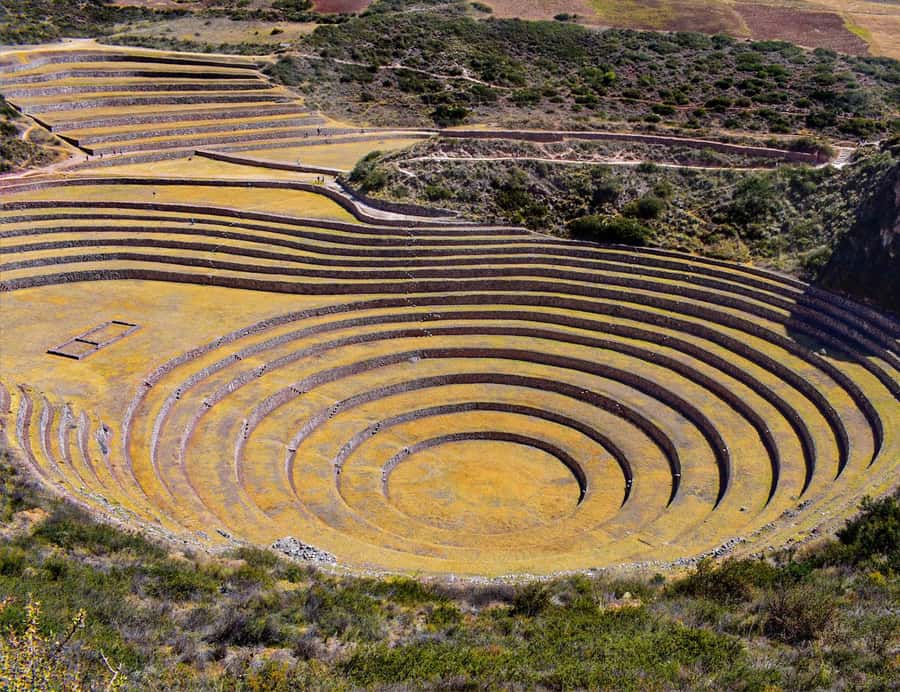
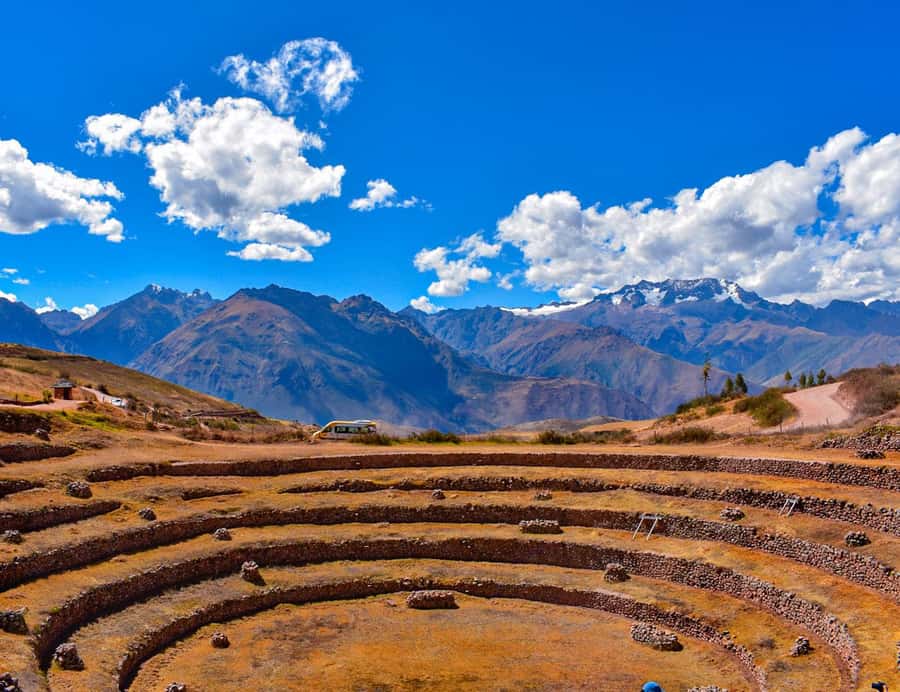
Moray is the archaeological centerpiece of the tour. The site sits at 3,450 meters, or 11,318 feet, in a broad highland setting. From the viewing area, huge circular terraces sink into the earth in a series of rings.
The shape is immediately memorable, but the guide’s explanation makes the stop more meaningful. The terraces are linked to Inca agricultural planning and an irrigation system. Their unusual form raises questions about how crops were tested and grown at different heights and temperatures.
You get about 40 minutes for a guided visit and a walk. That is enough for the main explanation, photographs, and a closer look, but it is not an open-ended archaeological visit. If you want to study every stone, you may wish for more time.
The altitude matters here. You may be walking under strong sun while also breathing thinner air. The route is not described as strenuous, but comfortable shoes are important, and you should avoid rushing up or down the terraces.
The Moray entrance fee is 70 soles and is not included in the $15 tour cost. This is the biggest extra expense of the day, so include it when comparing the tour with other Sacred Valley options.
I find Moray especially useful for visitors who want more than a pretty photograph. The terraces show a practical side of Inca society. They remind you that the empire depended on farming skill, water management, and close attention to mountain conditions.
Maras village: a brief pause among old stone buildings
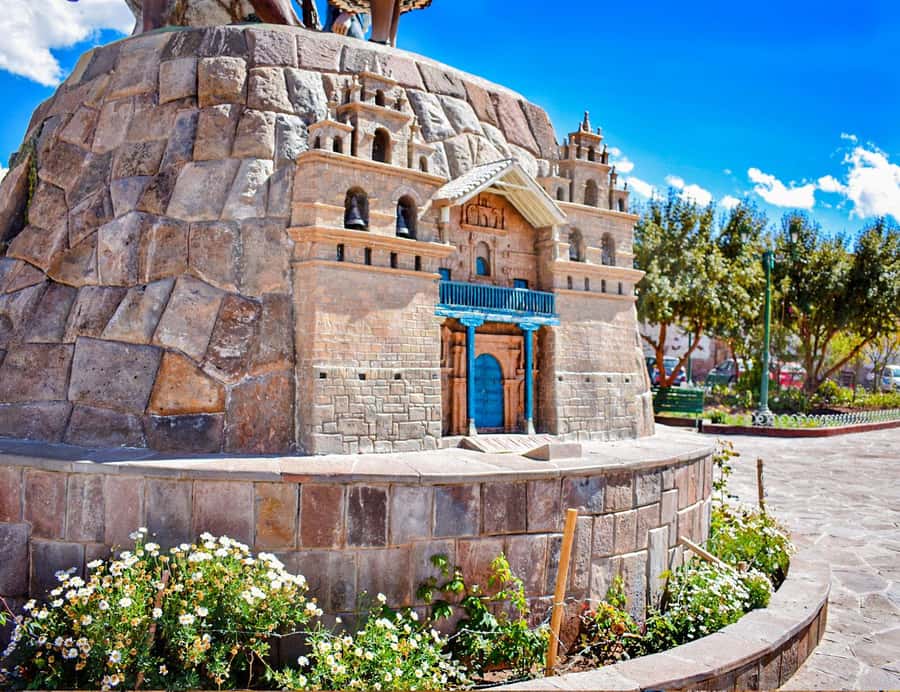
Before or around the salt mines, the route passes through Maras village. Here you see preserved colonial architecture and buildings made with thin stones. The stop is shorter, with roughly 20 minutes of free time and shopping.
This is not the main reason to book the excursion, but it adds a useful layer. The tour moves from pre-Inca and Inca engineering to colonial-era buildings, then to a salt industry that reaches back before the Incas.
You may have time to browse for local goods or use the pause for photos. Do not expect a long walking tour of the village. The schedule is designed to keep the day moving toward the salt pools and back to Cusco.
A few more cave trips around the world worth a look
- Chichen Itza, Cenote, and Valladolid Tour
★ 5.0 · 24,293 reviews - Naples: Naples Underground Entry Ticket and Guided Tour
★ 4.4 · 21,781 reviews - Chichen Itza, Cenote & Valladolid Tour with Tequila and Lunch
★ 4.5 · 15,789 reviews - Colosseum: Underground and Ancient Rome Tour
★ 4.7 · 12,691 reviews
Maras Salt Mines: the day’s most striking view
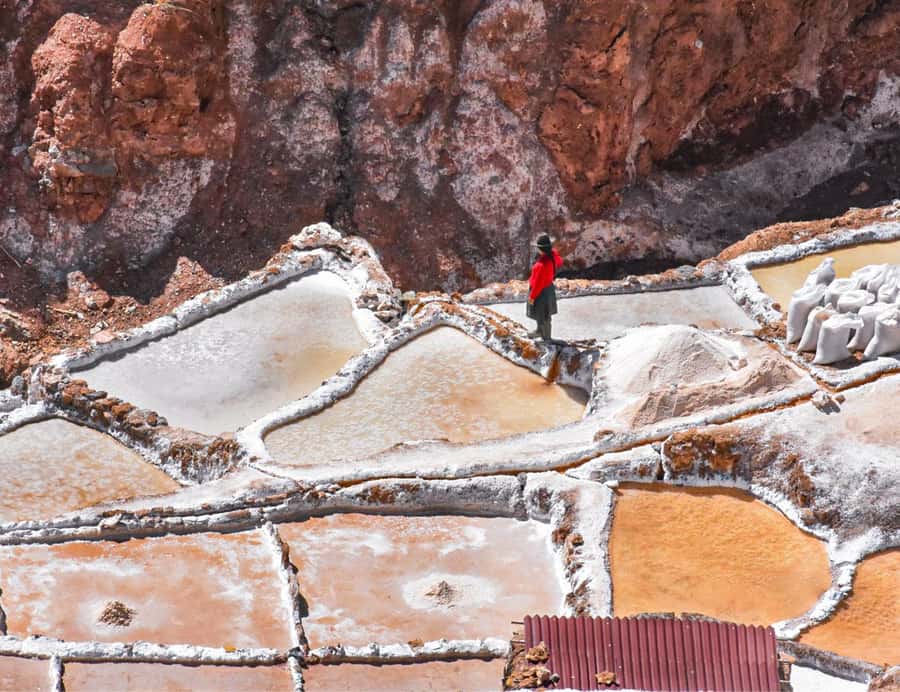
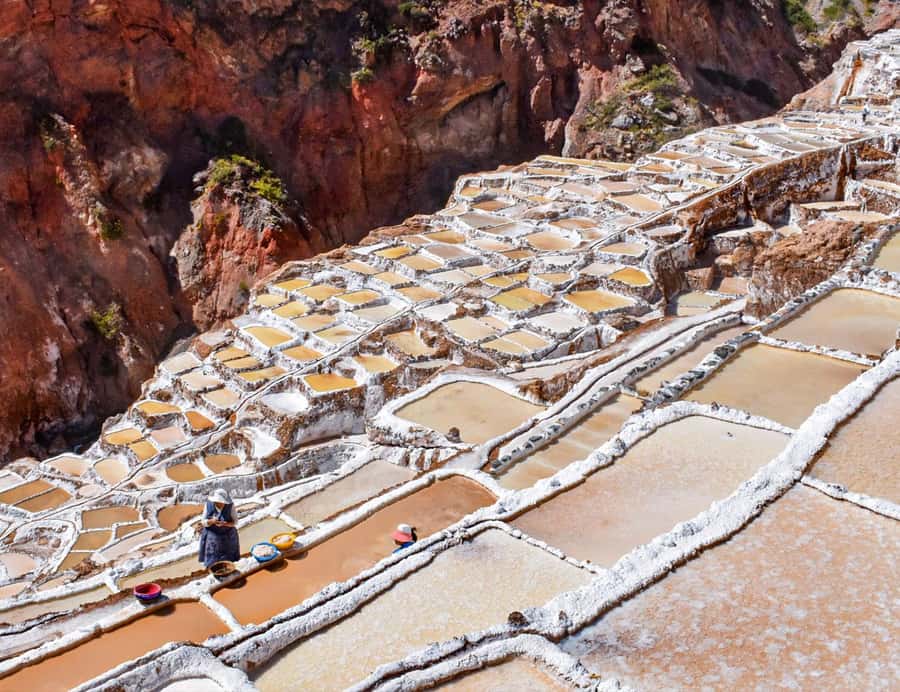
The Salineras de Maras are the tour’s visual prize. Around 3,000 small salt pools spread across the slope, fed by salty spring water that flows through narrow channels.
As the water evaporates, salt collects in layers. Local production continues today, and the salt is processed and sold in the region. That working quality gives the site more character than a purely historical ruin. You are looking at a place tied to both pre-Inca practice and present-day livelihoods.
The walk and guided visit last about 40 minutes. You will have time for the main explanation and photos, but the viewing area and paths can be crowded at popular times. Stay with the group and follow any instructions about where you may walk.
The light changes the appearance of the pools. In dry, sunny conditions, the salt can look bright white. At other times, the pools may appear brown, gray, or pinkish depending on water, minerals, and season. The surrounding mountains make the view even more dramatic.
The Salt Mines entrance fee is 20 soles, separate from the tour price. It is a small extra compared with Moray, but both fees should be part of your budget.
This stop can be hot despite the high elevation. Bring a hat, sunscreen, and water. You may also want a camera or phone with plenty of battery, since the pools make some of the strongest photographs of the outing.
Transport, timing, and how the day feels
Transportation is included, and the vehicle is described as clean and comfortable. The roads near the salt mines are narrow, so a careful driver matters. Guides and drivers have included Felipe, Julio, Manuel, Miguel, Willy, and others, with particular praise for safe driving and good timing.
The route involves road travel between stops, but the frequent pauses help break it up. If you are prone to car sickness, the 30 to 60-minute stops give you regular chances to get out and walk. You can also ask your guide for help if you start feeling unwell.
The experience is available as a small-group tour or a private option. A private departure costs more than the advertised basic price, but it can make sense if you want a flexible pace, more time for questions, or a more personal day. The regular group option is the better value if your priority is seeing the main places at a low cost.
The schedule is fairly full but not punishing. You visit several locations, yet the individual stops are short enough that the day does not feel like one long hike. Some people may find the pace ideal. Others may prefer a private tour or a slower visit spread across two days.
The vehicle may feel warm in strong sun, especially when full. Dress in light layers so you can adjust easily. Comfortable walking shoes are more important than hiking boots.
What the guides add to the experience
This tour depends heavily on the guide. The sites are attractive on their own, but the explanations connect them.
Felipe has received especially strong praise for his clear English, humor, cultural stories, and care with altitude, sunscreen, and hats. Julio has also been noted for explaining Inca history in a lively way and answering questions at each stop. Edi, Manuel, John, Roy, Rehider, Jhon, and other guides have been praised for friendly service, good organization, and useful local detail.
The exact guide is not guaranteed, so you should not book solely on the hope of getting one particular person. Still, the repeated strength of the guiding is important. You are paying very little for transport, but the interpretation helps turn Moray and Maras from photo stops into places you can understand.
Guides may also help with practical problems. One guide assisted a guest with issues involving a forgotten phone, currency exchange, and other small troubles. That kind of attentiveness matters when you are at altitude and moving through unfamiliar towns.
English and Spanish tours are available. If you have questions about farming, weaving, salt production, or local beliefs, ask them. The format allows time for conversation, especially on a private departure.
Price and extra costs: excellent value with two clear catches
At $15 per person, the tour is unusually inexpensive for a six-and-a-half-hour outing with pickup, transport, and a bilingual guide. Even after adding 90 soles for the two entrance fees, the total can still compare well with a private taxi or a larger full-day Sacred Valley tour.
The price is best understood as a transport and guiding deal, not an all-inclusive excursion. You pay separately for:
- Moray entrance: 70 soles
- Maras Salt Mines entrance: 20 soles
- Lunch, snacks, and drinks
- Shopping purchases
- Hotel drop-off
The shopping stops are worth considering before you book. Chinchero and Maras include time for browsing, and some visitors enjoy buying alpaca goods, woven products, or local salt. If shopping is not your thing, these pauses may feel less useful than extra time at Moray or the salt pools.
Lunch is on your own. The tour returns to Cusco in time for food according to the stated plan, though the overall timing can place your return in the afternoon. Carry a snack so you are not relying on an exact arrival time.
The booking terms are also flexible. You can cancel up to 24 hours before departure for a full refund, and reserve now while paying later. Pickup outside the Centro Histórico is included, but you should wait in your hotel lobby 10 minutes before the scheduled time.
Who should book this Cusco excursion?
I would choose this tour if you want a short, varied introduction to the Sacred Valley rather than a full day of major archaeological sites. It suits solo visitors, couples, families, and anyone looking for a lighter day before a trek.
It is also a good fit if you care about living culture. The weaving workshop and active salt production show that the Andes are not only a collection of ancient monuments. People still dye, weave, farm, produce salt, and sell goods in these places.
You should think twice if you dislike shopping stops, want long independent visits, or need a very slow pace at high altitude. The tour is efficient, but you will not have hours at each site.
Bring your passport, hat, sunscreen, camera, comfortable shoes, water, and cash. The tour runs rain or shine, so a change in weather should not surprise you. The strong sun can be the bigger issue than rain, especially at Moray and the salt mines.
Should you book the Moray and Maras tour?
Yes, if you want strong value and a well-planned half-day route. Moray gives you Inca farming and water management, Maras shows an ancient industry still operating, and Chinchero adds a direct look at Quechua weaving.
The main decision is not the $15 price. It is whether you are comfortable adding the entrance fees, accepting short shopping visits, and spending much of the day moving between several stops. If you are, this is one of the most efficient ways to see these Sacred Valley highlights from Cusco.
Choose the private option if flexibility matters more than price. Choose the small-group tour if you want the lowest cost and a clear introduction guided by someone such as Felipe, Julio, Manuel, or another member of the local team.
FAQ
How long does the tour last?
The tour lasts 390 minutes, or about six and a half hours. Pickup and return timing can vary by departure, and the stated schedule generally brings you back to Cusco in the afternoon.
Is hotel pickup included?
Pickup is included from hotels outside Cusco’s Centro Histórico. You should wait in the hotel lobby 10 minutes before the scheduled pickup time.
Is hotel drop-off included?
No. The tour offers drop-off in central Cusco, including Plaza Regocijo and the Centro Histórico area, but hotel drop-off is not included.
Which languages are available?
The live tour is available in English and Spanish.
Are the Moray and Salt Mines entrance fees included?
No. The Moray entrance fee is 70 soles, and the Salt Mines entrance fee is 20 soles.
Is lunch included?
No. Lunch is on your own. The tour is scheduled to return to Cusco in time for you to eat afterward, but you should carry cash and a snack for the day.
What should I bring?
Bring your passport, sun hat, camera, sunscreen, comfortable shoes, and cash. The tour operates in rain or shine.
Just added around the world
- From Hanoi: Hoa Lu, Mua Cave and Tam Coc Full-Day Trip★ 4.6 · 164 reviews
- From Hanoi: Ninh Binh, Bai Dinh, Trang An and Mua Cave Trip★ 4.7 · 20 reviews
- Hanoi: Halong Bay Day Trip with Titop Island, Cave, & Kayak★ 4.7 · 528 reviews
- From Hanoi: Ninh Binh Bai Dinh or Hoa Lu, Trang An, Mua Cave★ 3.7 · 32 reviews
- From Hanoi: Halong Bay 1 Day Trip Visit Cave, Island, Kayak★ 4.7 · 20 reviews
- From Hanoi: Hoa Lu/Bai Dinh-Tam Coc/Trang An-Mua Cave Tours★ 4.5 · 189 reviews
- Hanoi: Halong Bay Cruise, Amazing Cave, Titov Island & Kayak★ 4.2 · 39 reviews
- From Granada: Skip-the-Line Nerja Cave and Frigiliana★ 4.9 · 22 reviews
Salt Mine Tours, compared.
Krakow: Wieliczka Salt Mine Tour with Entry Ticket
Read our review →
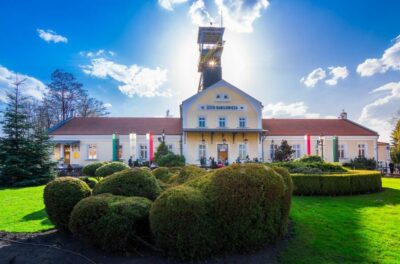
Krakow: Wieliczka Salt Mine Fast-Track Ticket & Guided Tour
Read our review →
Day Trip: Auschwitz-Birkenau and Wieliczka Salt Mine from Krakow
Read our review →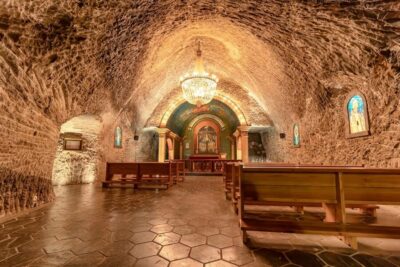
From Krakow: Wieliczka Salt Mine Tour & Skip the Line Ticket
Read our review →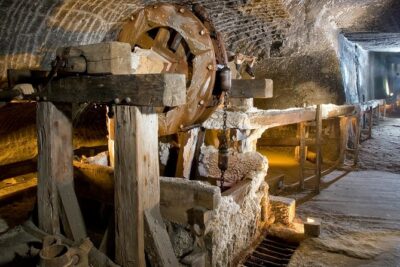
Krakow to Wieliczka: Salt Mine Guided Tour with Ticket & Transfer
Read our review →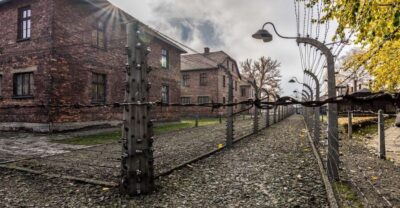
Kraków: Auschwitz-Birkenau & Salt Mine Full-Day Guided Tour
Read our review →
Auschwitz Birkenau and Wieliczka Salt Mine Guided Full Day Tour
Read our review →Browse the lists this tour appears in