
REVIEW · SALT MINE
From Cusco: Moray, Maras Salt Mines & Chinchero Weavers Half-Day
Moray’s great circular terraces and the Maras salt pools give this outing its real punch. In a single day, you see how Andean people worked with altitude, water, soil, plants, and salt, not just another set of stone ruins.
I like the mix of stops, especially the natural-dye demonstration at Chinchero and the chance to hear clear explanations from guides such as Felipe, Eddie, Julio, or Manuel. I also like the price: at $15.20 per person, the transport and bilingual guiding offer strong value before entrance fees.
The catch is the long day in a small vehicle, with no planned lunch stop and no hotel drop-off. Bring water, snacks, and patience for a full minibus, since the road time and group schedule can make the 6 to 7 hours feel longer.
Key points to know before booking
- Chinchero reaches 3,762 meters: The first stop is high, so take the morning gently and allow time to adjust to Cusco’s altitude.
- The textile visit is practical and sales-focused: You see natural dyeing, Andean clothing, llamas or alpacas in some visits, and handmade goods, but expect a strong invitation to buy.
- Moray shows Inca farming skill: The round terraces form a series of planting levels with different growing conditions.
- Maras is the visual star for many people: About 3,000 salt pools spread across the hillside and are still worked today.
- Entrance fees are extra: Budget $19 or 70 soles for Moray and $6 or 20 soles for the salt mines.
- Plan your food: Breakfast and lunch are not included, and the return to Cusco is around 3:15 p.m., near Plaza de Armas.
Why this half-day route works so well from Cusco
This is a useful introduction to the Sacred Valley area without committing to a full-day circuit. Pickup is scheduled between 8:20 and 8:40 a.m., and the return is around 3:15 p.m. near Plaza de Armas, giving you the late afternoon for lunch, further sightseeing, or an evening flight.
The route also has a sensible rhythm. Chinchero introduces living Andean traditions, Moray shifts to Inca agriculture, and Maras shows a working salt industry that reaches back to pre-Inca times. You are not simply looking at stones. You are seeing three ways people made a living in a difficult high-altitude setting.
The tour costs $15.20 per person, before admission fees. Add the listed $19 for Moray and $6 for the salt mines, and the basic cost becomes about $40.20 per person, or 90 soles for the admissions if you pay in local currency. That is still a fair price for transport, a bilingual guide, and several major sights, especially if you want an easy way to cover the area without hiring a private vehicle.
The value depends on your expectations. This is an efficient group outing, not a slow, private day with long pauses at each village. If you want plenty of time to wander independently, shop, or eat a relaxed meal, the schedule may feel tight.
More Salt Mine Tours in Peru:
- From Cusco: Sacred Valley & Maras Salt Mines Tour with Lunch
★ 4.8 · 2,227 reviews - From Cusco: Moray, Maras Salt Mines & Chinchero Weavers Tour
★ 4.8 · 1,925 reviews - Cusco: Sacred Valley, Pisac, Ollantaytambo, Salt Mines Moray
★ 4.6 · 1,058 reviews
Chinchero: weaving, color, and a high-altitude start
Chinchero sits at about 3,762 meters, higher than Moray and well above Cusco. The first part of the visit includes a traditional market where bartering has long been practiced, followed by an Andean textile center.
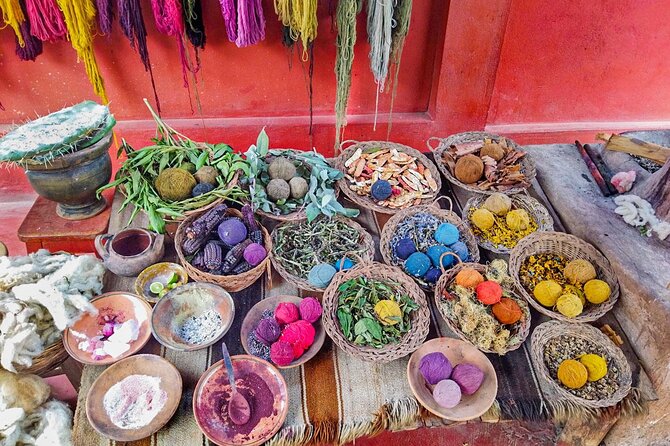
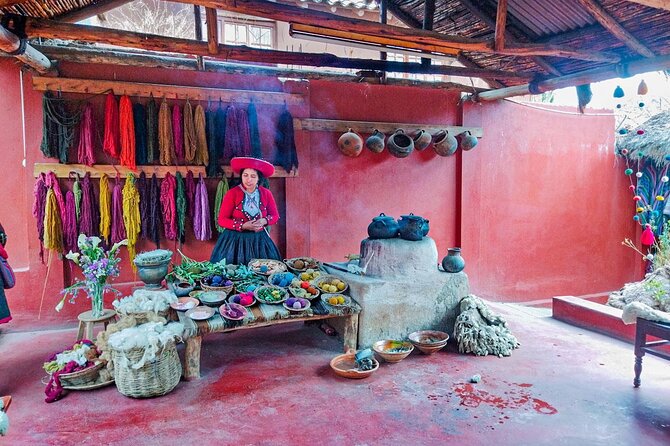
The textile demonstration is one of the most useful parts of the morning. Local weavers explain how colors come from plants and other natural materials, then show the process of turning fiber into colored yarn and cloth. Guides have also explained how llama and alpaca wool is prepared, and some visits include a chance to feed the animals.
You can pose in Andean clothing for photographs, which is optional but fun if you enjoy a visual souvenir. The better reason to pay attention is the link between the finished textile and the land around you. Colors are not just decorative. They come from a local knowledge of plants, minerals, and traditional methods.
This stop also gives you a chance to ask about modern production. One useful feature is that the textile sellers may identify which goods are pure alpaca and which include acrylic. That distinction matters, since prices and quality vary widely in Cusco’s markets.
Keep your expectations clear. The visit covers only part of Chinchero, along with the textile center. It is not a long walking tour of the entire town. The presentation can also turn into a sales pitch after the demonstration, with handmade goods placed in front of you. I would treat that as part of the visit, not a surprise, and buy only if you genuinely like an item.
Because Chinchero is the highest point on the route, avoid rushing around. Sip water, eat something small, and tell the guide if you feel unwell. The itinerary does not include breakfast, so you should not arrive expecting food to be provided.
Moray’s circular terraces and the Inca farming experiment
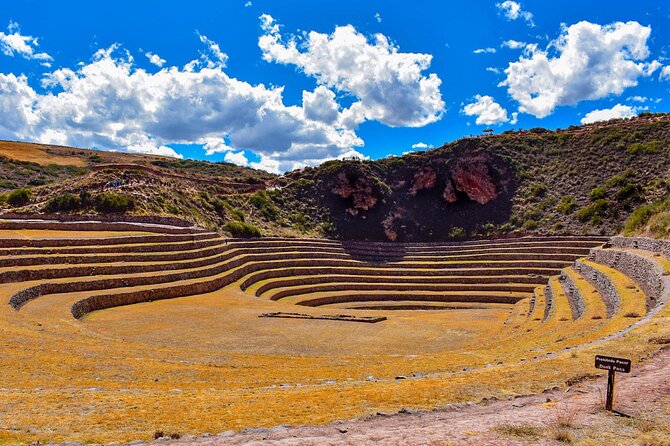
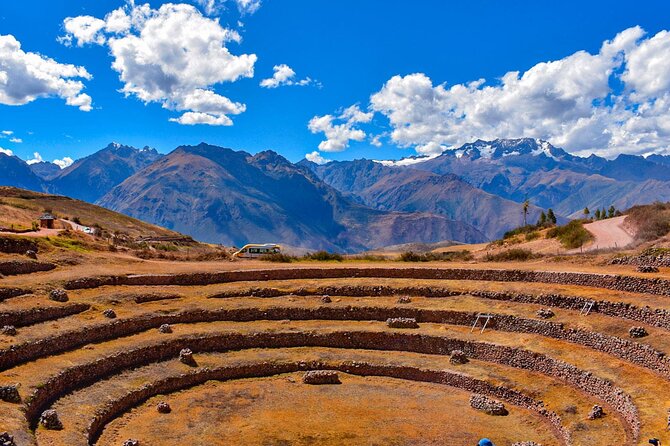
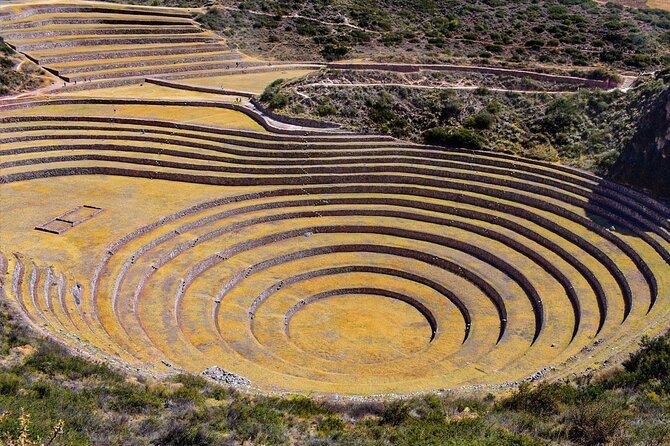
From Chinchero, the route continues to Moray at roughly 3,450 meters, or 11,318 feet. Here, the view changes from village and textile work to enormous circular terraces cut into a natural bowl.
The terraces descend in rings, each level creating a slightly different growing environment. The Incas are thought to have used Moray to test crops and compare conditions at different heights. Irrigation and terrace construction allowed them to grow plants in a place where ordinary fields would have struggled.
This is why Moray feels different from a standard archaeological stop. The site is not only impressive because of its size. It shows practical problem-solving. The Incas shaped the ground, managed water, and made use of temperature changes between terrace levels.
Your guide adds the most value here. Guides such as Felipe and Julio have been praised for explaining both the ancient farming system and the wider way of life in the Cusco region. A good explanation helps you see Moray as an agricultural facility rather than a strange amphitheater.
The stop lasts about an hour, which is enough for the main viewpoint and an explanation of the site. It is not enough for an unhurried exploration of every angle. If photography matters to you, listen for the guide’s suggested viewpoints, since the broad Andean setting and distant glaciers can add scale to the terraces.
Moray is also another high-altitude stop. The walking is not described as a demanding hike, but altitude can make even a modest walk feel harder. Wear shoes with a secure sole, especially if conditions are wet, and keep your pace steady.
Admission is not included. The listed cost is $19 or 70 soles. That is a sizeable addition to a budget tour, so include it when comparing this outing with other Cusco day trips.
Maras: thousands of salt pools on a mountainside
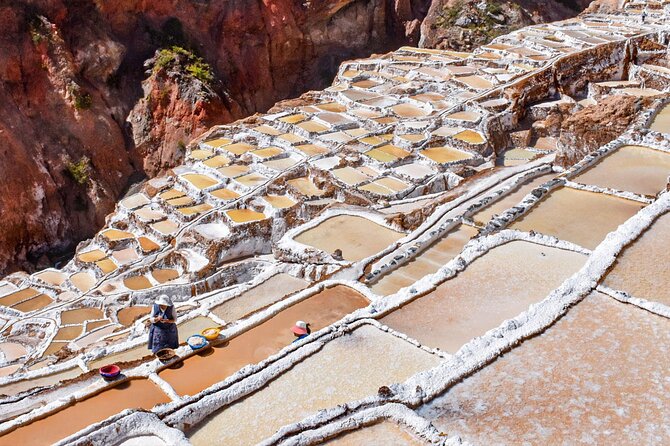
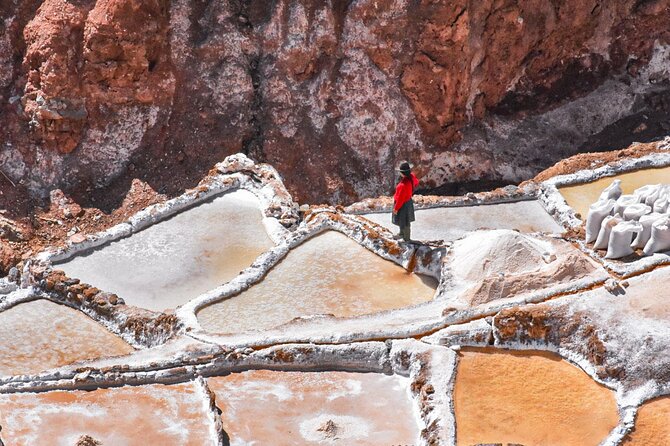
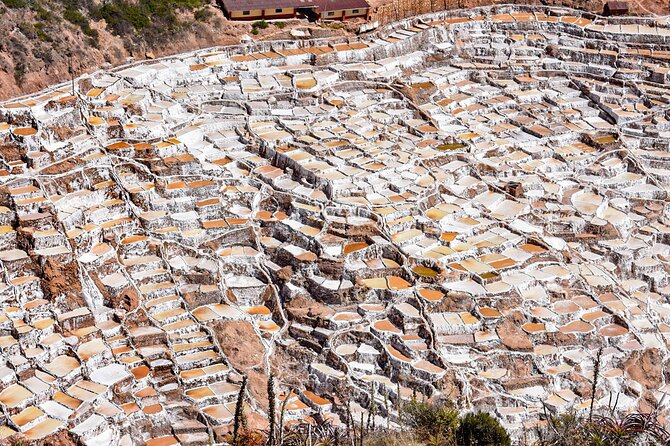
The Maras salt mines are often the favorite stop because they are so unlike the other sites around Cusco. Rather than one large ruin, you see around 3,000 small pools spread across the slope, each one catching sunlight and water.
Salt water comes from a natural hot spring. During the dry season, workers fill the pools about every three days. As the water evaporates, salt remains behind and is collected, ground, treated with iodine, packaged, and sold in markets around the region.
That process makes Maras more than a photo stop. It is an active working site with roots reaching back to pre-Inca times. The operation has continued into the present, with local communities sharing the work and income.
The colors and patterns change with the light, the amount of water, and the stage of salt production. You may see pale white pools, brownish earth, and narrow channels running between them. The view is especially striking from above, where the small basins form a dense pattern on the mountainside.
The stop lasts about an hour. That gives you time to hear the explanation, take photographs, and look closely at the water channels and salt beds. Do not expect to roam freely across every pool. This is a working area, and the route is controlled for practical and safety reasons.
Admission costs $6 or 20 soles and is also separate from the tour price. Compared with Moray, this is a modest fee, but together the two admissions add up. Carry soles if possible, since the supplied pricing is given in both dollars and local currency.
More Half-Day Trips in Peru:
- Half-Day Emerald Cave Kayak Tour with Optional Hotel Pickup
★ 5.0 · 4,978 reviews - Kuala Lumpur: Batu Caves Half-Day Tour with Pick-Up Option
★ 4.5 · 4,288 reviews - Half-Day Adventure 4×4 ATV, Water Cave and Dominican Culture
★ 4.5 · 3,394 reviews - Private Half-Day Batu Caves and Cutural Tour in Kuala Lumpur
★ 5.0 · 3,107 reviews
Maras village and the road between the stops
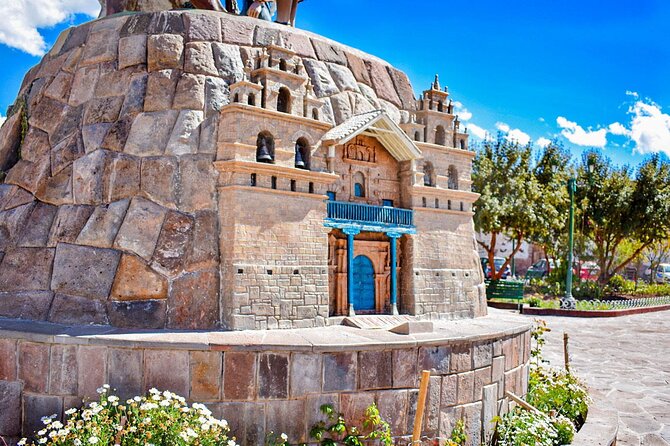
Before reaching the salt pools, the route passes through Maras village. The town is noted for colonial buildings made with thin stone, giving you a brief look at local architecture before the road continues to Salineras.
The driving is part of the day, not dead time. You will see broad Andean views from the vehicle, and several people particularly enjoy the scenery between the main stops. Still, the quality of the ride depends on how full the vehicle is and how comfortable you are with winding mountain roads.
Transportation is included, along with hotel pickup and a bilingual guide. Hotel drop-off is not included, so you return near Plaza de Armas and make your own way afterward. This is worth planning around if you have luggage, a dinner reservation, or a flight.
The advertised group limit is 16 people. That keeps the outing more personal than a large coach tour, though the minibus may still feel cramped when every seat is occupied. One direct criticism of the trip concerned uncomfortable seating in a full vehicle, so I would not book this expecting private-tour comfort.
The guides are a major part of the experience. Felipe is especially good at combining site explanations with stories about modern Peruvian life, while Eddie, Julio, Manuel, and John have also led visits. The exact guide can vary, but the tour is designed to operate in both Spanish and English.
Timing, food, altitude, and what to pack
The morning pickup window is 8:20 to 8:40 a.m. The tour usually lasts six to seven hours and returns near Plaza de Armas at about 3:15 p.m. The stated length varies slightly, so do not schedule a tight connection immediately afterward.
There is no breakfast or lunch. A long stretch without a meal can be the biggest practical drawback, especially at altitude. Eat before pickup if you can, and pack snacks, water, and perhaps a simple sandwich.
For the day, I would bring:
- Water and snacks
- Sun protection
- A light layer for changing mountain weather
- Comfortable walking shoes
- Small amounts of soles for admissions and purchases
- Space in your bag for textiles or salt products
The tour requires good weather. If poor conditions force cancellation, you are offered another date or a full refund. You can also cancel for a full refund up to 24 hours before the start time, but changes made inside that window are not accepted.
Most people can take part, and the tour is near public transportation. Still, the altitude deserves respect. Chinchero is the highest stop, and Moray is also above 3,400 meters. Move slowly and use the vehicle breaks to recover rather than treating every stop as a race.
Who will get the most from this outing
I would choose this tour if you have one free day in Cusco and want a broad sample of the surrounding area at a low base price. It works especially well for solo visitors, couples, and people who prefer a guide to explain what they are seeing rather than arranging separate taxis.
It is also a smart choice before an evening flight, provided you leave enough time for the airport and accept that the return time can shift. The route gives you several major sights without the very early start of some Sacred Valley outings.
Families can enjoy the animals, colors, and dramatic salt pools, though young children may tire during the long vehicle ride. Anyone who dislikes group schedules, sales-oriented textile stops, or packed minibuses should consider a private alternative.
I would not choose it for a relaxed meal, a full visit to Chinchero, or a quiet archaeological study. The tour covers a lot, but each stop has about an hour. Its strength is range, not depth.
Should you book the Moray and Maras tour?
Book it if you want three very different Andean experiences in one well-priced day: living textile tradition at Chinchero, Inca agricultural planning at Moray, and a still-working salt industry at Maras. The guide’s explanations are central to the value, and names such as Felipe, Eddie, Julio, and Manuel have been associated with clear bilingual storytelling and helpful photo assistance.
Before paying, add the $25 in listed admission fees, or 90 soles, and plan for food on your own. If you can accept a full minibus, a fixed schedule, and no hotel drop-off, this is an efficient and worthwhile introduction to the highlands around Cusco.
FAQ
How long does the tour last?
The outing takes about 6 to 7 hours. Pickup is scheduled between 8:20 and 8:40 a.m., with a return near Plaza de Armas at around 3:15 p.m.
What is included in the tour price?
The price includes hotel pickup, transportation, and a bilingual tour guide. Breakfast, lunch, entrance fees, tips, and hotel drop-off are not included.
How much are the entrance fees?
Moray costs $19 or 70 soles, and the Maras salt mines cost $6 or 20 soles. These fees are paid separately from the tour price.
Is food included?
No. Breakfast and lunch are not included, and the itinerary does not provide a lunch stop. Bring water and snacks or eat before pickup.
How large is the group?
The stated maximum is 16 people. Transportation is by minibus, and comfort can depend on how full the vehicle is.
Can I cancel the booking?
You can cancel up to 24 hours before the experience for a full refund. Changes or cancellations made less than 24 hours before the start time are not accepted, and poor weather may lead to a different date or a full refund.
Just added around Peru
- Moray and Maras Salt Mines Full Day Tour – Small Groups★ 5.0 · 79 reviews
- Sacred Valley Private Tour, Moray & Salt Mines Incluided★ 5.0 · 41 reviews
- Sacred Valley of the Incas Tour with Moray & the Salt Mines★ 5.0 · 61 reviews
- Salt Mines(Maras),Moray and Chincheros★ 5.0 · 41 reviews
- Tour of Lima with a visit to the catacombs of San Francisco.★ 4.2 · 24 reviews
- Lima: Historic Downtown, Miraflores & Catacombs Private Tour★ 4.5 · 28 reviews
- Lima: City Highlights Walking Tour & Catacombs★ 4.9 · 41 reviews
- Lima: Water Magic Circuit, Downtown and Catacombs Night Tour★ 4.8 · 142 reviews
Salt Mine Tours, compared.
Krakow: Wieliczka Salt Mine Tour with Entry Ticket
Read our review →
Krakow: Wieliczka Salt Mine Fast-Track Ticket & Guided Tour
Read our review →
Day Trip: Auschwitz-Birkenau and Wieliczka Salt Mine from Krakow
Read our review →
From Krakow: Wieliczka Salt Mine Tour & Skip the Line Ticket
Read our review →
Krakow to Wieliczka: Salt Mine Guided Tour with Ticket & Transfer
Read our review →
Kraków: Auschwitz-Birkenau & Salt Mine Full-Day Guided Tour
Read our review →
Auschwitz Birkenau and Wieliczka Salt Mine Guided Full Day Tour
Read our review →Browse the lists this tour appears in