
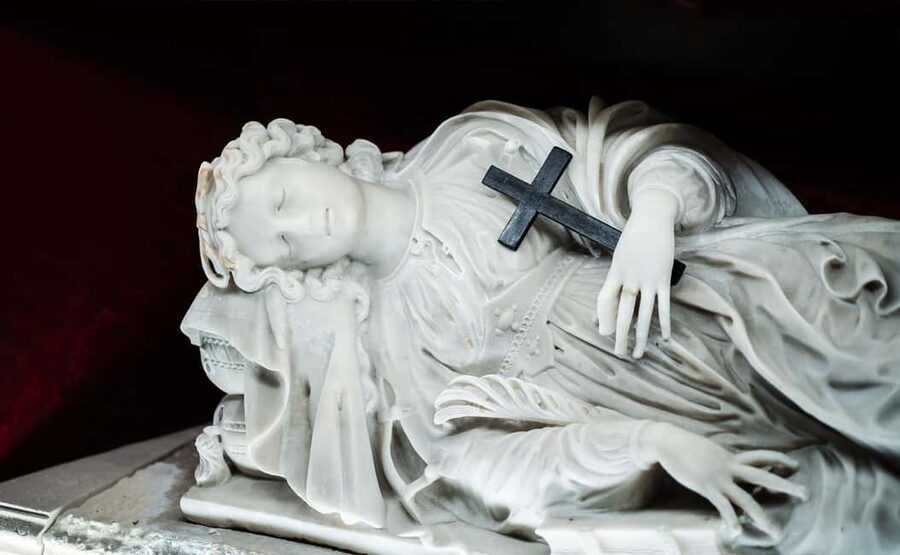
REVIEW · SYRACUSE
Syracuse: Entry ticket and guided tour of the Catacombs of Saint Lucia
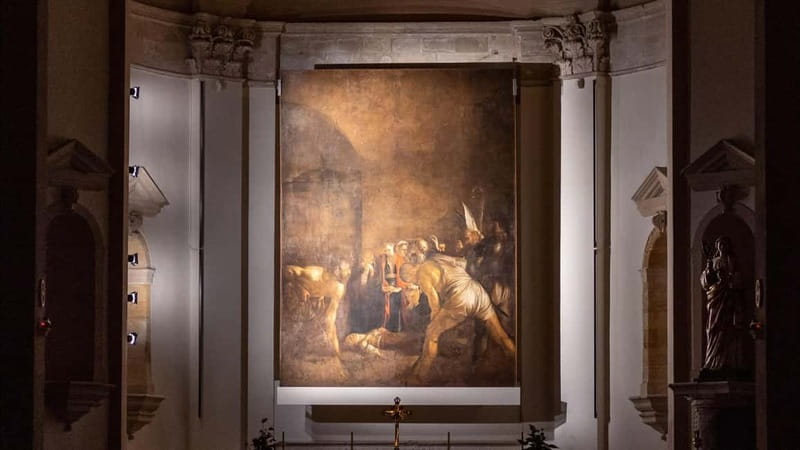
Syracuse’s Catacombs of Saint Lucy take you below Piazza Santa Lucia into a third-century Christian cemetery, where narrow galleries, burial niches, and private hypogea reveal how early Christians buried their dead. The visit also connects this quiet underground site with Caravaggio’s powerful Burial of Saint Lucy, displayed inside the basilica above.
I like the compact 45-minute format, which fits neatly into a day of sightseeing, and the modest $11 price, which gives you both an archaeological site and a major painting to look for. The main caution is the English guiding: some sessions have been hard to follow, and visits have occasionally started 15 to 45 minutes late.
I also like the site’s layered story. These are not just ancient tunnels. The catacombs were later adapted as air-raid shelters during World War II, giving you a glimpse of Syracuse’s religious and wartime past in one short visit. Just confirm the basilica’s opening time if seeing Caravaggio is important to you.
Key points to know before you go
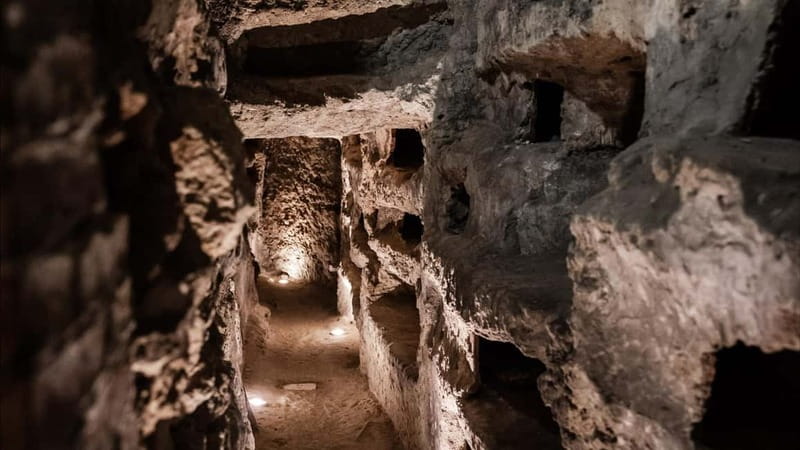
- Third-century Christian cemetery: The catacombs are among the earliest signs of the Christian Church in Sicily.
- Four underground areas: You see galleries with burial niches, private hypogea, and later burial cubicles along the corridors.
- Caravaggio connection: The basilica houses The Burial of Saint Lucy, painted in Syracuse in 1608.
- Short, affordable visit: At $11 and 45 minutes, this is an easy addition to an Ortigia itinerary.
- English quality can vary: Italian is the stronger option in some sessions, and bilingual explanations may be difficult to follow.
- Not wheelchair accessible: The underground setting is unsuitable for wheelchair users, and large luggage, pets, alcohol, and drugs are not allowed.
Beneath Piazza Santa Lucia, Syracuse’s oldest Christian cemetery
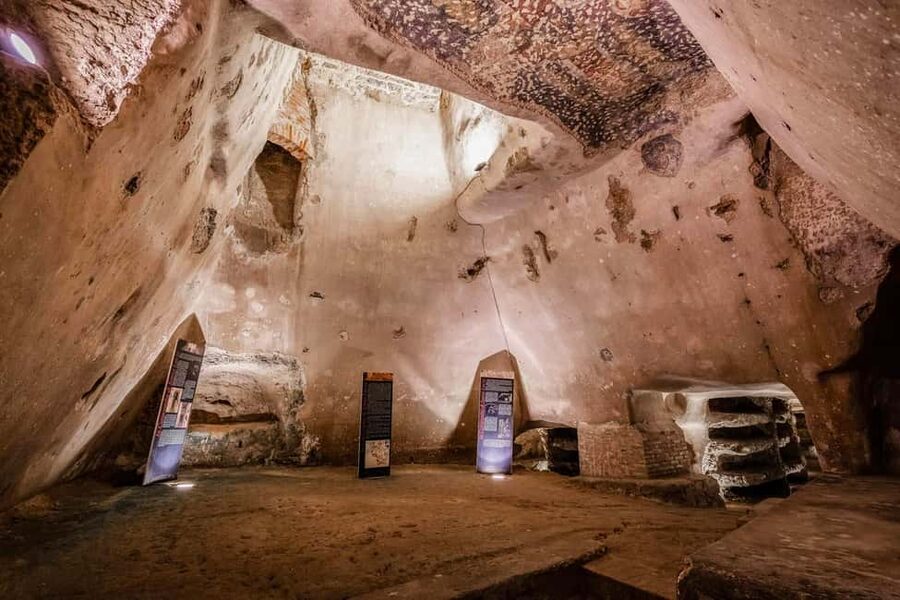
The story begins below the modern Piazza Santa Lucia, where the Catacombs of Saint Lucy form Syracuse’s oldest Christian cemetery. The site dates to the third century, a period when Christian communities were taking root across Sicily.
That date matters. You are not looking at a later medieval crypt or a decorated church basement. You are seeing an early burial complex connected to the first centuries of Christian life in Syracuse. The underground setting also helps you understand how burial spaces developed before modern cemeteries existed.
The catacombs extend beneath the square and are divided into four areas. The oldest parts use long galleries lined with niches. Later sections contain burial cubicles arranged along the passageways. The result is less like one grand chamber and more like a network that changed as the Christian community grew.
I find that layout useful because it gives the visit a clear sense of time. The galleries show an earlier form of communal burial, while the cubicles suggest a later need for more private family spaces. Your guide’s explanation is important here, since the underground remains are quiet and atmospheric but not self-explanatory.
More Catacombs and Underground City Tours in Italy
- Catacomb of St. John: Entrance ticket and guided tour with VR viewer
★ 4.0 · 34 reviews - Naples: Catacombs of San Gennaro Entry Ticket & Guided Tour
★ 4.6 · 7,941 reviews - Rome: Capuchin Crypts and Catacombs Tour with Transfers
★ 4.6 · 6,456 reviews
What the 45-minute guided visit covers
This is a short guided tour, not a long archaeological expedition. Expect to spend roughly 45 minutes learning how the cemetery was organized, what the burial spaces were used for, and why Saint Lucy matters so much to Syracuse.
The tour focuses on a portion of the catacombs rather than every underground passage. That is worth keeping in mind if you expect a large, fully open network. The accessible section is relatively small, but it still gives you the main elements: corridors, niches, burial cubicles, and the site’s connection to early Christianity.
A guide is especially helpful in a place like this. Without context, a series of recesses in the wall can look repetitive. With a good explanation, you can read the space as a record of changing burial customs and a growing religious community.
The tour is offered in Italian and English. The strongest experiences appear to be the sessions where the guide can speak clearly and give the group enough time to ask questions. English delivery has not always been consistent, so you should choose Italian if you are comfortable with it. Some tours are bilingual, and that can make the presentation longer while giving each language less attention.
A few sessions have also begun well after the scheduled time. Delays of 15 to 20 minutes have been reported, with one session starting 45 minutes late because of a booking-time mix-up. Since the whole visit lasts only 45 minutes, a late start matters. I would avoid placing a tight lunch reservation, train departure, or second timed attraction immediately afterward.
Saint Lucy’s place in the story
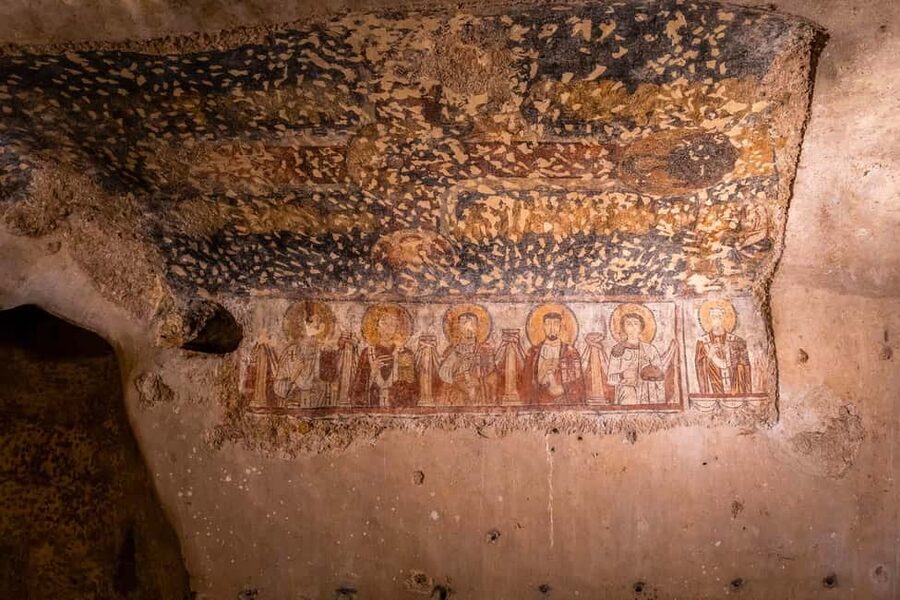
Saint Lucy is Syracuse’s patron saint, and the catacombs are tied to the place where she was buried after her martyrdom. That connection gives the site a living religious importance, not just archaeological interest.
The name can cause some confusion because the catacombs, the basilica, and Saint Lucy’s burial tradition are closely linked but are not identical spaces. The underground cemetery tells the story of the Christian community and the saint’s burial. Above ground, the basilica presents the devotional setting and Caravaggio’s painting.
Your guide may explain the relationship between these places in different ways, and one account in the supplied information expressed uncertainty about the exact grave location. For that reason, listen carefully to the wording used during your visit. The safe takeaway is that the catacombs are central to Syracuse’s devotion to Saint Lucy, even if the precise burial details need careful explanation.
This is one reason I would not treat the catacombs as a stand-alone sight. Their value grows when you connect them with the basilica, the piazza, and the wider story of Syracuse’s patron saint.
Caravaggio’s painting inside the basilica
The most famous artistic link is Caravaggio’s Burial of Saint Lucy. The painter came to Syracuse in 1608 while fleeing Malta and created the work for the Basilica of Saint Lucy.
The painting is known for its forceful use of light and shadow. It was made for this setting and is now displayed again inside the basilica, close to its original home. That makes the church visit more than an optional extra for anyone interested in art.
One practical problem is timing. The catacomb ticket covers the full entry price for the activity, but the basilica may not be open at the same time as your underground visit. One scheduled visit found the church opening much later that day, so the participant could not see the painting as expected.
Check the church hours before booking if Caravaggio is your main reason for coming. The catacombs can still be worthwhile on their own, but the experience feels more complete when you can see both the burial site and the painting created for Saint Lucy’s basilica.
More Catacombs and Underground City Tours in Syracuse:
- The Original Roman Crypts and Catacombs Tour with Transfers
★ 4.5 · 4,896 reviews - Rome: Catacombs of St. Callixtus Entry Ticket & Guided Tour
★ 4.6 · 3,037 reviews - New York Catacombs by Candlelight
★ 4.5 · 2,863 reviews - Full Day Cappadocia Tour( Red Tour + Underground City )
★ 5.0 · 1,862 reviews
From ancient cemetery to World War II shelter
The catacombs were changed over the centuries, and one of the most unusual chapters came during World War II. Parts of the complex were adapted as air-raid shelters.
That later use gives the site a human scale. These underground spaces were not frozen in the third century. Syracuse kept returning to them when the city faced new dangers. The same underground environment that once held Christian burials later offered protection from wartime bombing.
You may find the transition between ancient cemetery and modern shelter especially striking because it shows how practical needs can reshape sacred and historic spaces. The catacombs are therefore not only about Roman-era or early Christian history. They also carry a twentieth-century story.
The tour’s short length means this subject may receive only a brief explanation. If wartime history interests you, ask your guide how the shelters fitted into the complex and which areas were adapted. Clear English answers may depend on the guide assigned that day.
How much value do you get for $11?
At $11 per person, this is one of the easier Syracuse activities to justify. You receive entry and a guided visit rather than paying only to walk through an underground site without context.
The value is strongest for three kinds of visitors:
- You want a short historical stop between larger attractions.
- You are interested in early Christianity, burial customs, or sacred sites.
- You plan to see the basilica and want to connect it with Saint Lucy’s underground cemetery and Caravaggio’s work.
The price is less attractive if you expect a long, expansive catacomb experience. The accessible portion is small, and some sessions have finished in about 30 to 40 minutes instead of the advertised 45. A delayed start can also reduce the time you have for the rest of your day.
Still, the low cost limits the risk. Even a brief visit gives you a site that is difficult to understand fully from the outside. I would see it as a focused historical stop, not as a major half-day attraction.
Timing, language, and the practical details
The site opens in two blocks: 9:30 a.m. to 12:30 p.m., then 2:30 p.m. to 5:30 p.m. These are the opening periods, not a promise that every listed time is an exact tour start. Available visit times can vary.
That distinction matters. Check the selected time carefully, and allow a little space around the appointment. Reports of late starts make this especially important if you are building a strict Syracuse schedule.
Italian and English are available. Some content may be presented in its original language, and a bilingual session may move between Italian and English. If you understand Italian, you may have a smoother experience in an Italian-language group. If you need English, be prepared for the possibility that the guide’s fluency will vary.
The site is not suitable for wheelchair users. Pets and oversize luggage are not allowed, and alcohol and drugs are prohibited. The information provided does not list a general dress code or a required amount of walking, so you should rely on the site’s accessibility guidance if mobility is a concern.
You can cancel up to 24 hours before the activity for a full refund. The reserve-now, pay-later option also lets you hold a place without paying immediately, which is useful when your Syracuse plans are still shifting.
Who should book the Catacombs of Saint Lucy?
I would recommend this visit to history-minded visitors who enjoy places that explain how a city lived, worshipped, and adapted over time. It is also a good choice if you have limited time and want something more distinctive than another standard church interior.
Art lovers should book it when the basilica is open. Caravaggio’s Burial of Saint Lucy gives the visit a memorable focal point, and seeing the painting in the place for which it was conceived adds context that a gallery label cannot provide.
Families with older children may also find the 45-minute length manageable, especially if the children are interested in underground spaces or ancient cemeteries. The subject is serious, and the corridors may feel somber, so it is not an obvious choice for very young children.
I would hesitate if you need a fully accessible attraction, dislike enclosed archaeological sites, or require polished English interpretation. I would also avoid booking it as the only reason to visit the basilica unless you have confirmed that the church will be open.
Should you book it?
Book this tour if you want a low-cost, compact look at Syracuse’s early Christian past and you value the chance to connect the catacombs with Saint Lucy and Caravaggio. The archaeological setting, the four-part layout, and the later World War II shelter use give the visit more depth than its 45 minutes might suggest.
Go in with realistic expectations. You will see only a small portion of the catacombs, start times can slip, and English guiding may be uneven. For the best experience, choose a time that leaves room afterward, confirm the basilica’s opening hours, and use Italian if that is comfortable for you.
FAQ
How long does the Catacombs of Saint Lucy tour last?
The advertised duration is 45 minutes. Some visits have finished sooner, in about 30 to 40 minutes, and some have started late.
What languages are available?
Guided visits are available in Italian and English. Some sessions use both languages, and some content may be presented in its original language.
What are the opening hours?
The site is open from 9:30 a.m. to 12:30 p.m. and from 2:30 p.m. to 5:30 p.m. The available start time depends on the selected slot and current availability.
Does the ticket include Caravaggio’s painting?
The activity includes the full ticket price for the catacomb visit. Caravaggio’s Burial of Saint Lucy is displayed inside the Basilica of Saint Lucy, but the church may open later than the catacombs, so check its hours separately.
Is the site wheelchair accessible?
No. The Catacombs of Saint Lucy are not suitable for wheelchair users.
Can I cancel the booking?
Yes. You can cancel up to 24 hours in advance for a full refund.
Are pets and large bags allowed?
Pets and oversize luggage are not allowed. Alcohol and drugs are also prohibited.
Just added around Syracuse
- Syracuse: Picnic boat tour of Pillirina, Ortigia & sea caves★ 4.9 · 59 reviews
- Syracuse: Pillirina, Ortigia, Sea Caves and snorkeling★ 4.6 · 133 reviews
- Syracuse:Snorkeling+Pillirina, Ortigia & sea caves boat tour★ 4.8 · 18 reviews
- Syracuse: Ortigia Boat Trip with Caves and Pillirina★ 4.6 · 77 reviews
- Syracuse: Coast and Sea Caves Full Transparent Boat Tour★ 4.8 · 330 reviews
- Syracuse: Ortigia and Sea Caves Excursion by Boat★ 4.7 · 112 reviews
- Syracuse: boat tour of sea caves and Ortigia, Papyrus Excursion★ 4.7 · 24 reviews
- Syracuse:Tour Ortigia,caves with local skipper explanation★ 4.7 · 82 reviews
Syracuse Cave Tours, compared.
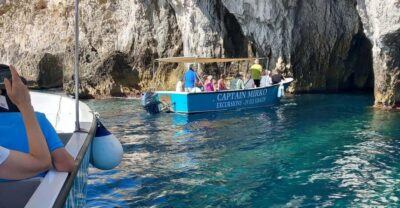
Syracuse: Boat Tour with Captain Mirko, Snorkeling & Caves
Read our review →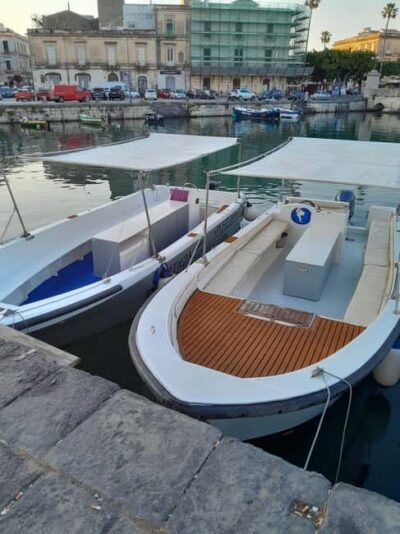
Siracusa: Ortigia Boat Tour with Marine Grotto & Snorkeling
Read our review →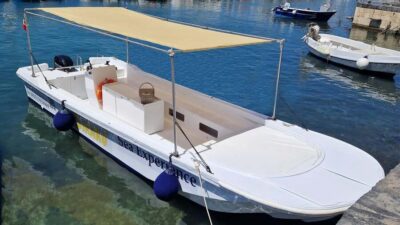
Siracusa: Ortigia & Sea Caves Boat Tour w/ Prosecco & Fruit
Read our review →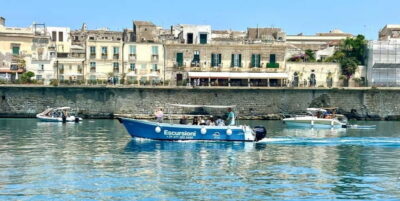
Syracuse: Ortigia Island & Sea Cave Boat Tour with Prosecco
Read our review →
Syracuse: Pillirina, Ortigia, and Sea Caves Tour by Boat
Read our review →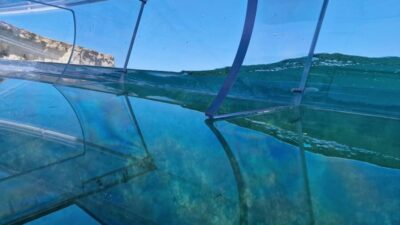
Syracuse: Coast and Sea Caves Full Transparent Boat Tour
Read our review →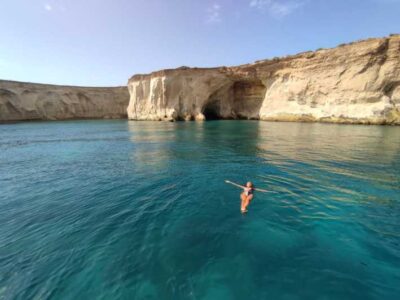
Syracuse: Pillirina, Ortigia, Sea Caves and snorkeling
Read our review →
Syracuse: Ortigia and Sea Caves Excursion by Boat
Read our review →Browse the lists this tour appears in