
REVIEW · KRAKOW
Krakow: Rynek Underground Museum Skip-the-line Guided Tour
Beneath Kraków’s polished Main Square lies a different city: old streets, market stalls, burial sites, coins, jewelry, and building remains uncovered during major excavations. This 90-minute guided walk makes sense of nearly 4,000 square meters of underground archaeology, with films and holograms filling in what bare stones cannot.
I like the way a guide links small finds to ordinary life, especially the work of craftsmen, merchants, and travelers who passed through medieval Kraków. I also like the skip-the-line entry, since the museum is popular and your time in Kraków is better spent below ground than waiting at a ticket counter.
The main caution is the group size, which can reach 29 people. Most of the praise goes to the guides, including Paulina, Magna, Chris, and others, but one visitor found the guide hard to hear at times. Arrive 10 minutes early, and stay close enough to catch every word.
Key points to know before booking
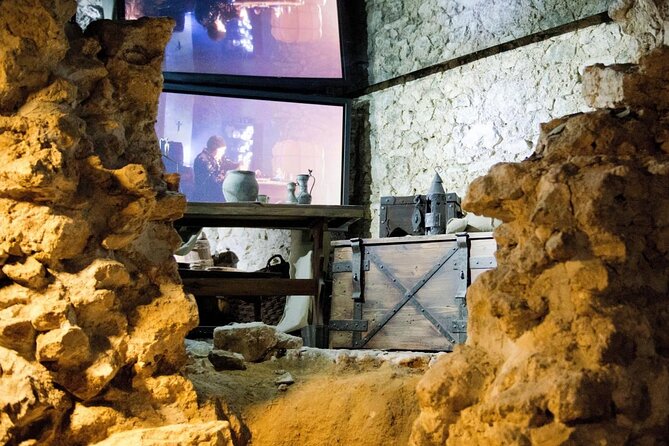
- Nearly 4,000 square meters underground: Follow old paths, market areas, archaeological remains, and reconstructions beneath the Main Square.
- Guides make the difference: The tour is designed around clear storytelling about trade, religion, daily life, and Kraków’s changing past.
- Modern displays meet old stones: Holograms, films, touchscreens, and sound effects help recreate medieval commerce.
- Medieval burials are part of the visit: Reconstructions of 11th-century burials add a serious, human side to the museum.
- Skip-the-line entry saves time: You enter with admission arranged, rather than joining the regular ticket queue.
- Language and group limits matter: Tours run in one selected language, with English, German, French, Italian, Spanish, and Polish available.
Entering Kraków’s medieval city below the square
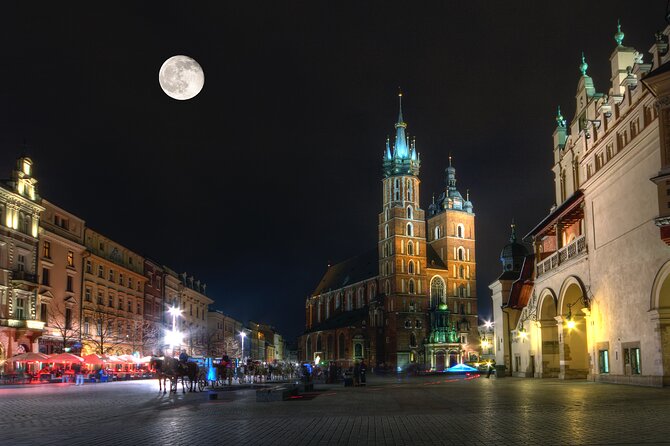
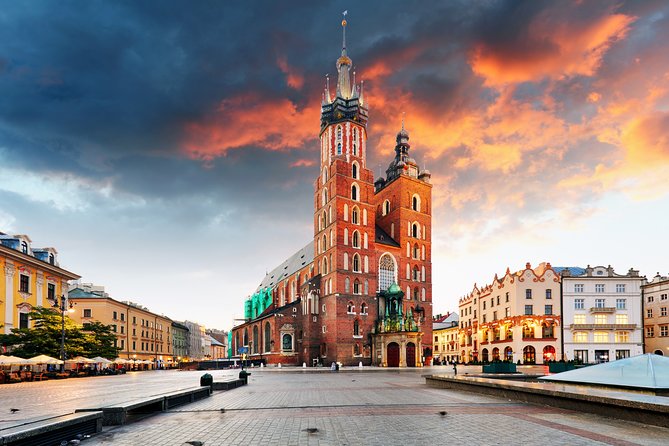
The Rynek Underground Museum sits beneath Kraków’s Main Square, directly under the streets and grand buildings you see above. St. Mary’s Basilica and the Cloth Hall give the surface its familiar postcard look. Below them, the museum shows how much of the city’s story is hidden under modern paving.
Your guide leads you through underground routes covering almost 4,000 square meters. This is not simply a room of objects behind glass. The visit combines archaeological remains with reconstructed market areas, multimedia displays, and short films.
That combination matters because medieval Kraków can be hard to picture from a fragment of wall or a handful of coins. A guide can explain what a street may have been used for, how traders moved goods, and why the market became so important to the city.
The tour lasts about an hour and a half, though the stated duration can range from 90 minutes to two hours. The pace is designed to give you a clear introduction without turning the museum into an exhausting lecture. Ivan, one past visitor, found the amount of information manageable and the pace comfortable. That is useful if you want context without spending half a day underground.
More Museum Visits in Krakow:
- Krakow: Rynek Underground Museum Guided Tour
★ 4.6 · 1,122 reviews - Krakow: Skip-the-Line Rynek Underground Museum Guided Tour
★ 4.7 · 26 reviews - Krakow: Rynek Underground Museum Guided Tour & Stories
★ 4.8 · 26 reviews
Market stalls, old streets, and the business of medieval Kraków
One of the strongest parts of the visit is the focus on Kraków as a trading center. The museum shows more than royal stories and grand churches. It brings attention to the people who made the city work: craftsmen, merchants, porters, travelers, and shoppers.
As you move through the remains, you might see traces of old streets and reconstructions of merchant stalls. These features help you understand the Main Square as a working place, not just a handsome open space for photographs.
The multimedia displays add movement and sound to this story. Holograms, touchscreens, and films recreate the calls of merchants and the creak of carts. These effects are useful for families and for anyone who finds traditional archaeology displays too quiet or abstract.
I would not expect a full theatrical show. The museum still depends on objects, walls, pathways, and explanations. The technology works best when it points you back to the physical evidence rather than replacing it.
Your guide also covers commerce, religion, and the political changes that shaped the city. This broader context is one reason I would choose the guided tour over visiting alone. You can read labels by yourself, but a good guide helps connect one section to the next and explains why a modest object matters.
Burials and artifacts that bring daily life closer
The museum includes reconstructions of 11th-century burials. This is a more sobering part of the tour, but it gives the underground visit human weight. The display is not only about how people traded or built. It also shows how people lived, died, and were remembered.
You may also see old coins, jewelry, and other artifacts. These smaller finds can be more revealing than a grand reconstruction. A coin hints at commercial links. Jewelry suggests personal taste, status, or belief. A tool or household object points toward work done by hand.
Agnieszka, who visited the museum, especially valued the old walls, house remains, coins, jewelry, and the way the exhibits showed Kraków changing over the centuries. That is the right way to approach this museum. Do not judge it only by the size of its objects. Much of its interest lies in the way separate fragments build a picture of city life.
A five-part documentary is also available toward the end of the visit. If you still have time and attention, it can help pull together the story of the region and its changes over the centuries. It is a useful extra, although some people may prefer to leave after the guided portion rather than add more screen time.
Why the guide is worth paying for
The $34 price is mainly paying for two things: admission without the regular ticket wait and a live guide who organizes the museum’s many layers of information. For a first visit to Kraków, I think that is fair value, especially if you prefer listening to reading.
The strongest praise is aimed at the guides. Paulina is described as interesting, informed, and helpful. Magna is remembered for enthusiasm around the site. Chris is credited with making the underground city more engaging. Another guide was praised as friendly, funny, and able to explain archaeological finds in a memorable way.
The guide assigned to your tour may be different, so do not book on the assumption that you will have one particular person. Still, the repeated pattern is clear: the quality of the explanation is central to the experience.
A guided visit also saves you from stopping at every label and trying to work out the chronology yourself. Ivan put this well in practical terms: if you learn better by listening than reading, you may get more from this tour in a short time than from exploring alone.
There is one small risk. One visitor found the guide difficult to hear at times. Groups can reach 29 people, and the underground setting may make clear communication harder. Headsets are provided for groups of 15 or more, which should help, but I would still arrive early and position yourself where you can see and hear the guide.
More Skip-the-Line Tickets in Krakow:
- From Krakow: Wieliczka Salt Mine Tour & Skip the Line Ticket
★ 4.4 · 3,925 reviews - Wieliczka Salt Mine Guided Tour with Skip the Line Tickets
★ 4.6 · 999 reviews - Wieliczka Salt Mine Tour from Kraków – Skip the Line Entry
★ 4.4 · 878 reviews - Krakow: Rynek Underground Guided Tour with Skip-the-Line
★ 4.4 · 55 reviews
What the 90-minute route feels like
The tour begins with the group gathering at a meeting point that can vary according to the option booked. Check your booking details carefully, then arrive at least 10 minutes before the start. Latecomers cannot join after the group has left, and the ticket is not refunded.
Once inside, the guide introduces the underground site and explains how the archaeological remains relate to the Main Square above. This opening gives you a useful frame for the rest of the visit. You begin to see the square not as a single medieval creation, but as a place that changed over time.
The route then moves through old paths, market areas, and remains of structures. You will encounter artifacts and reconstructions alongside interactive displays. This alternation keeps the experience from becoming a long succession of labels.
The middle part focuses on trade and ordinary work. You learn how merchants and craftsmen helped shape the city, and how Kraków’s location supported its role as a commercial hub. The sounds and images of carts and merchant calls make this section easier to picture.
Burials and religious themes add another layer. The museum does not present the past as only prosperous or picturesque. Archaeology also reveals difficult and unsettled parts of life, and the guide places those discoveries within the story of the city.
The final portion may include films or the five-part documentary. You can use this time to reinforce the chronology and regional context. By the time you return upstairs, St. Mary’s Basilica and the Cloth Hall should feel less like isolated monuments and more like parts of a long-lived urban center.
The modern displays: helpful, but not the main event
The holograms, touchscreens, and films are a real feature of this museum. They recreate activity that archaeology alone cannot show, from the movement of goods to the sound of people working and trading.
For children and adults who like visual storytelling, these displays can make the visit more approachable. They also help explain how an empty-looking street line may once have worked as part of a much larger market.
Still, I would not book this solely for the holograms. The best material is the mix of technology and evidence: the display gives you a picture, while the old wall, road, burial, or object gives that picture a physical anchor.
The guide helps keep the balance. Rather than leaving you to press buttons without context, the tour places the installations within the history of Kraków. That is especially useful when the museum presents several centuries in a compact area.
Group size, languages, and practical comfort
The maximum group size is 29 people, in line with museum rules. That is not a private tour, and it can feel less personal than a small group of six or eight. On the other hand, several highly rated visits involved small groups, so conditions may vary by departure.
Tours operate in one language only. You choose English, German, French, Italian, Spanish, or Polish when booking. Make sure you select the language you want, since the group will not switch between languages during the tour.
Headsets are supplied for groups of 15 or more. If your group is smaller, the guide may speak directly to the group without them. Because one visitor had trouble hearing, I would avoid drifting to the back of the group and would ask politely if a point is unclear.
The meeting point depends on the option you book. This is worth checking before you set out, particularly because the Main Square has several entrances and busy pedestrian areas. Arriving early gives you time to find the correct representative or sign without rushing.
The activity is offered year-round according to availability, with departure times shown during booking. The stated length is 90 minutes to two hours. That makes it easy to fit between a morning walk through the Old Town and an afternoon visit elsewhere, but allow extra time if you want to watch the documentary.
Is $34 a fair price?
At $34 per person, this is not the cheapest way to see a museum in Kraków. The value depends on how much you want the story explained as you go.
If you are already comfortable reading archaeological displays and tracing a complicated chronology on your own, you may find the guided supplement less necessary. The museum has enough objects and installations to make an independent visit worthwhile.
For most first-time visitors, I think the price is reasonable because it includes the museum ticket, skip-the-line admission, and a 1.5-hour live explanation. You are paying for orientation as much as access. The guide points out what deserves your attention and keeps the visit moving.
The cost also makes more sense if your time in Kraków is limited. A badly planned museum visit can leave you with a pile of facts but little sense of how they fit together. This format gives you a structured introduction in a compact period.
Free cancellation up to 24 hours before the tour and the option to reserve now and pay later add flexibility. Those policies are useful if your Kraków schedule is still shifting, but the late-arrival rule is strict once the group has departed.
Who will enjoy this museum most?
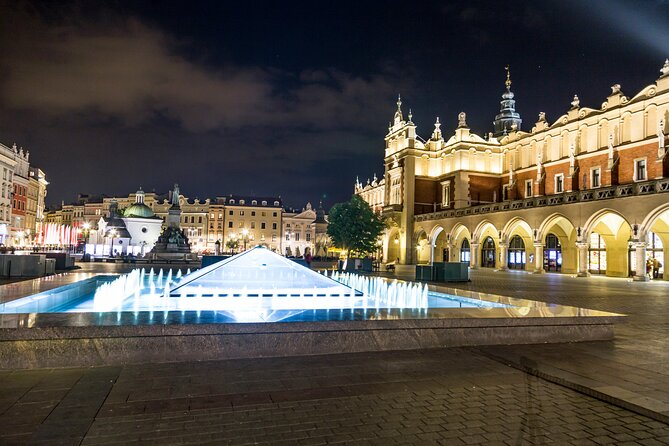
I would recommend the tour to you if you want to understand Kraków beyond its churches, royal buildings, and attractive streets. It is particularly good for people interested in archaeology, medieval trade, urban development, and daily life.
Families may appreciate the visual displays and reconstructed scenes, though the burial section and the amount of historical explanation will suit children best if they enjoy museums. The guide’s storytelling helps keep the visit moving.
It also suits anyone who learns better by listening. The information comes in a clear sequence, and you can ask questions at the end. Michelle, who joined one visit, used that question time to ask about the guide’s background because the explanation was so strong. That final chance to ask questions is a useful feature for curious visitors.
You may want to skip it if you dislike underground museums, screen-based interpretation, or guided group visits. The museum is also not the place for a quick ten-minute look. Give it the full 90 minutes, and allow more time if you want to watch the documentary.
Should you book the Rynek Underground guided tour?
Book it if you want the Main Square to make more sense. The museum gives you archaeology, reconstructed streets, burials, artifacts, and medieval trade, while the guide turns those pieces into a readable story.
I especially recommend it for a first visit to Kraków, for listeners who prefer a guide to long labels, and for anyone with limited time who wants a focused history lesson. The main things to watch are the group size, the changing meeting point, and the need to arrive early.
If you are choosing between visiting alone and joining this tour, I would pay the extra $34 when the history matters to you. The technology catches your eye, but the guide is what helps you understand what lies beneath your feet.
FAQ
How long does the Rynek Underground Museum tour last?
The tour lasts about 90 minutes, with the stated duration ranging from 90 minutes to two hours depending on the option and visit conditions.
What is included in the $34 price?
The price includes a licensed expert guide, skip-the-line admission to the Rynek Underground Museum, and a guided tour lasting about 1.5 hours. Headsets are included for groups of 15 or more.
Which languages are available?
Tours are available in English, German, French, Italian, Spanish, and Polish. Each group tour operates in one selected language.
How early should I arrive?
Arrive 10 minutes before the scheduled start. Latecomers cannot join after the group has departed, and their tickets cannot be refunded.
How many people can join the tour?
Museum regulations limit each tour to a maximum of 29 participants.
Can I cancel the booking?
You can cancel up to 24 hours before the tour for a full refund. You can also reserve now and pay later, so you do not have to pay at the time of booking.
Just added around Krakow
- Krakow: Auschwitz-Birkenau and Wieliczka Salt Mine Day Trip★ 4.7 · 84 reviews
- Krakow: Wieliczka Salt Mine Tour with Hotel Pickup & Guide★ 4.8 · 90 reviews
- Krakow: Wieliczka Salt Mine Guided Tour & Tickets★ 4.5 · 402 reviews
- Krakow: UNESCO Bochnia Salt Mine Tour & Boat Expedition★ 4.7 · 455 reviews
- Krakow: Rynek Underground Museum Guided Tour & Stories★ 4.8 · 26 reviews
- Krakow: Skip-the-Line Rynek Underground Museum Guided Tour★ 4.7 · 26 reviews
- Krakow: Old Town Rynek Underground Entry and Guided Tour★ 4.8 · 41 reviews
- Krakow’s Rynek Underground Museum Tour with Ticket and Guide★ 4.4 · 25 reviews
Krakow Cave Tours, compared.
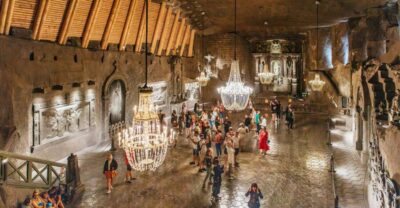
Krakow: Wieliczka Salt Mine Tour with Entry Ticket
Read our review →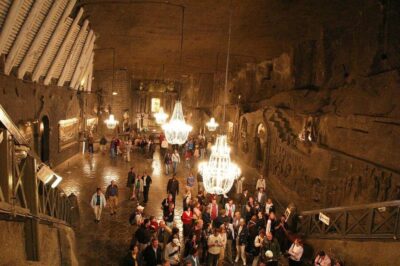
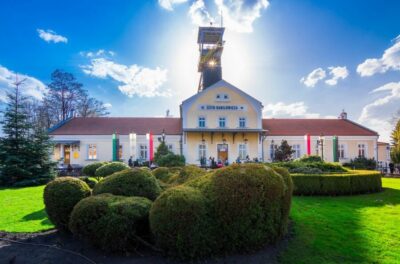
Krakow: Wieliczka Salt Mine Fast-Track Ticket & Guided Tour
Read our review →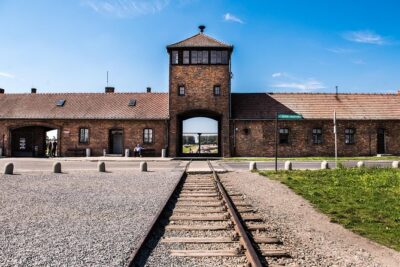
Day Trip: Auschwitz-Birkenau and Wieliczka Salt Mine from Krakow
Read our review →
From Krakow: Wieliczka Salt Mine Tour & Skip the Line Ticket
Read our review →
Krakow to Wieliczka: Salt Mine Guided Tour with Ticket & Transfer
Read our review →
Kraków: Auschwitz-Birkenau & Salt Mine Full-Day Guided Tour
Read our review →
Auschwitz Birkenau and Wieliczka Salt Mine Guided Full Day Tour
Read our review →Browse the lists this tour appears in