
REVIEW · GRANADA
Granada: Albaicín, Sacromonte & Museum of Caves Walking Tour
Granada’s most memorable streets are not the grand avenues below, but the steep lanes above them. This 2.5-hour tour takes you into Sacromonte’s cave quarter, through the old Muslim district of Albaicín, and to viewpoints facing the Alhambra and Sierra Nevada.
I like two things right away: the short bus ride puts you near the upper part of the route, and the tour ends by walking downhill toward the center. I also like that the guide explains Roma culture, Moorish Granada, local traditions, poetry, flamenco, and present-day life rather than treating the neighborhoods as a row of photo stops. The main drawback is the terrain. You will walk on slopes for much of the tour, so this is not a good choice if you have low mobility, use a wheelchair, or need a baby carriage.
Key points to know before booking
- The route generally works downhill: A 15-minute bus ride takes you from Plaza Nueva toward the upper districts before the walking begins.
- Sacromonte gets real attention: The Cave Museum provides context about cave homes, local customs, legends, and flamenco.
- San Nicolás is the big view stop: You get a classic outlook toward the Alhambra, along with other less obvious photo spots.
- The guide makes the difference: Paula, Laura, Carmen, Paloma, María, and Francisco are among the guides praised for clear English, local insight, and a relaxed pace.
- The group can be shared or private: Small groups may give you more time for questions and personal recommendations.
- The price is reasonable: At $35 per person, the fee includes the guide, bus transfer, panoramic views, and Cave Museum admission.
Why this tour works as a first look at Granada
Albaicín and Sacromonte can feel confusing when you first see them on a map. The streets twist, the slopes are demanding, and the best views are often reached by leaving the obvious route. A guide gives the area a human shape: this is where Granada’s Muslim quarter developed, this is how cave living became part of Sacromonte, and this is why the city’s Roma traditions remain closely tied to flamenco and neighborhood life.
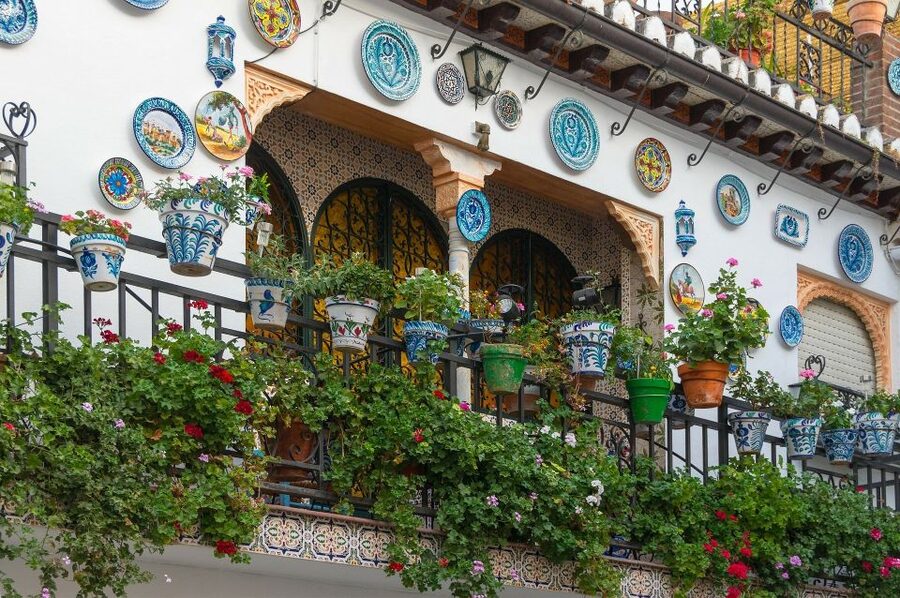
The tour also gives you a useful contrast. Albaicín is often associated with whitewashed lanes, old walls, small plazas, and views of the Alhambra. Sacromonte feels more rugged and personal, with cave dwellings cut into the hillside and a long connection to Roma culture. Seeing both in one outing helps you understand that Granada is not only an Alhambra city.
At $35, the tour offers a fair amount for a short morning or afternoon. You are paying for a live English or Spanish-speaking guide, transportation to the higher starting point, and entry to the Museo de las Cuevas. The value is strongest if you want background and orientation. If you already know these neighborhoods well and prefer wandering alone, you may find the guided format less necessary.
More Museum Visits in Spain:
- Aranda de Duero: Tour of Underground Cellar and Wine Museum
★ 4.5 · 23 reviews - Krakow: Rynek Underground Museum Guided Tour
★ 4.6 · 1,122 reviews - Coba Multun-Ha Cenote Tulum and Mayan Museum Small Group
★ 4.5 · 773 reviews
Meeting at Plaza Nueva and riding uphill
The meeting point is beside the fountain at Fuente de la Plaza Nueva. Look for the guide wearing a pink shirt and carrying a flag. This is a simple location in the center, but give yourself enough time to find the fountain rather than relying on a last-minute arrival.
The route includes a bus or coach ride of about 15 minutes. That short transfer matters because the walking section is made up of slopes, and the tour generally takes you from the higher districts down toward Paseo de los Tristes. Several people particularly appreciated this arrangement in warm weather and when visiting with children. Walking downhill is not effortless, but it is usually kinder than beginning with a long climb.
The transfer also saves time for the parts of Granada that require explanation. You are not spending the first stretch of the tour simply trying to reach the upper neighborhoods. Once you arrive, the experience turns into a walk through Sacromonte and Albaicín, with regular stops for photos and discussion.
The Sacromonte Cave Museum
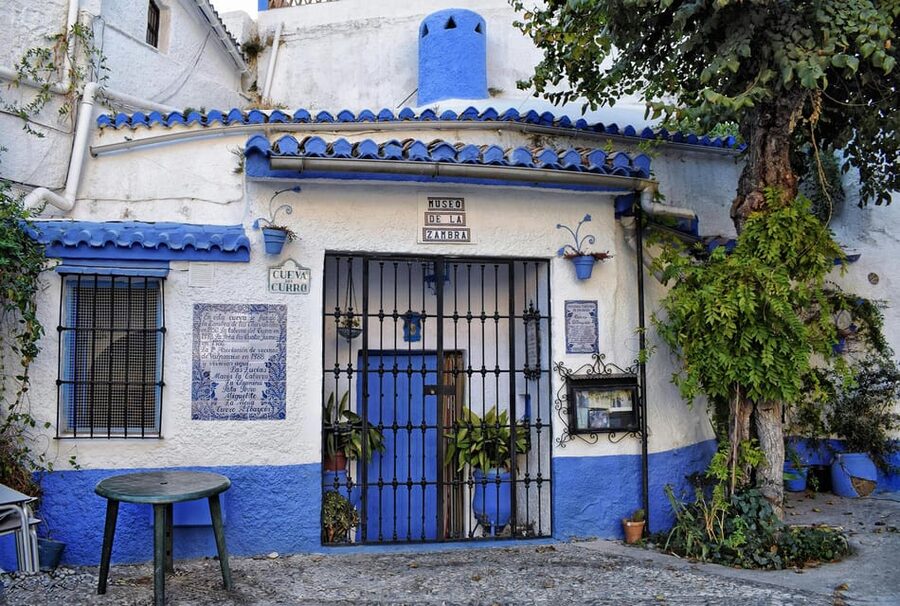
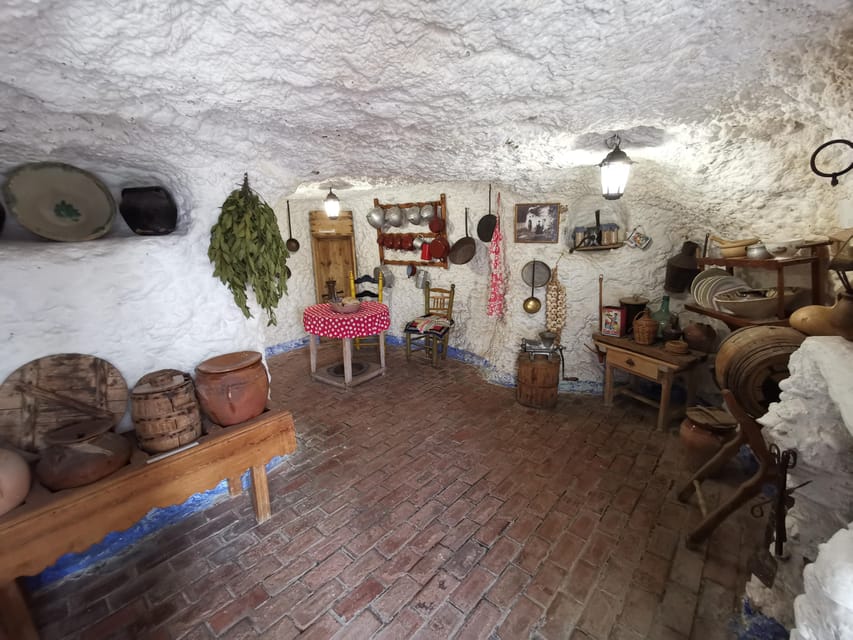
The Cave Museum is the tour’s most distinctive stop. It is not simply a small collection added to fill time. The museum shows how cave dwellings were used and explains the traditions connected with the area. You can expect about an hour here, including the guided visit, scenic views, and time to look around.
Sacromonte contains more than 3,000 caves, and the museum helps you understand why these homes became part of Granada’s identity. The information is tied to local stories, legends, Roma culture, and flamenco. Guides also explain how the neighborhood developed and how its past still affects life in Granada.
This is where the quality of the guide matters most. A local guide can give the caves social context instead of presenting them as curiosities. Carmen, who has Roma ancestry, was able to connect the subject with family stories and childhood memories. Other guides, including Laura, Paloma, María, and Francisco, were praised for explaining the cultural and historical background in clear English.
The museum is also a practical break from the moving route. You get time to listen, look closely, and ask questions before continuing through Sacromonte. The stop lasts roughly an hour, so if you hoped for a quick exterior visit only, this tour may feel more detailed than expected.
Walking through Sacromonte’s cave quarter
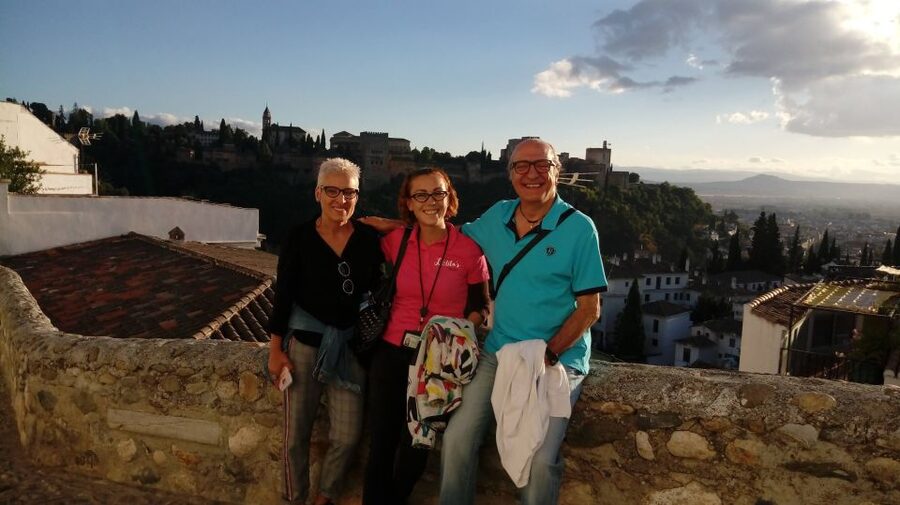
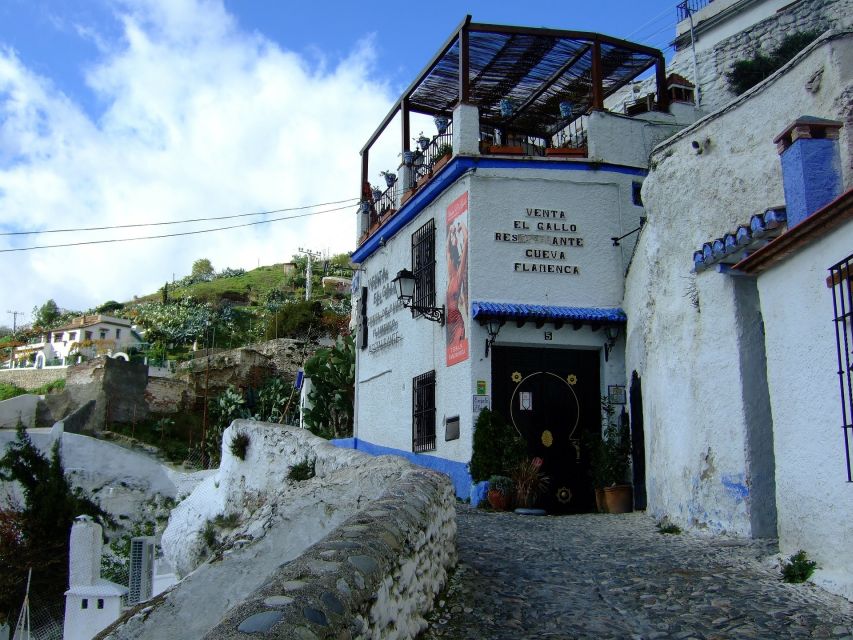
After the museum, the tour spends about 20 minutes in Sacromonte itself. The short timing does not mean the neighborhood is treated as an afterthought. You continue through the cave area, pause for views, and hear how Roma traditions, flamenco, and local identity are connected.
Sacromonte is one of the parts of Granada that can be hard to interpret alone. A cave entrance may look like a simple doorway in the hillside, but the surrounding neighborhood has a long social and cultural story. The guide helps you see the area as a living quarter rather than a scenic backdrop.
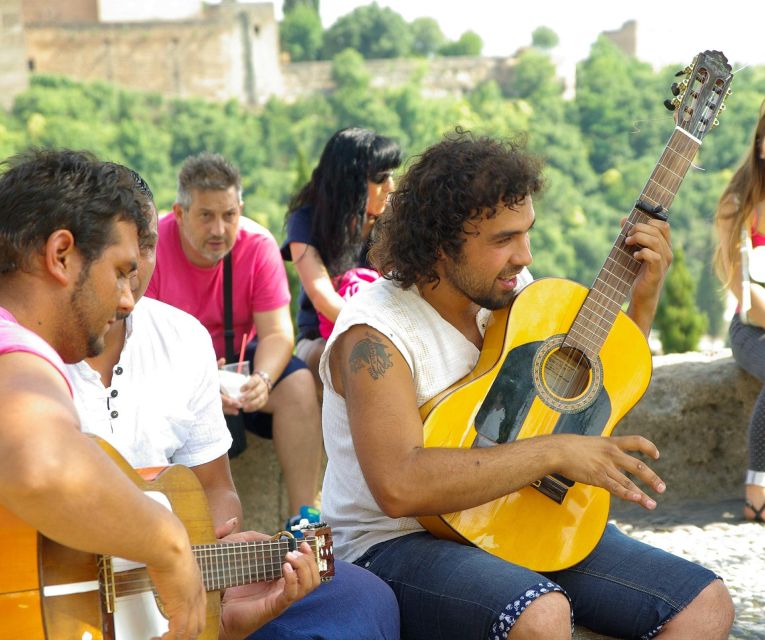
You may also hear about local flamenco customs and places linked to performances in caves. One guide offered a recommendation for a flamenco show in a cave, which can be useful if you want to continue the theme later in your visit. The tour itself is not presented as a flamenco performance, so book this walk for cultural explanation and neighborhood views, not for a complete evening show.
The walking is uneven and sloped. Wear shoes with a firm grip, carry water, and avoid bringing a bulky stroller. The operator specifically says baby carriages are not allowed, and the tour is not recommended for wheelchairs or people with limited mobility.
More Walking Tours in Spain:
- Underground Vaults Walking Tour in Edinburgh Old Town
★ 4.5 · 8,506 reviews - Cagliari: Underground Cagliari Walking Tour
★ 4.7 · 2,329 reviews - Seattle: Guided Underground Walking Tour
★ 4.6 · 2,144 reviews - Edinburgh: Witches & Haunted History Walking Tour
★ 4.8 · 1,290 reviews
Albaicín and its labyrinth of lanes
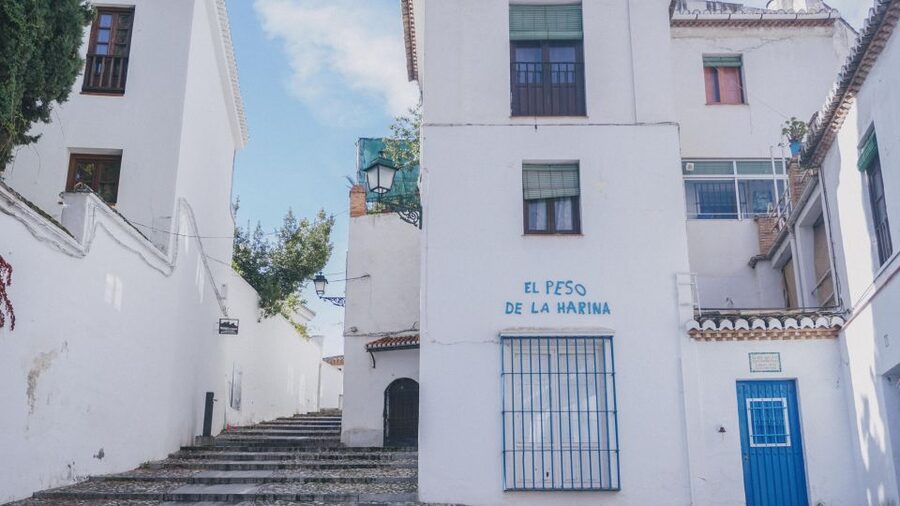
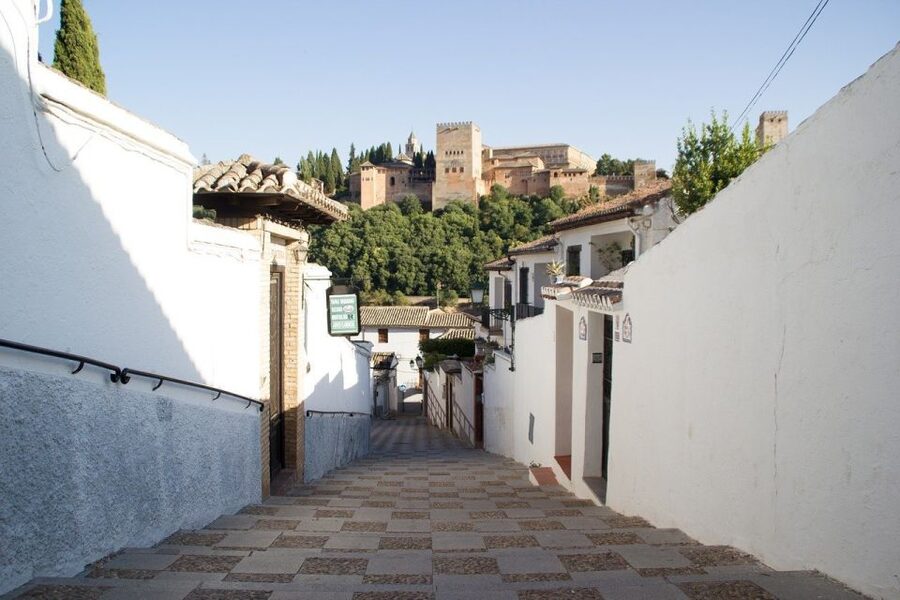
The Albaicín section lasts about an hour and brings you into Granada’s old Muslim quarter. UNESCO recognized the district as a World Heritage site in 1994, and its importance becomes clear as you move through the twisting streets. The appeal is not one single monument. It is the way walls, lanes, small plazas, and viewpoints fit together.
The guide introduces you to the world of Al-Andalus and explains how the district relates to the Alhambra across the valley. You will pass through places such as Placeta de San Gregorio and see areas around Casa Enrique Morente. These stops add cultural detail to what might otherwise be a pleasant but rather random walk.
I like this part best when the guide slows down. Several guides, including Paula and María, were praised for taking questions and matching the pace to the group. A small group can make a real difference here because narrow streets are better suited to conversation than to a large crowd gathered around a guide.
Do not expect every lane to be picturesque or perfectly quiet. Albaicín is a real neighborhood, not an open-air museum. That is part of its value, but it also means the experience can include ordinary residential streets and steep stretches. One useful point from the route is that you are shown areas you might easily miss while walking between the cathedral and the main squares.
San Nicolás and the classic Alhambra view
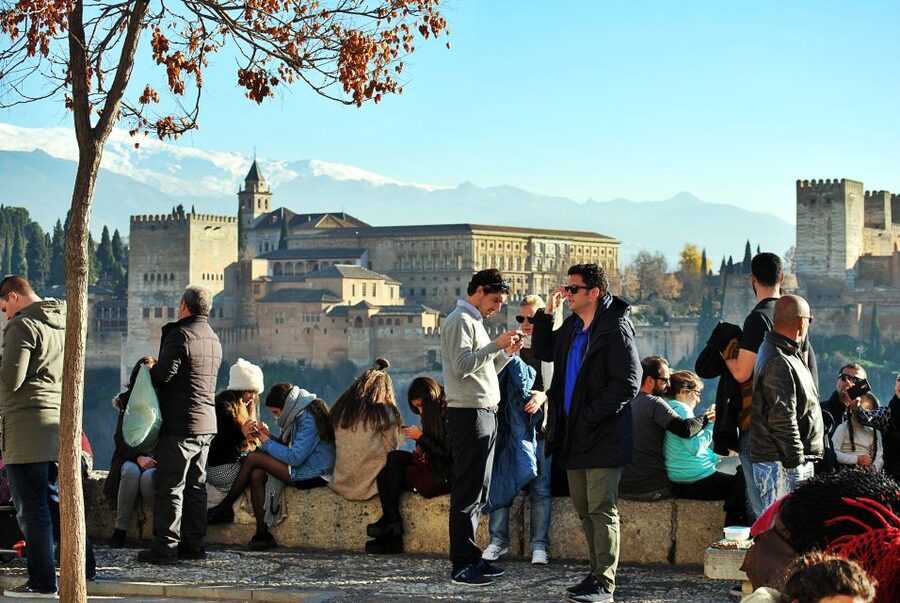
The tour reaches Plaza de San Nicolás for a short break of about 10 minutes. This is the headline viewpoint, with the Alhambra spread across the valley and the Sierra Nevada behind it when conditions are clear. Bring your camera, but do not spend the whole stop looking through it. The view makes more sense after the guide has explained the city’s layout and history.
San Nicolás can be busy, especially around popular viewing times. The timing of this tour may help because it is not built solely around sunset. One guide noted that a daytime visit suited the group and felt less crowded. You should still expect other people at the viewpoint, but the stop is short and focused.
The tour also includes less obvious outlooks in Sacromonte and Albaicín. These smaller viewpoints can be just as useful for photographs because they show Granada from different angles. The best picture is not always the famous one. Sometimes it is a narrow lane opening toward the Alhambra, or a hillside view that includes the roofs of Albaicín.
The downhill finish at Paseo de los Tristes
The official drop-off point is Paseo de los Tristes, one of the most convenient places to continue exploring. From here, you are close to the lower city and within reach of more walks, food stops, and routes toward the Alhambra area.
Ending here is practical. You finish the tour with the main neighborhoods behind you rather than returning to Plaza Nueva and retracing the route. The walk has also given you a useful sense of direction, so you can decide which part of Granada deserves more of your own time.
The route may not end exactly where you plan to spend the afternoon. Check your onward plans before booking, especially if you need to return to a hotel or train station. Hotel pickup and drop-off are not included.
The guides and the style of the experience
The strongest part of this tour is the guide’s ability to connect facts with local life. Paula was praised for her warmth, clear explanations, and flexible pace. Laura was singled out for excellent English and personal knowledge of Albaicín and Sacromonte. Paloma was described as conversational rather than scripted, which is exactly what suits these neighborhoods.
Carmen has also been praised for her insight into Roma history and for sharing personal family connections. Francisco, who grew up in Granada, was appreciated for explaining the area in a way that felt grounded in place. These details matter because the tour covers subjects that can become flat if presented as a list of dates and labels.
The guides also tend to offer useful suggestions for later. You might receive advice on local tapas bars or a flamenco venue, although recommendations will depend on your guide. Do not count on a formal food tour. The value is in getting a better sense of where to explore after the walk.
English and Spanish are available. Private groups can be arranged, while shared departures may offer a lower-cost way to meet other people. Small groups are especially helpful if you want to ask about architecture, local customs, or present-day life.
Who should book this walk
I would choose this tour if you are visiting Granada for the first time and want more than a quick photo at San Nicolás. It gives you a useful introduction to two major historic quarters and adds a museum that many independent walkers might skip.
It suits people who enjoy stories, cultural context, and a steady walking pace. It is also a smart choice early in your stay because the guide can help you decide where to return later. The route gives you names, viewpoints, neighborhoods, and practical orientation without taking up a full day.
It is less suitable if you want a relaxed flat walk. The route uses slopes most of the time, and the downhill direction does not remove the need for balance and sturdy footwear. It is also not suitable for baby carriages, wheelchairs, or people with low mobility according to the tour information.
Price, timing, and practical value
The $35 price includes the official guide, the bus ride to the upper part of the route, panoramic viewing stops, and entry to the Cave Museum. For 2.5 hours, that is a solid deal if you value interpretation and would otherwise need to arrange museum admission and transportation separately.
The tour is long enough to cover the essential areas but short enough to fit beside an Alhambra visit or an evening plan. It does not include hotel pickup or drop-off, so you need to reach Plaza Nueva independently and make your own way onward from Paseo de los Tristes.
You can cancel up to 24 hours before the activity for a full refund, and the reserve-now, pay-later option keeps your plans flexible. Check the available start times when booking, since the experience may work better in daylight than at sunset if your main goal is clear photography and easier walking.
Should you book the Albaicín and Sacromonte tour?
Book it if you want Granada explained from the inside out: cave homes, Roma culture, Moorish streets, local traditions, and Alhambra views all in one compact route. The Cave Museum is the unusual feature, while San Nicolás supplies the famous picture.
Skip it if steep streets are a serious problem or if you prefer to wander without a set pace. For most visitors who want a well-priced introduction to Granada’s upper quarters, the combination of a short bus ride, a local guide, and a downhill walking route makes this a sensible choice.
FAQ
How long does the tour last?
The tour lasts 2.5 hours, including the bus transfer, Cave Museum visit, Sacromonte walk, Albaicín walk, and stops at viewpoints.
Where does the tour begin?
It begins at Plaza Nueva de Granada, beside the fountain at Fuente de la Plaza Nueva. Look for a guide in a pink shirt carrying a flag.
Where does the tour end?
The stated drop-off location is Paseo de los Tristes.
Is transportation included?
A bus or coach transfer of about 15 minutes is included as part of the route. Hotel pickup and hotel drop-off are not included.
Is the Cave Museum included?
Yes. Admission to the Museo de las Cuevas is included, along with the official guide.
Is this tour suitable for wheelchairs or baby carriages?
No. Baby carriages are not allowed, and the tour is not recommended for people who use wheelchairs or have low mobility. The walk takes place on slopes for much of the route.
Just added around Spain
- From Granada: Skip-the-Line Nerja Cave and Frigiliana★ 4.9 · 22 reviews
- Granada: Sacromonte Caves Flamenco Show★ 4.5 · 84 reviews
- From Denia: Boat Trip to Tallada Cave with Optional Swim★ 3.6 · 376 reviews
- Jalon Valley and The Cave of Skulls Tour★ 4.3 · 35 reviews
- Explore Málaga and the Treasure Caves by Electric Car★ 4.9 · 26 reviews
- Estany d’en Mas: Coastal Hike, Abseil & Sea Cave Exploration★ 4.9 · 162 reviews
- Moraig: Kayak Excursion to Moraig & Cave peces-testos★ 4.9 · 148 reviews
- E-Bike Mountain Tour in Natural Park +Option Tapas in a Cave★ 4.7 · 63 reviews
Granada Cave Tours, compared.

Sacromonte: Flamenco Show at Cuevas Los Tarantos Tickets
Read our review →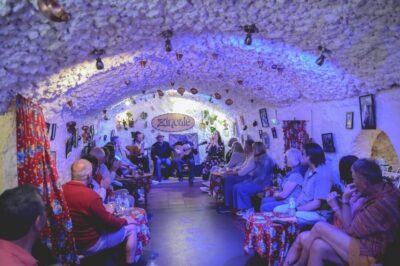
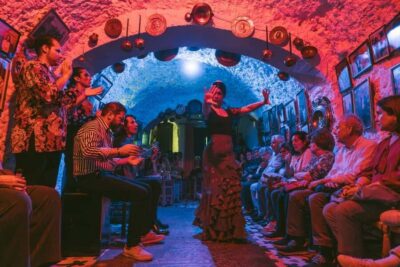
Granada: Los Amayas Cave Flamenco Show in Sacromonte
Read our review →
From Granada: Skip-the-Line Nerja Cave and Frigiliana
Read our review →Browse the lists this tour appears in