

REVIEW · ROME
Rome: Trevi Fountain District Underground Tour and Ice Cream
Rome’s Trevi District has a second life below street level. Under the cafés and souvenir shops, Vicus Caprarius reveals Roman walls, water channels, household rooms, and artifacts from centuries of rebuilding. It is a fine reminder that Rome is not just a city of grand monuments. It is also a stack of cities, one built over another.
I like two things here: the clear link between the Virgo aqueduct and Trevi Fountain, and the chance to see small, tangible finds such as Imperial-era coins and an African oil amphora. The underground site is especially welcome on a hot day. The drawback is its size. The archaeological area is compact, and the five-minute fountain stop is more an explanation from the plaza than a private visit beside the water.
Key points
- Roman water still shapes the story: Learn how water connected the aqueduct, underground masonry, pools, pipes, and Trevi Fountain.
- Vicus Caprarius is compact but packed with detail: See three antiquarian sections containing coins, amphorae, marble decoration, and architectural remains.
- Guides make the difference: Carla, Erika, Noemi, Alessia, and other English-speaking guides have led lively, clear tours.
- The fountain visit is brief: You begin with Trevi Fountain and return to it for a short guided explanation, but do not expect a long private viewing.
- Gelato is included: You receive Italian gelato at a historic shop near the fountain, sometimes through a voucher you can use after the guided portion.
- Plan for stairs and uneven ground: The experience is not suitable for wheelchair users or people with mobility impairments.
What lies beneath the Trevi District
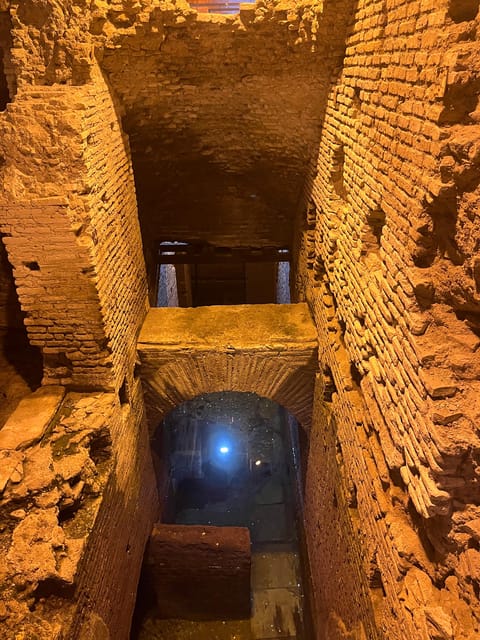
The tour starts at Vicolo del Puttarello 25, a short walk from the Trevi Fountain area. You will need to arrive at least 15 minutes early, since the lanes around the fountain can be crowded and slow to cross.
The setting changes quickly. Above ground, Trevi is one of Rome’s busiest postcard scenes. Below it, the mood is quieter and more archaeological. The central attraction is Vicus Caprarius, a small underground site where layers of Roman life remain visible beneath the modern neighborhood.
I find this kind of visit more revealing than another look at a famous façade. You are not simply hearing that Rome was ancient. You can see how later buildings rose over earlier ones, how water moved through the city, and how an ordinary district could contain an elegant Roman residence.
The site is described as an archaeological area with assistance from an archaeologist and a live English guide. The strongest part of the experience depends on the guide’s storytelling. Carla, Erika, Noemi, Alessia, and other guides have been praised for explaining difficult material in an easy, lively way. Names vary by departure, so you cannot book a specific guide unless the operator confirms one.
More Dessert Tours in Rome:
- 4×4 ATV Experience, Water Cave, Chocolate and Coffee Tasting
★ 5.0 · 1,430 reviews - Tangier: Sunset, Tea, Sweets, Camel Ride, and Hercules Caves
★ 4.9 · 575 reviews - ATV Adventure w/ Chocolate, Coffee & Cave Swim in Punta Cana
★ 5.0 · 178 reviews
The Virgo aqueduct and the City of Water
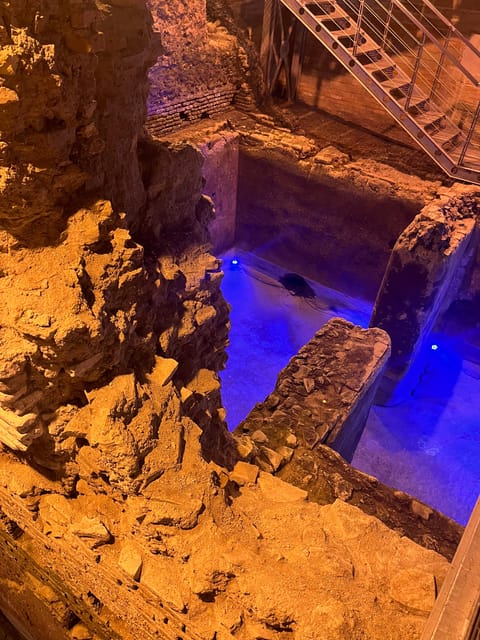
The main theme is Rome’s water system. The area is often called the City of Water because ancient channels and masonry carried water through the district. The Virgo aqueduct, which supplied the area, remains central to the explanation.
You will learn how water connected to the site and continued through pipes and pools associated with the Domus residence. The water from the Trevi area filters through ancient masonry, giving you a direct link between the modern fountain and the remains below your feet.
This is the part I would pay attention to. Many visitors see the Trevi Fountain as a Baroque monument and stop there. This tour supplies the missing infrastructure story. Fountains need water, and Rome’s fountains depended on an engineering network that began long before the Baroque period.
The tour does not present the aqueduct as a dry technical subject. Guides use the water routes to explain Roman building methods, daily life, and the way the city changed over time. If you enjoy ancient engineering, architecture, or the practical side of Roman life, this material gives the visit a useful focus.
Three sections of Vicus Caprarius
The guided visit inside Vicus Caprarius lasts about 40 minutes. That is enough time for a careful explanation, but not enough for an expansive archaeological walk. The space is small, so I would choose this tour for concentrated detail rather than scale.
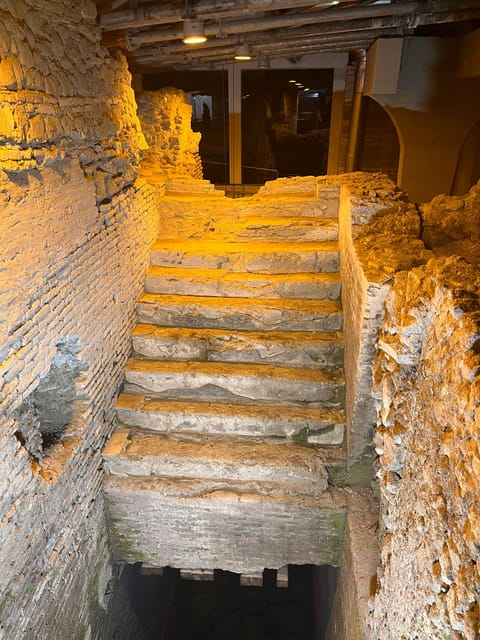
The underground area is arranged in three sections of the antiquarian. Each contains objects and remains that help explain the district’s past. You might see ancient masonry, architectural fragments, decorative marble, coins, and vessels used for trade and storage.
One important find is a group of roughly 800 coins. A collection like this gives the excavation a human angle. Coins are not only attractive objects. They can suggest patterns of use, periods of occupation, and the movement of money through the city.
The site also contains polychrome marble coverings. These point to a more refined interior than the plain underground setting might suggest. The Domus was a luxurious residence, and the marble helps you picture rooms that once had color, decoration, and status.
Another notable object is the head of Alessandro Helios. The supplied details also identify a Spatheia, an African amphora used for transporting oil. That amphora connects the neighborhood to trade beyond Rome. It is a small but useful reminder that the capital relied on goods moving across the wider Roman world.
The displays are close to the visitor, which makes the archaeology feel immediate. At the same time, the compact site can feel crowded, especially when the Trevi District is full. One booking described the area as crowded but still worthwhile. Headsets have also been used, which helps you hear the guide without forcing her to shout.
The Domus residence and ancient household life
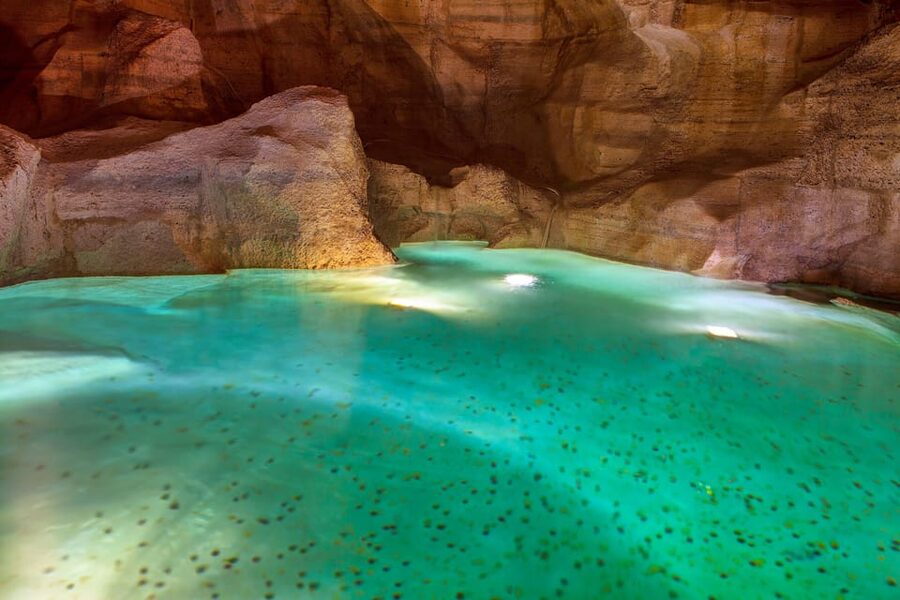
The Domus is more than a name in the tour description. It gives the underground visit a sense of place. You are looking at the remains of a residence with water features and decorative finishes, not just an isolated section of aqueduct.
The guide explains how the pools and pipes worked with the water supply. I like this combination of household archaeology and city engineering. The aqueduct tells you how water arrived. The Domus shows how wealthier Romans could use it once it was there.
This also helps you understand the layers under Rome. A modern building may cover Roman rooms. Streets may have risen over older floors. Water channels may continue through masonry that no longer looks like a complete building. The guide’s job is to connect these fragments so you can picture the original use.
The site will suit you best if you enjoy asking how people lived. It is less suited to someone who wants a huge monument or a long underground route. You will not spend an hour wandering through a vast complex. You will spend that hour looking closely and listening.
A few more cave trips around Rome worth a look
- Colosseum: Underground and Ancient Rome Tour
★ 4.7 · 12,691 reviews - Rome: Capuchin Crypts and Catacombs Tour with Transfers
★ 4.6 · 6,456 reviews - Expert Guided Tour of Colosseum Arena OR Underground, and Forum
★ 4.5 · 5,041 reviews - The Original Roman Crypts and Catacombs Tour with Transfers
★ 4.5 · 4,896 reviews
Trevi Fountain from the busy plaza
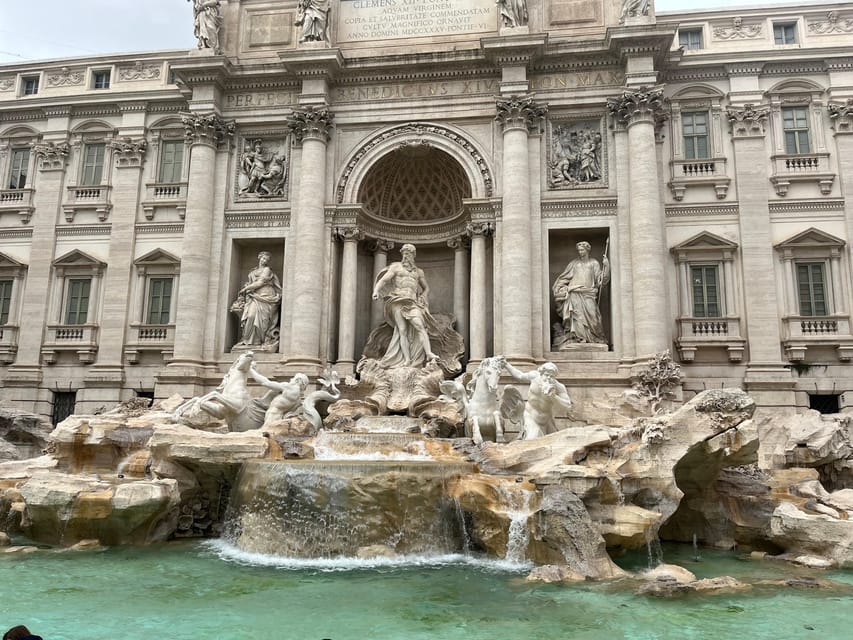
The itinerary includes a brief guided stop at Trevi Fountain, listed at about five minutes. You make a wish at the fountain and hear an explanation of the monument, including its connection to the older water system.
Set your expectations carefully. The fountain portion is not the main event. One booking described seeing it from the crowd side of the plaza rather than getting right up beside the water. Another group was able to move closer with help from a guard, but that should not be treated as guaranteed.
Crowds are part of the experience. The Trevi Fountain is one of Rome’s most popular sights, and the plaza can be difficult to cross at busy times. The tour can give you useful advice for photos and help you understand the exterior, but it does not replace a separate, unhurried visit to the fountain.
I see this as a strength if you already plan to visit Trevi. The tour adds context without asking you to spend a long time in the plaza. If your main goal is a close look at the fountain, schedule extra time before or after the tour.
The activity information includes reserved entry for Vicus Caprarius and says to skip the ticket line, while it also lists skip-the-line entry as not included. The safest approach is to count on reserved access to the archaeological site, not special priority access through the public crowd at Trevi Fountain.
Gelato at the end
The final treat is Italian gelato from a historic shop near Trevi Fountain. In practice, you may receive a voucher and collect the gelato after the guided portion rather than being led through a formal tasting with the guide.
That arrangement has one advantage: you can decide when to use it. One booking noted that the voucher could be used later instead of forcing everyone to stop at the same moment. This is handy if you want more time for photographs or need to move on to another appointment.
The gelato is not a minor detail for many people. After an underground visit and a busy fountain stop, a cold dessert makes a pleasant finish, especially in summer. One booking described it as the best gelato of a weekend in Rome, though taste is always personal and the exact shop experience can depend on the day.
The gelato also gives the tour a simple rhythm: famous fountain, ancient remains, then a local food stop. It is not a full food tour, but it adds something enjoyable to an archaeology visit.
Is one hour enough?
The advertised duration is one hour. The guided underground section takes about 40 minutes, the fountain explanation about five minutes, and the remaining time covers meeting, movement, and the gelato arrangement.
That is a short format, but it works because the site itself is compact. I would not expect a slow museum visit or a long archaeological lecture. Instead, you get a focused introduction that fits neatly between other Rome plans.
The short length makes this useful on a first visit when your schedule is full. You can pair it with a walk through the historic center, a visit to the Pantheon, or a return to Trevi after dark. It also works well as a break from outdoor sightseeing in hot weather. The underground rooms are cooler, and several people have specifically appreciated that relief during summer heat.
The tradeoff is that the guide has to cover a lot quickly. If you want a detailed study of Roman aqueduct construction or a longer explanation of the Domus, you may wish the tour lasted more than an hour. Listen closely and save questions for the pauses.
What the $52 price includes
At $52 per person, this is not the cheapest way to see Trevi Fountain. You can view the fountain from the public plaza without paying for a tour. The price makes more sense if you want guided access to Vicus Caprarius, historical interpretation, and gelato bundled together.
I would judge the value in three parts:
- The reserved archaeological entry saves you from arranging a separate visit to Vicus Caprarius.
- The English guide gives meaning to objects that could otherwise look like broken walls and scattered fragments.
- The gelato adds a modest but enjoyable finish.
The value is strongest for people who would otherwise walk past the underground site without understanding it. It is weaker if you only want photographs of Trevi Fountain, since the fountain stop is short and remains in the public crowd.
The activity has a 4.5 out of 5 rating from 356 bookings, with repeated praise for guides who explain the material clearly, use humor, answer questions, and keep children involved. Carla, Erika, Noemi, Alessia, Naomi, and others have been singled out for warmth and strong presentation. That consistency matters because the site depends heavily on interpretation.
Who should book this experience?
I would choose this tour if you like:
- Roman engineering and water systems
- Archaeological sites that are small but carefully explained
- Architecture and the way cities build over older cities
- Short activities that fit into a packed day
- A cool indoor stop during hot weather
- Guided experiences in English
- A little gelato after the history
Families can do well here when children enjoy stories, objects, and underground spaces. One guide was especially patient with an active child, and another kept children engaged through humor. Still, parents should remember that the site is archaeological rather than entertainment-based.
You should think twice if you have mobility limitations. The tour is not suitable for wheelchair users or people with mobility impairments. Comfortable shoes are required, and the underground setting may include uneven surfaces or steps.
Practical advice before you go
Arrive at Vicolo del Puttarello 25 at least 15 minutes before your selected time. The Trevi area can be crowded enough to slow you down, even when a map shows the meeting point nearby.
Wear comfortable shoes. You will spend time underground, and the archaeological floor may not feel like a smooth modern museum.
Treat the fountain stop as a short orientation, not a full Trevi Fountain visit. If you want your own close look and photos, allow extra time outside the one-hour activity.
Listen for the connection between the Virgo aqueduct, the underground masonry, and the Domus pools. That thread ties the whole experience together.
Finally, confirm the gelato instructions with the guide. The included treat may come as a voucher, and you may be able to use it after the tour rather than immediately.
Should you book it?
Book this tour if you want to see a less obvious side of the Trevi District and understand why water is so central to Rome. The underground site is small, but the coins, marble, amphora, Domus remains, and water channels give the visit real substance when a good guide brings them together.
Do not book it expecting a private Trevi Fountain viewing or a large underground complex. The fountain stop is brief, the area can be crowded, and the archaeological rooms are compact.
For $52, I think it is a sensible choice for history-minded visitors who value explanation over spectacle. You get ancient infrastructure, a Roman residence, a short fountain lesson, and gelato in one tidy hour. That is a good fit for a busy Rome itinerary, especially in hot weather.
FAQ
How long does the Rome Trevi District Underground Tour last?
The activity lasts one hour. The guided visit at Vicus Caprarius takes about 40 minutes, followed by about five minutes of guided information at Trevi Fountain and time connected with the gelato stop.
Where does the tour meet?
The meeting point is Vicolo del Puttarello 25 in Rome. You should arrive at least 15 minutes before your selected starting time.
What language is the tour conducted in?
The live guided tour is conducted in English.
Is gelato included in the price?
Yes. Italian gelato from a historic shop near Trevi Fountain is included. The gelato may be provided through a voucher that you use at the shop.
Is Trevi Fountain access included?
The activity includes a guided Trevi Fountain stop. The fountain visit is brief, and you should not expect a private viewing or guaranteed access to the front of the fountain.
What can I see underground?
You can see ancient masonry, coins dating to the Imperial Age, polychrome marble coverings, the head of Alessandro Helios, an African Spatheia amphora used for oil, and remains connected with the Domus residence and Roman water system.
Is the tour suitable for wheelchair users?
No. The experience is not suitable for wheelchair users or people with mobility impairments.
What should I bring?
Bring comfortable shoes. Arriving early at the meeting point is also important because the Trevi District can be crowded.
Can I cancel the booking?
You can cancel up to 24 hours in advance for a full refund. A reserve-now, pay-later option is also available.
Just added around Rome
- St. Peter’s Basilica Full Guided Tour with Vatican Grottoes★ 4.6 · 286 reviews
- St. Peter’s Basilica and Vatican Grottoes Tour★ 4.9 · 120 reviews
- Rome: St Peter’s Basilica Express Tour & Grottoes★ 4.3 · 126 reviews
- Rome: Appian Way, Aqueducts, & Catacombs E-Bike Guided Tour★ 4.9 · 54 reviews
- Rome: Underground Trastevere Guided Walking Tour★ 4.8 · 87 reviews
- Rome: Tour of St. Clement’s Basilica Underground Temples★ 4.8 · 242 reviews
- Rome underground hidden temples, ruins, and secret basilicas★ 3.7 · 21 reviews
- Rome: St. Peter’s Basilica Tour with Vatican Grottoes★ 4.5 · 314 reviews
Rome Cave Tours, compared.
Colosseum: Underground and Ancient Rome Tour
Read our review →
Rome: Capuchin Crypts and Catacombs Tour with Transfers
Read our review →
Expert Guided Tour of Colosseum Arena OR Underground, and Forum
Read our review →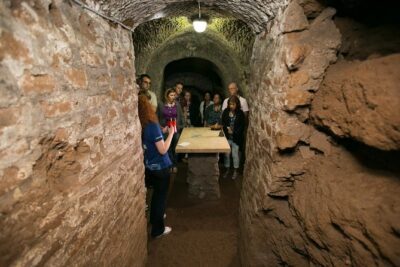
The Original Roman Crypts and Catacombs Tour with Transfers
Read our review →
Rome: Colosseum Underground Small Group Guided Tour
Read our review →
Rome: St. Peter’s Basilica, Dome Climb, and Underground Tour
Read our review →
Rome: Colosseum Underground, Arena & Forum Tour
Read our review →
Rome: Catacombs of St. Callixtus Entry Ticket & Guided Tour
Read our review →Browse the lists this tour appears in