REVIEW · ROME
Rome: Appian Way Golf Cart Tour with Roman Catacombs Entry
Rome’s ancient world feels far more open once you leave the center. This electric golf cart tour carries you from the Pantheon area to the Appian Way, where old paving stones, tombs, walls, and ruined baths sit among quieter stretches of Rome. The highlight is the underground Catacombs, reached with a separate official site guide.
I like two things right away: you cover a lot of ground without spending half a day walking, and the small vehicle gets you to places that are awkward to reach by public transport. Guides such as Amber, Marco, Leo, Gaia, and Jason have been praised for clear storytelling, humor, and calm driving.
The main caution is the Catacombs themselves. You must manage uneven ground and steep stairs, and the underground passages can be narrow, cool, and humid. Also, the ride is not a private tour by default, and your party may be split between two golf carts.
Key points at a glance
- The Appian Way without a long walk: Ride along one of ancient Rome’s great roads, with time to stop for photos and short walks.
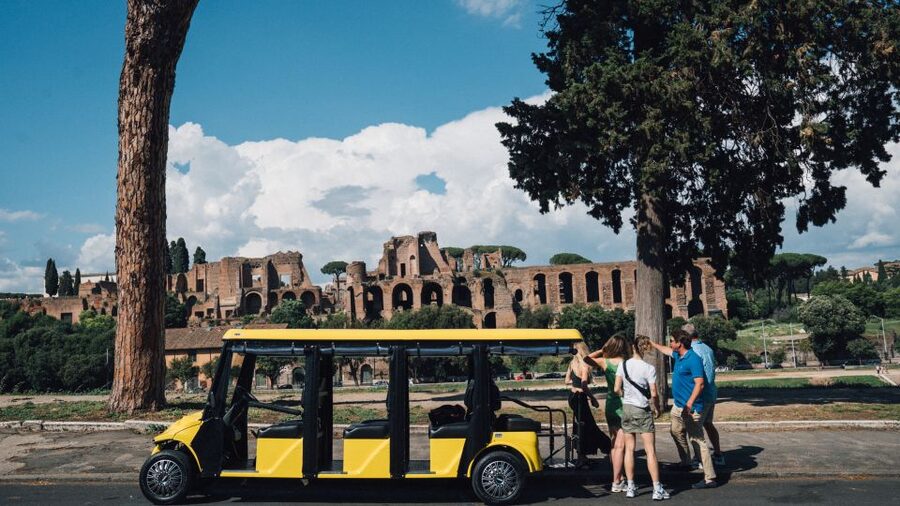
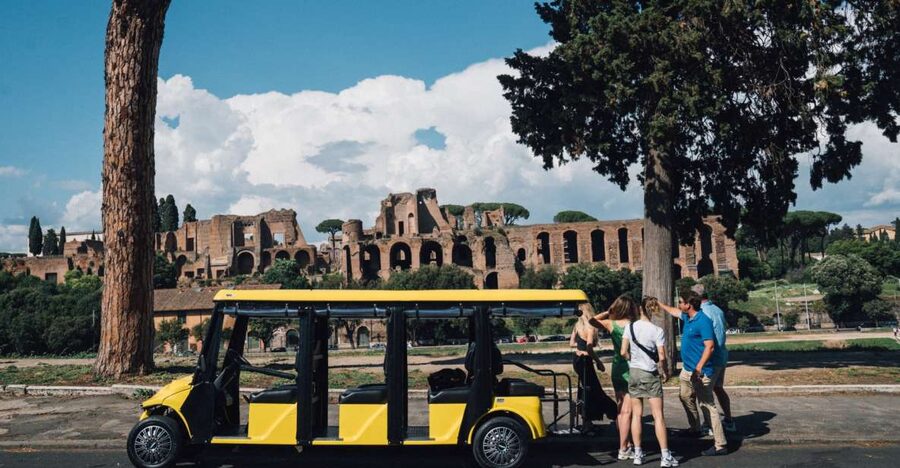
- A practical Roman history sampler: See Circus Maximus, the Baths of Caracalla, the Pyramid of Cestius, tombs, and the Aurelian Walls in one outing.
- A real underground visit: Spend about 30 minutes below ground with an official Catacombs guide, not just looking at an entrance.
- Small vehicles and shared commentary: Each cart has seven seats, with a maximum of two carts and 14 people.
- Useful for hot days or limited walking: The cart saves energy, though the Catacombs still require stairs and uneven walking.
- A guide makes the difference: The strongest part of the ride is the live English commentary, delivered through headsets while the carts are moving.
Why this is a smart way to reach the Appian Way
The Appian Way, or Via Appia, is one of Rome’s most important ancient roads. It once carried people, armies, goods, and official messages across the Roman world. Today, it offers a very different view of Rome from the packed streets around the Colosseum and Trevi Fountain.
Getting there on foot from central Rome would take too long for most short visits. A bicycle or e-bike gives you more freedom, but it also asks you to handle traffic, distance, and the uneven old road yourself. The golf cart removes much of that work. You sit back, listen, and watch the city change from dense streets to archaeological sites and open stretches of the ancient road.
The tour starts inside the operator’s office at Via Monterone 19, near the Pantheon. Look for the glass doors on the section of this L-shaped street beside Via di Torre Argentina. The carts are usually easy to spot, and the meeting point is central enough to reach before or after other sightseeing.
There is no hotel pickup, so allow time to find the office. I would arrive early, especially if you are not familiar with Rome’s small lanes.
More Catacombs and Underground City Tours in Italy
- Rome: Capuchin Crypts and Catacombs Tour with Transfers
★ 4.6 · 6,456 reviews - The Original Roman Crypts and Catacombs Tour with Transfers
★ 4.5 · 4,896 reviews - Rome: Catacombs of St. Callixtus Entry Ticket & Guided Tour
★ 4.6 · 3,037 reviews
The golf cart ride through Rome
The electric carts are a practical compromise. They are quieter and less tiring than a walking tour, but they remain open to the air, giving you a better view than a bus. The ride through Rome can be lively, with traffic and tight streets, but the guides handle the route and provide headsets so you can hear while the cart is moving.
Each vehicle has seven seats. Tours can run with one or two carts, for a maximum of 14 people. If two carts are used, they travel together, and everyone hears the same guide through earpieces. A party that books together may occasionally be divided between the vehicles, so do not assume your whole group will sit in one cart.
That arrangement keeps the group small enough for a personal feel, though it is not the same as having a private driver. The carts can also feel a little adventurous in central Rome traffic. If you prefer a slow, quiet ride with no road movement, a conventional walking tour may suit you better.
The strongest guides make the drive feel like a running conversation rather than a list of dates. Marco has been praised for humor and clear explanations, while Amber is often singled out for energy and easy-to-follow English. Leo and Jason are also noted for making Roman history feel connected to the streets around you.
Circus Maximus and the Baths of Caracalla
The first major stops help you place ancient Rome in its larger setting. At Circus Maximus, you look across the broad area that once held chariot races and huge public gatherings. The surviving foundations are not as visually complete as the Colosseum, but the scale of the site is the point. Your guide helps you picture how much space Rome gave to public entertainment.
The stop is mainly for sightseeing, commentary, and photographs rather than a long archaeological visit. That makes it a good introduction, but it may feel brief if you want to explore every ruin on foot.
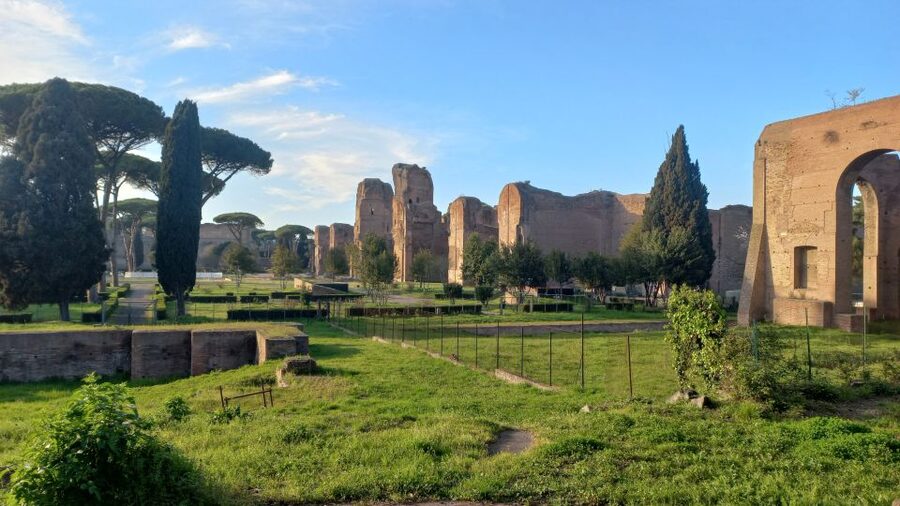
The Baths of Caracalla are more immediately impressive. Even from outside, the remaining walls and enormous brick structures show how ambitious Roman public bathing complexes were. This was not simply a place to wash. Roman baths included spaces for exercise, social life, and leisure, and the surviving remains give you a sense of the engineering behind them.
You should keep your expectations clear: this tour offers a stop and guided views, not a full visit inside every site. One practical criticism is that some people wish they had more time around the Baths and the aqueducts. If the Baths of Caracalla are high on your list, book a separate visit rather than treating this ride as a substitute.
The Appian Way: old stones and open space

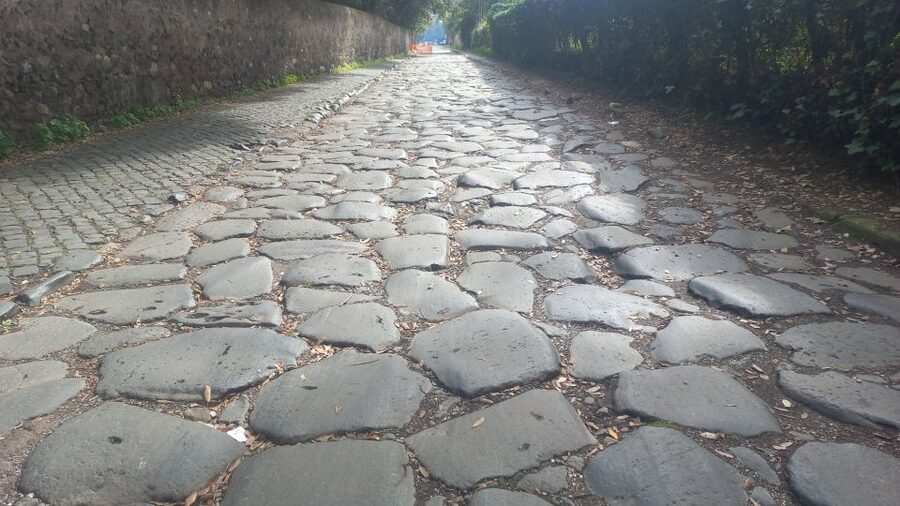
The Appian Way is the heart of the outing. The ride takes you beyond the city center and onto a road that still carries the marks of Roman construction. You get time for photographs and short walks, including the chance to step on sections of ancient paving.
This is where the golf cart earns its keep. The road is not a simple extension of central Rome’s sightseeing circuit, and reaching its historic stretches can be awkward without transport. You see greenery, old structures, and a quieter side of the city while your guide explains how the road worked in Roman times.
The views are not polished or theatrical. That is part of their appeal. You are looking at fragments, foundations, road stones, and tombs, then using the guide’s explanation to connect them. I find this more rewarding than rushing from one famous monument to another because the setting gives Rome some breathing room.
The tour also includes a stop at a large ancient Roman tomb. The Tomb of Cecilia Metella is one of the best-known monuments along the road and helps explain why important Romans placed tombs beside major routes. The tomb’s location was not random. It announced status to people passing by and kept the memory of the dead visible.
You do not get a long, independent visit at every Appian Way stop. The format is designed for an overview, several photo opportunities, and commentary from the cart. That is ideal if this is your first visit to Rome or if you want to add the Appian Way without dedicating an entire day.
More Catacombs and Underground City Tours in Rome
- Rome: Guided Roman Catacombs Tour with Transfers
★ 4.6 · 1,830 reviews - Rome: Catacombs Guided Tour with Transfer
★ 4.2 · 1,808 reviews - Rome EBike Tour: Appian Way, Catacombs & Roman Aqueducts
★ 5.0 · 1,766 reviews - Rome: Catacombs and Capuchin Crypt Guided Tour with Transfer
★ 4.6 · 1,606 reviews
Descending into the Roman Catacombs

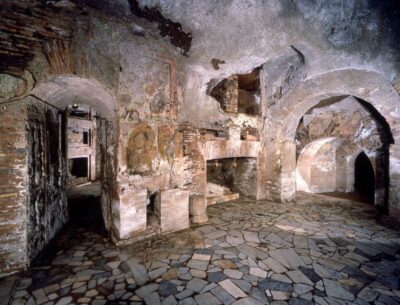
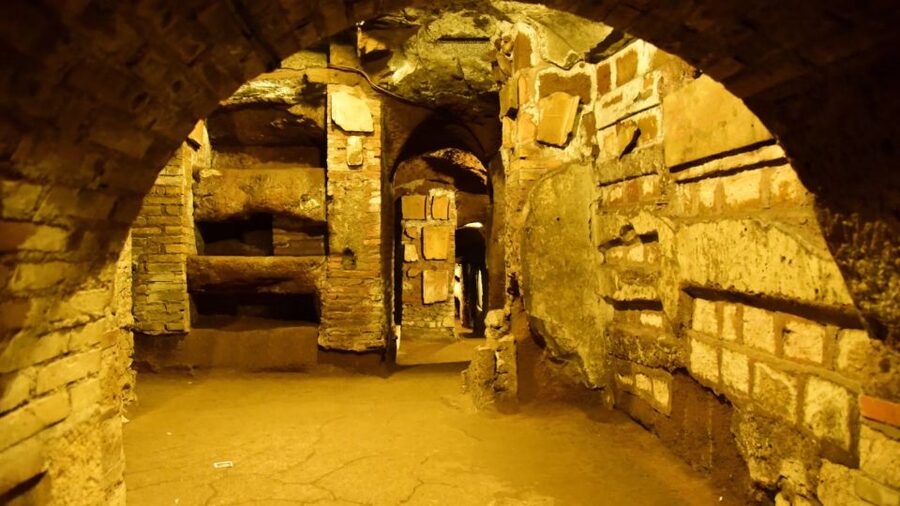
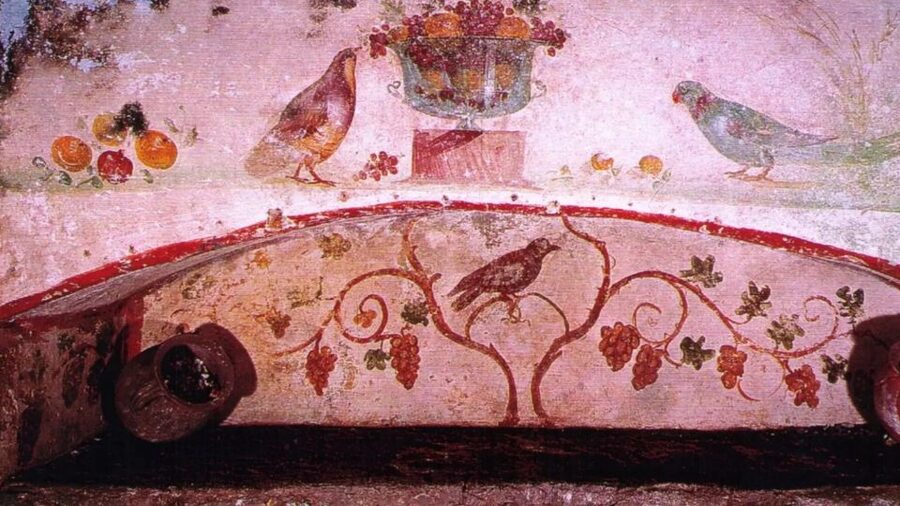
The Catacombs visit is the most distinctive part of the tour. After the outdoor stops, you join a separate official guide for a roughly 30-minute walking tour underground. The Catacombs are ancient Christian burial sites, with passageways and chambers cut beneath the ground.
The atmosphere changes quickly. The temperature is around 16°C, or 61°F, with high humidity. The corridors can be narrow, sometimes requiring single-file walking, and the route includes steep stairs down and back up. Wear shoes with a secure grip and bring a light layer, even in summer.
The guide provided inside the Catacombs is not always the same person who leads the golf cart ride. That specialist knows the site, but the style and clarity of the explanation can vary. If you have hearing difficulty, stay close enough to follow the guide, since one person described the Catacombs commentary as too quiet and fast.
The exact Catacombs site can depend on scheduling. One commonly used stop is connected with San Sebastian, and the surrounding church can add another worthwhile glimpse of Rome’s religious art and history. The operator’s own guide may meet you again afterward and point out features near the church before the group returns to the carts.
Do not expect a dramatic movie set. The value comes from the age, purpose, and physical setting of the burial chambers. You are walking through a fragile underground place, so the route is controlled and the visit is necessarily short.
Returning along the Aurelian Walls
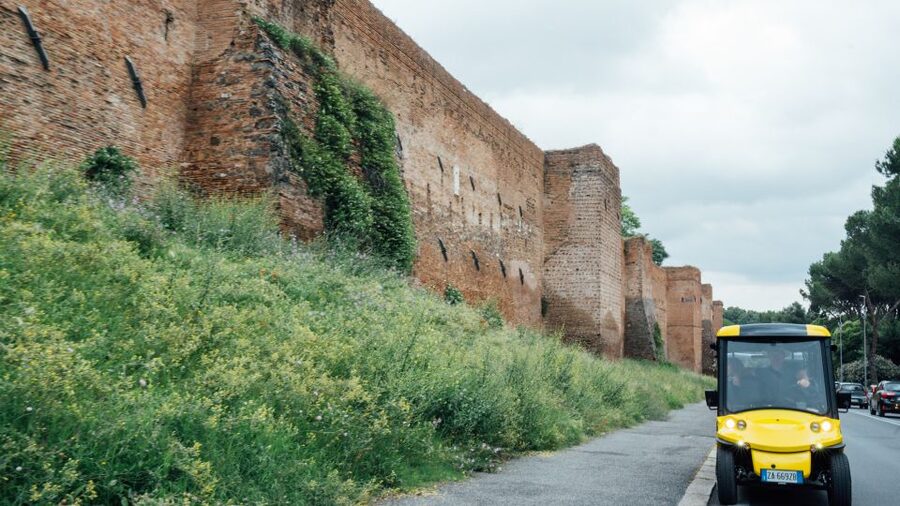
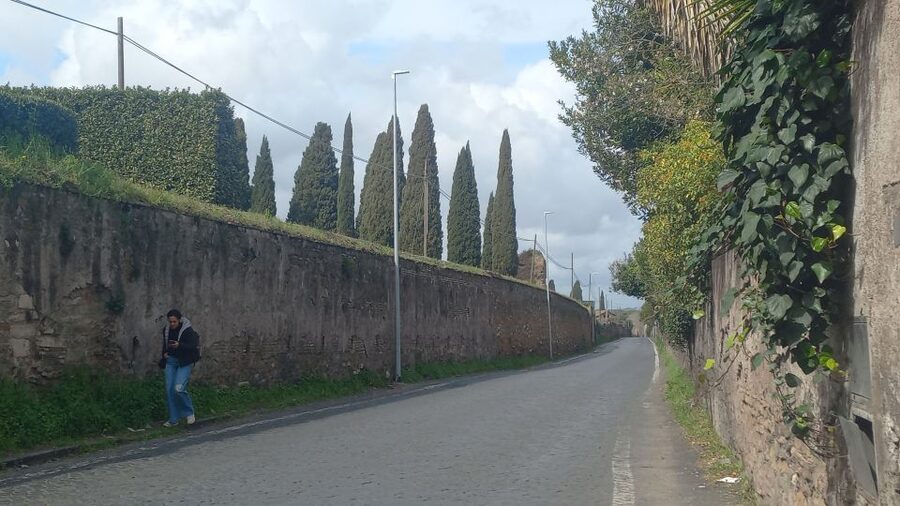
The return route includes the Aurelian Walls, the defensive fortifications built around ancient Rome. These walls once marked the edge of the city and protected it from attack. Large stretches remain, making them easier to understand from a moving cart than from a single isolated viewpoint.
The walls also help you see how Rome grew. Sites that now seem close to the modern center were once part of a protected boundary or lay beyond it. The guide’s commentary links the ruins to the city you are passing through today.
The Pyramid of Cestius is another unusual stop or sight along the route. Its sharp Egyptian form looks out of place beside Roman streets, yet it belongs to Rome’s ancient story. The tour usually treats it as a photo and commentary stop rather than a full interior visit.
These final sights are valuable because they widen the tour beyond the Appian Way and Catacombs. You get a compact survey of Rome’s roads, entertainment spaces, baths, burial places, defenses, and monuments. The tradeoff is that no single stop receives the time it would on a dedicated walking tour.
How much time does the tour really give you?
The full experience lasts about 2.5 hours. That includes the ride from central Rome, commentary from the cart, stops for photos and sightseeing, and the underground Catacombs visit.
This is a good length for a first or second day in Rome. You get a broad introduction without spending an entire morning or afternoon away from the center. It also works well on a hot day, when walking from site to site can drain your energy before lunch.
The pace is steady rather than rushed. Still, you should not book it if your goal is long, quiet time at the Baths, the Tomb of Cecilia Metella, or the Appian Way. Think of it as a guided overview with a substantial Catacombs stop.
A morning departure can be especially useful on a warm day, and a Sunday outing has been described as easy to manage from the central meeting point. Starting times vary, so check availability when booking.
Who gets the most from this experience?
I would recommend this tour to you if you want to see a less familiar side of Rome but do not want to arrange transport to the Appian Way yourself. It is also a strong choice for first-time visitors who want historical context before deciding which sites deserve a longer return visit.
It suits families with children from age 2 through 12, provided they can manage the Catacombs stairs and underground conditions. Children under 2 are not accepted because of safety rules.
It can also help if you have a disability or limited walking ability, since the golf cart reaches places that would be difficult to cover on foot or by bicycle. But the Catacombs portion is not fully accessible. Uneven ground, narrow passages, and steep stairs may make that part unsuitable, so ask the operator before booking if mobility is a concern.
The tour is less suitable for you if you dislike shared groups, traffic, or moving between several short stops. It is also not the right pick if you want a specialist archaeological lecture in English at every site. The best experience comes from enjoying the mix: a comfortable ride, clear stories, outdoor ruins, and one underground visit.
Is the tour good value?
No price is supplied here, so I cannot judge the exact cost against competing tours. I can judge what you receive for the time: central transportation to the Appian Way, a live English-speaking guide, a small vehicle, many historic sights, and Catacombs admission with a site guide.
That is a useful package because reaching these places independently can take planning. You are paying not only for a seat in the cart, but also for route management, explanations, and the chance to see several outlying sites in one short outing.
Value drops if you already plan to visit the Baths of Caracalla, the Catacombs, and the Appian Way separately. In that case, the shorter stops may feel repetitive. Value rises if your Rome schedule is tight, you want to save your legs, or you would otherwise skip the Appian Way entirely.
The tour has a 4.9 rating from 429 bookings, with praise focused especially on guide quality, safe driving, clear English, and the unusual route. The occasional weak point is not the concept but the Catacombs commentary or the limited time at some outdoor ruins.
Practical tips before you book
Wear weather-appropriate clothing for the open cart, plus a light layer for the underground section. Comfortable shoes matter more than stylish ones because of the Appian Way stops and the Catacombs stairs.
Bring a phone or camera, but listen during the drive instead of trying to photograph everything from the moving cart. The best photographs usually come during the planned stops.
Expect the guides to shape the experience. If you are assigned Marco, Amber, Leo, Gaia, Jason, Sabina, Andrea, Francesco, or another member of the team, you can expect the tour to depend heavily on that person’s storytelling style. The strongest guides connect the ruins to ordinary Roman life and keep the commentary conversational.
Allow extra time after the tour if you need to reach another appointment. Rome traffic can be unpredictable, and the advertised duration is 2.5 hours rather than a guaranteed minute-by-minute schedule.
Should you book the Appian Way golf cart tour?
Yes, if you want an efficient and enjoyable way to reach the Appian Way, especially if this is your first visit or you have limited time. The combination of ancient roads, tombs, walls, baths, and Catacombs gives you a strong look at Rome beyond the usual center.
Book it with realistic expectations. You will see many places, but most outdoor stops are brief. The Catacombs are fascinating but physically demanding, and the exact site may depend on scheduling.
I would choose this over a standard city sightseeing ride if you have already seen the Colosseum and Pantheon area and want something different. I would skip it only if stairs are a problem, you need a private vehicle, or you want long visits inside individual archaeological sites.
FAQ
Where does the tour start and finish?
It starts and ends at the operator’s office at Via Monterone 19, near the Pantheon and Via di Torre Argentina.
How long does the tour last?
The full tour lasts 2.5 hours.
What language is the tour in?
The golf cart tour is conducted in English, with a live guide. The Catacombs portion is led by an official site guide.
How many people can join?
Each golf cart has seven seats. The tour can use up to two vehicles, with a maximum of 14 participants.
Will my group stay in the same golf cart?
Not always. If two vehicles are used, people who book together may occasionally be separated. The carts travel together, and everyone listens to the same guide through earpieces.
Is hotel pickup included?
No. You need to make your own way to the central meeting point near the Pantheon.
How long is the Catacombs visit?
The underground guided visit lasts about 30 minutes. The tour information also notes a 35-minute guided walking portion, so allow roughly half an hour underground.
Are the Catacombs physically demanding?
Yes. You need to walk on uneven ground and climb steep stairs down and up. The passages may also be narrow, and the temperature is about 16°C with high humidity.
Are children allowed?
Children from age 2 to 12 are welcome. Infants under 2 are not accepted because of safety regulations.
What should I wear?
Wear clothing suitable for the weather during the open-air cart ride, comfortable shoes for walking, and a light layer for the cool, humid Catacombs.
Just added around Rome
- St. Peter’s Basilica Full Guided Tour with Vatican Grottoes★ 4.6 · 286 reviews
- Rome: St Peter’s Basilica Express Tour & Grottoes★ 4.3 · 126 reviews
- St. Peter’s Basilica and Vatican Grottoes Tour★ 4.9 · 120 reviews
- Rome: Appian Way, Aqueducts, & Catacombs E-Bike Guided Tour★ 4.9 · 54 reviews
- Rome: Underground Trastevere Guided Walking Tour★ 4.8 · 87 reviews
- Rome: Tour of St. Clement’s Basilica Underground Temples★ 4.8 · 242 reviews
- Rome underground hidden temples, ruins, and secret basilicas★ 3.7 · 21 reviews
- Rome: St. Peter’s Basilica Tour with Vatican Grottoes★ 4.5 · 314 reviews
Rome Cave Tours, compared.
Colosseum: Underground and Ancient Rome Tour
Read our review →
Rome: Capuchin Crypts and Catacombs Tour with Transfers
Read our review →
Expert Guided Tour of Colosseum Arena OR Underground, and Forum
Read our review →
The Original Roman Crypts and Catacombs Tour with Transfers
Read our review →
Rome: Colosseum Underground Small Group Guided Tour
Read our review →
Rome: St. Peter’s Basilica, Dome Climb, and Underground Tour
Read our review →
Rome: Colosseum Underground, Arena & Forum Tour
Read our review →