
REVIEW · PRIVATE
Private Underground Tango Immersion
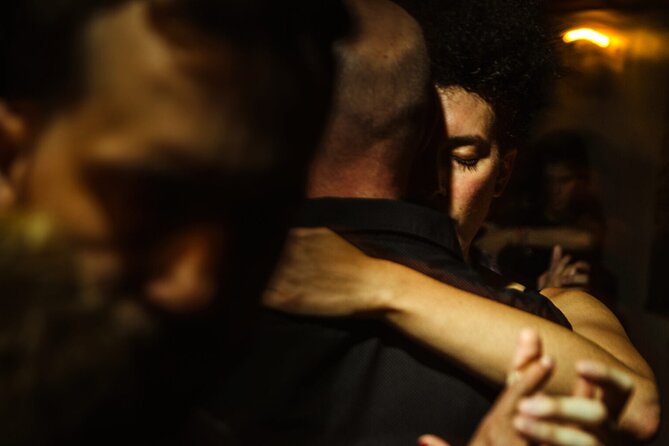
Buenos Aires tango is most interesting when you see it where locals actually dance, not only under stage lights. This private lesson and milonga visit starts with the basic tools for social tango, then takes you to a local dance hall where the codes, music, and floor etiquette make sense in real time.
I like the patient teaching, especially for first-timers, and I like having Rafael, Esther, or Andrea explain what you are seeing from a table inside the milonga. The small private format also makes the night feel personal. The tradeoff is the late 9:30 p.m. start, and a live orchestra or dance performance depends on the night you book.
Key points to know before you book
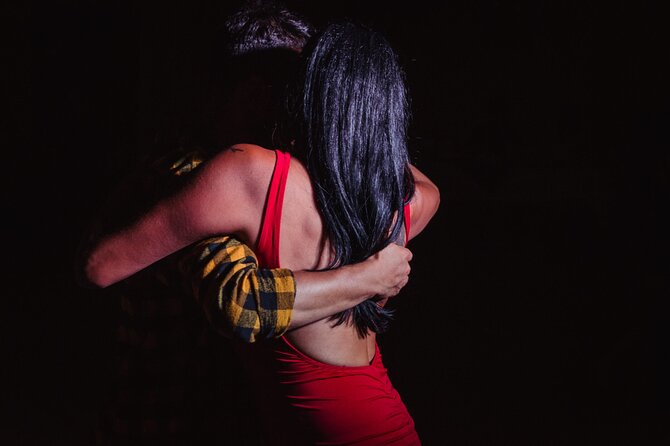
- A lesson comes first: Learn simple tango mechanics, including the ocho and closing steps, before seeing social dancers use them.
- You visit a real milonga: This is a local dance night, not simply a polished theater show built for sightseers.
- Your guide stays with you: Rafael, Esther, or Andrea explains tango codes, floor behavior, music, and local customs at your table.
- Live entertainment varies: Some nights include an orchestra, singer, or professional dance performance, but it is not guaranteed.
- The night runs late: Meet at 9:30 p.m., with the activity lasting about three hours and sometimes continuing later.
- The price buys access and context: At $330 per person, this makes the most sense if you value private instruction and an introduction to a place you would struggle to enter comfortably on your own.
Why this tango night feels different from a stage show
A standard Buenos Aires tango show gives you close-up footwork, dramatic costumes, and a polished performance. This experience gives you something less tidy but more revealing: a short lesson, a local milonga, and a guide who helps you understand what is happening around you.
That difference matters. At a milonga, the dancing is part of a social evening. Couples arrive to dance, talk, listen to music, and follow customs that are easy to miss from the outside. Your guide helps you notice the invitations, the movement around the floor, and the unwritten rules that shape the evening.
I especially like the order of the night. You do not simply watch tango as an outsider. You first try a few movements yourself, then see how experienced dancers use balance, timing, and restraint. Even if you never become a tango dancer, the lesson gives you a better eye.
The experience is private, so only your group participates. That makes a big difference for anyone who feels shy about dancing in front of strangers. Couples, solo visitors, and families have all found the format approachable, and the teaching is designed for beginners as well as people who have taken a few lessons before.
More Private Cave Tours in the world:
- Private Half-Day Batu Caves and Cutural Tour in Kuala Lumpur
★ 5.0 · 3,107 reviews - Capri & Blue Grotto Semi Private Boat Day Trip from Sorrento
★ 5.0 · 2,053 reviews - Elephanta Caves & Island Guided Private Tour
★ 5.0 · 1,327 reviews
Starting at 9:30 p.m. in Honduras
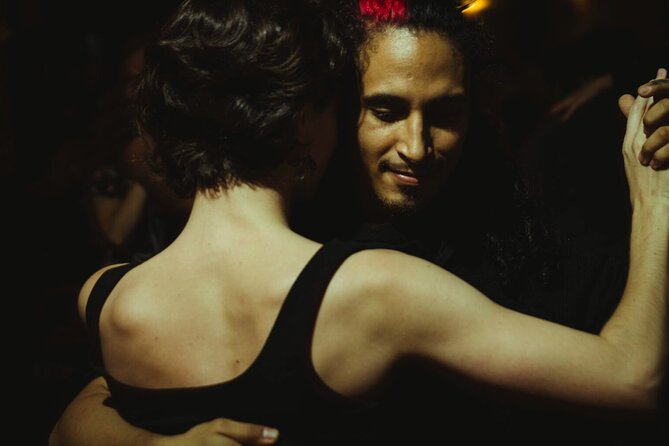
The meeting point is Honduras 3700 in Buenos Aires, with the exact meeting details confirmed after booking. The scheduled start is 9:30 p.m., a useful reminder that Argentine tango nights often begin late by many visitors’ standards.
The start time is part of the charm, but it requires planning. You should eat earlier or arrange a light dinner beforehand, since the activity focuses on the lesson and milonga rather than a full meal. Argentine wine is included, but food is not listed as part of the experience.
You receive confirmation when booking, and the meeting point is near public transportation. The activity ends back at the starting point, while transportation from the lesson to the milonga is provided. That removes one awkward part of the evening: figuring out how to reach an unfamiliar dance hall late at night.
Communication with the guide can also help settle nerves before you arrive. Rafael has used WhatsApp to answer questions and share information before the meeting, which is useful if you are unsure about clothing, meeting details, or what level of dance ability you need.
The private lesson: mechanics before romance
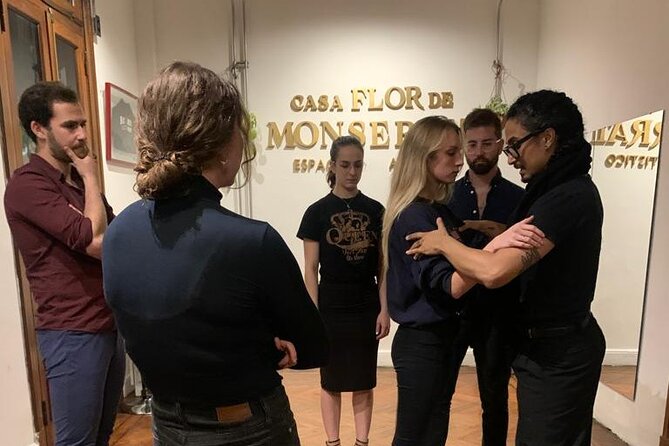
The lesson lasts about an hour in many accounts of the evening, though the total experience is listed at roughly three hours. You begin with the basic tools needed to improvise with another person in a social setting.
That wording is important. You are not being trained for a stage routine. You are learning how tango works as a conversation between two dancers. The focus includes posture, connection, walking, turning, and the mechanics behind familiar steps.
The ocho and closing steps receive special attention in the teaching described by past participants. These movements can look simple from a chair and feel surprisingly complicated once you try them. A patient instructor helps you understand where your weight goes and how small changes affect your partner.
Rafael and Esther are described as accomplished dancers and warm teachers. Andrea is also repeatedly praised for patient instruction, especially with complete beginners. The guides adjust the pace rather than assuming you already know how to move.
That makes this a good choice if you are nervous about having two left feet. You do not need to arrive with dance experience, and you are not expected to perform for a room full of people. The private setting gives you room to make mistakes, ask basic questions, and try a step again.
The teaching also covers tango language and origins. You learn the names of steps and gain a sense of how tango developed as both dance and social practice. The most useful part, though, is learning how the dance feels: controlled, close, rhythmic, and built on clear signals.
If you already take tango lessons at home, the class may be more of a refresher than a full course. Its real value comes later, when your guide points out the same ideas on the milonga floor.
Riding to the milonga with your guide
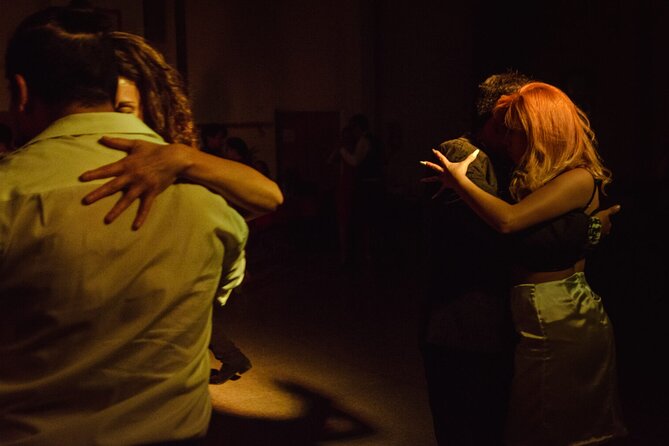
After the lesson, transportation takes you and your guide to the social dancing venue. This short transfer is more than a practical connection between two stops. It gives you time to ask questions and learn what to expect when you arrive.
The venue is described as an underground or local milonga, a place that may be difficult to find and enter with confidence on your own. That does not mean the setting is secret or unsafe. It means the experience takes you beyond the most obvious tourist circuit and into a regular Buenos Aires tango night.
Your guide remains with you and seats you at their table. This is one of the strongest parts of the arrangement. You are not dropped at the door and left to decode the room alone.
At the table, you can sip Argentine wine while learning about tango codes and perspectives. The guide can explain how dancers relate to one another, how the floor works, and why some behavior that seems minor to an outsider matters to regular dancers.
This is where the private format earns its keep. A large group tour might tell you a few facts and move on. Here, you can ask why dancers behave a certain way, what to watch for in the music, or how the social side differs from a formal show.
A few more cave trips around the world worth a look
- Chichen Itza, Cenote, and Valladolid Tour
★ 5.0 · 24,293 reviews - Naples: Naples Underground Entry Ticket and Guided Tour
★ 4.4 · 21,781 reviews - Chichen Itza, Cenote & Valladolid Tour with Tequila and Lunch
★ 4.5 · 15,789 reviews - Colosseum: Underground and Ancient Rome Tour
★ 4.7 · 12,691 reviews
What you see inside a Buenos Aires milonga
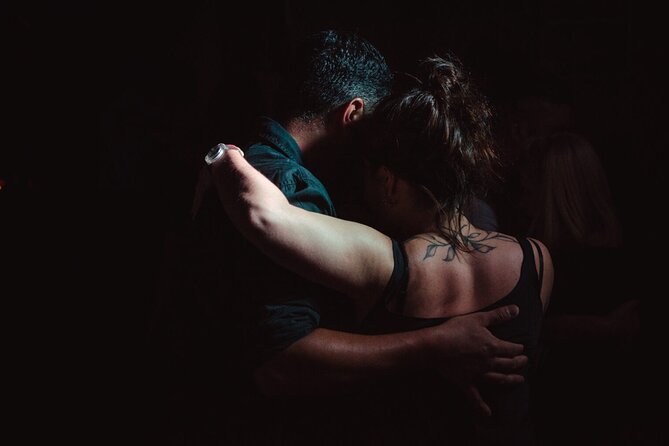
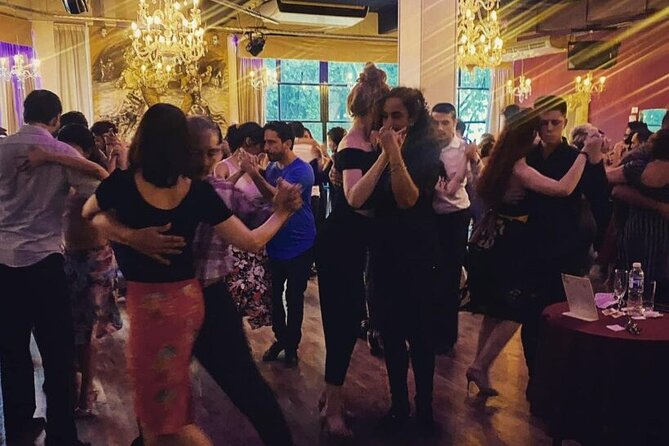
The milonga is the heart of the evening. It is a social dance venue with seating, drinks, music, and a floor where local couples dance for themselves rather than for a paying audience.
You may see an orchestra, singer, or dance performance, depending on the date. Some evenings have included a live tango orchestra, a vocalist, and professional dancers. One night featured a performance by a world champion couple, while on another evening Rafael himself performed after spending time with his group.
Those additions can make the night memorable, but they should be treated as a bonus rather than a promise. The core experience is watching and discussing social tango in a local setting.
The room may feel more intimate than a theater. Tables can be close to the floor, giving you a good view of the footwork and the way couples share space. You may also notice that social tango is not only about dramatic kicks. Much of it is walking, listening, pausing, and responding to the music.
Your guide helps you see those details. You learn to watch the couple’s connection, not just the most eye-catching step. You also gain a sense of why experienced dancers can appear relaxed even when the movement is demanding.
You may have an opportunity to dance yourself, depending on the venue, timing, and your comfort. One couple found a less crowded setting that felt friendly to beginners and tried their new tango shoes on the floor. That possibility is appealing, but the activity should not be booked as a guaranteed dance session with local partners.
The main activity is observation, conversation, and cultural explanation. If you want hours of nonstop dancing, a longer tango class or dedicated dance pass would suit you better.
Tango codes make the evening easier to understand
Tango has social rules that are not always obvious to first-time visitors. The guides explain these codes in plain terms, then show you how they appear in the room.
You might learn how dancers signal interest, how couples join the flow of the floor, and why awareness of other pairs matters. These details help you avoid the feeling of sitting in a room where everyone else knows a private language.
I find this context more valuable than a long lecture about tango’s past. You are learning how the culture works now, in the place where people gather to practice it.
The guides also bring personal experience. Rafael and his partners are active in the tango scene, and their stories connect the steps to real life in Buenos Aires. The evening can shift naturally from dance instruction to conversations about local customs, work, performance, and life in the city.
That friendly tone is a repeated strength of the experience. It may feel more like being welcomed to someone’s table than being moved through a standard sightseeing program. Still, the quality of the night depends partly on the guide assigned and the communication around your booking. One serious complaint involved a guide failing to appear and notifying the group only the next day. That appears to be an exception among the supplied accounts, but it is a fair reason to confirm the meeting details before setting out.
Is $330 per person a fair price?
At $330 per person, this is not a budget night out. You are paying more than the cost of a public tango show or a basic group lesson.
The price makes more sense when you value the combination of four things:
- A private lesson
- An English-speaking guide
- Transportation from the lesson to the milonga
- A hosted visit with wine and cultural explanation
You are also paying for access to a social setting that may be hard to locate and understand independently. The guide’s table, introductions, and explanations turn a potentially confusing night into a guided cultural experience.
The value is strongest for a couple or small group that wants a personal introduction to tango rather than a quick performance. It is also a good fit for a solo visitor who wants company at a late-night cultural event.
The value is weaker if you already know Buenos Aires milongas well, speak Spanish comfortably, and have experience with social tango. In that case, you may prefer to book a regular lesson and attend a milonga on your own.
Argentine wine and all fees are included. Tips are not included, and the listing does not include a meal. Alcohol is available only to people age 18 and older.
Who should book this private tango experience?
I would recommend it most strongly to first-time tango visitors who want more than a staged show. The lesson removes some of the mystery, and the milonga shows you the dance in its natural social setting.
It also suits:
- Couples seeking a special evening together
- Solo visitors who want a local guide at a late-night venue
- Families with adult members who enjoy shared activities
- Beginners who feel self-conscious about dancing
- People who have taken lessons at home and want cultural context
- Anyone curious about tango codes, music, and local dance customs
The age range can be broad. A 78-year-old participant stayed out until around 1 a.m. and enjoyed the evening, while a family found the experience appealing to a 19-year-old. Those examples do not guarantee the same energy level for everyone, but they show that the activity is not aimed only at serious dancers.
You should think twice if you dislike late nights, do not enjoy sitting and watching live dance, or want a tightly timed sightseeing stop. The evening can run beyond the stated three hours, especially when the music and conversation are flowing.
Practical details that affect your night
The tour starts at 9:30 p.m. and ends back at the original meeting point. The venue transfer is included, while tips are not.
The guides speak English, Spanish, and Japanese. That language range is useful in a setting where small explanations can make a large difference.
Most people can participate, and the activity is private for your group. Still, you should be comfortable with a late evening, basic movement during the lesson, and time seated at the milonga.
The activity can be canceled for a full refund if you cancel at least 24 hours before the local start time. Cancellations or changes made within 24 hours are not refunded or accepted.
The experience is commonly booked about 15 days ahead. That is a sensible window if your Buenos Aires dates are fixed, especially if you want a particular night that may include live music or a show.
Should you book it?
Book this if you want tango as a living social tradition, not just a polished theater number. The strongest reason to choose it is the bridge from lesson to milonga: you learn a few tools, then watch local dancers use timing, connection, and floor etiquette in context.
I also like the human scale. Rafael, Esther, and Andrea are presented as teachers and active tango people, not simply hosts reading prepared facts. Their patience makes the experience friendly for beginners, while their connection to the scene gives the night a sense of access you would not easily create alone.
Skip it if $330 feels too high for a three-hour evening, or if you want guaranteed live music and a formal performance. Neither is promised on every date.
For most first-time visitors who want to understand why tango matters in Buenos Aires, this is a thoughtful splurge. It gives you a lesson, a local night out, and enough cultural explanation to make the music and dancing more meaningful.
FAQ
Where does the experience begin?
It begins at Honduras 3700, C1174 Ciudad Autónoma de Buenos Aires, Argentina. The exact meeting point information is provided after booking.
What time does the activity start?
The scheduled start time is 9:30 p.m.
How long does the tango experience last?
The activity lasts approximately three hours, although some evenings may continue later.
What happens during the tango lesson?
You learn fundamental tango tools and mechanics for improvising with another dancer in a social setting. Instruction can include movements such as the ocho and closing steps, along with information about tango codes and perspectives.
Is transportation included?
Yes. Transportation from the lesson to the milonga is included, and the activity ends back at the original meeting point.
Is the activity private?
Yes. Only your group participates in the private activity.
Is wine included?
Yes. Argentine wine is included. Alcoholic beverages are available only to people age 18 and older.
Will there be a live orchestra or tango performance?
There may be a live tango orchestra, singer, or dance performance, depending on the day you book. These additions are not guaranteed for every evening.
What is the cancellation policy?
You can receive a full refund if you cancel at least 24 hours before the experience start time. Cancellations or changes made less than 24 hours before the start are not accepted and are not refunded.
Just added around the world
- Hanoi to Ninh Binh 1 day: Trang An – Tam Coc – Mua Cave – Hoa Lu★ 4.5 · 99 reviews
- Trang An grottoes – Bai Dinh Pagoda Day Tours★ 4.5 · 73 reviews
- Ninh Binh Full Day Tour from Hanoi to Hoa Lu, Trang An & Mua Cave★ 5.0 · 31 reviews
- Luxury small Group Hoa Lu – Tam Coc – Mua Cave Max 6 – 8 pax/tour★ 5.0 · 479 reviews
- Halong Islands, Caves, Kayak, Lunch day tour w Dragonfly Cruise★ 5.0 · 159 reviews
- Hanoi – Hoa Lu – Tam Coc – Mua Cave – 1 Day / By Luxury Limousine & Small Group★ 5.0 · 18 reviews
- Ninh Binh Daily Tour: Hoa Lu -Mua Cave -Tam Coc- Bike-Swimming with Sunset Party★ 5.0 · 163 reviews
- Ninh Binh Full Day Tour with Hoa Lu, Trang An and Mua Cave★ 5.0 · 93 reviews
Private Cave Tours, compared.
Private Half-Day Batu Caves and Cutural Tour in Kuala Lumpur
Read our review →
Capri & Blue Grotto Semi Private Boat Day Trip from Sorrento
Read our review →
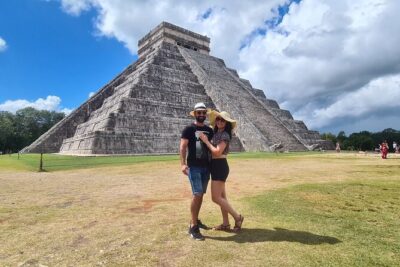
Skip the Line Chichen Itza Private Tour, Sacred Cenote & Lunch
Read our review →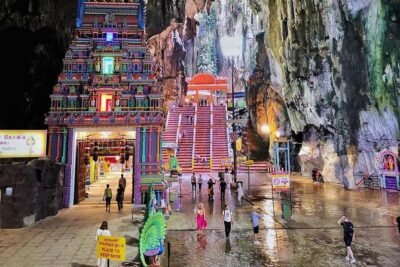
Private Tour Kuala Lumpur with Petronas Twin Towers Observation Deck & Batu Cave
Read our review →
PRIVATE TOUR HALONG BAY ONE DAY with Cave, Kayaking, Bamboo Boat
Read our review →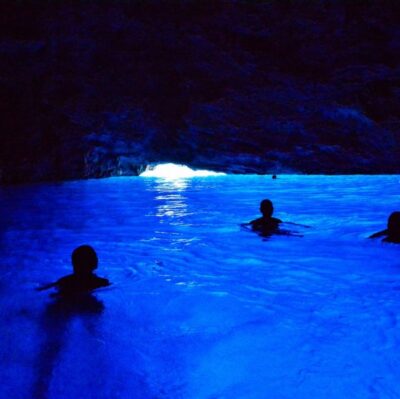
Dubrovnik: Blue & Green Caves Private Boat Tour with Drinks
Read our review →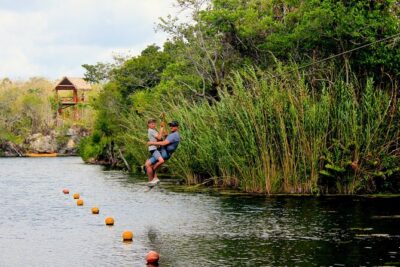
4 Private Cenotes, Zip-Lines, Canoes & Mayan Village with Delicious Lunch
Read our review →Browse the lists this tour appears in