
REVIEW · MUMBAI
Mumbai: Kanheri Caves and The Golden Pagoda Temple
Kanheri’s ancient Buddhist caves and the shining Golden Vipassana Pagoda offer two very different views of Buddhism in Mumbai. One is carved into a forested hillside and dates back to the 1st century BCE. The other is a modern meditation center with a huge golden dome and wide views toward the Arabian Sea.
I like this tour for two clear reasons: the guide gives meaning to the stonework, and private transport takes the strain out of Mumbai’s traffic. Guides such as Aryan, Nikhil, Kavita, and Shivam have been praised for clear explanations and friendly help. The main drawback is time. A tour advertised at three and a half to seven hours can stretch into a full day, especially with traffic, and the caves involve steps and slopes.
Key points
- Kanheri’s rock-cut prayer halls and monastic cells reveal how Buddhist monks studied, lived, and meditated.
- Sanjay Gandhi National Park gives the cave visit a welcome forest setting away from central Mumbai’s noise.
- The Golden Vipassana Pagoda offers a modern meditation experience, grand interior, and panoramic views.
- Private air-conditioned transport is valuable in Mumbai, especially during hot and humid weather.
- A short guided meditation may be included at the pagoda, depending on the day’s arrangements.
- The pace can vary widely, so allow more time than the shortest advertised duration.
Two Buddhist sites, two very different moods
This is a strong choice if you want to see a quieter, less obvious side of Mumbai. The tour links an archaeological site with a living meditation center, so you get both ancient Buddhist practice and its modern expression.
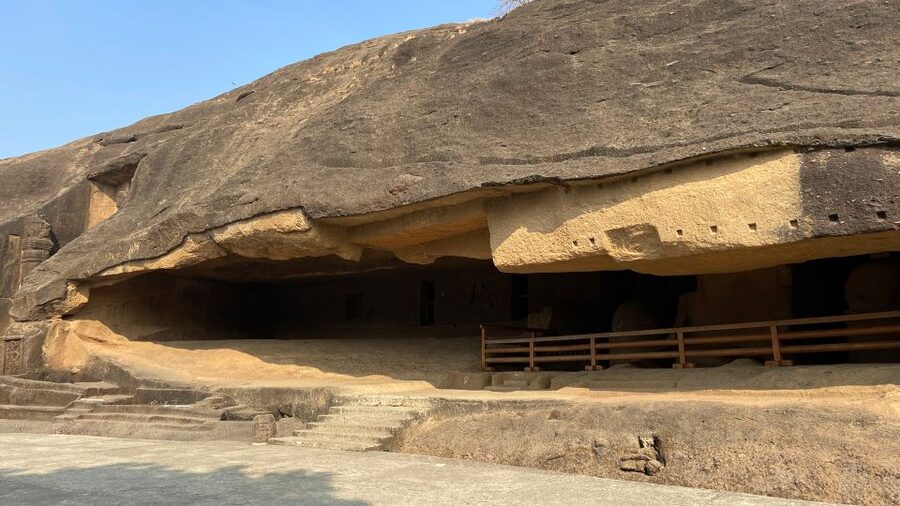
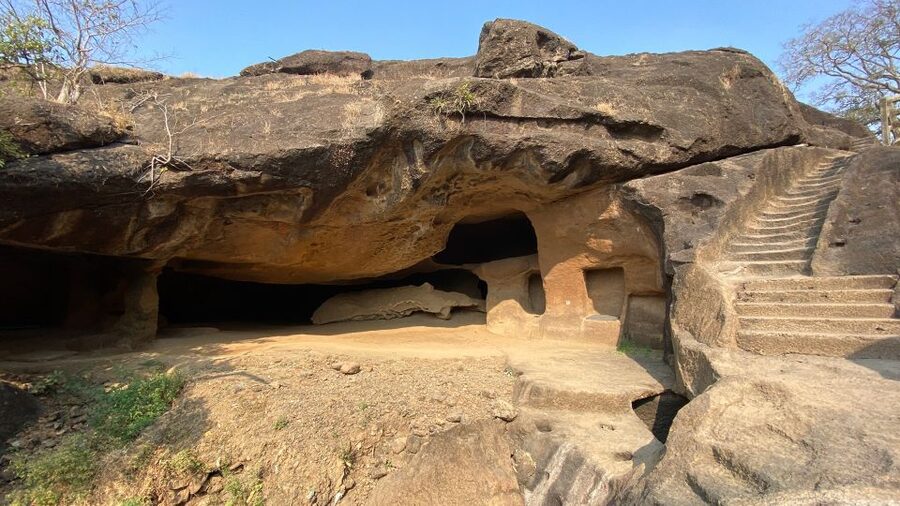
Kanheri Caves feel tied to the earth. The chambers were cut into dark basalt rock, and the complex spreads across the slopes of a hill inside Sanjay Gandhi National Park. The Golden Vipassana Pagoda feels more ceremonial and spacious, with its large golden dome, polished surfaces, and meditation hall.
I like the contrast. The caves ask you to look closely at carvings, inscriptions, pillars, and worn stone. The pagoda invites you to slow down, sit quietly, and take in the view. Together, they make a more thoughtful day than a quick drive past another Mumbai landmark.
The tour costs about $43 per person. That is not the cheapest way to visit these sites, since you could arrange local transport yourself, but it covers an English-speaking guide, entrance tickets, transport fees, and an air-conditioned vehicle. With private pickup and a driver handling Mumbai traffic, the extra cost can make sense if you value comfort and context.
More Ajanta, Ellora and Elephanta Cave Tours in Mumbai:
- Elephanta Caves & Island Guided Private Tour
★ 5.0 · 1,327 reviews - Mumbai: Elephanta Caves Half-Day Guided Tour with Expert
★ 4.8 · 1,032 reviews - All inclusive Elephanta Caves Guided Tour
★ 5.0 · 386 reviews
Starting at Sanjay Gandhi National Park
Pickup depends on the option you choose. With hotel pickup, the guide and driver meet you at your accommodation’s car pickup area. Without hotel pickup, the meeting point is the main gate of Sanjay Gandhi National Park near the ticket counter.
The drive to the park is part of the day’s transition. Mumbai quickly gives way to a greener setting, and the change helps you understand why Kanheri feels removed from the city even though it remains within Mumbai’s wider urban area.
Allow time for traffic. Some departures run smoothly in about three and a half hours, while others take six or seven hours. One longer outing ran from around 9:30 in the morning until 8 in the evening, so you should not schedule a tight evening flight, work meeting, or dinner reservation unless the operator confirms the timing.
The air-conditioned vehicle is more than a small comfort. Mumbai can be hot and humid, and the return drive after walking around the caves can feel long. Several guides have also helped with water, photos, restaurant suggestions, and small changes to the schedule. Those touches matter on a private day out.
Walking through Kanheri’s ancient caves
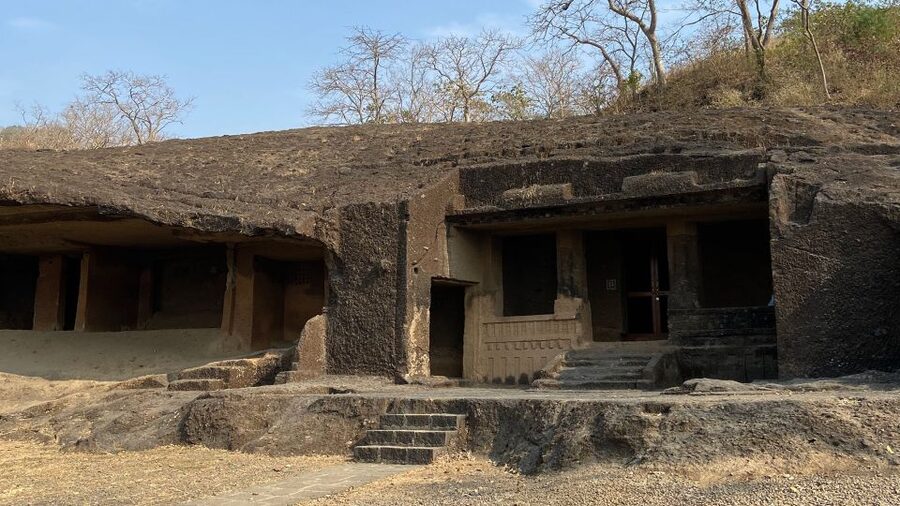
Kanheri is the heart of the experience. The caves date from the 1st century BCE and served as a center for Buddhist learning, worship, and meditation. Rather than one single chamber, this is a broad complex of rock-cut spaces shaped over many centuries.
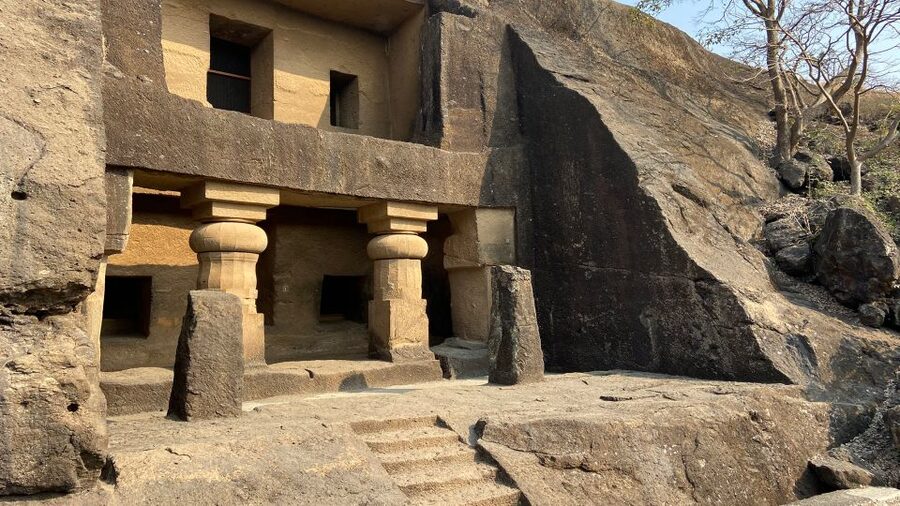
Your guide should point out the main types of rooms. Chaityas were prayer halls, while viharas served as monastic cells and living spaces. Look for carved pillars, sculptures, inscriptions, and the traces of careful work in the basalt. The appeal is not only visual. The layout helps you picture a working religious community, with places for study, contemplation, and daily life.
The caves are scattered along a hillside, so this is not a flat museum visit. You will climb steps and walk on sloping paths between sections. The effort is manageable for many people, but comfortable shoes are essential. Bring water, and take your time rather than treating the site as a race from one chamber to the next.
One useful feature of a private guide is the ability to pause where you want. Guides including Aryan, Shivam, Nikhil, and Kavita have been singled out for explaining how monks lived and for making the stones easier to understand. Without that help, you can still admire the setting, but the inscriptions and rooms may blur into a series of dark openings.
The forest setting adds much to the visit. You are not studying the caves in a bare archaeological enclosure. Trees, hillside views, and the distance from central Mumbai give the site a calmer feel. From higher points, you may also get broad views across the park and toward the city.
The main limitation is that the site can be tiring in strong sun. Some of the paths are exposed, and the combination of heat, steps, and walking makes an early start sensible. A review of the day’s schedule also noted that the caves require quite a few steps, though the route was not considered especially difficult.
The short ride up to the cave complex
The route to the caves may include a short park bus or local transfer. One account described a roughly ten-minute, somewhat bumpy ride uphill before the walking began. Treat that ride as part of the local character, not as a polished tourist shuttle.
Transport arrangements can vary with the chosen package and the day’s conditions. Your guide should explain where to board and where to meet again. Keep your belongings close, and wear shoes that give you a steady grip.
This is also where a private guide earns much of the tour price. Mumbai’s traffic, park entrances, local transfers, and ticket points can be confusing when you are trying to manage them alone. A guide such as Sahil or Ravi may also help with photographs and keep the visit moving without making you feel rushed.
A few more cave trips around Mumbai worth a look
- From Mumbai: Half-Day Elephanta Caves Tour with Ferry Ride
★ 4.9 · 284 reviews - Mumbai: City Tour, Elephanta Caves, Dharavi Slum W/Options
★ 4.9 · 198 reviews - Mumbai Elephanta Caves Private Half-Day Tour including Guide
★ 4.5 · 150 reviews - Private Full-Day Mumbai City Tour with Elephanta Caves Excursion
★ 5.0 · 113 reviews
Inside the Golden Vipassana Pagoda
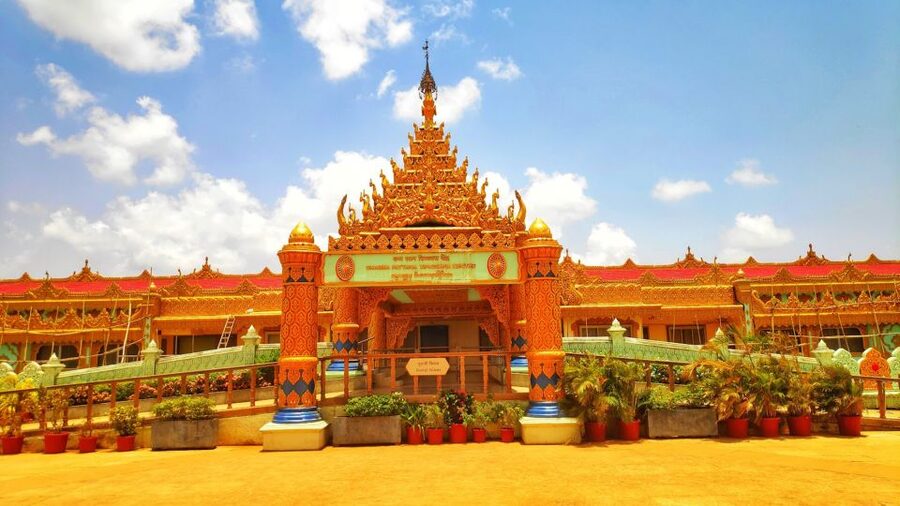
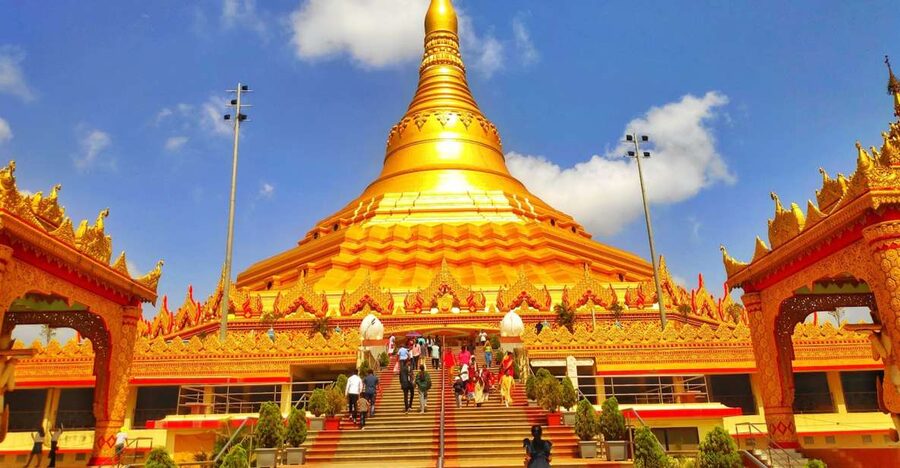
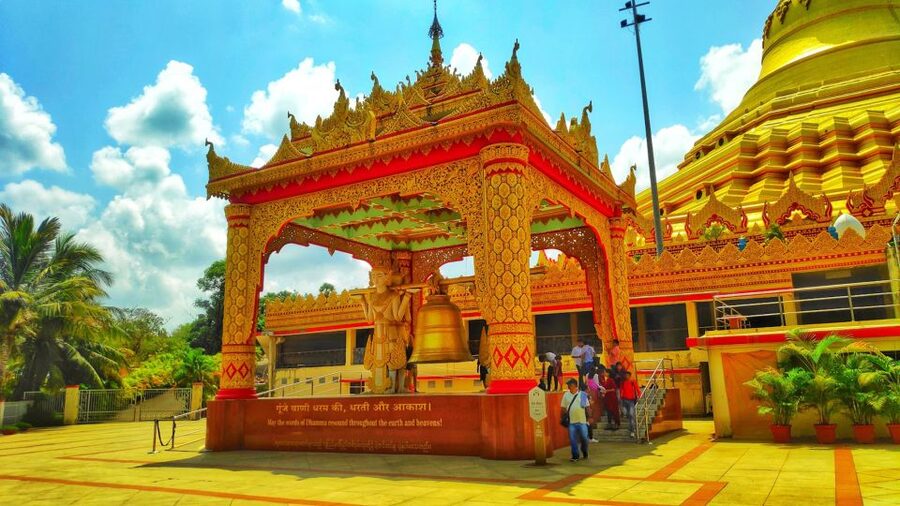
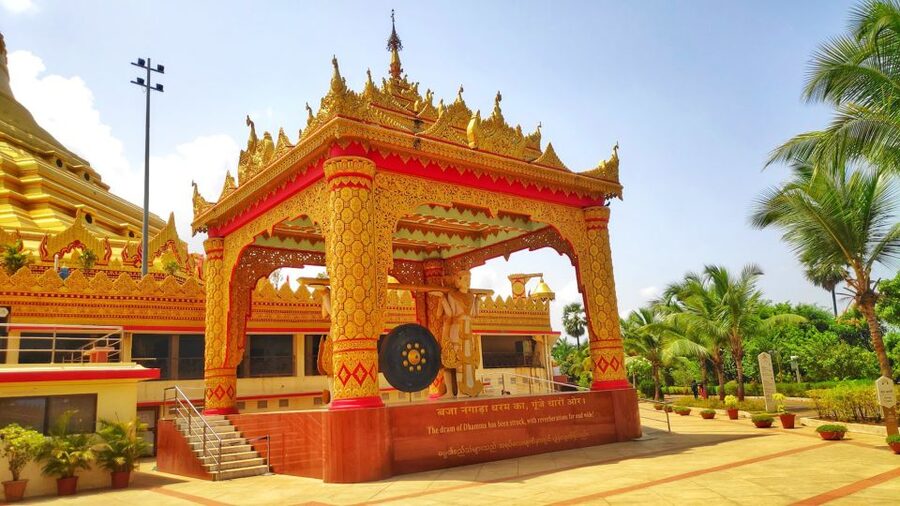
The second major stop changes the tone completely. The Global Vipassana Pagoda is a modern meditation center built around a huge golden dome. It is one of the largest pagodas in Asia and is designed as a place for Vipassana meditation, a practice focused on self-awareness and inner calm.
The main hall is highly decorative, with stone carvings and a large golden image of Buddha. The scale is impressive, but the intended experience is quieter than a standard sightseeing stop. You are expected to respect the setting and its spiritual purpose.
A brief guided meditation of about ten to fifteen minutes may be included. Several tours have included this short session, though you should confirm the exact arrangement when booking. It can be the most personal part of the day. After the busy streets and the physical effort at Kanheri, even a few quiet minutes can help you notice the difference between seeing a religious site and spending time in one.
The pagoda’s setting also adds to its appeal. A short boat ride may form part of the route to the complex, depending on the transport arrangement. From the pagoda area, you can enjoy broad views toward the Arabian Sea and Mumbai’s skyline. The contrast between the open water, city buildings, and the golden dome makes this a strong photo stop.
Do not expect the pagoda to offer the same archaeological detail as Kanheri. It is a modern site, and its value comes from its scale, design, meditation purpose, and setting. One useful criticism is that some visitors would like more explanation about the pagoda itself. If you want detailed information, ask your guide direct questions about Vipassana, the building, and the role of meditation in the center.
What the guides add to the day
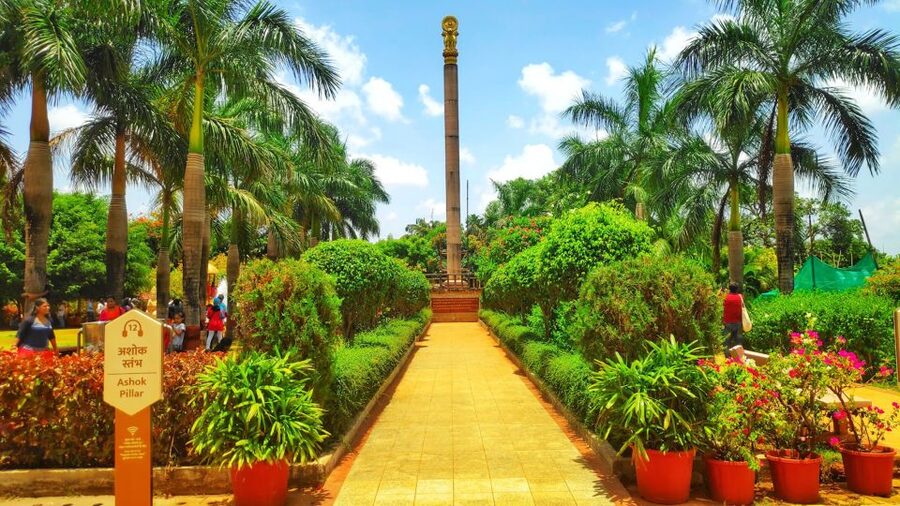
Guide quality is one of the strongest reasons to book this experience rather than arrange both sites independently. The best guides do not just lead you from entrance to entrance. They explain Buddhist ideas, connect the ancient caves with the modern pagoda, and help you read details that would otherwise be easy to miss.
Aryan has been praised for being attentive, funny, and well informed about both locations. Nikhil has been noted for clear explanations and good company. Kavita has helped visitors make the most of shorter schedules, while Ravi has combined historical detail with practical care, including water, photographs, and advice for the rest of a Mumbai stay.
The driver matters too. Mumbai traffic can be intense, and a calm driver makes the road time much easier. Drivers named Hassan, Jainul, JQ, Ismail, Ashfak, and Shamsher have been praised for safe, courteous service. The usual setup separates the guide and driver, so you can ask questions while someone else handles the road.
This is a private group experience, which gives you more flexibility than a large coach tour. You can ask for extra explanation at the caves, spend less time at a point that interests you less, or adjust the order when practical. Flexibility is not unlimited, since traffic and opening arrangements still control the day, but it is useful.
Time, heat, and physical effort

The tour suits most people who can manage ordinary walking and stairs, but it is not ideal for anyone seeking a completely effortless sightseeing day. Kanheri includes hillside paths, steps, and uneven sections. The pagoda is easier to explore, but the full outing still includes transfers and walking.
Start early if possible. The park and cave paths are more pleasant before the strongest heat, and an early departure leaves more room for traffic delays. At the pagoda, some areas are exposed to the sun, so a hat, water, and light clothing are sensible additions to the required comfortable shoes.
The vehicle’s air conditioning is a major advantage. It gives you a cool place to recover between stops, especially in the hotter months. One visitor found the rear seating short on legroom, so if you are tall or traveling with several people, ask about the vehicle and seating before you confirm.
The advertised duration ranges from three and a half to seven hours because pickup points, traffic, and route details can change the schedule. In practice, you should treat it as a flexible half-day or full-day plan. A short version may feel brisk, while a longer version can include slower sightseeing, transfers, and possibly lunch.
Food and extra stops
The standard inclusions are transport, entrance tickets, and an English-speaking guide. A home-cooked Indian meal has been part of some longer arrangements, with dishes such as rice, lentils, vegetables, and dessert served in a local home. Do not assume this meal is included in every booking. Confirm it before you plan your food around the tour.
Some guides also help with restaurant suggestions after the tour. That can be useful because the experience may finish later than expected. If you have a strong preference for lunch, tell the guide early rather than waiting until the schedule is nearly over.
The private format makes optional additions possible, but time and price can change. Ask clearly what is included if a home meal, tuk-tuk ride, boat ride, or extra stop is important to you. These details have appeared in different versions of the day, but they are not all listed as standard inclusions.
Is $43 good value?
At about $43 per person, the price sits above a do-it-yourself visit. You could potentially reach the park and pagoda by local transport for less, but you would need to manage tickets, directions, transfers, timing, and the trip between two sites on your own.
I see the value in three areas. First, the guide gives the caves a human story rather than leaving you with carvings and empty rooms. Second, the vehicle and driver reduce the stress of Mumbai’s traffic. Third, the private format gives you personal attention and a better chance to ask questions.
The value is weaker if you already know Mumbai well, enjoy arranging local transport, or prefer to spend only a short time at each site. One guide described the tour as expensive for a private outing and suggested using a tuk-tuk independently for a lower price. That is fair advice for a confident budget visitor.
For a first visit, a solo guest, or a couple wanting a simple plan, the price is more reasonable. Hotel pickup, tickets, transport, and a guide in one booking remove several small decisions. You are paying for ease and explanation, not just entry to the two attractions.
Who should book this experience?
I would choose this for someone who wants Mumbai beyond its central streets and headline sights. It is especially good for visitors interested in Buddhism, history, architecture, photography, or quieter places.
Solo visitors can benefit from the private setup and the support of a guide. The experience has also worked well for couples and small groups. Families with older children may enjoy the caves, though young children may find the hillside walking and heat tiring.
It is less suitable if you want a short, fixed-duration activity with no stairs. It is also not the best choice if your schedule cannot absorb delays. Mumbai traffic can turn a neatly planned outing into a longer day.
Should you book the Kanheri and Golden Pagoda tour?
Book it if you want the two sites explained properly and prefer someone else to handle Mumbai’s roads, tickets, and transfers. The pairing is excellent: Kanheri gives you ancient stone, hillside walking, and Buddhist archaeology, while the Golden Pagoda offers modern meditation and wide city views.
Before paying, confirm the pickup point, expected duration, vehicle size, and whether a meditation session, boat ride, or meal is included. If you want the best chance of a comfortable day, start early and bring water, comfortable shoes, and patience for traffic.
I would not book it solely for the lowest price. I would book it for the private guidance and easy transport, especially if this is your first time in Mumbai. For independent visitors on a tight budget, self-guided transport may be cheaper. For most others, the added context makes the day worthwhile.
FAQ
How much does the tour cost?
The listed price is $43 per person. This includes an English-speaking guide, entry tickets, transport fees, and an air-conditioned vehicle.
How long does the experience last?
The stated duration ranges from three and a half to seven hours. Traffic, pickup location, and the amount of time spent at each site can make the day longer.
Where does the tour begin?
Pickup depends on the selected option. With hotel pickup, the guide and driver meet you at your accommodation’s car pickup and drop-off point. Without hotel pickup, meet at the main gate of Sanjay Gandhi National Park near the ticket counter.
Is hotel pickup included?
Hotel pickup and drop-off are available as an optional part of the booking. Check the selected option when you reserve.
Is the tour private?
Yes. The experience is arranged for a private group rather than a large shared group.
What language does the guide speak?
The live guide service is in English.
How much walking is involved?
Kanheri Caves include steps, slopes, and walking between caves on a hillside. Comfortable shoes are specifically recommended.
Is meditation included at the Golden Pagoda?
A short guided meditation of about ten to fifteen minutes has been included in some tours. Confirm this detail for your selected departure.
Are meals included?
Meals are not listed among the standard inclusions. Some longer arrangements have included a home-cooked Indian meal, so confirm this before booking if food is important to your plans.
Can I cancel the booking?
You can cancel up to 24 hours in advance for a full refund. A reserve-now, pay-later option is also available.
Just added around Mumbai
- Sanjay Gandhi National Park + Kenheri Caves + Lion Safari★ 4.4 · 19 reviews
- Private Elephanta Caves: Private Half-Day Tour from Mumbai★ 4.7 · 52 reviews
- Mumbai City Tour with multiple options★ 4.5 · 27 reviews
- Mumbai: City Tour, Elephanta Caves, Dharavi Slum W/Options★ 4.9 · 198 reviews
- Mumbai: Buddhist Kanheri Caves with Golden Pagoda Temple★ 4.8 · 47 reviews
- Elephanta Caves & Island Guided Tour★ 4.8 · 59 reviews
- Elephanta Cave Tour with Bollywood Tour★ 4.0 · 18 reviews
- Mumbai Kanheri Caves & Golden Pagoda – A Buddhist Settlement★ 5.0 · 28 reviews
Mumbai Cave Tours, compared.
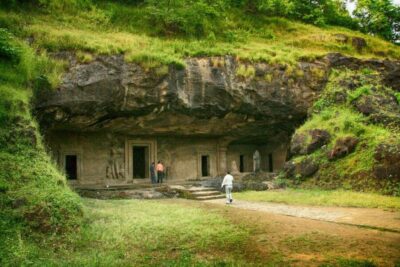
Mumbai: Elephanta Caves Half-Day Guided Tour with Expert
Read our review →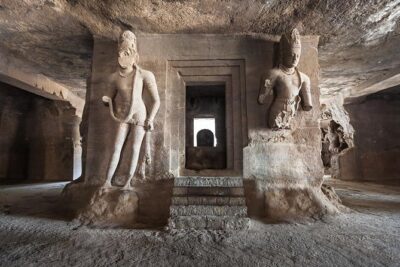
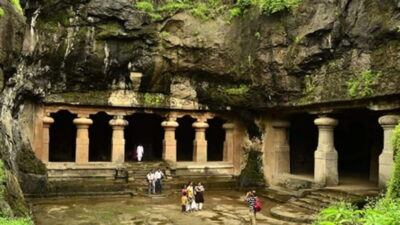
From Mumbai: Half-Day Elephanta Caves Tour with Ferry Ride
Read our review →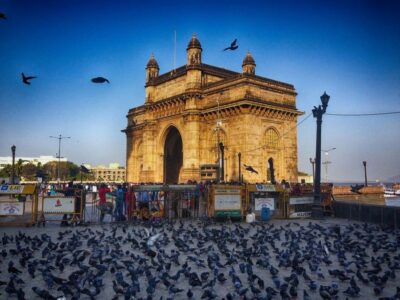
Mumbai: City Tour, Elephanta Caves, Dharavi Slum W/Options
Read our review →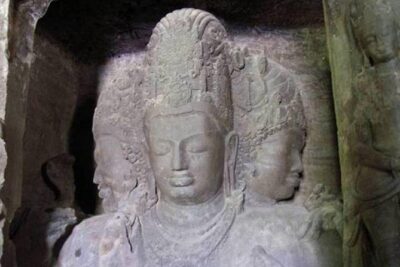
Mumbai Elephanta Caves Private Half-Day Tour including Guide
Read our review →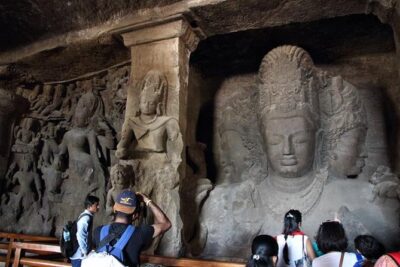
Private Full-Day Mumbai City Tour with Elephanta Caves Excursion
Read our review →
Full Day Mumbai Sightseeing With Elephanta Caves Private Tour
Read our review →Browse the lists this tour appears in