
REVIEW · NEW ZEALAND
Aranui Cave 1-Hour Guided Tour
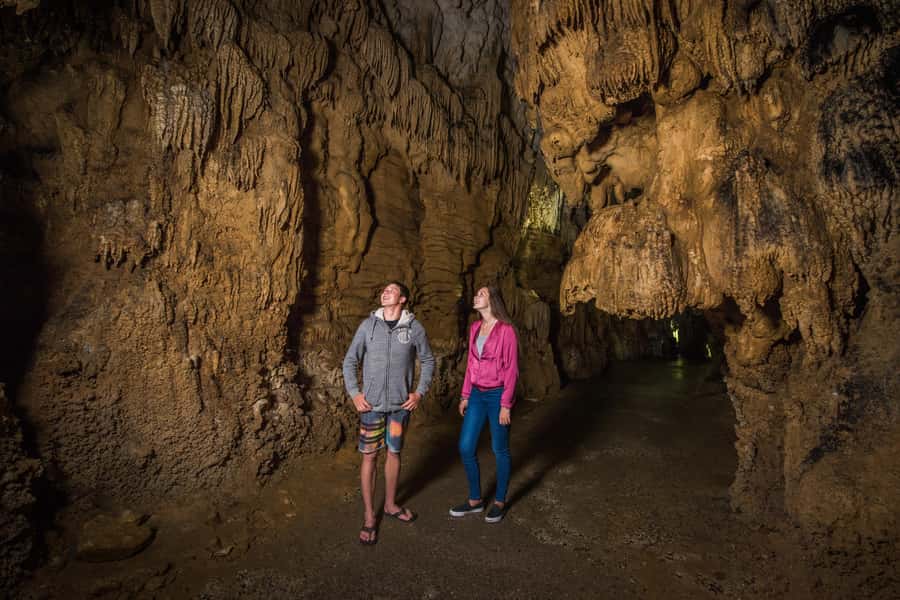
Aranui Cave gives you a quieter, more intimate look at Waitomo’s underground world. Instead of a boat ride beneath glowworms, you walk along safe boardwalks through a small, delicate cave filled with towering chambers, unusual limestone shapes, and New Zealand’s cave wetas. I like the small group limit of 18 and the way the tour combines geology with Maori stories. The short bush walk through Ruakuri Scenic Reserve adds a little context before you go underground.
I also like that photography is allowed, and guides such as Cori have made a strong impression with clear explanations and good storytelling. The main drawback is time: the cave portion can feel brief if you stop often for photos, and one part of the visit includes a fairly long introduction before entering the cave.
Aranui Cave at a glance
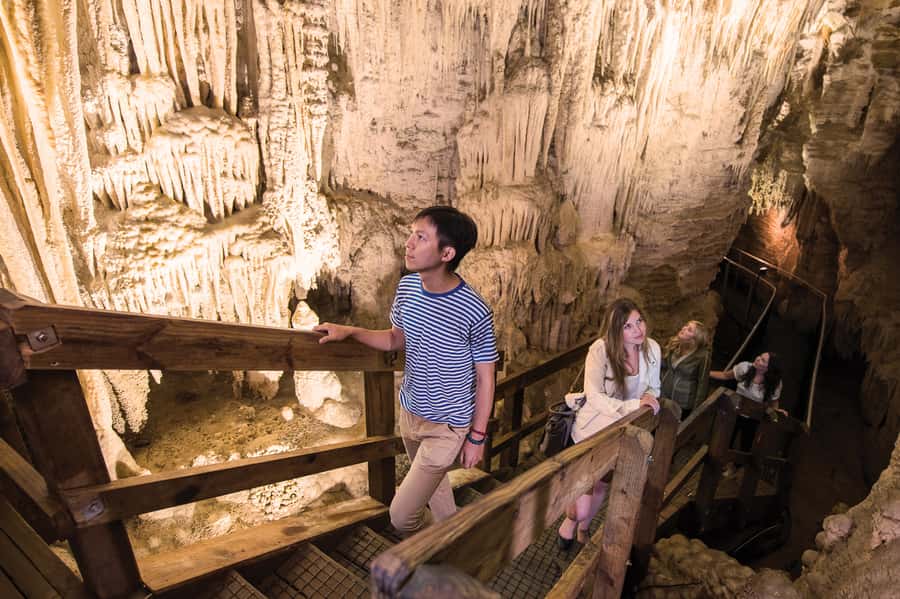
- Ancient limestone formations: See large stalactites, stalagmites, and pale brown, pink, and white mineral shades.
- A cave weta colony: Look for these large New Zealand insects near the natural entrance.
- A 15-minute bush walk: Reach the cave through the forest of Ruakuri Scenic Reserve.
- Small groups: Numbers are restricted to 18 people, helping keep the cave visit personal.
- Maori legends and geology: Your English-speaking guide connects the cave to local stories and natural history.
- Photography allowed: Bring your camera, but keep an eye on the clock during the one-hour tour.
Why Aranui Cave feels different from Waitomo’s glowworm visit
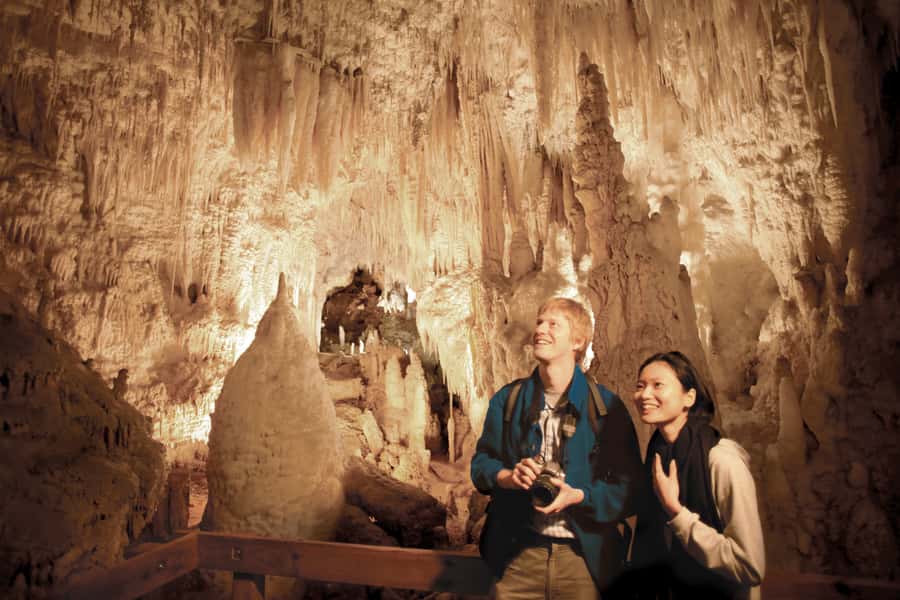
Waitomo is best known for its glowworm caves, but Aranui Cave offers a different kind of underground experience. There is no focus on a silent boat ride or a starry ceiling of glowworms. Here, you walk through a natural cave entrance and spend your time looking closely at rock formations.
That difference matters. Aranui is the smallest of Waitomo’s three main caves, and its smaller scale makes the shapes feel more immediate. You are close to the walls, close to the cave weta colony, and close enough to study the subtle colors in the limestone.
The setting also gives the tour a more peaceful rhythm. The cave sits in Ruakuri Scenic Reserve, and the approach includes a guided bush walk of about 15 minutes. That short walk is not just extra padding. It gives you time to shift from the visitor center to the forest, then from the forest to the dark, cool cave.
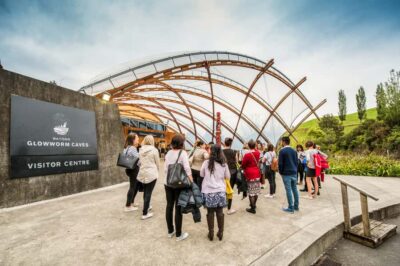
You begin at the Waitomo Glowworm Caves Visitor Centre at 39 Waitomo Village Road. Aranui Cave is about a five-minute drive from the glowworm cave site, making it easy to add to a Waitomo visit if the timing works.
More Quick One-Hour Trips in New Zealand:
- Cambridge, Matamata, Waitomo: 1-Hour Ecological River Cruise
★ 4.8 · 22 reviews - Benagil cave 1 hour tour with local guide
★ 4.7 · 153 reviews - Gozo: 1 Hour Kayak plus +Cave Tour + Drop off Blue Lagoon
★ 4.9 · 67 reviews
The bush walk through Ruakuri Scenic Reserve
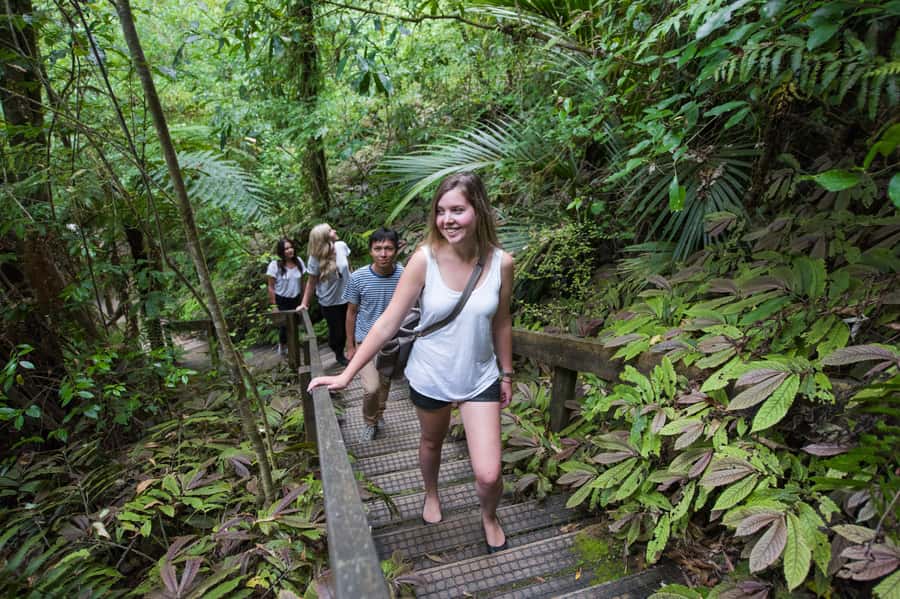
The tour starts at the visitor centre, then continues with a guided walk through the reserve. The bush section is brief, but it helps place Aranui Cave in its natural setting rather than treating it as a stand-alone attraction.
Your guide uses this part of the experience to explain the area and prepare you for the cave. The walk also gives you a chance to get comfortable with the pace before reaching the entrance. Wear shoes you can walk in confidently, since the tour includes both the forest path and the cave boardwalks.
This is a walking tour, not a strenuous caving trip. Still, the cave has narrow sections and there is no wheelchair access. If you have mobility problems, this is not the right Waitomo cave experience for you.
Meeting the cave wetas near the entrance
One of the most memorable details comes early. Just inside the natural entrance, you may see a colony of cave wetas.
These large insects are unique to New Zealand and are a useful reminder that a cave is not simply a room full of rocks. The wetas live in the cave environment, and your guide can help you understand what you are seeing without turning the moment into a long science lecture.
For some people, the wetas will be a highlight. For others, large insects in a dark cave may be less appealing. Either way, this is one reason to pay attention near the entrance rather than rushing toward the larger chambers.
Boardwalks, narrow passages, and high chambers
Inside Aranui Cave, you follow safe boardwalks through narrow chambers and into taller spaces. The route lets you see the cave from several scales. At one point, you are studying small details close to the path. Farther in, the ceiling rises and the formations become much larger.
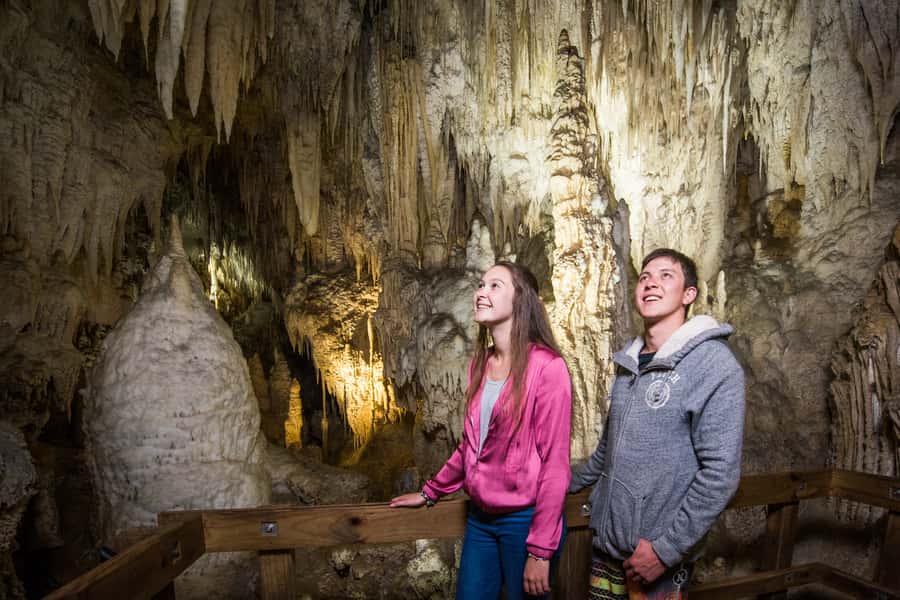
The stalactites and stalagmites are the main visual draw. They come in pale brown, pink, and white shades, with shapes formed over long periods by mineral-rich water. The effect is not flashy. It is more delicate than dramatic, and that is precisely what makes Aranui special.
Look up as often as you look ahead. The high chambers can be easy to miss if you focus only on the path, while the smaller formations reward a slower glance. Your guide points out features and explains how the cave developed, giving the shapes a clear geological context.
The boardwalk keeps the route manageable and protects the cave floor. It also means you are not scrambling over rocks or crawling through tight passages. You get a close look without turning the visit into an adventure-caving expedition.
More Guided Tours in New Zealand:
- Waitomo: Glowworm Caves Guided Tour by Boat
★ 4.5 · 4,908 reviews - Hobbiton & Waitomo Caves Guided Day Trip from Auckland incl lunch
★ 5.0 · 2,677 reviews - Te Anau: Glowworm Caves Guided Tour
★ 4.6 · 2,611 reviews - Waitomo Caves: Ruakuri Glowworm Cave Guided Walking Tour
★ 4.7 · 1,249 reviews
Maori stories and local guiding
Aranui Cave is tied to Maori myth and legend, and the guide’s storytelling is an important part of the experience. The best moments come when the explanation connects the dark chambers, natural entrance, and surrounding forest to the cultural meaning of the site.
The tour is conducted in English. Guides have different styles, but the strongest reports from this experience point to lively storytelling and patience with questions. Cori, in particular, has been praised for explaining the history, geology, and unusual formations while handling a stream of questions from children.
That is useful if you are visiting with a family. A cave tour can lose younger children quickly if it becomes a list of rock names. A guide who explains the formations clearly and keeps the tone light can make the hour work for different ages.
Another guide, identified in one booking as Baba, was noted for helping with family photos and keeping the group comfortable without rushing. Names and guide assignments can change, so book this for the cave itself rather than expecting a particular person.
How the one-hour timing works
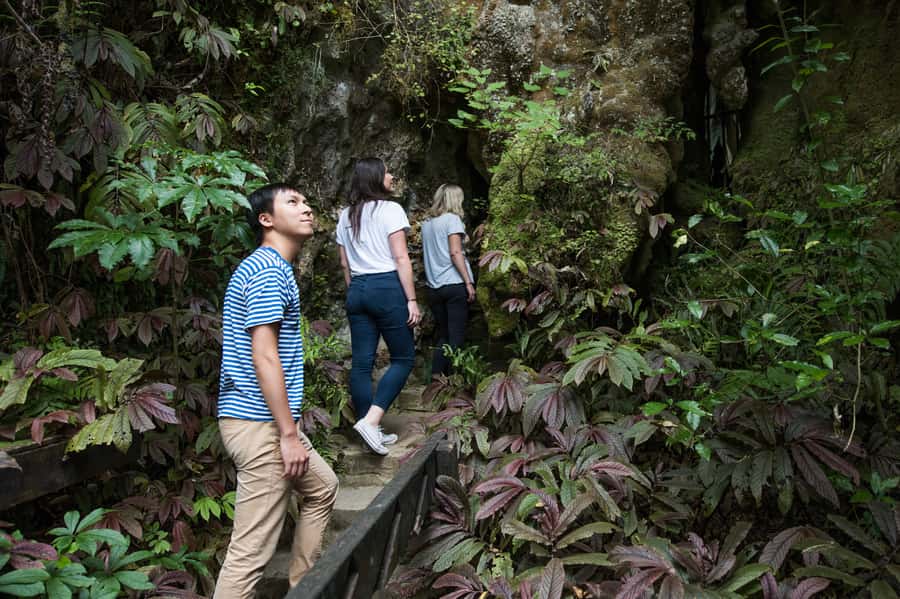
The advertised tour lasts one hour, with an additional 15-minute guided bush walk included. That makes the experience short enough to fit into a wider Waitomo day, but you should arrive ready to move promptly.
The limited time is both a benefit and a drawback. You can see Aranui without giving up half a day, and the route remains focused. On the other hand, the cave formations deserve attention, and stopping for pictures can make the interior portion feel hurried.
The timing can also shift by 15 to 30 minutes from the slot you request, depending on availability. Build a little breathing room into your day, especially if you are arranging another tour nearby.
Arrive early. If you miss your scheduled departure or arrive late, your ticket is forfeited and cannot be refunded. New bookings cost the full amount and depend on remaining space.
Small groups make a real difference
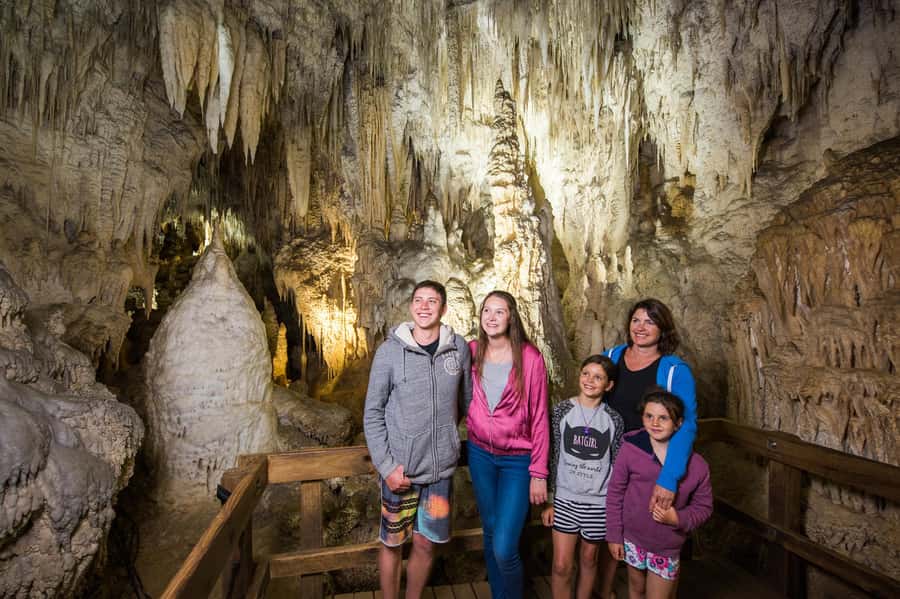
Tour numbers are capped at 18, and that limit matters inside a narrow cave. A smaller group makes it easier to hear the guide, see the formations, and pause without creating a traffic jam.
The strongest group experience may be smaller than the maximum. One family found a group of 10 comfortable and did not feel cramped inside the cave. That is a useful guide for your expectations: 18 people is still a group, but it is much more manageable than a large procession.
A small group also helps the guide respond to questions. If you are curious about geology, Maori traditions, or cave wetas, there is a better chance of getting a direct answer rather than simply following along silently.
Photography, clothing, and comfort
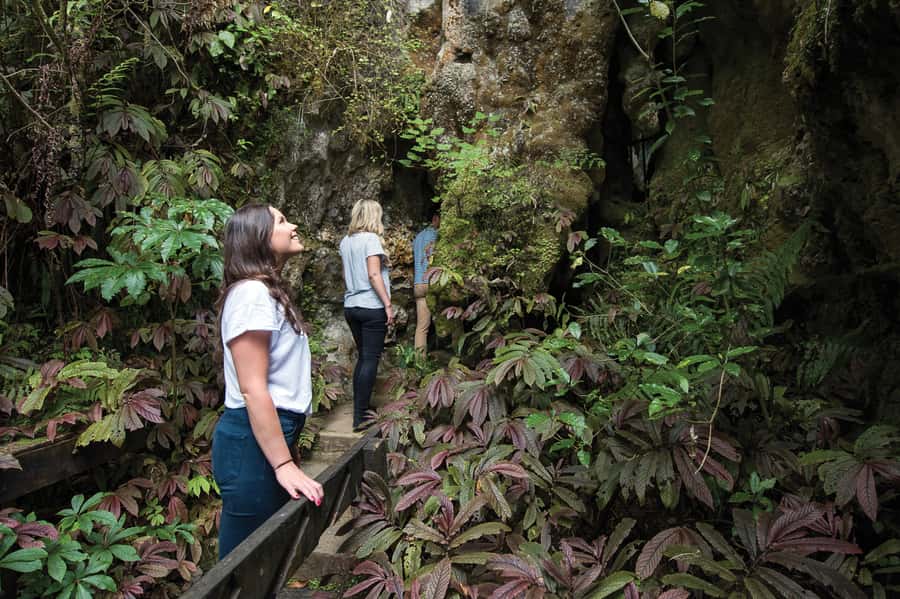
Photography is permitted in Aranui Cave, which is a welcome advantage for anyone who likes to record unusual natural details. The cave’s formations have soft color variations, so a camera can help you remember the shapes more clearly.
Still, photography takes time. The tour does not provide unlimited space for setting up shots, and the route continues with the group. Take a few pictures, then put the camera away long enough to listen and look around.
Bring comfortable walking shoes and a warm jacket. The cave environment can feel cool, and the bush walk adds outdoor time before and after the underground portion. Comfortable footwear is also more important than fashionable footwear here.
The cave is not wheelchair accessible and is unsuitable for people with mobility problems. This is not a minor footnote, since the tour includes a bush walk, narrow cave areas, and boardwalk movement.
Is the $47 price good value?
At $47 per person, Aranui Cave is not a throwaway add-on, but the price includes entry, the guided walk, and the local guide. You are paying for access to a protected cave, interpretation, and a small-group format rather than simply walking into an open cavern.
The value is strongest if you care about geology, local stories, and a quieter experience. You also get a compact attraction that can fit around other Waitomo plans. If your main goal is glowworms, Aranui will not replace the famous glowworm cave visit. It offers a different subject and mood.
The price may feel less attractive if you want a long underground outing. The tour is about an hour, and some of that time includes the approach and guiding. If you expect an extended caving adventure, the short format could disappoint.
For many people, though, the combination of the natural entrance, delicate formations, cave wetas, and guide-led interpretation makes the cost reasonable. You are not just looking at a cave. You are learning how the cave fits into the surrounding reserve and local culture.
Who should book Aranui Cave?
I would recommend this tour if you want a manageable walking experience with real natural detail. It suits families, couples, and anyone who prefers rock formations and stories to a more theatrical attraction.
It is also a good choice if you have already planned the glowworm caves and want to see another side of Waitomo. The two experiences are not duplicates. Aranui is about limestone, scale, wetas, and walking under your own power.
Families should appreciate the short duration and the chance to ask questions. Children who enjoy insects, unusual rocks, or legends may get more from this than from a quiet boat ride. A patient guide can make a major difference, and Cori has shown the kind of friendly, detailed approach that works well for curious children.
I would think twice if you dislike cool, enclosed spaces, have mobility limitations, or want plenty of time for photography. The tour is not difficult in the way an extreme cave trip is difficult, but it still requires walking and attention to the group schedule.
Cancellation and booking details
You can cancel up to 24 hours before the tour for a full refund, and you can reserve now and pay later. Bookings are essential because space is limited and all departures depend on availability.
The requested start time may shift by 15 to 30 minutes. Check the final time carefully, arrive early at the Waitomo Glowworm Caves Visitor Centre, and leave enough room in your day for the 15-minute bush walk.
Should you book the Aranui Cave tour?
Book it if you want a close look at Waitomo’s limestone world without committing to a long or physically demanding caving trip. The cave wetas, high chambers, Maori stories, and delicate mineral colors give the hour plenty of substance.
Skip it if your only reason for visiting Waitomo is glowworms, or if you need wheelchair access. For everyone else, Aranui Cave is a well-sized companion to the better-known glowworm experience, with enough geology and local character to justify the extra stop.
FAQ
Where does the Aranui Cave tour begin?
The tour begins at the Waitomo Glowworm Caves Visitor Centre, 39 Waitomo Village Road, Waitomo, New Zealand.
How long does the tour last?
The cave tour lasts about one hour and includes an additional 15-minute guided bush walk.
How large are the tour groups?
Numbers are restricted to 18 people per tour.
Is the tour conducted in English?
Yes. The tour has a live English-speaking guide.
Can I take photographs inside Aranui Cave?
Yes. Photography is permitted inside Aranui Cave.
What should I bring?
Bring comfortable walking shoes and a warm jacket.
Is Aranui Cave wheelchair accessible?
No. There is no wheelchair access, and the tour is not suitable for visitors with mobility problems.
Just added around New Zealand
- From Auckland: Day Trip to Waitomo Glow Worm Caves★ 4.7 · 60 reviews
- From Auckland: Two-Day Hobbiton, Rotorua, Waitomo Caves Tour★ 4.7 · 59 reviews
- From Auckland: Waitomo Caves and Kiwi House Group Tour★ 4.8 · 20 reviews
- From Auckland: Hobbiton and Waitomo Day Tour with Lunch★ 4.9 · 126 reviews
- Cathedral Cove Coast and Cave Tour★ 4.9 · 110 reviews
- Cambridge, Matamata, Waitomo: 1-Hour Ecological River Cruise★ 4.8 · 22 reviews
- Waitomo Caves Black Abyss Ultimate Caving Experience★ 4.9 · 257 reviews
- Auckland: One-Way Tour to Rotorua with Waitomo Caves★ 4.5 · 44 reviews
New Zealand Cave Tours, compared.
Hobbiton & Waitomo Caves Guided Day Trip from Auckland incl lunch
Read our review →
From Auckland: Hobbiton & Waitomo Caves Day Trip with Lunch
Read our review →
Waitomo Caves: Labyrinth Black Water Rafting Experience
Read our review →
Waitomo Caves: Ruakuri Glowworm Cave Guided Walking Tour
Read our review →
Hobbiton & Waitomo Caves Small-Group Tour W Lunch from Auckland
Read our review →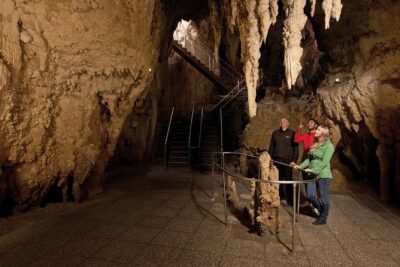
Browse the lists this tour appears in