
REVIEW · ROME
Rome: Trevi Fountain and Underground Guided Tour
The most surprising part of this 40-minute Trevi Fountain tour is nine meters below the crowded piazza. Beneath modern Rome, you’ll see Vicus Caprarius, ancient masonry, an imperial Domus, and a 2,000-year-old aqueduct that still supplies water to the fountain above. I like that the tour turns a quick photo stop into a lesson in how Rome was built in layers.
I also like the clear headsets and the guides’ lively storytelling. Mario, Francesca, Vito, and Anestis are among the guides praised for humor, patience, and strong explanations. The main drawback is simple: the underground site is near Trevi Fountain, not directly beneath its basin, and $41 is a fairly high price for only 40 minutes.
Key points to know before you book

- The underground site is Vicus Caprarius: You explore nearby Roman ruins, not a secret chamber directly beneath the fountain.
- A working ancient aqueduct is the star below ground: The water system is about 2,000 years old and still feeds Trevi Fountain.
- The tour splits neatly into two 20-minute sections: One part covers the fountain, and the other covers the archaeological site.
- Guides make the short format work: Mario and Francesca are often singled out for humor, patience, and clear explanations.
- You view the fountain from the public piazza: Entry into the restricted basin area costs an extra €2.
- Expect stairs and uneven archaeological spaces: The tour is not suitable for wheelchair users.
Trevi Fountain first: more than a photo stop

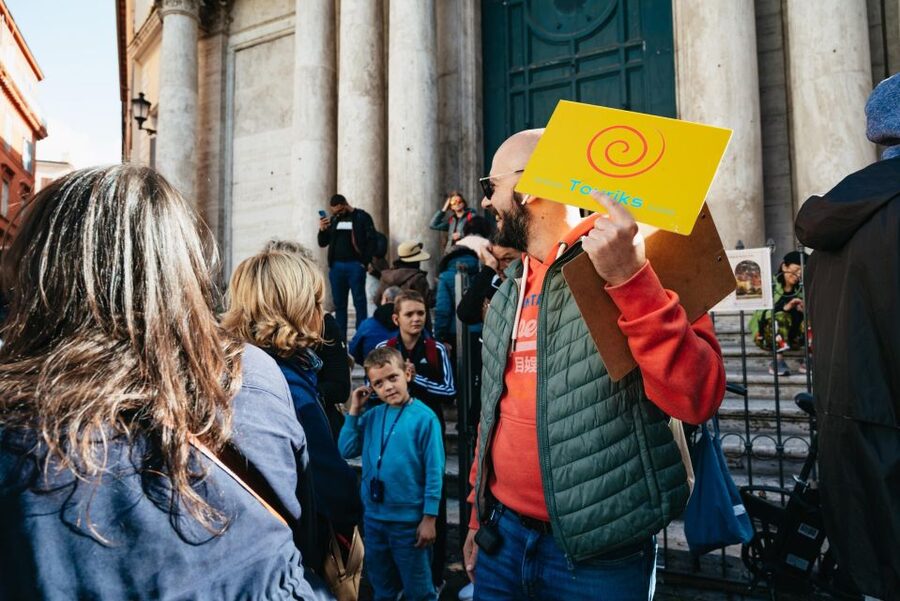
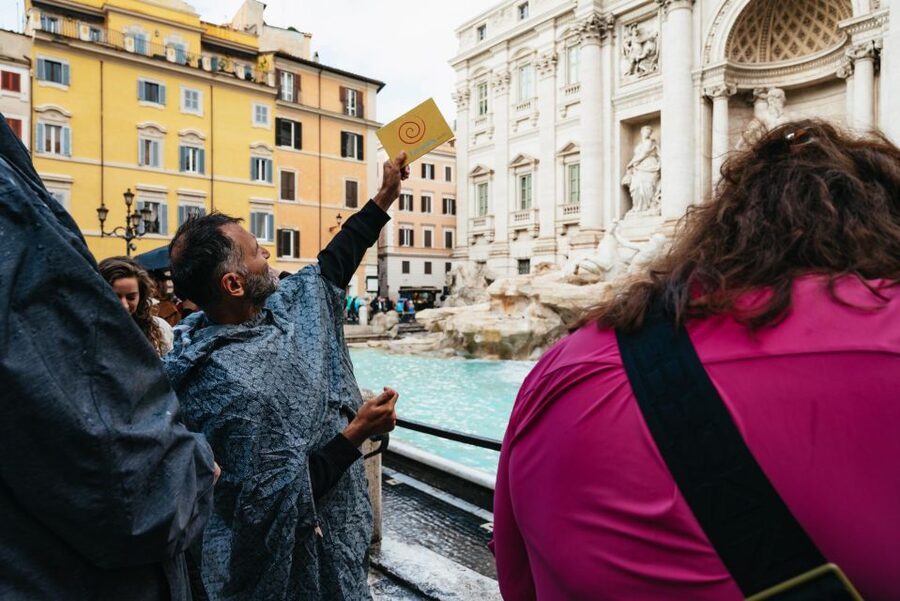
The meeting point is easy to place once you know what to look for. Go to Via del Lavatore 49, in front of the Santi Vincenzo e Anastasio a Fontana di Trevi Church. The church sits on the left corner of Piazza di Trevi, and your guide carries or wears a yellow label marked TOURIKS.
This matters because Trevi Fountain is one of Rome’s busiest gathering points. A guide without a clear sign can be hard to spot among the crowds, so allow extra time to find the church and look for the yellow label. The operator has also contacted late-arriving participants by phone or text in some cases, but you should not count on a late arrival being accommodated.
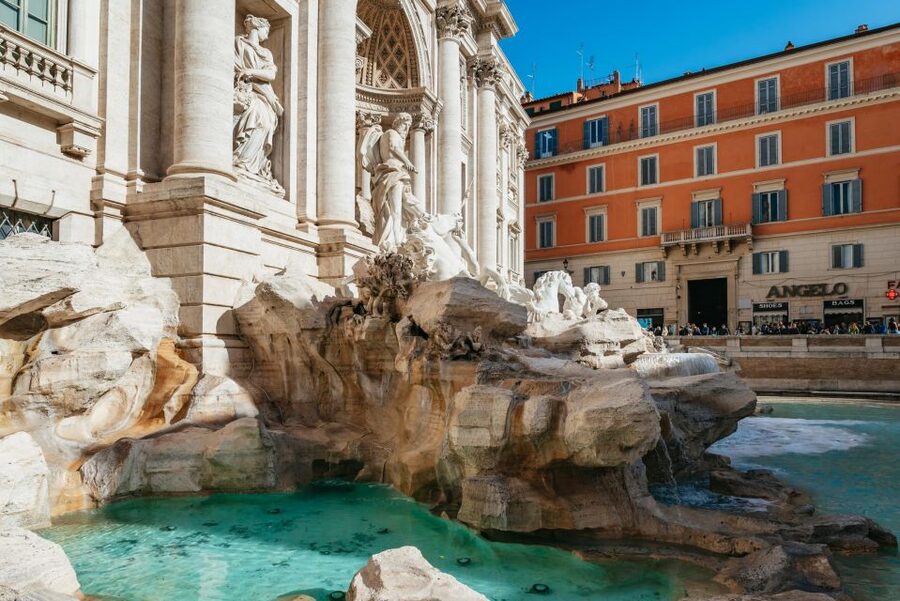
The fountain portion lasts about 20 minutes. You remain at public piazza level, where the guide explains the design, figures, myths, and long story behind the monument. You’ll hear how the fountain connects to Rome’s ancient water system and why its dramatic figures were chosen.
The setting can be hard work. The piazza is crowded, people stop for photographs, and voices compete from every direction. The supplied headsets help you hear the guide without needing to stand directly beside the speaker. Bring your own headphones if requested, though the tour also provides listening equipment.
You will not enter the restricted basin area as part of the $41 price. That access costs €2 separately. The guide instead takes you to a strong viewing point in the public square, which lets you see the fountain without adding another ticket, but it may disappoint you if you expect special access to the water or the front edge.
That limitation should be clear before booking. The public view is still the classic view of Trevi Fountain, and the guide uses the scene in front of you as a teaching tool. Just do not expect an escorted walk down into the fountain basin.
More Guided Tours in Rome:
- Expert Guided Tour of Colosseum Arena OR Underground, and Forum
★ 4.5 · 5,041 reviews - Rome: Colosseum Underground Small Group Guided Tour
★ 4.7 · 4,844 reviews - Rome: Catacombs of St. Callixtus Entry Ticket & Guided Tour
★ 4.6 · 3,037 reviews
Nine meters below Rome at Vicus Caprarius
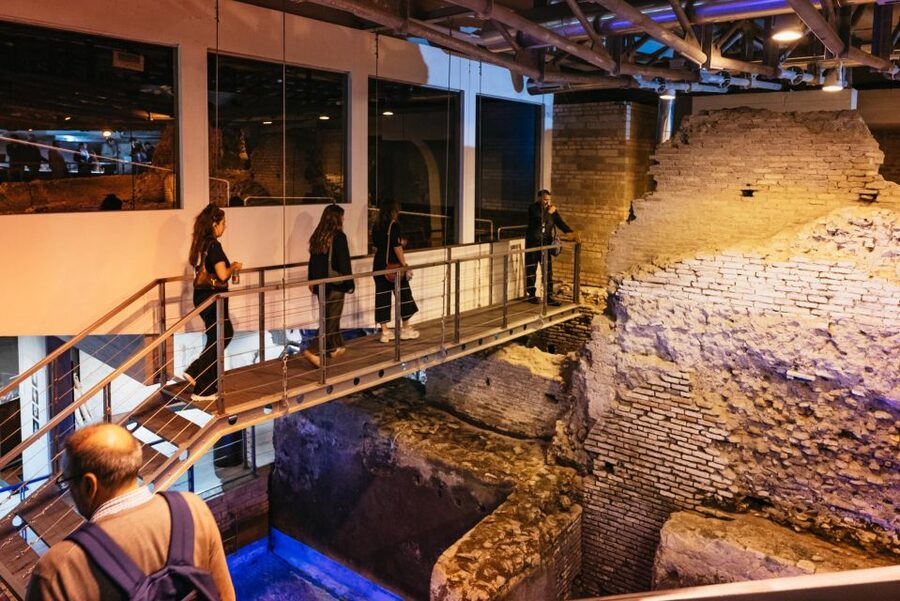
The second 20-minute section takes you to Vicus Caprarius, the archaeological site below the modern streets. Here the tour changes character. Above ground, you are looking at a theatrical Baroque fountain. Below ground, you are looking at exposed brick, stone, water channels, and the physical layers of Rome.
The site sits about nine meters beneath street level. That descent gives you a direct sense of how the city has risen over time. Modern roads and buildings occupy the surface, while earlier Roman structures remain below. You can see the millenary stratification that makes Rome feel less like a single ancient city and more like several cities stacked together.
One of the strongest sights is the ancient aqueduct. The tour description identifies it as a fully functioning, 2,000-year-old system that continues to supply Trevi Fountain. That is a useful link between the glamorous monument above and the engineering that makes its water display possible.
If you have any interest in Roman engineering, this may be the most valuable part of the experience. You are not just hearing that Rome had advanced water systems. You are standing beside a surviving section and seeing how water infrastructure remained part of the city’s later life.
You also see remains of an imperial Domus. The tour connects these ruins with the changing use of the area, including the transition from private Roman homes to later urban functions. The details help you read the broken walls as former rooms and structures, rather than as a pile of old stones.
The archaeological site is not vast. That is why the guide matters. Without explanation, you could walk through it quickly and miss the relationship between the fountain, aqueduct, Domus, and layers above. The tour gives the remains a timeline and a purpose.
What the guide adds in a short tour
Forty minutes leaves little room for wandering. The benefit is focus. You spend about 20 minutes at the fountain and 20 minutes underground, with a guide keeping the story moving.
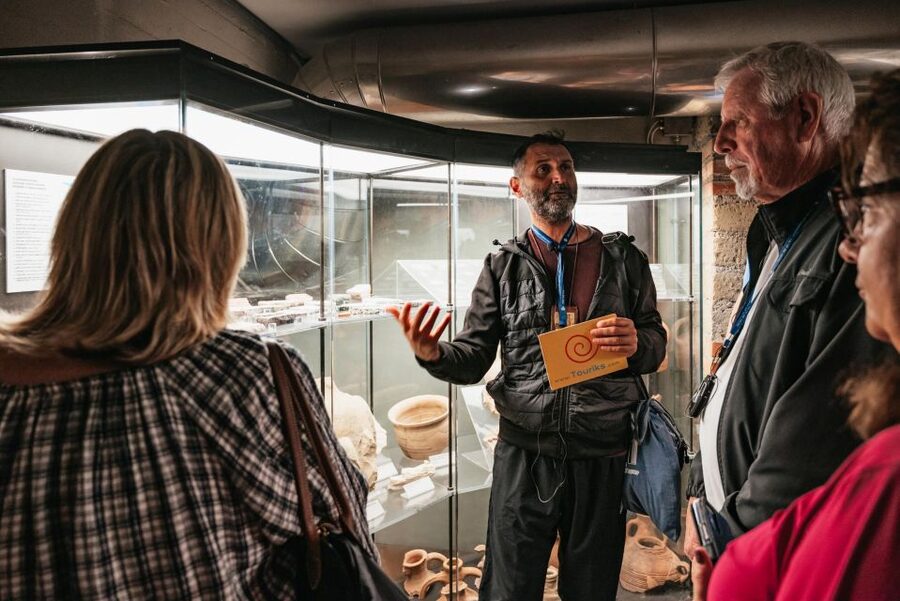
The strongest guide reports center on clear explanations and a good sense of timing. Mario is described as funny, entertaining, and well informed. Francesca is praised for her enthusiasm, warmth, and ability to make the information easy to follow. Vito and Anestis also receive strong marks for making the experience friendly and answering questions.
That range of guide styles matters. A short tour can feel rushed if the guide simply recites dates. Here, the best version uses short facts, stories, and answers to questions. Families with children may appreciate that approach. One guide adjusted explanations into small, easy pieces for two young children while still giving the adults more detail.
You should still keep expectations realistic. A 40-minute tour cannot explain all of Trevi Fountain, Roman aqueducts, and the full archaeology of Rome. It works as a compact introduction, not as a full archaeological visit.
The headsets are especially useful at the fountain. At the underground site, the quieter setting may make them less essential, but they keep the group together and let you hear without crowding around the guide. One participant found the audio devices clear and comfortable.
Language choices are broad. Tours are offered in English, French, Spanish, Portuguese, German, and Italian. Private groups are also available, which may suit families or small parties that want more time for questions, though the listed price and duration should be checked for the particular booking you choose.
Does the $41 price make sense?
At $41 per person, this is not a bargain for the amount of time. You spend only 40 minutes with the guide, and the public view of Trevi Fountain is free. You can also visit the underground site independently, with an audio tour reported at about €3.50, according to one participant’s comparison.
The guided format earns its price only if you value context and personal explanation. The fountain is easy to photograph, but it is not easy to understand in a crowded piazza. The underground ruins are also easy to miss without knowing where to go. A strong guide ties both places together and answers questions on the spot.
I would see the tour as better value for a first visit to Rome, families, and anyone with a strong interest in ancient water systems. It is less attractive if you already know the fountain well, prefer to read at your own pace, or want a long archaeological visit.
Some people found the short tour affordable enough because it fitted neatly into a busy day. Others felt the price was high for a small program. Both reactions make sense. The value depends on whether you want a quick guided orientation or a fuller museum-style visit.
The included entrance fee to the underground excavations helps. Headsets and a live guide are also included. Food, drinks, transport, and the €2 restricted basin access are not included.
A few more cave trips around Rome worth a look
- Colosseum: Underground and Ancient Rome Tour
★ 4.7 · 12,691 reviews - Rome: Capuchin Crypts and Catacombs Tour with Transfers
★ 4.6 · 6,456 reviews - The Original Roman Crypts and Catacombs Tour with Transfers
★ 4.5 · 4,896 reviews - Rome: St. Peter’s Basilica, Dome Climb, and Underground Tour
★ 4.8 · 3,404 reviews
The main misunderstanding to avoid
The word underground can create the wrong picture. You are not going through a hidden tunnel directly beneath Trevi Fountain or standing below the basin while water pours overhead.
Vicus Caprarius is an archaeological site close to the fountain. It contains ancient remains connected to the city’s water supply and earlier buildings. That is still a fascinating visit, but it is a different experience from entering the fountain’s own foundation.
I would make this distinction part of your booking decision. If the thought of a secret passage under the fountain is the main reason you are interested, this tour may disappoint you. If you want to understand the ancient city beneath the modern streets and see the aqueduct that continues to feed the fountain, the site fits well.
The clarification also helps you plan the rest of your visit. Since the tour ends back near Via del Lavatore 49, you can remain in the Trevi area afterward and make your own way to the fountain’s public viewing spaces. Try to see the fountain before or after the tour rather than assuming the guided portion includes every possible viewpoint.
Practical details for a smoother visit
Wear shoes that are comfortable for walking and steps. The tour is not suitable for wheelchair users, and archaeological spaces may have uneven surfaces or tight passages.
Bring a reusable water bottle. Rome’s streets can be tiring, especially in hot weather, and the underground portion offers a break from the heat. Several participants liked being below ground for a while during warm summer conditions.
Keep your schedule flexible around the 40-minute duration. The activity has set starting times, and the meeting point is in a crowded area. Arrive early enough to find the church and the yellow TOURIKS label without rushing.
The tour can be affected by weather. If the operator cancels because of conditions, you are offered another date or a full refund. You can also cancel up to 24 hours before the start for a full refund, and reserve now while paying later.
The tour ends where it begins, at Via del Lavatore 49. There is no hotel pickup or drop-off, so you need to reach the meeting point independently.
Who will enjoy this Trevi experience most?

I would recommend it to you if you want more than a fountain photograph but do not want to spend half a day on a museum visit. The two-part format gives you the famous monument and a less obvious archaeological stop in one compact outing.
Families may find the pace manageable. The guides’ habit of answering questions and adjusting explanations helps keep children involved. The short length also reduces the risk of young attention spans collapsing in the middle of the visit.
History fans and engineers should pay special attention to the aqueduct. Seeing an ancient water system that still supplies the fountain gives the visit a practical edge. You are looking at infrastructure, not only decoration.
It also suits visitors who need a break from Rome’s heat. The underground site is cooler than the piazza, though you should still expect walking and steps.
I would hesitate if you need step-free access, want direct entry into the fountain basin, or expect a long tour. I would also compare the price with independent entry if you are comfortable reading signs or using an audio guide.
Should you book it?

Book this tour if you want a lively introduction to Trevi Fountain and the Roman remains beneath its neighborhood. The best guides, including Mario and Francesca, add humor, patience, and useful context, while the aqueduct gives the visit a memorable focus.
Skip it if your priority is special access to the fountain itself or a large underground complex. For $41, the tour is short, but it brings together two sights that are easy to treat as unrelated. For a first visit, that connection can be worth paying for. Just arrive knowing that Vicus Caprarius is nearby, not directly below the fountain basin.
FAQ

How long does the Trevi Fountain and Underground Guided Tour last?
The tour lasts 40 minutes. It includes about 20 minutes at Trevi Fountain and 20 minutes at the Vicus Caprarius archaeological site.
Where is the meeting point?
Meet at Via del Lavatore 49, in front of the Santi Vincenzo e Anastasio a Fontana di Trevi Church. The church is on the left corner of Piazza di Trevi. Look for a yellow TOURIKS label.
Does the tour enter the Trevi Fountain basin?
No. Access to the restricted basin area is not included and costs an additional €2. The guide takes you to a good viewing point in the public piazza instead.
Is the underground site directly beneath Trevi Fountain?
No. The underground visit is at Vicus Caprarius, a nearby archaeological site beneath Rome’s streets. It includes ancient ruins, an imperial Domus, and a working aqueduct connected with the fountain’s water supply.
What languages are available?
Live tours are available in English, French, Spanish, Portuguese, German, and Italian. A private group option is also available.
Is the tour suitable for wheelchair users?
No. The activity is not suitable for wheelchair users.
What happens if the tour is canceled because of weather?
You are offered an alternative date or a full refund. You may also cancel up to 24 hours in advance for a full refund.
Just added around Rome
- Rome: Colosseum Underground and Arena Floor Tour★ 4.4 · 59 reviews
- Rome: Exclusive Colosseum Underground and Roman Forum Tour★ 4.8 · 569 reviews
- Catacombs of Saint Agnes Entry Ticket & Guided Tour★ 4.5 · 72 reviews
- From Rome: Capri Guided Day Trip with Blue Grotto★ 4.2 · 199 reviews
- Rome: Appian Way, Catacombs & Aqueducts by eBike + Transfer★ 4.9 · 421 reviews
- Private Guided Tour of Colosseum Underground OR Arena and Forum★ 5.0 · 111 reviews
- Hidden Gems & Rome Catacomb Semi Private Tour by golf cart★ 5.0 · 114 reviews
- Private Tour of Catacombs and Ancient Appian Way (hotel pick up)★ 4.5 · 120 reviews
Rome Cave Tours, compared.
Colosseum: Underground and Ancient Rome Tour
Read our review →
Rome: Capuchin Crypts and Catacombs Tour with Transfers
Read our review →
Expert Guided Tour of Colosseum Arena OR Underground, and Forum
Read our review →
The Original Roman Crypts and Catacombs Tour with Transfers
Read our review →
Rome: Colosseum Underground Small Group Guided Tour
Read our review →
Rome: St. Peter’s Basilica, Dome Climb, and Underground Tour
Read our review →
Rome: Colosseum Underground, Arena & Forum Tour
Read our review →
Rome: Catacombs of St. Callixtus Entry Ticket & Guided Tour
Read our review →Browse the lists this tour appears in