
REVIEW · HISTORICAL
Boston: Underground Railroad History Tour of Beacon Hill
Boston’s Beacon Hill is more than gas lamps and handsome brick homes. This walking tour follows the Black Heritage Trail through a free African American community that lived close to Boston’s wealthiest residents, while the nation argued over slavery, citizenship, and freedom.
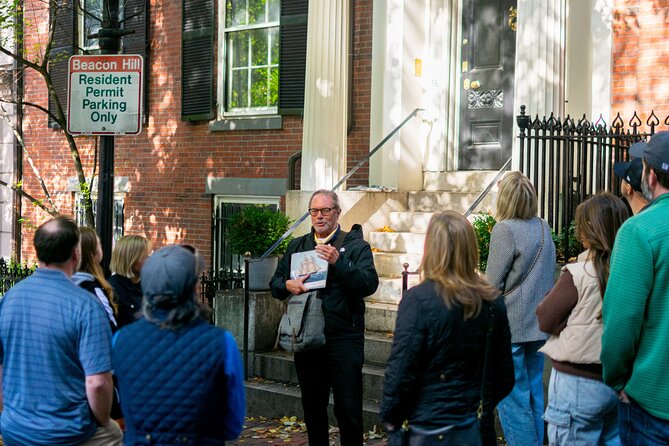
I like the small-group format, which helps you hear the guide on narrow sidewalks. I also like the route’s focus on real homes, schools, churches, and meeting places, rather than a quick parade of famous names. The main drawback is the walking: two miles over steep hills and uneven, non-ADA-compliant sidewalks, in rain or shine.
Key points
- Follow the Black Heritage Trail: Visit ten important sites tied to Boston’s African American past.
- See Underground Railroad homes: Stop at the homes of Lewis and Harriet Hayden, John Coburn, and John J. Smith.
- Enter the story at the African Meeting House: Allow about 20 minutes here, though museum admission is not included.
- Connect local events to the Civil War: Learn how education, integration, abolition, and fugitive slave laws shaped Boston.
- Finish at the 54th Massachusetts Memorial: End with the story of Black soldiers who fought for the Union.
- Plan for serious walking: The route covers about 2 miles and can take up to three hours.
Why Beacon Hill tells a different Boston story

Boston is often introduced through Paul Revere, the Revolution, and the Freedom Trail. Those stories matter, but this tour shifts your attention to the three decades before the Civil War, when the city wrestled with slavery’s grip on the country and with racial inequality at home.
You walk through Beacon Hill, a neighborhood associated with wealth and old Boston families, while learning about the free African American residents who built their own institutions nearby. That contrast gives the route its force. The streets are attractive, but the guide keeps bringing you back to the people who lived, taught, organized, worshipped, and resisted here.
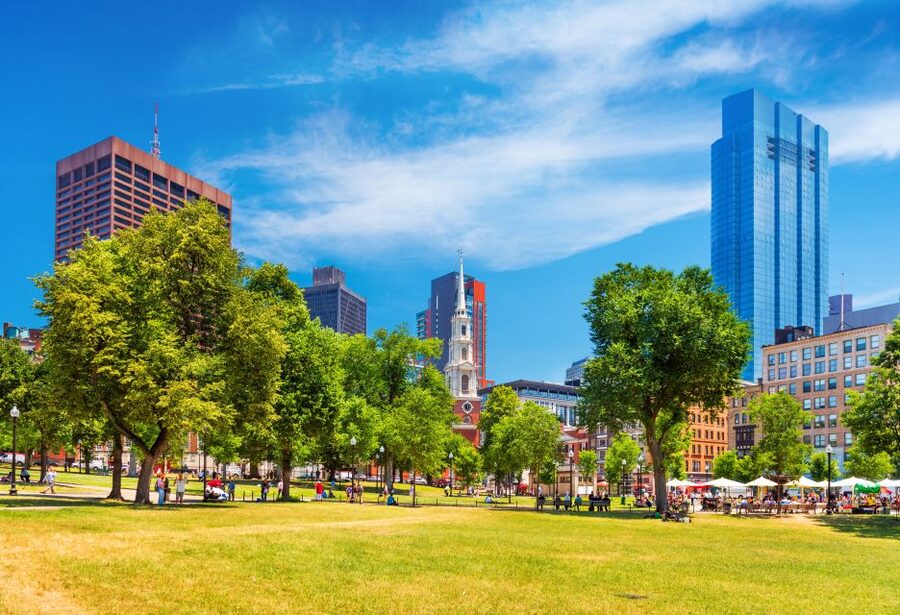
The tour begins at the Soldiers and Sailors Monument in Boston Common. Find the white granite column topped by a woman holding a flag, surrounded by four bronze figures. It is just steps from the Boston Common Visitors Center at 139 Tremont Street, so you can use the center as a clear reference point before meeting your guide.
Guides vary, but William, also called Will, is frequently praised for his clear storytelling and passion. Dana and Joe have also led groups. You may get a guide who uses visual aids, dramatic reenactments, or a lively question-and-answer style. The common thread is a strong command of African American history and a willingness to explain difficult subjects in plain language.
More History Tours in the USA:
- Beneath The Streets Underground History Tour
★ 4.5 · 8,006 reviews - Emerald Cave Express Kayak Tour with Scenic & Historic Stops
★ 5.0 · 1,522 reviews - Prague: Oldtown, Medieval Underground & Dungeon History Tour
★ 4.3 · 10,277 reviews
From Boston Common to Beacon Hill’s narrow lanes
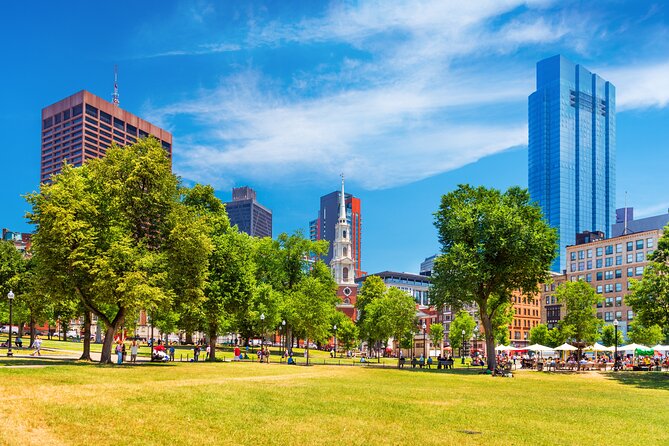
The opening stop in Boston Common sets up the city’s public role in the national conflict. You will spend about ten minutes here before heading toward Beacon Hill, with the guide explaining how Boston’s political movements and abolitionist activity fit into the larger fight over slavery.
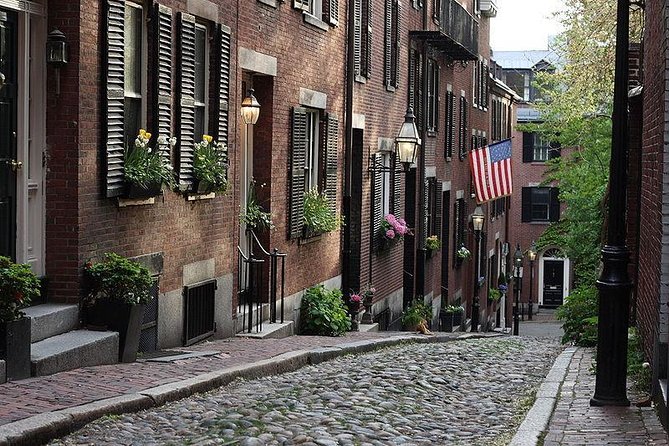
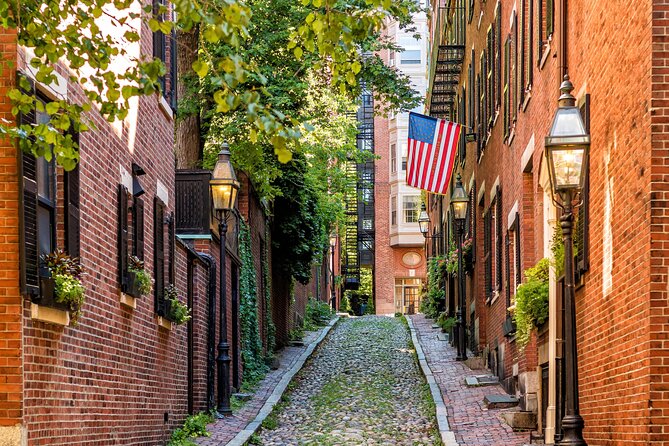
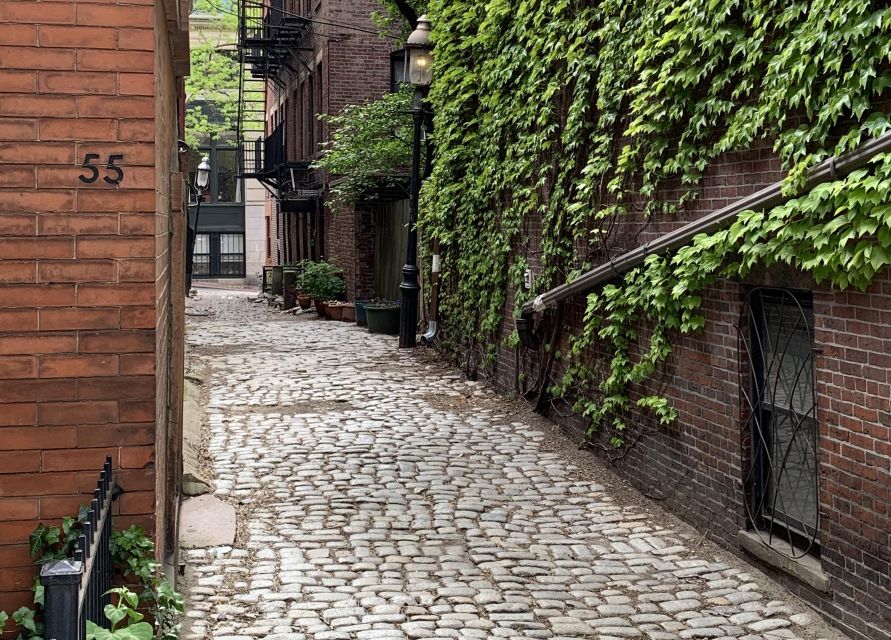
From there, the route turns toward Mount Vernon Street, Acorn Street, and Louisburg Square. These are attractive parts of Beacon Hill, but the tour does not treat them as mere photo stops. Their narrow lanes and grand homes help you picture the sharp social divisions of nineteenth-century Boston.
Acorn Street receives only a short guided stop, about five minutes. That is enough for the guide to place the street within the neighborhood’s social setting, but not enough for a long architectural discussion. If your main interest is house design, you may want a separate Beacon Hill architecture walk.
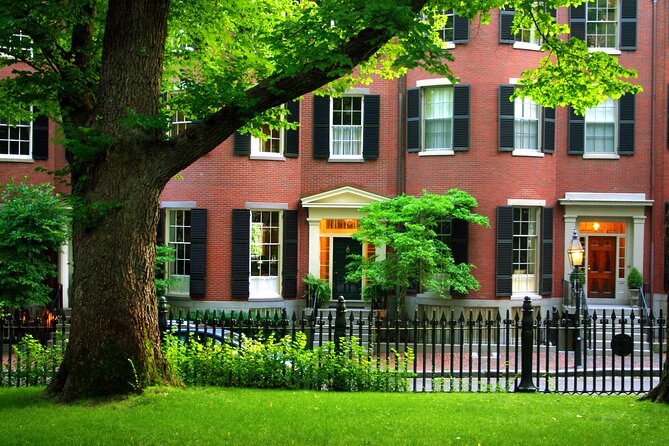
At Louisburg Square, the focus shifts more clearly to class, race, and proximity. Wealthy white residents lived close to a growing free African American community, yet physical closeness did not mean equal treatment. This is one of the useful themes of the tour: Boston could oppose slavery in the South while still struggling with discrimination in schools, housing, work, and public life.
Schools, churches, and the fight for equal education
The Phillips School gives the tour one of its clearest looks at education. You will hear about the fight for equal schooling and the debate over integration, not as an abstract political issue but as a local struggle involving Boston families and institutions.
The stop lasts about 15 minutes, giving the guide room to explain how education became a test of the city’s stated ideals. You will hear about the pressure for change and the resistance that met it. This part works well for anyone interested in how racial policy operated outside the plantation South.
The route then moves to the John J. Smith House. Smith was an important figure in Boston’s African American community, and the house helps connect political action with everyday neighborhood life. The stop is not simply about a person who lived there. It shows how homes could become places for organizing, discussion, and practical help.
At the Charles Street Meeting House, the guide explores another major Boston issue: church life and racial integration. You will spend about 15 minutes here. The building’s religious purpose is only part of the story. It also reflects the city’s arguments over who could sit where, who belonged in public institutions, and how far white reformers were willing to go.
The route continues along Charles Street, then reaches the John Coburn House. Coburn was connected to Boston’s antislavery movement, and this stop adds another household to the larger network of people who challenged slavery and helped those seeking freedom.
The Hayden house and Boston’s Underground Railroad
The Lewis and Harriet Hayden House is one of the most important stops on the route. You will spend about 15 minutes learning about the Haydens and the role their home played in the Underground Railroad.
The phrase Underground Railroad can make the story sound like a formal transport system. It was not. The term described a loose network of people, homes, churches, and safe places that helped enslaved people escape toward freedom. This tour gives you a physical sense of that network by placing you outside homes where this work took place.
That said, you should keep your expectations specific. The experience is mainly about the people, politics, and homes connected to the movement. It is not a train-themed tour, and it does not promise a long catalog of escape routes or railroad terminology. One part of the tour is especially useful for understanding the Underground Railroad in context, while the larger program spends equal time on schools, abolition, integration, and the road to war.
You will pass the Otis House Museum and Old West Church without a scheduled interior visit. The route also passes the Charles Sumner House, where a 15-minute stop connects the neighborhood to antislavery politics and the rising conflict over slavery’s expansion and survival.
A few more cave trips around the USA worth a look
- Best Niagara Falls US Tour W/Boat Ride, Cave & More Wonders!
★ 5.0 · 8,372 reviews - Half-Day Emerald Cave Kayak Tour with Optional Hotel Pickup
★ 5.0 · 4,978 reviews - Niagara Falls USA: Maid of the Mist & Cave Adventure
★ 5.0 · 3,924 reviews - New York Catacombs by Candlelight
★ 4.5 · 2,863 reviews
Smith Court and the African Meeting House
Smith Court Residences bring the story back to the daily life of Beacon Hill’s African American residents. Here, you are not only following famous activists. You are looking at a cluster of homes that reflects a community with its own families, work, faith, and political concerns.
Next comes the Abiel Smith School. Its place on the route reinforces the earlier discussion at Phillips School, but with another angle on African American education and the institutions created to serve the community. If you pay attention here, you will see how education appears again and again as a measure of citizenship and equality.
The African Meeting House is the central pause in the tour. Plan on about 20 minutes for a guided stop and break. It is one of the essential landmarks on the Black Heritage Trail and gives the story a strong community center: a place connected to worship, organizing, education, and antislavery work.
Admission inside museums is not included in the $35 tour price. Ask your guide what access is planned on the day you visit, and be prepared to pay separately if you want to enter a museum space. Even without an interior visit, the stop is valuable because the building brings together many themes introduced earlier.
The George Middleton House follows, with about 15 minutes of guided attention. Middleton connects Beacon Hill’s African American story to earlier generations and to the long effort to claim civic rights. After so many stops, this is where the route can feel like a chain of individual lives rather than one broad historical lecture.
From abolition to the 54th Massachusetts
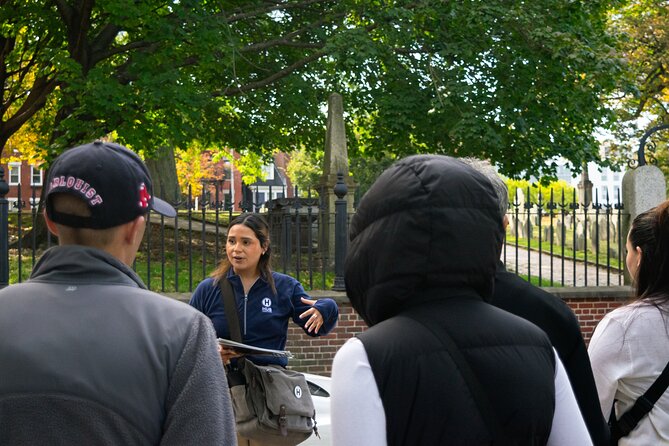
The walk turns back toward Boston Common, passing Park Street Church and the Massachusetts State House. These are scenic views along the way, not full museum visits. The State House helps place the neighborhood’s conflicts within Massachusetts politics, while Park Street Church adds another reminder of the religious institutions involved in public debates.
The final stop is the Robert Gould Shaw and the 54th Massachusetts Regiment Memorial, on Boston Common. The tour concludes here with about 20 minutes focused on the 54th Massachusetts, one of the best-known Black Union regiments of the Civil War.
The memorial makes a fitting endpoint because it shows how the earlier arguments led toward military service and emancipation. The tour begins with free Black Bostonians pressing for rights in schools, churches, and public life. It ends with Black men serving in a regiment whose existence challenged the belief that African Americans could not fight for the nation.
This final section also prevents the tour from stopping at the Underground Railroad. You get a wider account of the decades before and during the Civil War, including the political and social changes that shaped Black military service.
How the walking feels in real terms
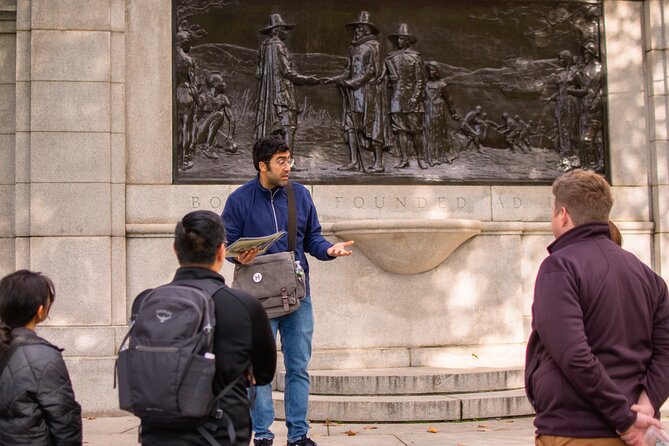
The advertised duration is 150 minutes, but the tour can last up to three hours. The route covers roughly 2 miles, and the guide pauses often for stories, questions, and explanations.
Beacon Hill is not flat. You will encounter steep hills, narrow sidewalks, and surfaces that do not meet modern accessibility standards. Comfortable shoes are essential, and people with low fitness, mobility impairments, or wheelchairs should choose a different activity.
The tour operates rain or shine. Bring weather-appropriate clothing, since the experience is entirely outdoors. Boston weather can change quickly, and a wet sidewalk can make the hills less pleasant, so do not treat the short distance as an excuse for light footwear.
The small-group setup is a real help on busy sidewalks. You avoid the feel of a large procession, and it is easier to ask questions. Still, small group does not mean private tour, and the guide may need to keep the group moving through residential streets.
Large bags and luggage are not allowed. Video recording is also prohibited, so plan to listen and take brief written notes instead. The route has enough stops that you will have chances to remember names and places without trying to record every word.
Is $35 a fair price?
At $35 per person, this is a reasonable price for a 150-minute guided walk led by a local historian. You are paying for interpretation, not admission tickets or transportation. That matters here because the value comes from understanding why a plain-looking house, school, or church matters.
I would compare this tour with a standard Freedom Trail walk before booking. If you want the Revolution, famous founders, and a fast run through central Boston, another route may suit you better. If you want the history of slavery, abolition, free Black communities, and the Civil War’s roots, this tour covers material that many general city walks skip.
The price is especially fair if you plan to visit the African Meeting House or other museums separately. The tour gives you a framework first, then you can decide which interiors deserve your time and admission fee.
There is also a practical booking advantage: you can cancel up to 24 hours before the start for a full refund, and you can reserve now while paying later. Those policies are useful if Boston weather or your sightseeing schedule is still unsettled.
Who should book this Beacon Hill walk?
I recommend this tour to adults, older children, students, history fans, and anyone who wants a fuller account of Boston than the usual revolutionary storyline. Children under six cannot join, and the serious subject matter may not suit very young children even when they meet the age requirement.
It is a good match for you if you enjoy asking questions. Guides such as Will, Dana, and Joe have been praised for handling questions well, and the small-group setting makes conversation easier than on a large city tour.
The tour also suits repeat visitors. Even people who have lived in Boston for years may know little about the city’s African American history, the Underground Railroad homes, or the disputes over school integration. The route can change the way you read streets you thought you already understood.
I would skip it if you dislike walking, need step-free access, want extensive indoor museum time, or prefer a light sightseeing tour. The subject is serious, and the route asks you to stay focused for several hours.
FAQ
Where does the tour meet?
Meet at the Soldiers and Sailors Monument in the center of Boston Common, near the Boston Common Visitors Center at 139 Tremont Street, Boston, Massachusetts 02108. Look for the white granite column topped by a female figure holding a flag.
Where does the tour finish?
The walking tour ends at the Robert Gould Shaw and the 54th Massachusetts Regiment Memorial on Boston Common.
How long is the tour?
The stated duration is 150 minutes. The actual tour can vary, but it will not last more than three hours.
How far do you walk?
The route covers approximately 2 miles, or 3.2 kilometers, through Boston Common and Beacon Hill.
Is the tour accessible for wheelchair users?
No. The route includes steep hills and non-ADA-compliant sidewalks. It is not suitable for wheelchair users or people with mobility impairments.
Is admission to the African Meeting House included?
Museum admission is not included. The tour includes a guided stop and break at the African Meeting House, but any interior admission cost is separate.
What happens if it rains?
The tour operates rain or shine and takes place entirely outdoors. Wear weather-appropriate clothing and comfortable shoes.
Should you book it?
Book this tour if you want Boston’s Civil War era explained through real streets, homes, schools, and meeting places. The African Meeting House, Hayden house, and 54th Massachusetts Memorial give the walk a clear arc, while the guides’ strong storytelling helps connect local events to the national struggle over slavery.
Skip it if two miles on steep, uneven sidewalks sounds tiring or if you want a mostly indoor experience. For the right audience, $35 buys more than a walk through pretty Beacon Hill. It gives you the people and conflicts that make the neighborhood matter.
Just added around the USA
- Door County: Peninsula Park Caves & Ephraim North Cruise★ 4.7 · 35 reviews
- Chicago: Underground Pedway & Downtown Secrets Walking Tour★ 4.7 · 268 reviews
- From Las Vegas: Emerald Cave Guided Kayaking Tour★ 4.9 · 456 reviews
- Dolphin, Sea Cave & Captain Cook Snorkel Combo in Kealakekua Bay★ 4.5 · 220 reviews
- Kauai: Nā Pali Coast Zodiac Raft Sea Caves + Snorkel★ 4.9 · 166 reviews
- Ultimate Na Pali Coast Zodiac Boat Snorkeling and Sea Cave Tour★ 4.5 · 101 reviews
- Niagara Falls: Cave of the Winds, Boat Ride, & Trolley Tour★ 4.7 · 680 reviews
- Emerald Cave Kayak Tour with Lunch & Las Vegas Shuttle Option★ 5.0 · 733 reviews
Historical Tours, compared.
Prague: Oldtown, Medieval Underground & Dungeon History Tour
Read our review →
Prague Old Town, Medieval Underground and Dungeon Historical Tour
Read our review →
Edinburgh: Old Town and Underground Historical Tour
Read our review →
Emerald Cave Express Kayak Tour with Scenic & Historic Stops
Read our review →
Edinburgh: Witches & Haunted History Walking Tour
Read our review →
Rome: Ancient History and Colosseum Underground Tour
Read our review →
Malta: Prehistoric Temples, Limestone Heritage & Blue Grotto
Read our review →Browse the lists this tour appears in