REVIEW · ROME
Rome: Catacombs of St. Callixtus Entry Ticket & Guided Tour
The Catacombs of St. Callixtus take you below Rome’s Appian Way, into a burial complex used by early Christian communities. The Crypt of the Popes, with nine popes and three bishops once buried there, is the tour’s strongest historical stop. You also see the Crypt of St. Cecilia and old wall paintings in the underground chambers.
I like the low $16 price and the way the tour packs a surprising amount into 30 minutes. I also like the guides’ range of styles. Francesca, an archaeologist, Sam, Fr. Peter, and other multilingual guides have been praised for clear explanations, humor, and thoughtful answers. The main drawback is the location. It sits outside central Rome, and the visit is short, fully guided, and not suitable for people with claustrophobia or mobility impairments.
Key points to know before you go
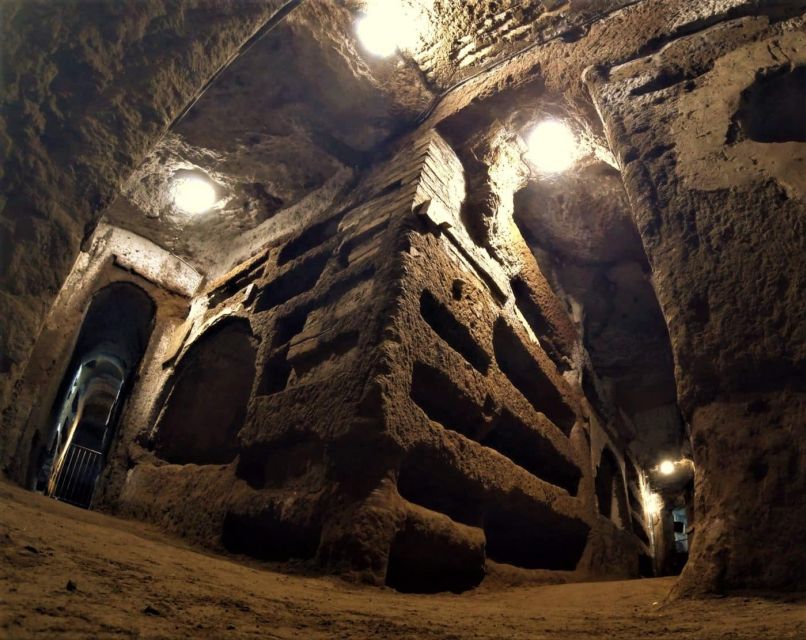
- The Crypt of the Popes: See the burial place associated with nine popes and three bishops.
- A cool underground visit: The chambers are reported to be around 15 degrees Celsius, a welcome break from Rome’s summer heat.
- A 30-minute guided route: The tour is brief but tightly packed with information, and it may run a little longer.
- No skeletons on display: You see burial spaces, inscriptions, and art, not rows of bones.
- Plan the bus ride carefully: The site is easy enough to reach by public transport, but it takes time and the return trip can be less convenient.
- Bring a light layer: The underground rooms are cool even when Rome is hot.
Why the Catacombs of St. Callixtus matter
Rome has plenty of grand ruins above ground. This visit gives you a different view of the city, one based on burial, memory, and the religious life of early Christian communities.
The Catacombs of St. Callixtus are regarded as the oldest official cemetery of Rome’s Christian community. The complex extends across a large area, and an estimated half a million Christians were buried here over time. You do not see all of it on this tour, of course. The guided route focuses on selected chambers that explain how the site was organized and used.
The name comes from Callixtus, who was connected with the cemetery’s development. Your guide explains the role of popes, martyrs, and ordinary members of the Christian community, helping you see the catacombs as more than a maze of tunnels.
I find the subject most interesting when the guide connects the physical spaces to daily life. A burial chamber can look plain at first, but details about family groups, memorial practices, and Christian symbols give the walls a human scale.
More Catacombs and Underground City Tours in Italy
- Rome: Capuchin Crypts and Catacombs Tour with Transfers
★ 4.6 · 6,456 reviews - The Original Roman Crypts and Catacombs Tour with Transfers
★ 4.5 · 4,896 reviews - Rome: Guided Roman Catacombs Tour with Transfers
★ 4.6 · 1,830 reviews
Meeting the guide at the ticket office
You should go directly to the catacomb ticket office, not simply to a nearby parking area or a general meeting point. Show your voucher at least 10 minutes before the scheduled start. The instructions have caused some confusion, so give yourself extra time and look for the ticket counter at the entrance.
The entrance is in front of the Fosse Ardeatine bus stop. If your voucher needs to be exchanged for an entry ticket, do that at the office before joining the group. This is a small but important detail. Arriving at the wrong side of the property can turn a simple check-in into a rushed one.
The tour is offered in English, Italian, French, and German. Guides vary, but the strongest feedback points to a consistently good standard. Francesca has been described as an archaeologist who made the visit especially clear. Sam has been praised for his warmth and humor, while Fr. Peter and other guides have brought a religious and historical understanding to the subject.
You stay with the group for the full visit. This is not a self-guided wander through the tunnels, and you cannot leave the route to explore on your own.
The Crypt of the Popes
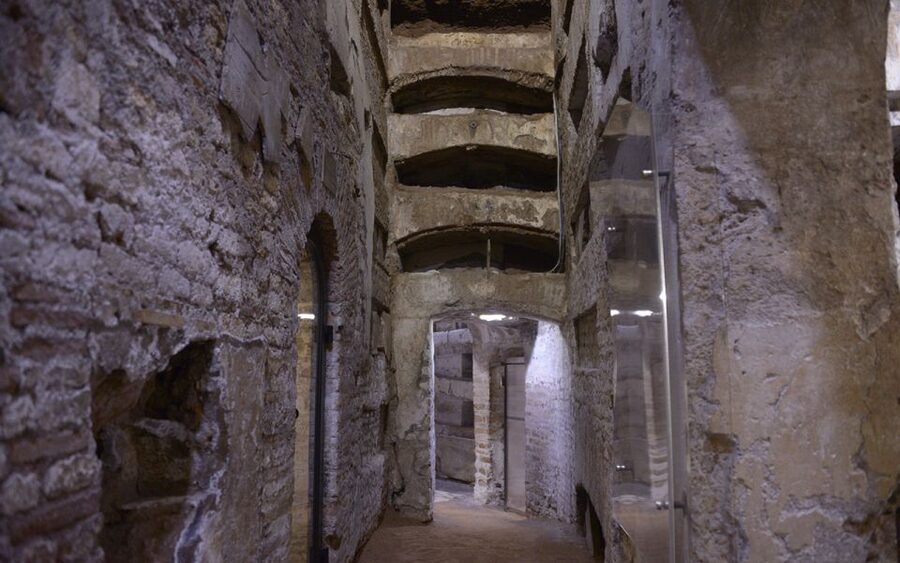
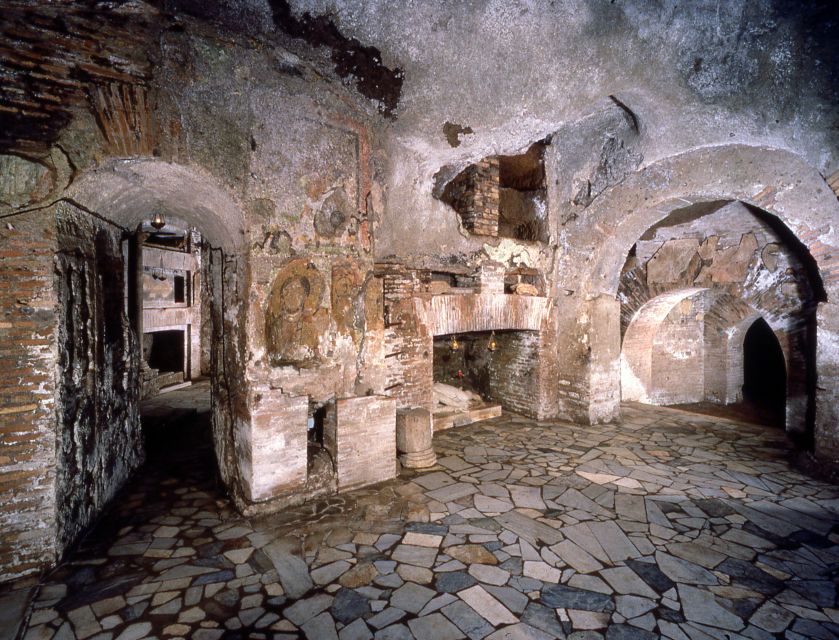
The Crypt of the Popes is the key stop. Nine popes and three bishops were laid to rest here, making the room one of the clearest places to understand the importance of the cemetery to early Christians in Rome.
Your guide explains who was buried here and why the room is linked to the leadership of the early Christian community. The power of the space comes from its simplicity. You are not looking at a grand marble monument. You are standing in an underground room that served a religious community during a period when Christian worship and burial had a very different place in Roman society.
The chamber is also a good example of why this tour needs a guide. Without context, the stone walls and narrow passageways can blend together. With an explanation of the people connected to the room, the site becomes easier to picture and remember.
The lighting is limited in parts of the catacombs. That helps preserve the atmosphere, but it can make steps and corners harder to see, particularly for older people. Wear comfortable shoes and stay close to the guide.
The Crypt of St. Cecilia and the early frescoes
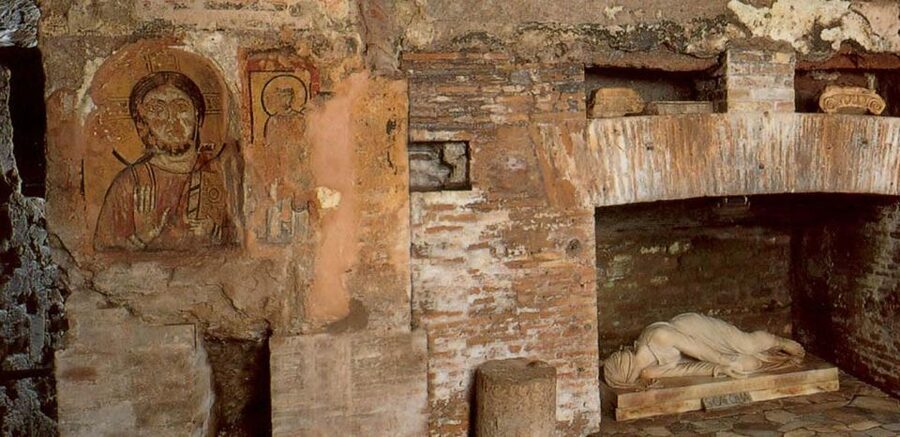
The adjoining Crypt of St. Cecilia recalls a Roman matron associated with the burial of Christian martyrs. Your guide explains her connection with the site and the tradition surrounding her role in ensuring that the dead received a proper burial.
This stop adds a personal side to the broader story. The Crypt of the Popes deals with church leadership. The Crypt of St. Cecilia brings attention to the people who helped care for the community and its dead.
You also see some of the oldest frescoes found in Rome’s catacombs. They are not presented as bright, intact paintings. Instead, you look at surviving images and traces on the walls, with the guide pointing out what they reveal about early Christian beliefs and symbols.
Photography is not allowed inside. That may disappoint you if you like to record every stop, but it also keeps the visit quiet and focused. I suggest taking a moment outside the entrance to appreciate the setting, then relying on your memory and the guide’s explanation once you are underground.
More Catacombs and Underground City Tours in Rome
- Rome: Catacombs Guided Tour with Transfer
★ 4.2 · 1,808 reviews - Rome EBike Tour: Appian Way, Catacombs & Roman Aqueducts
★ 5.0 · 1,766 reviews - Rome: Catacombs and Capuchin Crypt Guided Tour with Transfer
★ 4.6 · 1,606 reviews - Rome: Appian Way & Aqueducts E-Bike Tour (Catacombs & Food)
★ 4.9 · 1,498 reviews
Area I and the burial chambers
The route continues to Area I, where the cubicles of the sacraments are located. These burial rooms help show how the cemetery was arranged. The word cubicle can sound like a small modern room, but here it refers to underground burial chambers connected to the wider network of passages.
The tour gives you a sense of the site’s size without attempting to cover every corridor. That is a sensible choice. A longer route could become repetitive, especially for families or people with only a short amount of time in Rome.
The chambers are preserved rather than dressed up as a theatrical attraction. You see burial places and wall decoration, not a staged display of bones. If you expect skeletons, you may be disappointed. If you want to understand how early Christians buried their dead and marked their faith, the visit delivers more.
The underground temperature is another practical point. The chambers are cool, around 15 degrees Celsius according to one report. In August, that makes the catacombs a pleasant break from the heat. In cooler weather, carry a light jacket or sweater.
What the 30-minute length really means
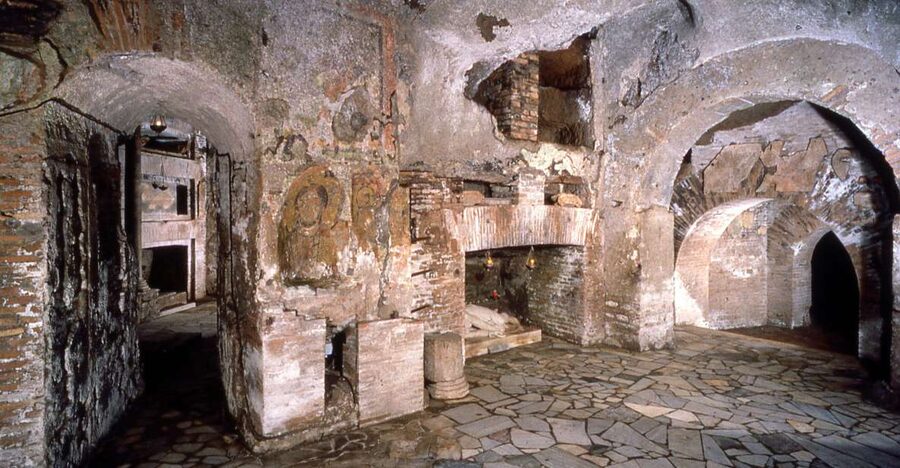
Thirty minutes sounds short, and it is. Still, the tour makes good use of the time. You move through the main historic sections, hear the story of the cemetery, and receive explanations about the popes, St. Cecilia, the frescoes, and the early Christian community.
Some tours finish close to the scheduled time, while others run a little longer. Do not build a tight connection immediately afterward. You need to allow time to leave the underground route, find the bus stop, and travel back toward central Rome.
The short format suits families with older children and teenagers. One family booked the visit for two adults and two teenagers who were not especially interested in ancient history, and the tour still held their attention. The guide’s storytelling makes a difference here. Humor, clear pacing, and room for questions help keep the visit from becoming a dry lecture.
For adults who want a major archaeological visit, such as the Colosseum or Roman Forum, this is a smaller experience. I would treat it as a focused historical stop rather than a full half-day attraction.
Reaching the site from central Rome
The catacombs are not in the heart of the historic center. That distance is the main practical issue, so plan your route before leaving your hotel.
From Termini Station, take Metro A toward Anagnina to San Giovanni. From there, take bus 218 toward Ardeatina and get off at Fosse Ardeatine. The entrance should be in front of you.
Another option is Metro B toward Laurentina. Get off at Colosseo or Circo Massimo, then use the bus stop at Terme Caracalla or Porta Capena. Take bus 118 toward Appia or Villa Dei Quintili and leave at Catacombe di San Callisto.
Public transport can work well, but buses may not arrive immediately. One visitor waited 20 minutes, and several people found the return trip less simple than the journey out. If you are traveling alone, short on time, or uncomfortable navigating Rome’s buses, a taxi or ride service may be worth the extra cost.
Allow more time than the official 30-minute tour duration. The site is easy enough to miss if you arrive without a plan, and you do not want to rush the ticket office check-in.
Is $16 good value?
At $16 per person, I consider this a strong-value Rome activity. The price includes entry and a live guide in English, Italian, French, or German. It does not include transport, food, or hotel pickup, so your total cost will be higher if you use a taxi.
The value comes from the guide. A ticket alone would give you access to an atmospheric place, but it would not explain why the Crypt of the Popes matters, how St. Cecilia fits into the story, or what the frescoes and burial chambers reveal.
The visit is not a large museum experience with a long list of rooms. You are paying for a concentrated introduction to one important site. If you already plan to visit the Appian Way area, the catacombs make an easy addition. If you are staying near central Rome and have limited time, the transport may take longer than expected for a 30-minute activity.
Free cancellation up to 24 hours before the visit and the option to reserve now and pay later make the booking fairly flexible. Still, check your route and appointment time before committing, since late arrival could be difficult once the group has gone underground.
Who should book this tour?
I would recommend it to you if you enjoy ancient history, religious history, archaeology, or unusual places that show another side of Rome. It also works well for families with older children and teens, especially when the guide uses stories and humor.
The tour suits people who prefer a short, structured visit. You do not need to spend several hours underground, and the guide keeps the route moving. The cool temperature is a bonus in summer.
I would hesitate if you have serious mobility limits or claustrophobia. The activity is specifically not suitable for people with mobility impairments or claustrophobia. It is also a poor match if your main goal is to see human bones, since the route shows burial spaces and historical remains rather than skeletons.
My verdict on the Catacombs of St. Callixtus
Book this tour if you want a compact, well-guided look at early Christian Rome and you are willing to spend time getting beyond the center. The Crypt of the Popes, the Crypt of St. Cecilia, and the old frescoes give the visit real substance, while the $16 price keeps the risk low.
I would schedule it when you can travel without rushing, bring comfortable shoes and a light sweater, and arrive at the correct ticket office at least 10 minutes early. For a short visit with serious historical content, it is one of Rome’s better-value choices.
FAQ
How long does the Catacombs of St. Callixtus tour last?
The scheduled duration is 30 minutes. Some visits may last a little longer, so avoid arranging a tight connection immediately afterward.
What is included in the price?
The price includes entry to the Catacombs of St. Callixtus and a guided tour. Food, drinks, and hotel pickup or drop-off are not included.
What languages are available?
The live tour is available in English, Italian, French, and German.
Where do I meet the guide?
Go directly to the catacomb ticket office and show your voucher at least 10 minutes before the scheduled tour. The entrance is near the Fosse Ardeatine bus stop.
How do I reach the catacombs from Termini Station?
Take Metro A toward Anagnina to San Giovanni, then bus 218 toward Ardeatina. Get off at Fosse Ardeatine, with the catacomb entrance in front of you.
Can I take photographs inside?
No. Photography is not allowed inside the catacombs.
Will I see skeletons?
No. The visit focuses on burial chambers, historical spaces, and wall paintings rather than displayed skeletons.
Is the tour suitable for people with claustrophobia?
No. The activity is not suitable for people with claustrophobia.
Can I cancel my booking?
You can cancel up to 24 hours in advance for a full refund. The activity also offers a reserve-now, pay-later option.
Just added around Rome
- Rome: Colosseum Underground and Arena Floor Tour★ 4.4 · 59 reviews
- Rome: Exclusive Colosseum Underground and Roman Forum Tour★ 4.8 · 569 reviews
- Catacombs of Saint Agnes Entry Ticket & Guided Tour★ 4.5 · 72 reviews
- From Rome: Capri Guided Day Trip with Blue Grotto★ 4.2 · 199 reviews
- Rome: Appian Way, Catacombs & Aqueducts by eBike + Transfer★ 4.9 · 421 reviews
- Hidden Gems & Rome Catacomb Semi Private Tour by golf cart★ 5.0 · 114 reviews
- Private Guided Tour of Colosseum Underground OR Arena and Forum★ 5.0 · 111 reviews
- Private Tour of Catacombs and Ancient Appian Way (hotel pick up)★ 4.5 · 120 reviews
Rome Cave Tours, compared.
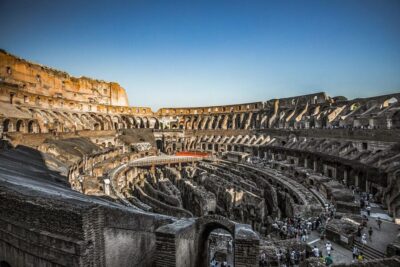
Colosseum: Underground and Ancient Rome Tour
Read our review →
Rome: Capuchin Crypts and Catacombs Tour with Transfers
Read our review →
Expert Guided Tour of Colosseum Arena OR Underground, and Forum
Read our review →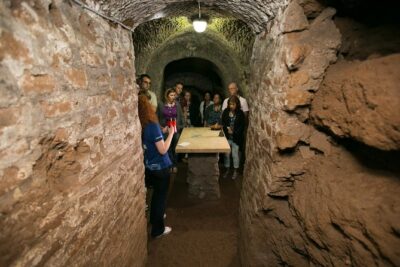
The Original Roman Crypts and Catacombs Tour with Transfers
Read our review →
Rome: Colosseum Underground Small Group Guided Tour
Read our review →
Rome: St. Peter’s Basilica, Dome Climb, and Underground Tour
Read our review →
Rome: Colosseum Underground, Arena & Forum Tour
Read our review →