
REVIEW · ROME
Rome: Tour of St. Clement’s Basilica Underground Temples
Fourteen meters below a quiet Roman basilica, an underground river runs beside one of the city’s best-preserved Mithraic temples. That strange combination of water, pagan ritual, early Christianity, and medieval art makes San Clemente one of Rome’s most rewarding archaeological stops.
I like two things here: the site lets you walk through several layers of Rome in a compact visit, and a live guide makes details visible that you would likely miss alone. Guides such as Francesca, Lorenzo, and Paul have been praised for clear storytelling, humor, and strong historical knowledge.
The main drawback is physical and visual: the lower rooms are dark, enclosed, and reached by stairs. Add the optional Santo Stefano Rotondo visit only if you are comfortable with graphic martyrdom scenes and another 45 minutes on foot.
Key points to know before you book
- Three major layers beneath one basilica: See the 12th-century church, a fourth-century Christian basilica, and Roman structures below street level.
- An unusually well-preserved Mithraic temple: Learn about the secretive cult of Mithras and the rituals that took place before Christianity became Rome’s dominant faith.
- A real underground river: Water moving beneath the complex adds an eerie note to the lowest level.
- The golden apse mosaic comes first: Your guide explains its symbols before you descend into the darker archaeological rooms.
- Santo Stefano Rotondo is an optional extension: Add 45 minutes for a circular church and graphic scenes of Christian martyrdom.
- The tour is best for history-minded visitors: It suits people who want context and explanation, not simply a quick look inside a church.
Why San Clemente feels like Rome in layers
Rome can feel like an open-air history book, but San Clemente makes the idea literal. The current basilica sits above an older Christian church, which in turn sits above Roman structures and a Mithraic sanctuary. You do not just hear that the city was rebuilt over centuries. You walk down through those changes.
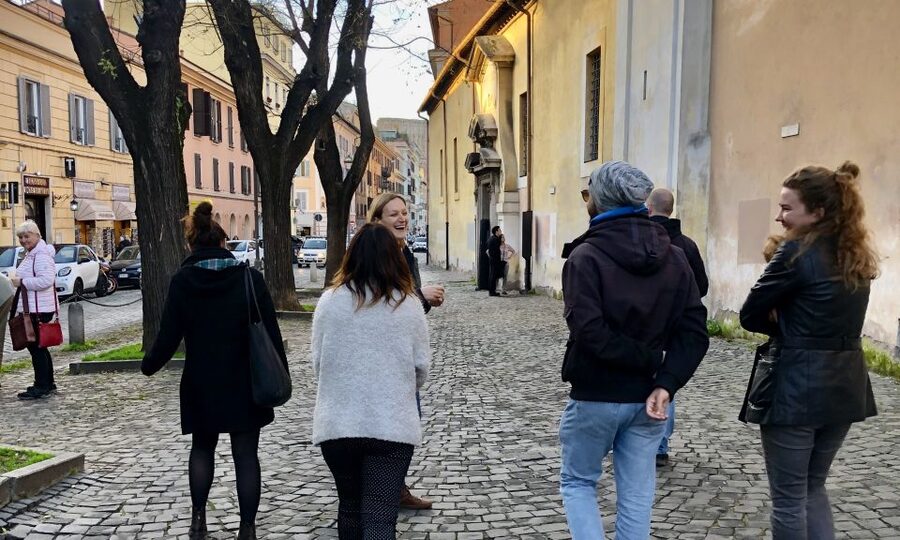
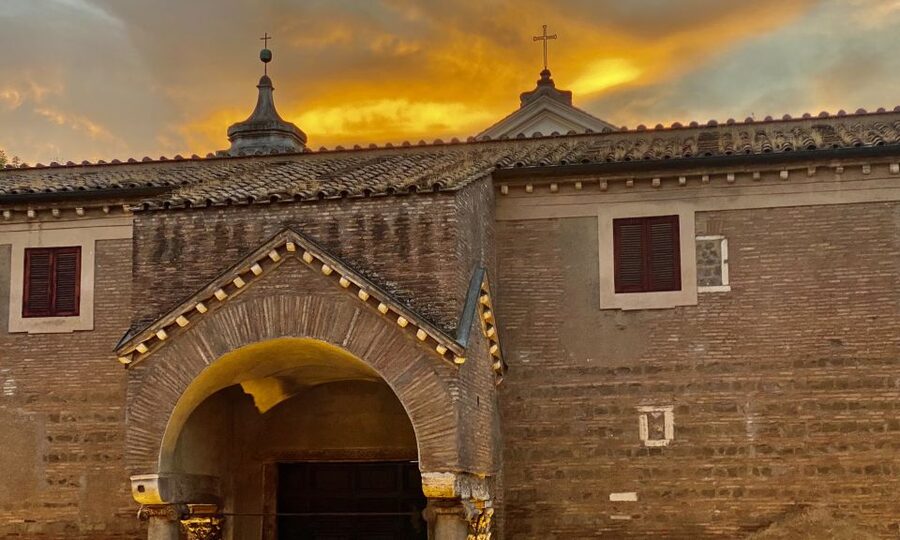
The visit begins at the Basilica of San Clemente al Laterano, close to the Colosseum and the Lateran area. The upper church dates from the 12th century and is far more intimate than Rome’s grandest basilicas. That modest scale helps you focus on the details.
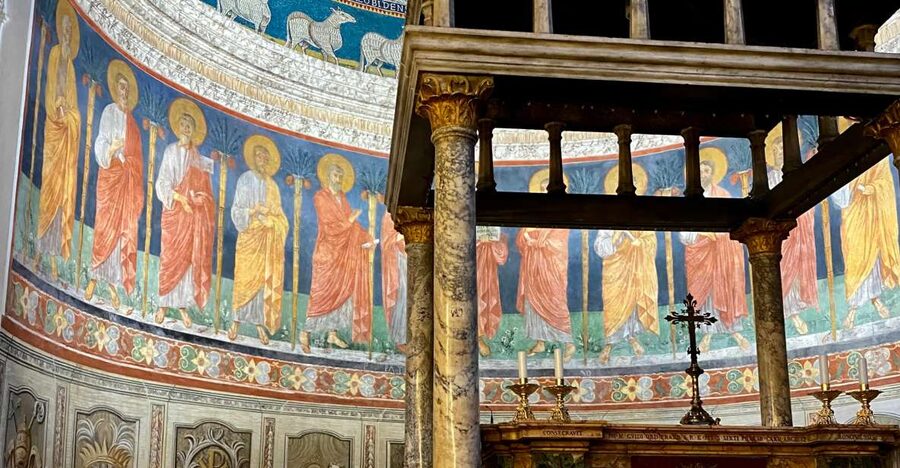
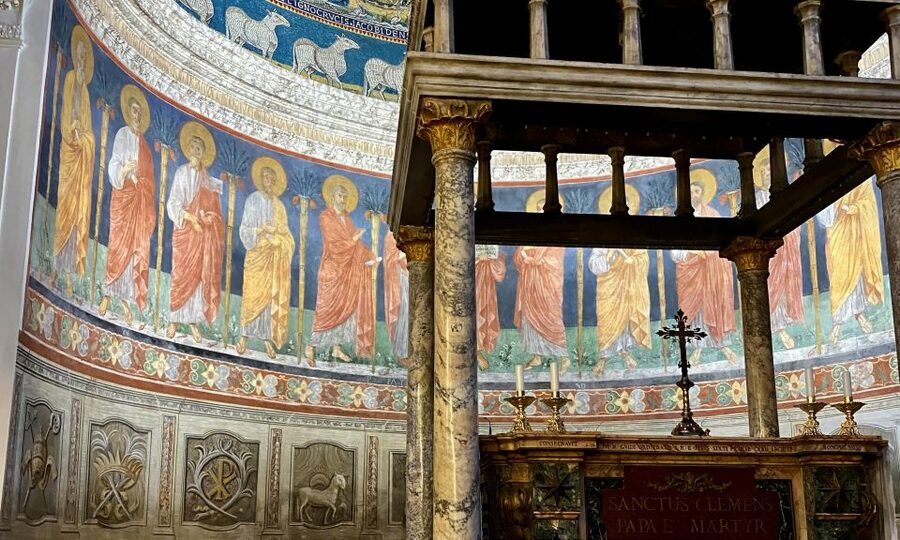
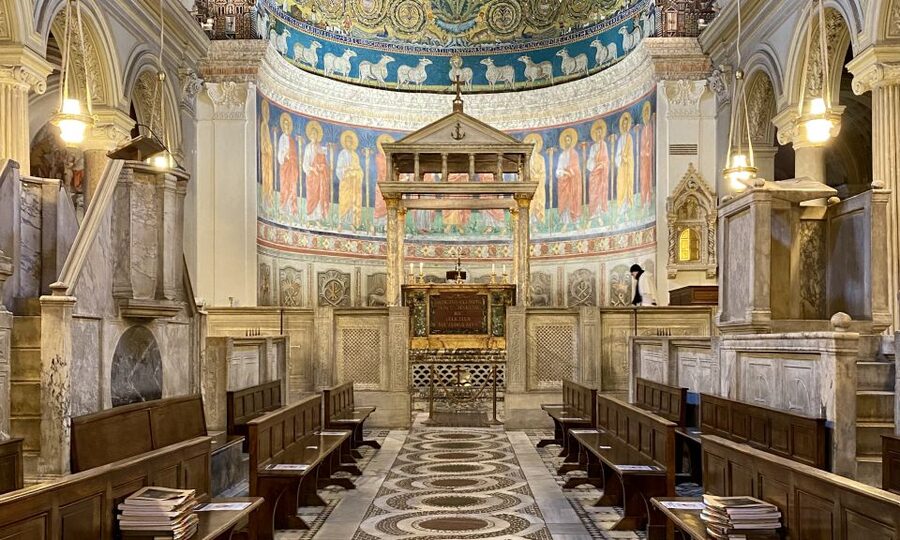
Before heading underground, your guide explains the apse mosaic. Its gold background catches the light, while its Christian symbols reward a closer look. The mosaic is not simply decorative. It carries ideas about salvation, the cross, paradise, and the relationship between the church and the faithful.
I like that the tour starts here rather than sending you straight downstairs. Without this introduction, the underground rooms can seem like disconnected ruins. The upper basilica gives you the religious setting, then the lower levels show how earlier buildings and beliefs shaped the site.
A few more cave trips around Rome worth a look
- Colosseum: Underground and Ancient Rome Tour
★ 4.7 · 12,691 reviews - Rome: Capuchin Crypts and Catacombs Tour with Transfers
★ 4.6 · 6,456 reviews - Expert Guided Tour of Colosseum Arena OR Underground, and Forum
★ 4.5 · 5,041 reviews
Descending to the fourth-century church
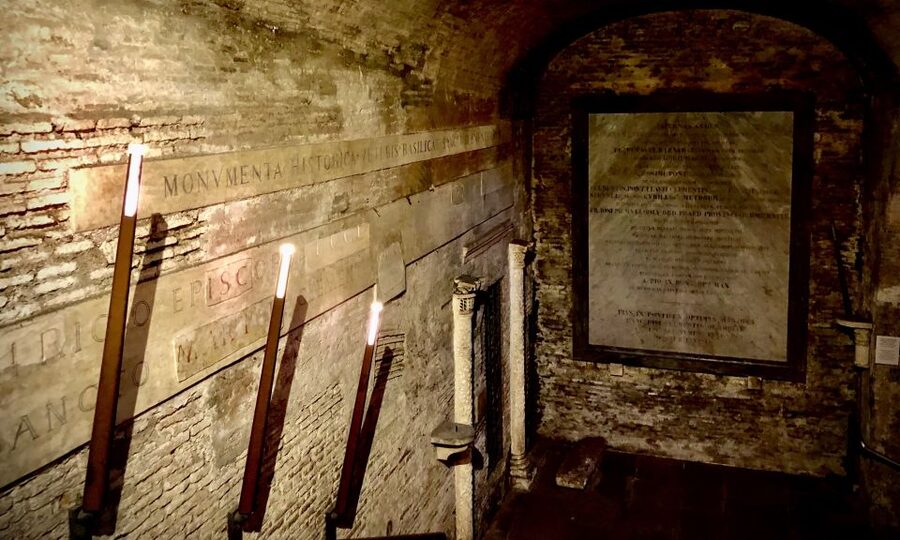
The first major stop below the present basilica is an early Christian church built in the fourth century. It was constructed over the home associated with Saint Clement, traditionally regarded as the third pope of Rome.
The surviving rooms preserve some of the earliest Christian frescoes in the city. Their subjects include martyrs and scenes connected with the persecution of Christians. Time and damp have affected the paintings, so do not expect bright, freshly colored wall art. Their importance lies in their age, subject matter, and survival underground.
This is where a guide earns the admission price. A worn figure or damaged scene can be difficult to interpret on your own. A good guide points out what remains, explains the religious setting, and connects the art to the uncertain period when Christianity was still developing within the Roman world.
The rooms also help you understand how early Christian worship occupied existing urban spaces. San Clemente was not created in an empty field. It grew over earlier homes and Roman buildings, with later generations adapting what was already there.
The lower church can feel close and dim. You will use stairs, and the air may feel different from the bright basilica above. If enclosed spaces bother you, this is the point to think carefully about booking. The site is not suitable for wheelchair users because of its architectural layout and underground stairways.
The Mithraic temple and underground river
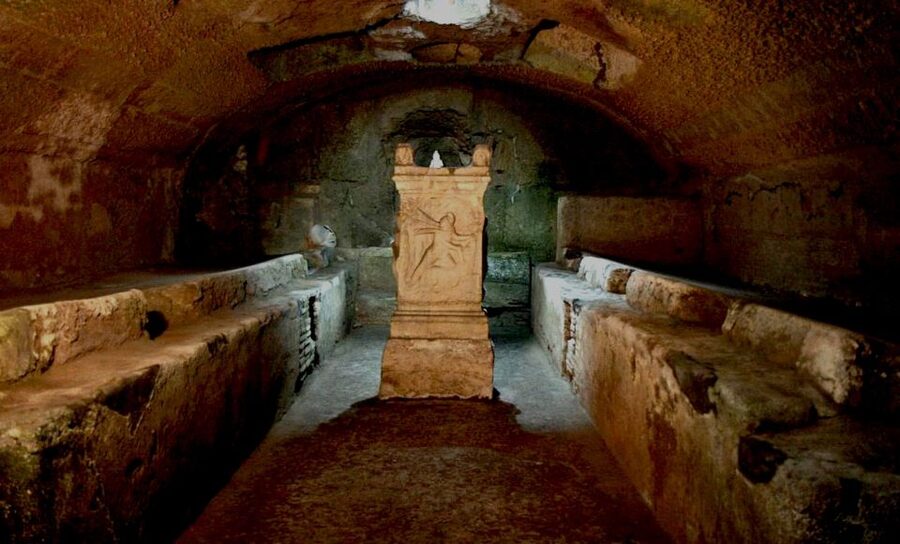
The lowest section contains one of Rome’s best-preserved Mithraic temples. Mithraism was a Roman mystery cult centered on the god Mithras. Its followers practiced private rites, and much of the religion’s meaning remains difficult to reconstruct with certainty.
That uncertainty makes the visit more interesting, but it also calls for careful guiding. You may hear about the symbols, rituals, and beliefs associated with the cult, along with the limits of what historians can prove. The temple is not a large monument. Its power comes from its setting and the fact that it survived beneath later buildings.
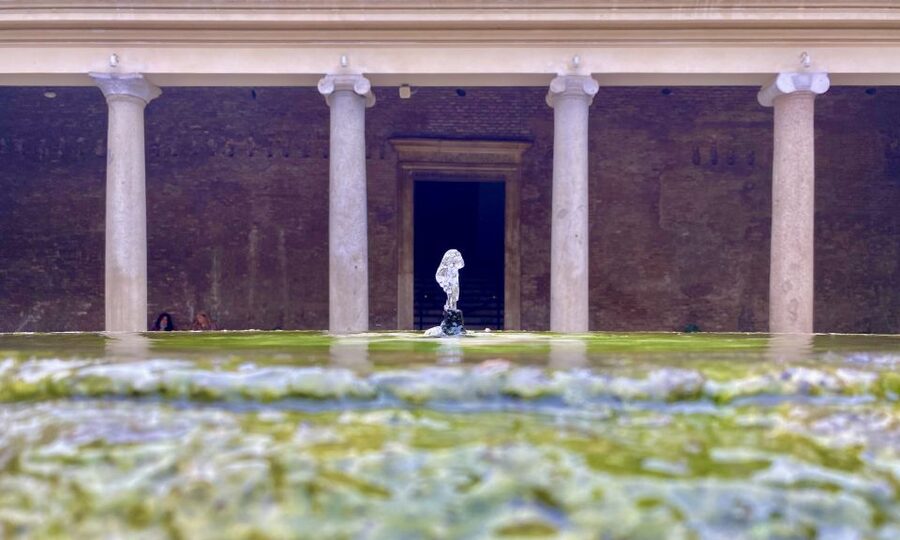
The underground river adds a strong sensory element. Water moves through the lowest level, reminding you that ancient builders had to work with the ground beneath the city. It also gives the temple a haunting atmosphere that photographs rarely capture.
Do not expect a theatrical attraction. This is a real archaeological site with uneven surfaces, low light, and ancient masonry. If you prefer polished museums with large labels and open galleries, the experience may feel rough around the edges. If you like places where the setting itself raises questions, San Clemente is a fine choice.
Your guide also explains the change from pagan worship to Christianity without treating the past as a simple contest with one winner. Roman religious life changed over time, and the layers beneath San Clemente show that change in a physical way.
Santo Stefano Rotondo adds another powerful hour
You can book the San Clemente visit alone, which lasts about one hour, or add a 45-minute guided visit to nearby Santo Stefano Rotondo. The extension is a useful choice if early Christian history is a major reason for your Rome trip.
Santo Stefano Rotondo is known for its circular design, a striking contrast to the more familiar rectangular basilica plan. The building has a quiet, unusual shape that makes the interior feel different from San Clemente.
Its major draw is the cycle of frescoes showing Christian martyrdom. The scenes are graphic and can be upsetting, particularly for young children. They were intended to present suffering and faith in direct, sometimes brutal images. You should not add this stop simply because it makes the tour longer. Add it because you want to examine how early Christian art presented persecution and martyrdom.
The order can change. Depending on the schedule, you may begin at San Clemente and walk to Santo Stefano Rotondo, or visit Santo Stefano first. The walking connection is about 15 minutes. Pick-up and drop-off are not included, so you meet the guide at the designated starting point and finish at San Clemente, Santo Stefano Rotondo, or another stated nearby location depending on the option booked.
The extension can occasionally be unavailable during special events or liturgical celebrations. Church schedules also mean that the route may change if a section is closed. In that case, the guide uses another part of the planned visit and keeps the overall duration unchanged.
Same corner of the map, a different way in:
- The Original Roman Crypts and Catacombs Tour with Transfers
★ 4.5 · 4,896 reviews - Rome: Colosseum Underground Small Group Guided Tour
★ 4.7 · 4,844 reviews - Rome: St. Peter’s Basilica, Dome Climb, and Underground Tour
★ 4.8 · 3,404 reviews - Rome: Colosseum Underground, Arena & Forum Tour
★ 4.7 · 3,272 reviews
What the one-hour tour is really like
The basic visit is short, but it is not slight. In roughly one hour, you see the upper basilica, the fourth-century church, and the Mithraic temple below. The pace has to be steady because there is a great deal to explain in limited time.
You begin at Piazza di San Clemente. Meeting details can vary by booking option, so check your confirmation carefully rather than assuming every group gathers in exactly the same place.
Inside the basilica, listen closely to the opening explanation of the apse mosaic. This is the brightest and most visually immediate part of the visit. It also provides the symbolic language that your guide will use later when discussing early Christian worship.
The group then descends through the church’s archaeological levels. Headsets are included, which matters in stone rooms where voices can echo. They also let you stay with the group without crowding close to the guide.
The final section is the Mithraic temple and river. Then you return upward to the 12th-century basilica. That change in light and space gives the visit a satisfying shape: church, underground worship site, then church again.
A small group is especially helpful here. Some bookings may be private, and past tour dates have included groups of only two people. A smaller group makes it easier to ask questions and hear explanations in tight rooms. It may also allow the guide to adjust the pace, though the exact group size depends on the booking.
How the guides shape the experience
This is a site where the guide matters more than usual. Much of what you see is damaged, underground, or hard to interpret without context. You need someone who can explain what is known, distinguish fact from tradition, and keep the sequence clear.
Several guides connected with this experience have received especially strong praise. Francesca is described as enthusiastic, friendly, and good at explaining the site with humor. Lorenzo is known for personable delivery, excellent English, and a strong command of ancient Roman history. Paul has led tours with an archaeological and academic background, giving especially detailed explanations of the structures and artifacts.
You may be assigned a different guide, since the available language and guide depend on the date. Tours are offered in English, Italian, Spanish, French, German, and Portuguese. The important point is to choose a language in which you can follow detailed historical explanations. A language mismatch would undercut the main reason to pay for this experience.
The best guides make the history feel connected. They show how the upper mosaic, the early Christian frescoes, the Roman house, and the Mithraic temple relate to one another. They also welcome questions, which is useful because the site raises issues about worship, burial, persecution, and how ancient buildings were reused.
Is $70 a fair price?
At $70 per person, this is not a cheap stop by Rome standards. The value depends on how much help you want interpreting the site.
For an independent visitor, San Clemente’s underground levels may look like a sequence of dark walls, fragments, and passages. The tour adds entrance, a live guide, and headsets. It turns the visit into a structured explanation of the entire complex rather than a quick look at ruins.
I think the price makes the most sense for first-time visitors to San Clemente, people with a strong interest in archaeology, and anyone who wants to understand how pagan and Christian Rome overlapped. The cost is harder to justify if you are already comfortable reading archaeological sites on your own or if you plan to move quickly through Rome’s many churches.
The optional Santo Stefano Rotondo extension may improve the value if you want a fuller early Christian program. It adds 45 minutes and another major monument, but it also brings more walking and difficult imagery. Check the final price when selecting the option, since the Santo Stefano visit is not included unless you specifically choose it.
Free cancellation up to 24 hours before the activity and reserve-now, pay-later booking make it easier to fit the tour into a changing Rome schedule. Weather and liturgical events can affect the visit, with an alternative date or full refund offered if the tour is canceled.
Practical advice for a smoother visit
Wear comfortable shoes. You will walk between sites if you choose the extension, and the underground sections require stairs.
Dress for a church. Shorts, short skirts, sleeveless shirts, food, and drinks are not allowed. Pets, weapons, alcohol, and drugs are also prohibited. Photography and video recording inside are not allowed, so plan to pay attention rather than document every wall.
The underground spaces may not suit anyone with claustrophobia. This is not a wheelchair-accessible visit because of the structure of the basilica and the stairs below it.
Families should decide carefully about Santo Stefano Rotondo. The martyrdom frescoes are graphic and may not be suitable for children. San Clemente alone may be the better choice for a family that wants archaeological interest without the most disturbing imagery.
Allow extra time around the start and finish if you have a tight appointment afterward. The stated basic tour lasts about one hour, while the combined option takes about two hours plus the walk between churches. Church events can also change the order or available areas.
Who will enjoy San Clemente most?
I would recommend this tour to you if you enjoy seeing the physical remains of change. San Clemente is not one grand monument built in a single period. It is a record of reuse, adaptation, and competing beliefs placed one above another.
It is also a good choice after visiting major sights such as Saint Peter’s Basilica or Saint Paul Outside the Walls. Those huge churches can be overwhelming. San Clemente offers a smaller, quieter setting where a guide can focus on details and historical connections.
You should probably skip it if you dislike stairs, dark rooms, enclosed spaces, or guided explanations. The underground levels are the reason to come, so there is little point booking if you already know they will make you uncomfortable.
The tour suits adults and older children with an interest in ancient Rome, Christian history, and archaeology. The Santo Stefano extension is best for people who can handle graphic religious art and want more time on early Christian themes.
Should you book this Rome underground tour?
Yes, if you want a short but serious history experience away from Rome’s biggest crowds. San Clemente gives you an unusual sequence: a golden medieval mosaic, an early Christian church, Roman structures, a Mithraic temple, and an underground river. Few city visits let you move through so many periods by simply walking downstairs.
I would book the one-hour San Clemente option if you have limited time or are unsure about the enclosed rooms. Choose the Santo Stefano Rotondo extension if you want more early Christian art and can manage the extra walking and graphic frescoes.
At $70, the tour is worth considering because the guide supplies the connections that make the site meaningful. Choose it for interpretation, not just admission. If Francesca, Lorenzo, Paul, or another strong guide is assigned, you can expect the history to be explained with detail, clarity, and room for questions.
FAQ
How long does the San Clemente tour last?
The guided visit to Basilica di San Clemente lasts about one hour. If you add Santo Stefano Rotondo, the visit adds 45 minutes, plus about 15 minutes of walking between the churches.
Is Santo Stefano Rotondo included in the basic tour?
No. The guided visit to Santo Stefano Rotondo is included only when you select the extended option during booking.
What languages are available?
The tour is offered in English, Italian, Spanish, French, German, and Portuguese. A private group option is also available.
Is the tour suitable for wheelchair users?
No. The underground structures and stairs inside San Clemente make the tour unsuitable for wheelchair users.
Can I take photographs inside?
No. Photography and video recording inside are not allowed.
Is the tour suitable for children?
San Clemente may suit older children interested in history, but the frescoes at Santo Stefano Rotondo show graphic scenes of martyrdom and may not be appropriate for children. The underground areas may also be uncomfortable for anyone with claustrophobia.
Just added around Rome
- St. Peter’s Basilica Full Guided Tour with Vatican Grottoes★ 4.6 · 286 reviews
- Rome: St Peter’s Basilica Express Tour & Grottoes★ 4.3 · 126 reviews
- St. Peter’s Basilica and Vatican Grottoes Tour★ 4.9 · 120 reviews
- Rome: Appian Way, Aqueducts, & Catacombs E-Bike Guided Tour★ 4.9 · 54 reviews
- Rome: Underground Trastevere Guided Walking Tour★ 4.8 · 87 reviews
- Rome underground hidden temples, ruins, and secret basilicas★ 3.7 · 21 reviews
- Rome: St. Peter’s Basilica Tour with Vatican Grottoes★ 4.5 · 314 reviews
- Rome: Trevi Fountain Underground Small Group Tour★ 4.4 · 47 reviews
Rome Cave Tours, compared.
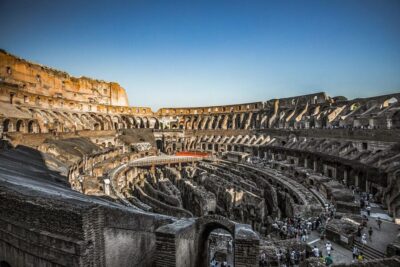
Colosseum: Underground and Ancient Rome Tour
Read our review →
Rome: Capuchin Crypts and Catacombs Tour with Transfers
Read our review →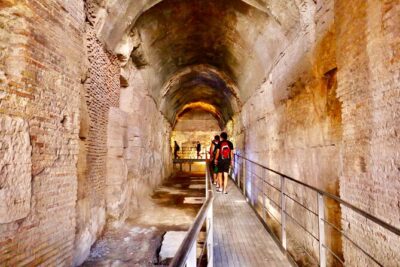
Expert Guided Tour of Colosseum Arena OR Underground, and Forum
Read our review →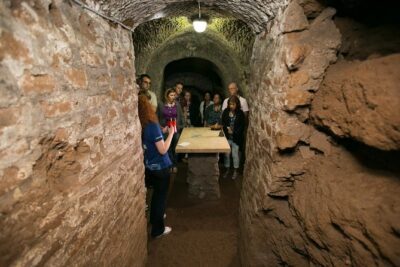
The Original Roman Crypts and Catacombs Tour with Transfers
Read our review →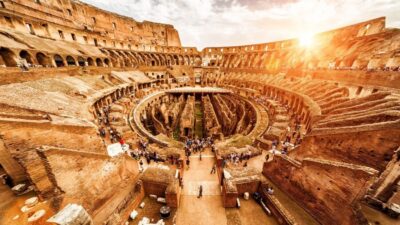
Rome: Colosseum Underground Small Group Guided Tour
Read our review →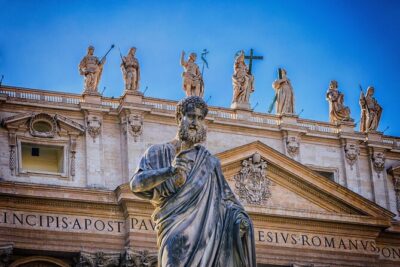
Rome: St. Peter’s Basilica, Dome Climb, and Underground Tour
Read our review →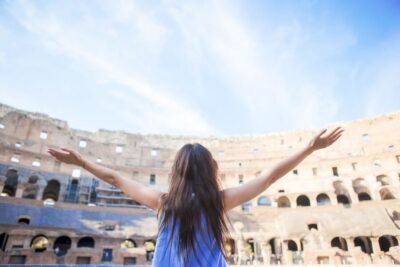
Rome: Colosseum Underground, Arena & Forum Tour
Read our review →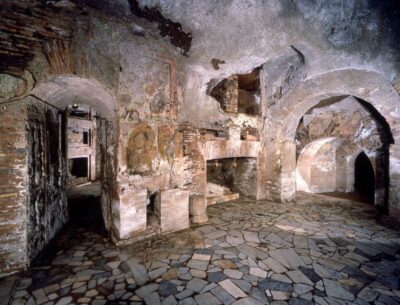
Rome: Catacombs of St. Callixtus Entry Ticket & Guided Tour
Read our review →Browse the lists this tour appears in