
REVIEW · ROME
Rome: Immersive Underground and Piazzas Tour
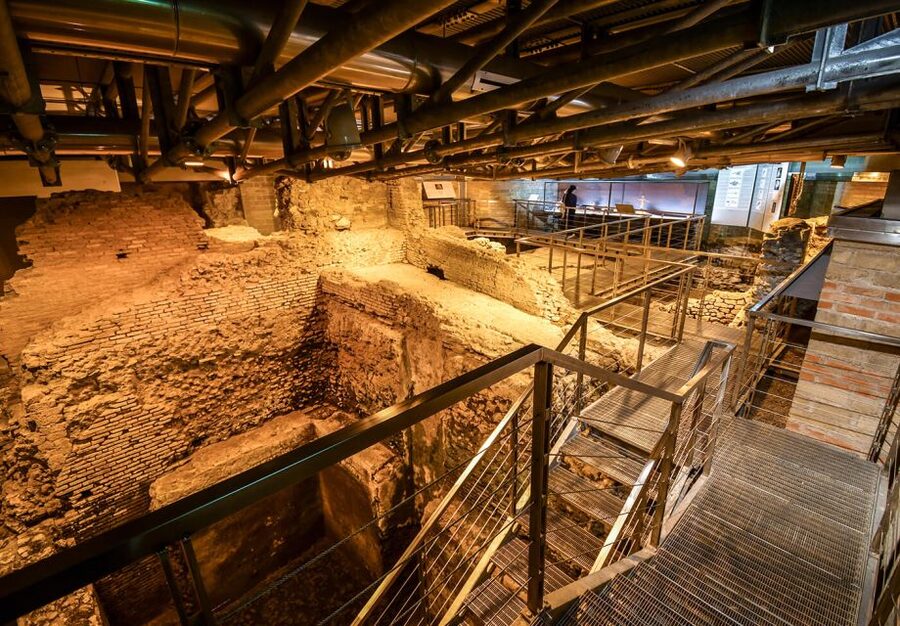
Rome is easiest to understand when you look below street level. This three-hour walk connects grand piazzas with the buried city beneath them, including the Stadium of Domitian under Piazza Navona and the ancient waterworks at Vicus Caprarius near Trevi Fountain.
I especially like the archaeologist-led storytelling and the way the tour joins famous sights to lesser-known remains. I also like the cool underground stops, a welcome break on a hot Roman day. Guides such as Amanda, Francesca, and Alex have been praised for explaining clearly, answering questions, and making the past feel close at hand.
The main drawback is simple: the title promises an underground tour, but much of the three hours takes place above ground as you walk between sites. You should also expect a fair amount of walking, crowded streets, and stairs or uneven surfaces that make this unsuitable for wheelchair users.
Key points to know before booking
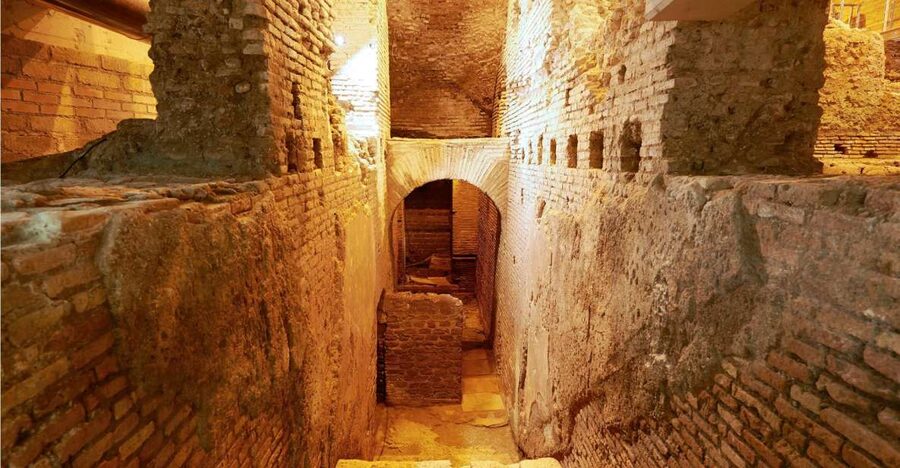
- Piazza Navona sits over an ancient stadium, and the underground visit reveals how much of Rome remains beneath the modern city.
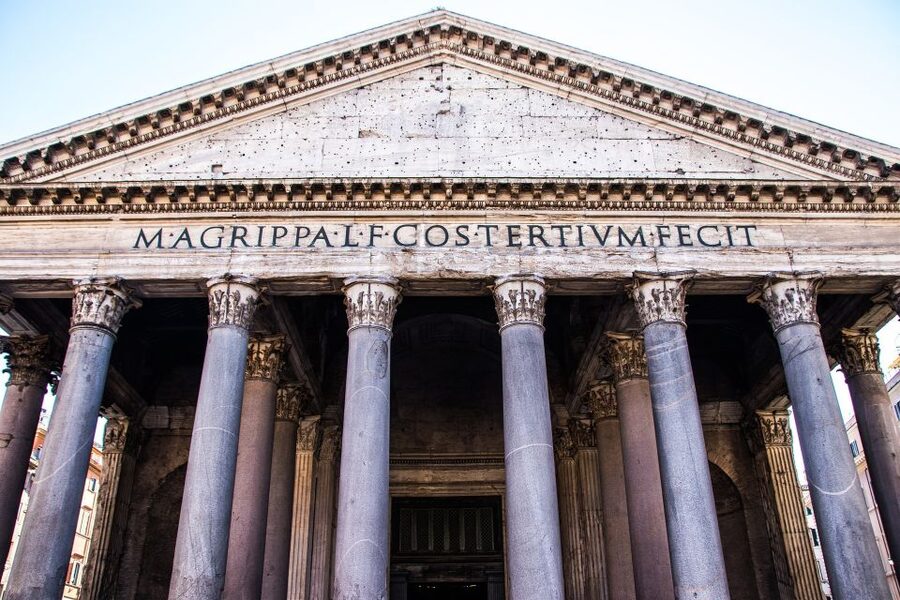
- The Pantheon adds a major highlight, with a guided explanation rather than a quick look inside.
- Vicus Caprarius shows Rome’s water system, including part of the Aqua Virgo aqueduct and an imperial-era house.
- The guides are the tour’s strongest feature, with archaeologists and multilingual professionals including Amanda, Francesca, Alex, and Maria.
- Three hours gives you a useful overview, but the pace includes outdoor walking between every major stop.
- Dress for the Pantheon, since it remains an active church and requires covered shoulders and knees.
What this underground Rome tour is really about
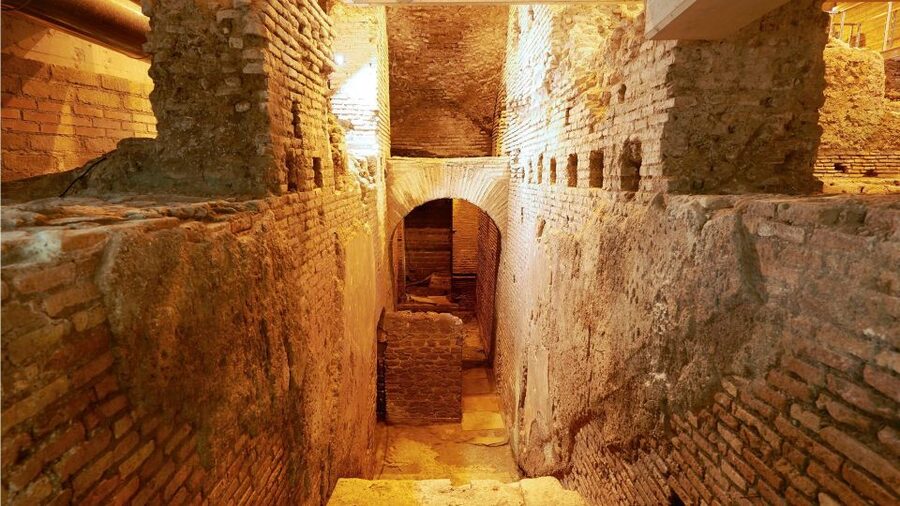
This is not a long descent into catacombs or a full day spent below the city. I would describe it as an archaeological walking tour with two substantial underground visits, framed by Rome’s most famous public spaces.
That combination works well because Rome’s monuments can feel disconnected when you see them one at a time. Here, your guide links the piazzas, buildings, fountains, roads, aqueducts, and buried rooms into one story. You see how the modern city was built on top of the ancient one, often without fully erasing it.
The tour lasts three hours and is offered in Italian, English, or Spanish. Most guides are archaeologists, and that matters here. At the underground sites, you need someone who can explain what a wall, drain, foundation, or water channel once did. Several guides have been singled out for their ability to make the material clear without turning the walk into a university lecture.
The tone seems to vary slightly by guide, but the strongest names associated with this experience include Amanda, Francesca, Alex, Maria, Gloria, Caterina, Karolina, and Giuliana. Amanda is often described as warm, funny, and very thorough. Alex brings archaeological training and personal knowledge of the local area. Francesca is praised for being friendly and clear, while Maria is noted for telling stories with real feeling.
A few more cave trips around Rome worth a look
- Colosseum: Underground and Ancient Rome Tour
★ 4.7 · 12,691 reviews - Rome: Capuchin Crypts and Catacombs Tour with Transfers
★ 4.6 · 6,456 reviews - Expert Guided Tour of Colosseum Arena OR Underground, and Forum
★ 4.5 · 5,041 reviews
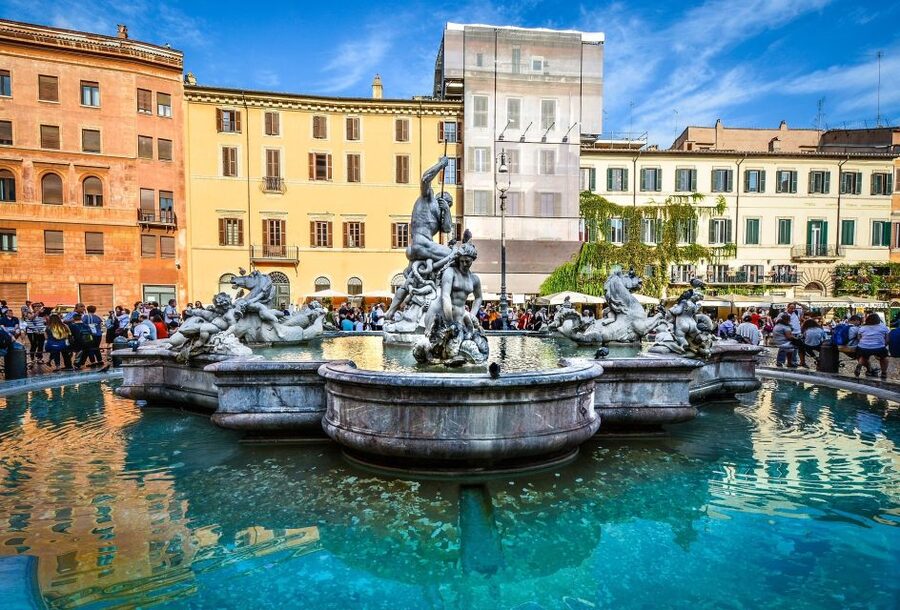
Piazza Navona and the Stadium of Domitian
The tour begins at Piazza Navona, usually near the Fountain of the Four Rivers or the National Academy of San Luca, depending on the booking option. Confirm your exact meeting point before setting out, since one past group experienced confusion over the rendezvous and another was contacted with a change.
Piazza Navona is one of Rome’s most enjoyable squares for an introduction. Its long, oval shape follows the footprint of the ancient Stadium of Domitian. Above ground, you get fountains, Baroque buildings, cafés, artists, and one of Bernini’s best-known works, the Fountain of the Four Rivers, completed in 1651.
Your guide first helps you read the square as a Roman site rather than simply a pretty piazza. The shape is the clue. Underneath, the stadium once hosted athletic contests. For a short period after fire damaged the Colosseum in 217 AD, it also hosted gladiatorial shows.
The underground visit usually lasts about 30 minutes. This is one of the tour’s most useful moments because the modern square suddenly makes more sense. You can connect the broad public space above with the structure that occupied it nearly two thousand years ago.
I would not expect a vast underground complex here. The value comes from seeing actual remains and hearing how the stadium functioned. If you have already visited many Roman ruins, the scale may feel modest. If this is your first look at Rome below street level, it is an excellent example of how much the city hides in plain sight.
The walk to the Pantheon
From Piazza Navona, you walk for about 10 minutes toward the Pantheon. This short transfer is part of the experience, not dead time. Your guide continues the historical thread while you move through the center of Rome.
Rome’s streets can be crowded, especially around the Pantheon and Trevi Fountain. One practical complaint has been that a guide can be difficult to spot in a large crowd. A flag or raised sign would help, so keep close to the guide and pay attention at crossings and corners.
The tour is best suited to people who enjoy walking and asking questions. Guides have made rest stops and toilet breaks when needed, which is useful in hot weather, but this is still an active city walk. Comfortable shoes are essential.
The Pantheon explained at street level and inside
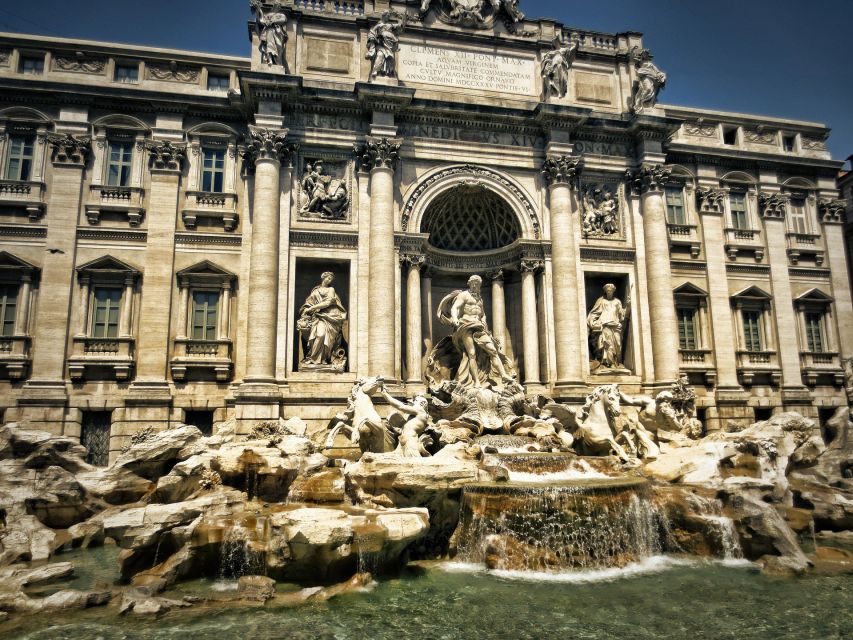
The Pantheon is scheduled for about 45 minutes, making it the longest stop. That is a good choice. The building deserves more than a hurried photo from the piazza.
According to the supplied tour description, Roman legend connects the site with Romulus, the founder of Rome, who was said to have been carried into the heavens by an eagle after his death. Your guide also places the building within the long story of Rome, from ancient religion through later Christian use.
The Pantheon is now an active church, so you must cover your shoulders and knees. Shorts, short skirts, and sleeveless shirts are not allowed for this visit. This dress rule applies even if you are mainly entering as a sightseer.
A guided visit is especially useful here because the building can look deceptively simple. The columns, dome, interior space, and later religious use all need context. Several guides have been praised for explaining the structure in a personal way rather than leaving people to wander around without a clear idea of what they are seeing.
Access can change because of religious services. The Pantheon may not be open to this tour on some days. Restoration work connected with the Jubilee can also alter routes or affect access to monuments, so read any updates sent before your visit.
Same corner of the map, a different way in:
- The Original Roman Crypts and Catacombs Tour with Transfers
★ 4.5 · 4,896 reviews - Rome: Colosseum Underground Small Group Guided Tour
★ 4.7 · 4,844 reviews - Rome: St. Peter’s Basilica, Dome Climb, and Underground Tour
★ 4.8 · 3,404 reviews - Rome: Colosseum Underground, Arena & Forum Tour
★ 4.7 · 3,272 reviews
Trevi Fountain and the coin tradition
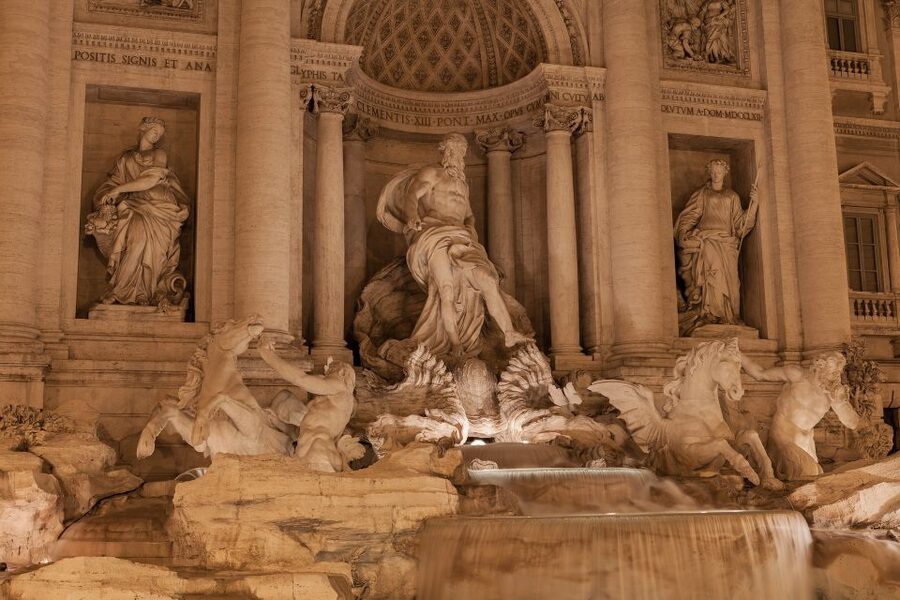
The walk continues to Trevi Fountain, where you have around 20 minutes for a guided look and photographs. This is the busiest and most familiar stop on the route, but it still fits the theme: the fountain depends on an ancient water system that you will see more clearly at the next underground site.
You can throw a coin into the fountain according to the familiar Roman tradition. The tour description does not promise a long private visit or crowd-free viewing, so set your expectations sensibly. Trevi is usually a quick-moving public stop, not a quiet archaeological enclosure.
Your guide can help you see beyond the crowds and theatrical water. The fountain marks the endpoint of the Aqua Virgo aqueduct, a system that still gives the area its connection to ancient Roman engineering. That makes the next stop more meaningful.
Vicus Caprarius, the City of Water

Vicus Caprarius is the tour’s most unusual stop. This underground archaeological area lies near Trevi Fountain and is also called the City of Water. The visit lasts about 30 minutes.
Below the modern streets, you find a maze of remains from different periods. The key features include an imperial-era domus and the castellum aquae of the Aqua Virgo aqueduct. A castellum aquae was a water distribution structure, so this is not simply an old basement. It shows how Roman water was received, managed, and sent onward through the city.
I like this stop because it gives the tour a clear point. The Stadium of Domitian explains Rome’s public entertainment. The Pantheon explains monumental architecture and religious change. Vicus Caprarius shows the practical systems that kept the city supplied with water.
The contrast between the underground remains and the modern buildings above is part of the charm. One account of the visit noted the striking sight of ancient aqueduct remains beneath a department store. That is Rome in a nutshell: a fashionable modern street may be sitting directly over a Roman water channel.
The rooms are also cooler than the streets above, which makes this a smart mid-day activity in summer. You still need to manage your footing and stay with the guide, particularly if the group is large or the route is busy.
Guide quality makes the difference
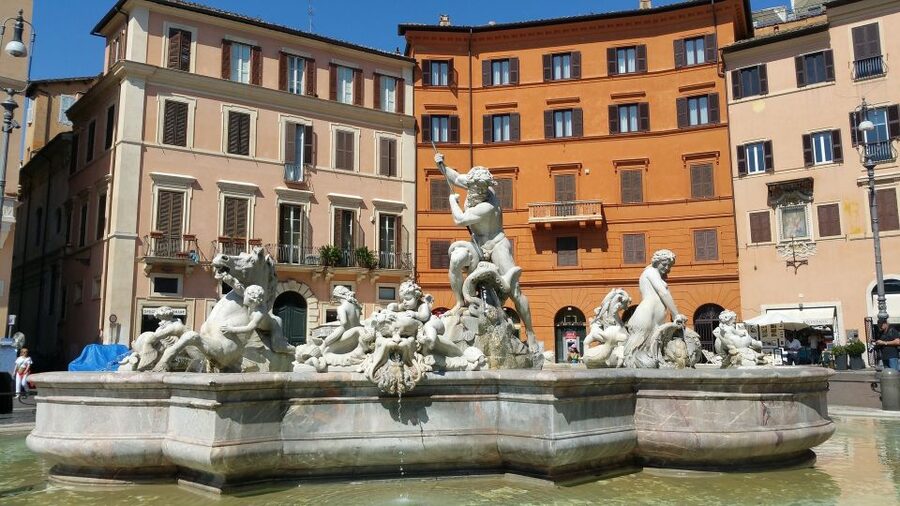
The strongest reason to book this experience is the guide. The monuments are good, but the route depends on explanation. Without context, an underground wall can look like a pile of old masonry. With the right guide, it becomes part of a house, stadium, or water network.
The guide names attached to especially strong experiences include Amanda, Francesca, Alex, Maria, Gloria, Caterina, Karolina, and Giuliana. Giuliana is described as a multilingual former university professor. Alex combines archaeological training with memories of growing up locally. Amanda is known for humor and enthusiasm as well as detailed explanations.
That does not mean you can select a particular guide when booking. Names may change according to the day and language. It does mean the provider has a deep bench of guides who can handle questions and speak to different ages and interests.
I would also ask about headsets if your group is large. One visitor found the tour easier once the guide had a microphone and the group had headphones. In Rome’s crowded streets, clear audio can make the difference between following the story and catching only fragments.
Timing, walking, and summer comfort
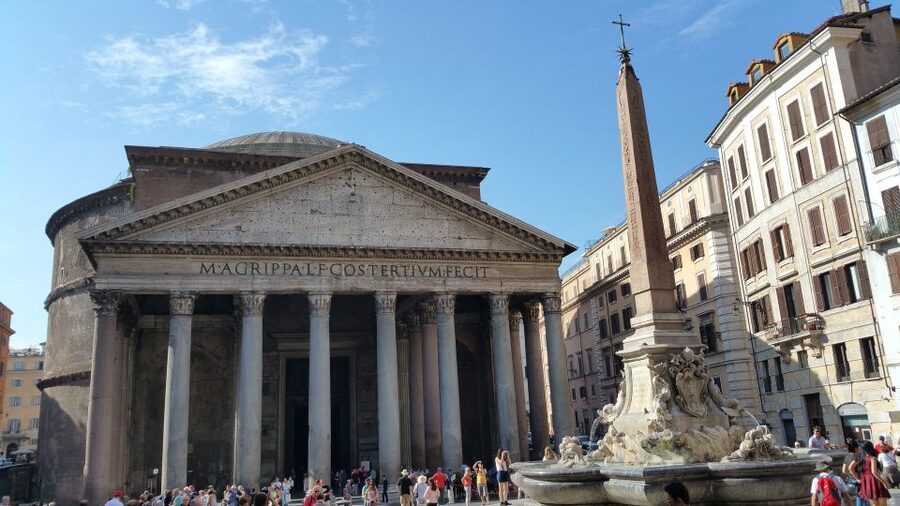
Three hours is a sensible length for this route. You get enough time at the Stadium of Domitian, Pantheon, Vicus Caprarius, and Trevi Fountain without giving up an entire day.
The schedule works especially well in the morning. One guide-led visit that began at 10 AM benefited from quieter conditions at several places. No start time is guaranteed to be free of crowds, but an earlier departure is usually easier for both walking and listening.
The underground sections offer relief from Rome’s heat, but do not mistake this for a low-effort activity. You walk between Piazza Navona, the Pantheon, and Trevi Fountain, often through busy streets. Wear shoes with good support, bring water, and stay aware of the group.
The route is not suitable for wheelchair users. The underground archaeological areas may involve narrow passages, steps, or uneven surfaces. Anyone with limited mobility should ask the provider about current access before booking.
Is the tour good value?
No price is supplied here, so I cannot judge the exact cost. I would assess the booking against three things: the three-hour duration, the guided access to two underground archaeological sites, and the quality of the person leading the walk.
The value is strongest if you want explanation rather than simple entry. You are paying for a connected story and a guide who can answer questions at several different types of Roman site. The Pantheon is an added benefit, since it is one of the city’s essential buildings and receives a substantial portion of the tour.
The value is weaker if you want a tour spent almost entirely underground. Roughly half of the experience, and possibly more depending on transfers and explanations, takes place above ground. One visitor felt the title suggested more underground time than the route delivered. That is a fair concern.
You also need to compare it with shorter tours focused only on Trevi Fountain’s underground area or the Pantheon. This experience covers more ground and gives you a wider picture, but a specialist tour may offer longer time at one site.
Flexible booking terms help if your schedule is uncertain. You can cancel up to 24 hours before the activity for a full refund, and the reserve-now, pay-later option allows you to hold a place without paying immediately. Check the current conditions at booking.
Who should book this Rome walk?
I would recommend it to first-time visitors who want more than the standard postcard route. It is particularly good for you if you like archaeology, ask questions, or want to understand how ancient Rome fits beneath the modern city.
It also suits repeat visitors. If you have already seen the Colosseum, Roman Forum, Pantheon, and Trevi Fountain from the usual angles, the Stadium of Domitian and Vicus Caprarius give you a different view of the center.
Families with older children may enjoy the mix of fountains, legends, buildings, and underground rooms. The guide-led format keeps the history moving, though young children who dislike walking or dark archaeological spaces may find three hours long.
I would skip it if you need step-free access, dislike group walking tours, or want a relaxed afternoon with very little movement. I would also choose a focused underground tour instead if your main goal is to spend most of your time below street level.
Should you book it?
Book this tour if you want Rome explained as a layered city, not just a collection of famous monuments. The Stadium of Domitian and Vicus Caprarius are the real prizes, while the Pantheon adds major architectural weight and Trevi Fountain gives the route a lively finish.
Go in expecting an archaeology walk, not three hours underground. Dress properly for the Pantheon, wear comfortable shoes, confirm the meeting point, and watch for access changes tied to restoration or religious services.
For most visitors, the guide will decide how good the experience feels. If you get a guide in the mold of Amanda, Alex, Francesca, Maria, or Giuliana, you can expect clear explanations, room for questions, and a stronger understanding of Rome’s layers by the time you reach Trevi Fountain.
FAQ
How long does the Rome underground and piazzas tour last?
The tour lasts three hours.
Where does the tour begin?
There are two possible starting locations: the Fountain of the Four Rivers or the National Academy of San Luca. The exact meeting point depends on the option booked.
Where does the tour finish?
The tour finishes at Trevi Fountain.
Which languages are available?
The live guide is available in Italian, English, and Spanish.
Does the tour include the Pantheon?
Yes. The route includes a guided visit to the Pantheon, usually lasting about 45 minutes, although access can change because of religious functions.
What underground sites do you visit?
You visit the Stadium of Domitian beneath Piazza Navona and Vicus Caprarius, also called the City of Water, near Trevi Fountain.
What should I wear?
Wear comfortable shoes. For the Pantheon, your shoulders and knees must be covered because it is an active church. Shorts, short skirts, and sleeveless shirts are not allowed.
Is the tour suitable for wheelchair users?
No. The tour is not suitable for wheelchair users.
Just added around Rome
- St. Peter’s Basilica Full Guided Tour with Vatican Grottoes★ 4.6 · 286 reviews
- St. Peter’s Basilica and Vatican Grottoes Tour★ 4.9 · 120 reviews
- Rome: St Peter’s Basilica Express Tour & Grottoes★ 4.3 · 126 reviews
- Rome: Appian Way, Aqueducts, & Catacombs E-Bike Guided Tour★ 4.9 · 54 reviews
- Rome: Underground Trastevere Guided Walking Tour★ 4.8 · 87 reviews
- Rome: Tour of St. Clement’s Basilica Underground Temples★ 4.8 · 242 reviews
- Rome underground hidden temples, ruins, and secret basilicas★ 3.7 · 21 reviews
- Rome: St. Peter’s Basilica Tour with Vatican Grottoes★ 4.5 · 314 reviews
Rome Cave Tours, compared.
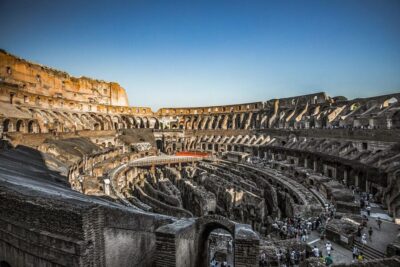
Colosseum: Underground and Ancient Rome Tour
Read our review →
Rome: Capuchin Crypts and Catacombs Tour with Transfers
Read our review →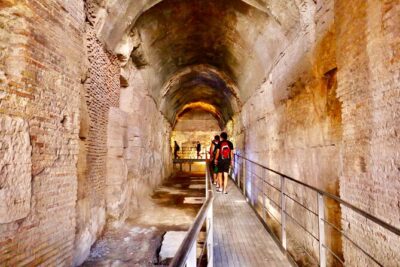
Expert Guided Tour of Colosseum Arena OR Underground, and Forum
Read our review →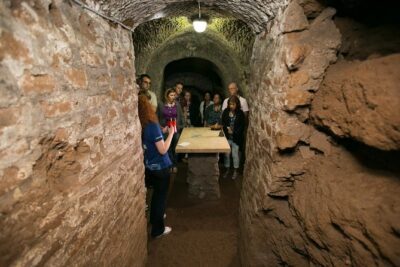
The Original Roman Crypts and Catacombs Tour with Transfers
Read our review →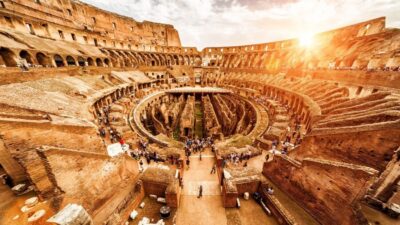
Rome: Colosseum Underground Small Group Guided Tour
Read our review →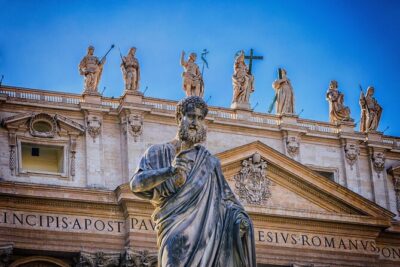
Rome: St. Peter’s Basilica, Dome Climb, and Underground Tour
Read our review →
Rome: Colosseum Underground, Arena & Forum Tour
Read our review →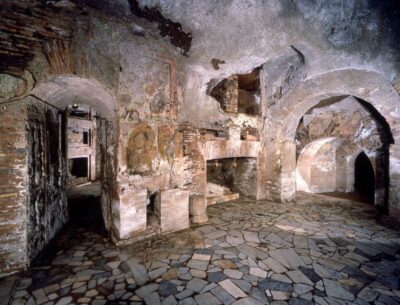
Rome: Catacombs of St. Callixtus Entry Ticket & Guided Tour
Read our review →Browse the lists this tour appears in