
REVIEW · ROME
Rome: Navona Underground & Domitian Stadium Guided Tour
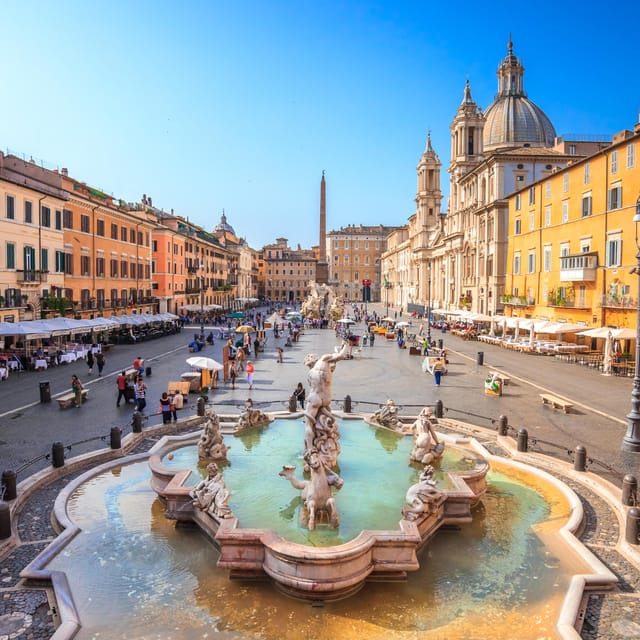
The most intriguing part of this Rome tour is below street level. Under Piazza Navona, you’ll enter the remains of the Stadium of Domitian, an ancient sports venue that once drew Romans to athletic contests and public spectacles. Above you, cafés and fountains carry on modern Rome. Below, the stonework gives the square a far older pulse.
I like the small-group format, which gives your guide room to answer questions instead of rushing through a script. I also like the short, focused route: 20 minutes around Piazza Navona, followed by 40 minutes underground. The main consideration is its length. At one hour, this is a sharp introduction, not a full archaeological visit, and the site is not suitable for wheelchair users or people with mobility impairments.
Key points to know before you go
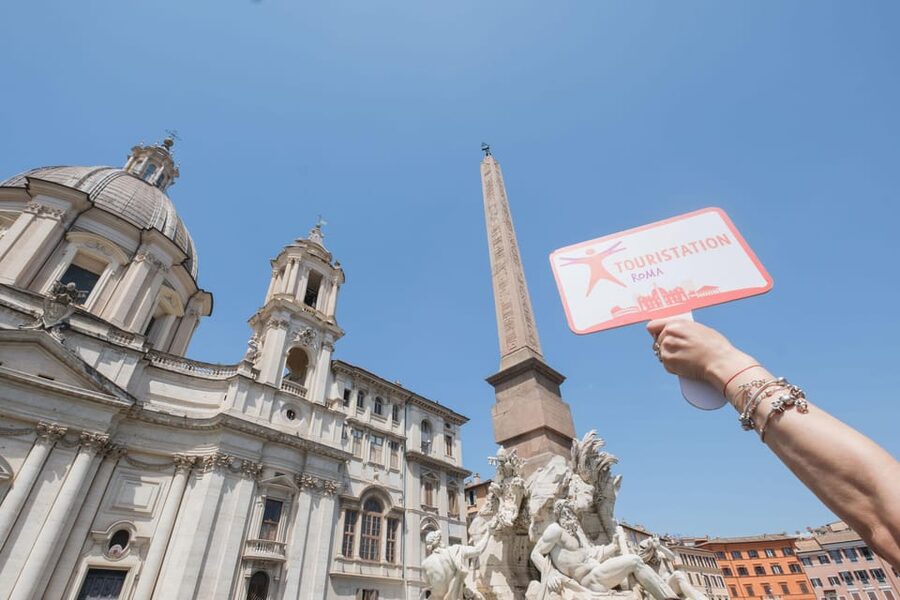
- The tour begins at Piazza Navona 25, at the Touristation office directly in front of the central fountain.
- The underground visit lasts about 40 minutes, with another 20 minutes devoted to Piazza Navona.
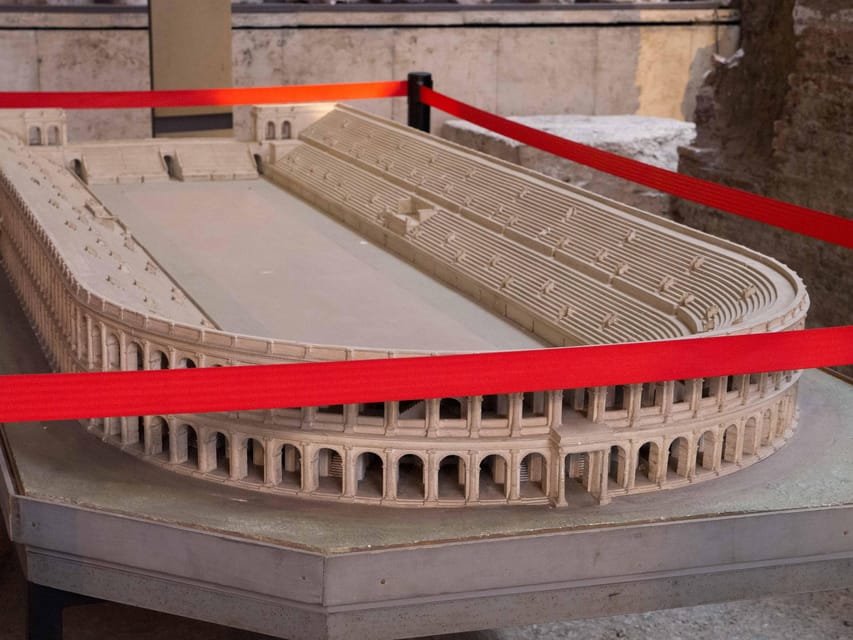
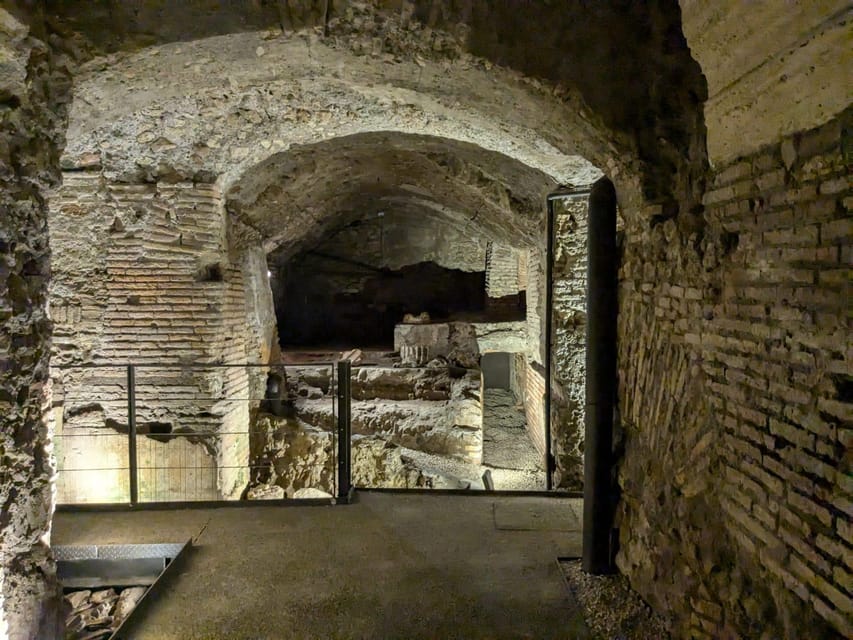
- You’ll see the ancient track and sections of Roman seating beneath the modern square.
- English and Italian tours are available, led by a live guide.
- The $41 price includes skip-the-line entry, assistance at the meeting office, and the guided visit.
- A wine option adds two wines and a traditional appetizer board, but food and drink are not included in the basic tour.
Why the Stadium of Domitian is worth an hour
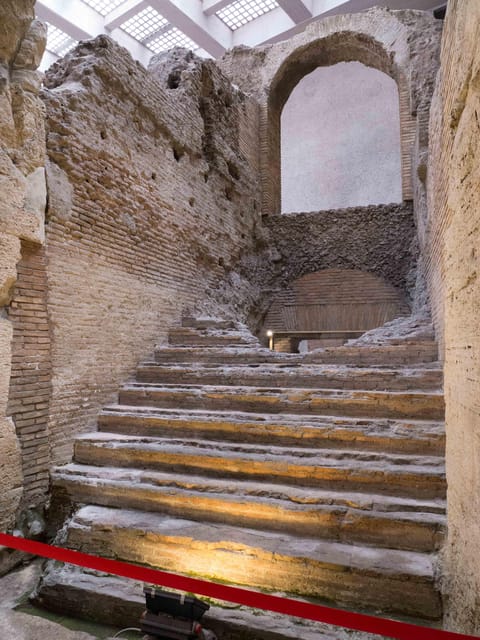
Rome can make you work for its best discoveries. The famous monuments are easy to spot, but the city’s older layers often sit beneath ordinary streets and lively squares. This tour takes you below Piazza Navona, where the remains of Domitian’s stadium offer a more contained and physical look at Roman public life.
The appeal is not just that the ruins are underground. It is the contrast between the present-day square and the venue below it. Piazza Navona is known for its central fountain, open space, and grand façades. Then you step down and encounter the old stadium’s track, seating, and masonry. That shift helps you picture how Rome was built in layers.
The stadium mattered because it gave Romans a place for organized athletic and cultural events. Your guide explains its connection with Emperor Domitian and the role of public entertainment in Roman society. I find this more useful than simply seeing another wall and hearing a date. You get a sense of why the building existed and what it meant to the people who gathered there.
The site also offers something the biggest Roman attractions cannot always provide: a quieter visit with time to look closely. This is not a sprawling monument where you spend half the day finding your way around. It is a compact stop that fits neatly into a busy Rome schedule.
More Guided Tours in Rome:
- Expert Guided Tour of Colosseum Arena OR Underground, and Forum
★ 4.5 · 5,041 reviews - Rome: Colosseum Underground Small Group Guided Tour
★ 4.7 · 4,844 reviews - Rome: Catacombs of St. Callixtus Entry Ticket & Guided Tour
★ 4.6 · 3,037 reviews
Meeting at the central fountain in Piazza Navona
You meet at Touristation Navona, Piazza Navona 25, directly in front of the square’s central fountain. This is a practical location, since Piazza Navona is easy to pair with nearby sights, cafés, churches, and streets in central Rome.
Allow enough time to find the office and your guide. The meeting point is in a busy part of the square, so arriving at the stated meeting time matters. The tour begins with assistance at the office, then moves into a guided look at Piazza Navona before heading underground.
The location gives you a useful preview of what lies below. From the square, you can appreciate the broad shape of the space. Once underground, the surviving structure helps explain why Piazza Navona has its distinctive elongated form. You are not simply visiting a separate ruin. You are seeing how an ancient building still shapes the city above it.
The office also provides a clear starting point for visitors who want a little help getting oriented. If you have just arrived in Rome, this can be welcome. The one drawback is that the busy square may make the meeting point feel less obvious than a quiet museum entrance, so check the address before setting out.
The 20-minute Piazza Navona introduction
The first part lasts about 20 minutes and takes place around Piazza Navona. Your guide sets up the story of the stadium, Domitian, and the square’s place in modern Rome before you enter the archaeological remains.
This portion is valuable because it gives you a visual frame. You can look at the square as a whole, then learn how its current shape relates to the older stadium. Without that introduction, the underground walls might feel detached from the piazza overhead.
I would pay close attention here if you are interested in urban history. Rome is full of monuments that changed purpose over time, and Piazza Navona is a good example of an ancient site living on in a new form. The guide’s job is to connect the visible square with the structure beneath it, not just point out attractive scenery.
The square also gives you the tour’s best open-air views. The activity specifically includes views of Piazza Navona from the historic track, so your perspective changes as you move through the site. You see the famous setting from above and then consider it from the level of the ancient stadium.
Do not expect a long walking tour of the entire neighborhood. The Piazza Navona section is a short introduction, designed to support the underground visit. If you want a broad tour of central Rome, you will need to add that separately.
Forty minutes below Rome at the ancient stadium
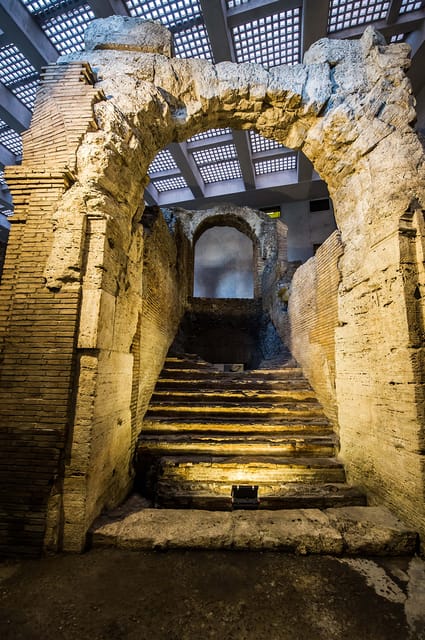
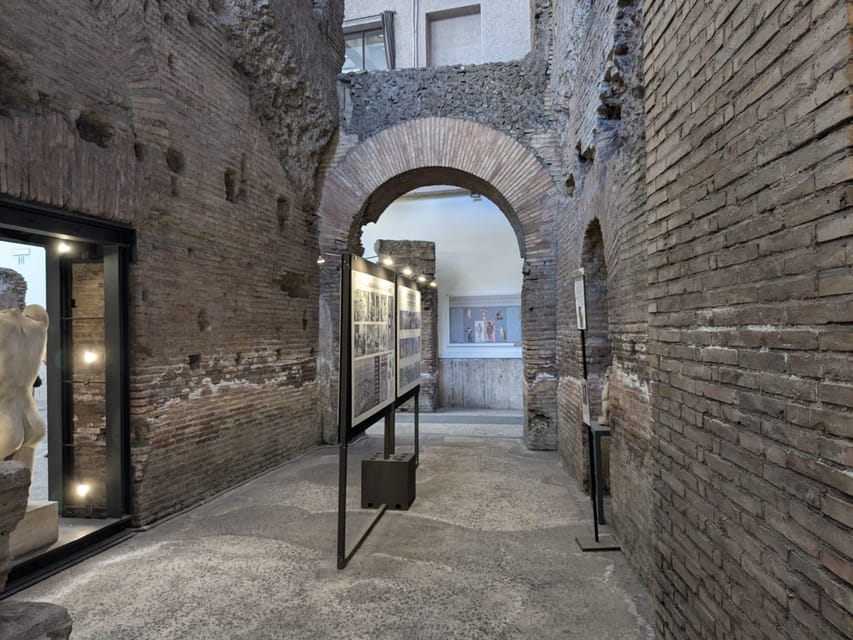
The underground Stadium of Domitian is the heart of the experience. For about 40 minutes, your guide leads you through the surviving remains, including parts of the old track and sections of Roman seating.
The strongest part of this visit is the sense of scale. Even with only partial remains, the track and seating show that this was built for crowds, competition, and spectacle. You can imagine spectators gathering to watch athletes and public events, while the stone structure reminds you that Roman entertainment depended on serious planning and construction.
The guide adds the human story. The tour focuses on Roman sports, entertainment, and the connection between Domitian and the stadium. That context makes the archaeology easier to read. Instead of seeing isolated masonry, you learn how the venue functioned as part of Roman public culture.
This is also where the small group matters most. In a compact underground site, a large crowd can make it hard to hear or find a clear view. A small group gives you a better chance to stay close to the guide and ask about details that catch your eye. The experience is described as semi-private, though the exact group size is not specified, so do not assume you will always have the site to yourself.
The underground setting has limits. You should expect ancient remains rather than a fully reconstructed stadium. Some visitors may find the visit too brief if they want a long archaeological study. For most people, that short length is an advantage: it adds an unusual stop to your day without taking over your Rome itinerary.
A few more cave trips around Rome worth a look
- Colosseum: Underground and Ancient Rome Tour
★ 4.7 · 12,691 reviews - Rome: Capuchin Crypts and Catacombs Tour with Transfers
★ 4.6 · 6,456 reviews - The Original Roman Crypts and Catacombs Tour with Transfers
★ 4.5 · 4,896 reviews - Rome: St. Peter’s Basilica, Dome Climb, and Underground Tour
★ 4.8 · 3,404 reviews
What the guides add to the visit
A good guide is especially important here because the stadium is not self-explanatory. The stones cannot tell you on their own how Romans used the venue or why Domitian’s building project mattered. A live guide fills in those gaps with stories and explanations.
Carla received especially strong praise for being friendly, passionate, and well prepared. That combination suits this site. The best guide here is not simply someone who recites facts, but someone who can make the stadium feel connected to the people who used it.
The tour is offered in English and Italian. If you want a more personal exchange, the small-group arrangement should help. One reported booking had only the guide and the customer, creating extra time for explanation. That will not necessarily happen on your date, but it shows how the format can work when demand is light.
There is one practical concern. One booking was affected when the guide could not attend. That appears to be an isolated problem rather than a feature of the tour, and the overall rating is 4.6 out of 5 from 36 reviews. Still, guided experiences depend on staff and timing, so keep your confirmation details handy and avoid placing an important timed connection immediately after this one-hour visit.
Is $41 a fair price?
At $41 per person, the tour costs more than simply walking through Piazza Navona, of course, but the comparison is not quite fair. The fee includes entry to the underground ruins, skip-the-line access through a separate entrance, assistance at the Touristation office, and a live guided visit.
I see the value in the combination of access and explanation. You are paying for a small-group experience at a site that many people would miss or struggle to understand on their own. If the stadium is high on your list, the price is reasonable for a focused hour in central Rome.
The value is less clear if you are trying to visit as many major monuments as possible on a tight budget. The tour is short, and the archaeological area is compact. You will not get the scale of a major ancient complex or several hours of guided sightseeing.
The included skip-the-line entry helps. A separate entrance can reduce wasted time, particularly during busy periods. Still, the main reason to book is not speed. It is the chance to understand an ancient venue beneath one of Rome’s most familiar squares.
If you choose the wine tasting option, you also receive two wines paired with a traditional appetizer board in central Rome. That can make the package more appealing if you want a small food stop built into your sightseeing. Check the exact option when booking, since food and drink are not included in the basic tour.
Who will enjoy this tour most
I would recommend this experience to you if you have already seen some of Rome’s headline monuments and want a shorter visit with a different angle. It suits history-minded visitors, first-time visitors who enjoy guided context, and anyone curious about what lies beneath Piazza Navona.
It is also a good fit if you prefer a compact tour. One hour is easy to place before lunch, after a morning walk, or between other central Rome stops. The route starts and ends at Touristation Navona, so you do not need transport between the meeting point and the archaeological site.
Families and casual sightseers may like the mix of open-air square and underground ruins, though the guide’s explanations are central to the experience. If you are only interested in grand interiors, paintings, or panoramic views, this may feel too specialized.
You should skip it if stairs, uneven surfaces, or limited mobility are a serious concern. The activity is not suitable for wheelchair users or people with mobility impairments. Flash photography is also not allowed, so bring your camera but leave the flash switched off.
The tour works best when you treat it as a focused history stop, not as a replacement for Rome’s larger ancient sites. It gives you one clear story and a look at physical remains that many people pass without noticing.
Practical ways to fit it into your Rome day
Start by locating Piazza Navona 25 before the tour time. The central fountain is the main reference point, but a few extra minutes will help you identify the Touristation office without rushing.
Plan another activity nearby rather than crossing the city immediately afterward. The tour ends back at Touristation Navona, keeping you in central Rome. That makes it easy to continue exploring the piazza or nearby streets, though the supplied details do not specify exact walking times to other attractions.
Choose the wine option if you want a relaxed finish with two wines and a traditional appetizer board. If you would rather keep moving, the basic archaeological tour is the cleaner choice. Food and drink are not included unless you select that option.
The cancellation policy gives you some flexibility: you can cancel up to 24 hours in advance for a full refund. You can also reserve now and pay later, which is useful if your Rome plans are still shifting.
English and Italian are the available tour languages. Flash photography is prohibited, and the site is not accessible for wheelchair users. These are simple details, but they can determine whether the experience fits your day.
Should you book the Stadium of Domitian tour?
Book it if you want a short, well-focused look at ancient Rome beneath a famous modern square. The underground track and Roman seating give the visit a strong sense of place, while the guide explains Domitian, Roman sports, and the role of public spectacle. The small-group setup and positive feedback about guides such as Carla add real value.
Think twice if you want a long archaeological tour, broad sightseeing route, or step-free access. At $41, the price makes sense for skip-the-line entry and guided context, but the visit remains only one hour.
For most visitors who enjoy history and want something beyond Rome’s standard checklist, I would book it, especially early in your stay. You will leave Piazza Navona seeing the square in a different way, with an ancient stadium beneath its fountains and busy pavement.
FAQ
Where does the tour meet?
Meet your guide at the Touristation Navona Office at Piazza Navona 25, directly in front of the central fountain.
How long does the tour last?
The tour lasts one hour. About 20 minutes are spent on Piazza Navona and about 40 minutes inside the underground Stadium of Domitian.
What languages are available?
The live tour is available in English and Italian.
Does the ticket include skip-the-line entry?
Yes. The experience includes skip-the-line tickets for the underground ruins, with access through a separate entrance.
Is the tour suitable for wheelchair users?
No. The activity is not suitable for wheelchair users or people with mobility impairments.
Is wine tasting included?
Wine tasting is included only if you select that option. It includes two wines and a traditional appetizer board. Food and drink are not included in the basic tour.
Just added around Rome
- St. Peter’s Basilica Full Guided Tour with Vatican Grottoes★ 4.6 · 286 reviews
- Rome: St Peter’s Basilica Express Tour & Grottoes★ 4.3 · 126 reviews
- St. Peter’s Basilica and Vatican Grottoes Tour★ 4.9 · 120 reviews
- Rome: Appian Way, Aqueducts, & Catacombs E-Bike Guided Tour★ 4.9 · 54 reviews
- Rome: Underground Trastevere Guided Walking Tour★ 4.8 · 87 reviews
- Rome: Tour of St. Clement’s Basilica Underground Temples★ 4.8 · 242 reviews
- Rome underground hidden temples, ruins, and secret basilicas★ 3.7 · 21 reviews
- Rome: St. Peter’s Basilica Tour with Vatican Grottoes★ 4.5 · 314 reviews
Rome Cave Tours, compared.
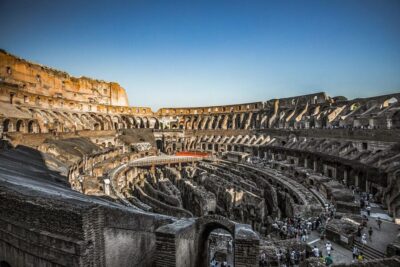
Colosseum: Underground and Ancient Rome Tour
Read our review →
Rome: Capuchin Crypts and Catacombs Tour with Transfers
Read our review →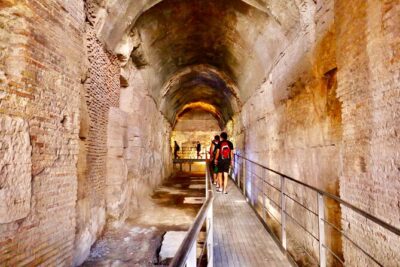
Expert Guided Tour of Colosseum Arena OR Underground, and Forum
Read our review →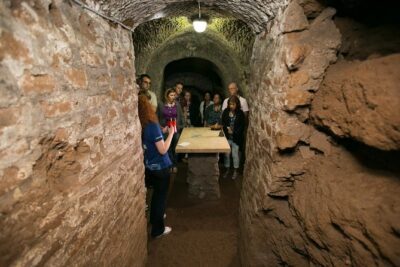
The Original Roman Crypts and Catacombs Tour with Transfers
Read our review →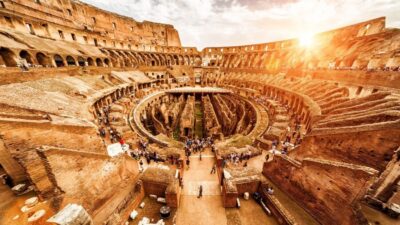
Rome: Colosseum Underground Small Group Guided Tour
Read our review →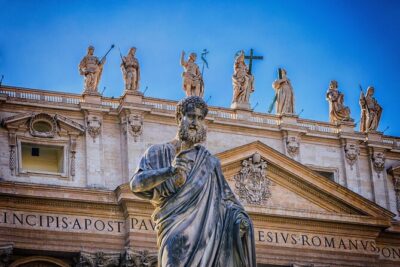
Rome: St. Peter’s Basilica, Dome Climb, and Underground Tour
Read our review →
Rome: Colosseum Underground, Arena & Forum Tour
Read our review →
Rome: Catacombs of St. Callixtus Entry Ticket & Guided Tour
Read our review →Browse the lists this tour appears in