REVIEW · ROME
Rome: Catacombs and Appian Way Golf Cart Small-Group Tour
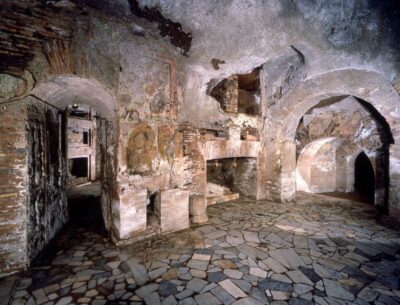
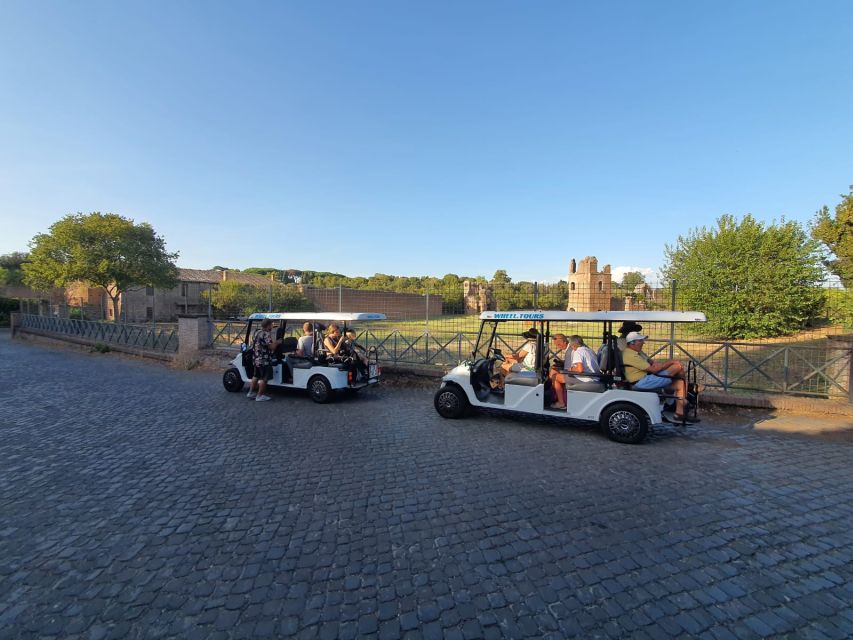
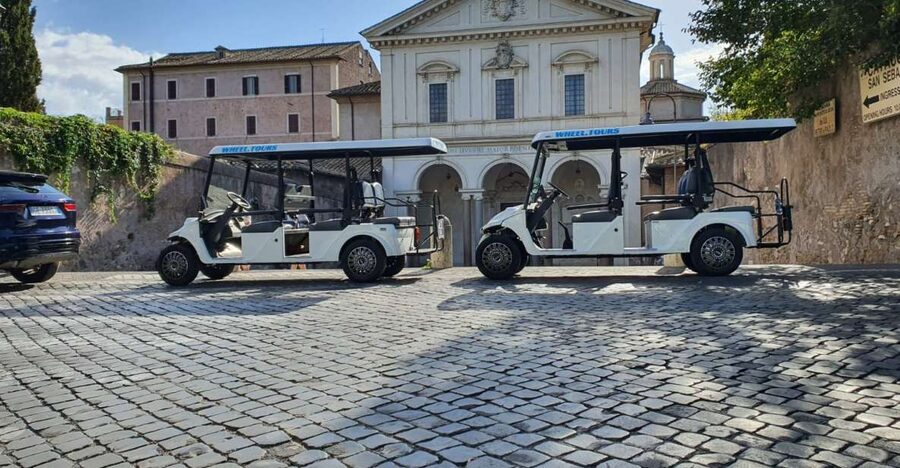
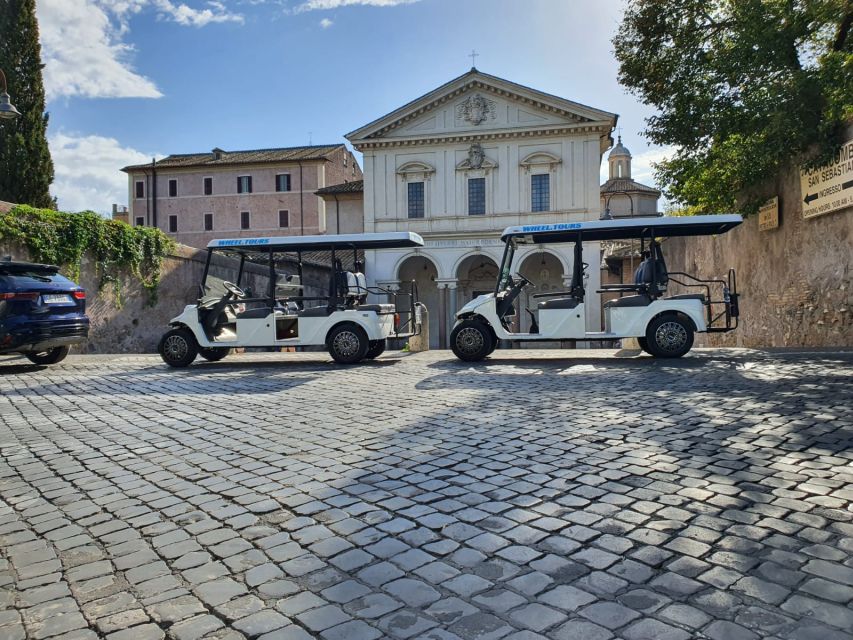
The most unusual part of this Rome tour comes 16 meters underground, where you enter the catacombs and learn about early Christian Rome. Above ground, a golf cart carries you from the Colosseum and Baths of Caracalla to the Appian Way, letting you cover far more ground than you could on foot.
I like the mix of major sights and quieter stops, especially the Church of Domine Quo Vadis and the Basilica of Saint Sebastian. I also like the practical design: headsets help you hear the guide over traffic, and bottled water is included. The tradeoff is a bumpy ride on cobbled streets, and the catacombs require 50 uneven steps down and 50 back up.
Key points to know before booking
- Catacombs below Rome: Expect a cool, humid visit at about 59°F, or 15°C, with no elevator and no place to sit.
- A lot of Rome in three hours: The route links the Colosseum, Circus Maximus, Appian Way, Baths of Caracalla, and more.
- A guide-led experience: Guides including Federico, Anna, Antonella, Claudio, and Alessandro are praised for clear storytelling, humor, and strong knowledge of Rome.
- Golf cart comfort with limits: You avoid a long day of walking, but the open cart can make monuments hard to see and cobbled roads rough.
- Two catacomb options: Morning departures feature San Sebastian, while afternoon tours visit San Callixtus, according to the schedule provided.
- Easy central meeting point: The start is about a five-minute walk from Termini Station, and the tour returns there.
Why a golf cart works so well in Rome
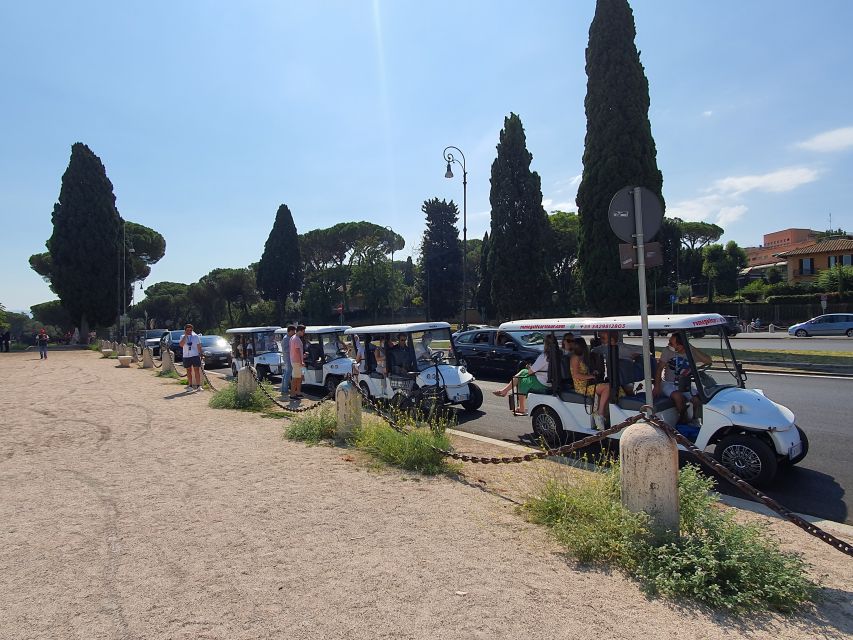
Rome is not laid out like a tidy museum. Its sights are scattered across a large city, and the Appian Way lies well beyond the usual Trevi Fountain and Pantheon circuit. Walking between the Colosseum, the Baths of Caracalla, the Circus Maximus, and the catacombs would take much of your day.
The golf cart solves that problem. You sit while the driver-guide handles the roads, then get out for selected stops and short walks. That makes this a useful choice if you are tired of Rome’s pavement, traveling with someone who prefers less walking, or visiting for only a short time.
You will not see every monument in detail. Some sights are drive-bys, and the sides of the cart can limit your view. Traffic can also interrupt the guide’s commentary, although the provided headsets help a great deal. Think of this as a broad introduction to Ancient Rome, not a substitute for a full visit inside the Colosseum or a half-day walk along the Appian Way.
The small-group format helps keep the outing personal. Guides such as Federico, Anna, Antonella, Claudio, and Alessandro have been praised for answering questions, adding humor, and adjusting their explanations to the group. Federico, in particular, is described as passionate and theatrical, sometimes bringing ancient characters to life while explaining Roman sites.
More Catacombs and Underground City Tours in Italy
- Rome: Capuchin Crypts and Catacombs Tour with Transfers
★ 4.6 · 6,456 reviews - The Original Roman Crypts and Catacombs Tour with Transfers
★ 4.5 · 4,896 reviews - Rome: Catacombs of St. Callixtus Entry Ticket & Guided Tour
★ 4.6 · 3,037 reviews
From Termini to the Colosseum
The meeting point is only about five minutes from Termini Central Train Station. Look for the guide holding a Wheel Tours sign. Since the activity returns to the same place, the start and finish are simple to manage if you are staying near the station or connecting with public transport.
The first major sight is the Colosseum. The cart does not replace an inside visit, but the drive gives you an early view of Rome’s great arena while your guide explains its place in the ancient city. You can take photographs without spending the first part of the tour in a ticket line.
The practical value here is orientation. A good guide can connect the Colosseum with the roads, public buildings, baths, and arenas that once surrounded it. Guides praised for their storytelling, including Federico and Alessandro, have a knack for describing how these ruins might have looked before time and weather reduced them to stone fragments.
Keep your expectations clear: this is a drive-by view rather than a Colosseum tour. If entering the arena is a priority, book that separately and treat this excursion as a different experience.
Baths of Caracalla and the Roman city
The route continues past the Baths of Caracalla, one of the largest bathing complexes built in Imperial Rome. The surviving walls and arches give you a sense of scale, even from the cart. Your guide explains the baths as part of ordinary Roman life, not just as a pile of impressive ruins.
This is one of the benefits of having a live guide. You hear about daily routines, public spaces, religion, plants, language, and politics as you move through the city. Antonella has been praised for bringing several subjects into her stories, adding jokes and small details rather than delivering a dry list of dates.
The cart is especially useful here because the Appian Way route and the central ruins are spread apart. Still, the open vehicle is not perfect for sightseeing. Traffic, passing buildings, and the cart’s frame may block part of a monument, so listen closely and be ready to take photographs during the planned stops.
The Church of Domine Quo Vadis
The Church of Domine Quo Vadis is one of the tour’s more personal stops. It is tied to the Christian story of Saint Peter meeting Jesus on the road outside Rome. The church marks a place where tradition says this encounter occurred, and the site includes the famous footprints associated with that story.
You do not need to treat the tradition as documented fact to appreciate the setting. The point is the connection between faith, road travel, and the early Christian community around Rome. It gives the Appian Way a human dimension beyond its paving stones and Roman engineering.
This stop also helps explain why the catacombs are located along this route. The road led beyond the crowded city, where burial grounds and Christian worship spaces developed. A guide can link the church, the catacombs, and the wider story of Christianity in Rome in a way that is difficult to grasp from isolated visits.
More Catacombs and Underground City Tours in Rome
- Rome: Guided Roman Catacombs Tour with Transfers
★ 4.6 · 1,830 reviews - Rome: Catacombs Guided Tour with Transfer
★ 4.2 · 1,808 reviews - Rome EBike Tour: Appian Way, Catacombs & Roman Aqueducts
★ 5.0 · 1,766 reviews - Rome: Catacombs and Capuchin Crypt Guided Tour with Transfer
★ 4.6 · 1,606 reviews
The Appian Way and original Roman pavement
The Appian Way is the heart of the excursion. You stop near the ancient road and have a chance to walk on original paving that has survived for centuries. This is a different experience from viewing ruins behind a barrier. The road remains a physical route through the countryside around Rome.
The surface is uneven, so wear shoes with a firm sole. You may also feel the rough ride before reaching it, since the golf cart travels over cobbled streets. That discomfort is part of the bargain: you are being taken to a road built long before modern suspension systems.
The Appian Way also shows how quickly Rome changes. One moment you are near busy city streets and monumental ruins. Soon after, you are looking at an ancient route with more open space around it. The tour does not provide a long walk along the entire road, but it gives you a useful first look and lets you decide if you want to return for a slower visit.
Choosing between San Sebastian and San Callixtus
The catacomb portion is included in the ticket price, but the specific site depends on the departure. Morning tours feature San Sebastian, while afternoon tours visit the Catacombs of San Callixtus. Check the available start time and exact itinerary when you book.
At San Sebastian, the tour includes the Basilica of Saint Sebastian as well as the underground site. The basilica offers a more intimate religious setting than Rome’s grandest churches, with sacred art and historical objects to see. It can be an unexpected highlight because the visit feels quieter and more personal than the city’s major attractions.
San Callixtus is another important early Christian burial site. Either catacomb gives you a look at Rome beneath its streets, where tunnels and burial chambers preserve a part of the city that is easy to miss above ground.
The underground temperature stays around 59°F, or 15°C, and the air is humid. Bring a light layer even on a warm Roman day. The catacombs are sacred places, so dress and behave with respect. A face covering is listed among the items to bring, and pets are not allowed.
The physical demands deserve serious attention. You go down about 50 irregular steps and come back up the same number. There is no elevator, no chance to sit along the route, and uneven flooring underfoot. The visit is not recommended for people with serious walking problems or claustrophobia, and the monument is not wheelchair accessible.
A separate catacomb guide may lead the underground portion. One particularly useful point from the tour experience is that the vehicle guide and catacomb guide may have different communication styles. If clear English is important to you, stay attentive during the handoff and ask questions when needed.
Circus of Maxentius and the road beyond the city
The Circus of Maxentius is one of the less familiar stops. It does not carry the same instant recognition as the Colosseum, but that is part of its appeal. The site helps you understand how Roman entertainment buildings spread beyond the city center and how much ancient Rome remains outside the standard sightseeing loop.
The tour then continues through the Appian Way area, combining broad views from the cart with short stops on foot. This rhythm keeps the three-hour schedule moving. You are not spending the whole time inside one monument, but you are also not trapped in the cart without a chance to stretch your legs.
If you want a slow archaeological study, this pace may feel quick. If you want to see a range of places in one morning or afternoon, it is a sensible compromise.
Circus Maximus, the Mouth of Truth, and central Rome
Back in the city, the route includes a stop at the Belvedere of Romulus and Remus in the Circus Maximus. From here, you can look across a space once used for vast public spectacles. The scale is hard to understand from a small photograph, so the elevated view helps you read the shape of the former arena.
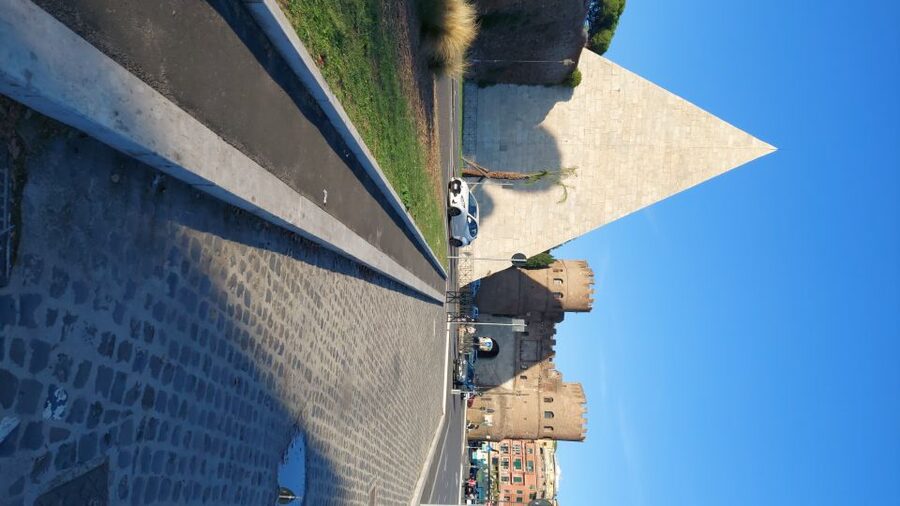
The cart also passes the Mouth of Truth, the Theatre of Marcellus, and the Pyramid of Caius Cestius. These sights show Rome’s long habit of building, rebuilding, and adapting around older structures.
The Pyramid of Caius Cestius is especially striking because it looks unlike the city’s usual Roman ruins. The Theatre of Marcellus helps show how ancient performance spaces influenced later city buildings. The Mouth of Truth adds a lighter moment to the route, with its familiar legend and recognizable stone face.
At Venetian Square, you see the Fatherland Monument and the Column of Trajan. These stops bring the trip back toward central Rome and offer more chances for photographs. The guide’s running commentary matters here because many of these monuments pass quickly from the cart.
Guides, headsets, and the pace of the commentary
The guide can make or break a moving sightseeing tour. The strongest guide reports describe people who explain clearly, answer questions, use humor, and show real affection for Rome. Federico is praised for helping visitors picture the ancient city, while Anna, Antonella, Claudio, Alessandro, Meryl, and others are described as warm, lively, and attentive.
Some guides speak quickly, so you need to stay alert. The headsets are a real advantage when traffic or road noise rises. They also mean you can hear the explanation while looking out at the site rather than leaning toward the guide.
The style may vary from one departure to another. You might get a theatrical storyteller, a calm history teacher, or a guide who mixes botany, religion, language, and local anecdotes into the route. That variety is part of a live tour, though it means the exact tone cannot be guaranteed.
The best approach is to ask questions. Guides have been praised for checking that the group understands before moving on, and a question can turn a passing ruin into the most memorable part of the afternoon.
Is the $113.29 price good value?
At $113.29 per person, this is not a budget sightseeing ride. You are paying for a small-group vehicle, a live English-speaking guide, headsets, water, and entry to the catacombs. The value comes from combining several distant parts of Rome in three hours.
A cheaper self-guided day could cover some of the same streets, but you would need to plan transport, find the catacombs, arrange admission, and piece together the historical connections yourself. Taxis or private transfers along the Appian Way could also add up quickly.
The price makes more sense if you are near the end of a walking-heavy trip, traveling with someone who cannot manage long distances, or visiting Rome for a limited time. It is less compelling if you enjoy moving slowly, want extended time inside each site, or already plan to explore the Appian Way independently.
Food and drinks are not included, though bottled water is provided. Hotel pickup and drop-off are also not included. The tour begins and ends near Termini, so plan your own route to and from the meeting point.
Who should book this tour?
I would choose this tour for a first visit that needs a broad view of Ancient Rome, especially if your feet are tired or your schedule is tight. It is also a good fit for anyone curious about early Christian sites and willing to handle the stairs into the catacombs.
Families with young children should think carefully. One guide specifically found the experience better suited to adults, and the underground steps, sacred setting, and history-heavy commentary may not hold a small child’s attention.
You should also reconsider it if you are claustrophobic, use a wheelchair, or have serious difficulty with stairs. The cart reduces walking between sites, but it does not remove the physical demands inside the catacombs.
Rain does not necessarily ruin the experience. The covered cart and provided equipment can help, and one rainy outing still worked well because the group remained relatively protected. Still, weather may affect visibility and comfort, so dress in layers and bring suitable protection.
Cancellation is flexible up to 24 hours before the start for a full refund, and you can reserve now and pay later. That is useful when Roman weather, train plans, or a packed sightseeing schedule are still shifting.
Should you book it?
Book this tour if you want many Roman sights in one compact outing, with the Appian Way and catacombs added to the usual central monuments. The strongest reason to go is the combination of transport and storytelling. You cover ground that would be awkward on foot, then get enough time at key stops to understand why they matter.
Skip it if your priority is a slow, detailed visit to one monument or if uneven stairs and enclosed spaces are a problem. For most able walkers who want a lively introduction to the lesser-seen side of Rome, the $113.29 price is reasonable, particularly when a strong guide such as Federico, Anna, Antonella, or Claudio is leading the cart.
FAQ
How long does the golf cart tour last?
The activity lasts three hours. Check the available dates and start times when booking.
Where does the tour begin?
The meeting point is about a five-minute walk from Termini Central Train Station. Your guide will be holding a Wheel Tours sign.
Where does the tour finish?
The tour ends back at the same meeting point.
Which sights are included on the route?
The route includes drive-bys or stops connected with the Colosseum, Baths of Caracalla, Church of Domine Quo Vadis, Appian Way, Circus of Maxentius, Basilica of Saint Sebastian, Circus Maximus, Mouth of Truth, Theatre of Marcellus, Pyramid of Caius Cestius, Venetian Square, Fatherland Monument, and Column of Trajan.
Which catacombs will I visit?
Morning tours feature the Catacombs of San Sebastian, while afternoon tours feature the Catacombs of San Callixtus, according to the provided schedule information.
Is the catacomb visit accessible?
No. The catacomb visit includes about 50 irregular steps down and 50 back up, with uneven floors, no elevator, and no place to sit along the route. It is not wheelchair accessible and is not recommended for people with serious walking problems or claustrophobia.
What is included in the price?
The price includes the golf cart tour, an English-speaking guide, bottled water, headsets, and the catacomb entrance fee. Hotel transfers, food, and other drinks are not included.
Just added around Rome
- St. Peter’s Basilica Full Guided Tour with Vatican Grottoes★ 4.6 · 286 reviews
- Rome: St Peter’s Basilica Express Tour & Grottoes★ 4.3 · 126 reviews
- St. Peter’s Basilica and Vatican Grottoes Tour★ 4.9 · 120 reviews
- Rome: Appian Way, Aqueducts, & Catacombs E-Bike Guided Tour★ 4.9 · 54 reviews
- Rome: Underground Trastevere Guided Walking Tour★ 4.8 · 87 reviews
- Rome: Tour of St. Clement’s Basilica Underground Temples★ 4.8 · 242 reviews
- Rome underground hidden temples, ruins, and secret basilicas★ 3.7 · 21 reviews
- Rome: Trevi Fountain Underground Small Group Tour★ 4.4 · 47 reviews
Rome Cave Tours, compared.
Colosseum: Underground and Ancient Rome Tour
Read our review →
Rome: Capuchin Crypts and Catacombs Tour with Transfers
Read our review →
Expert Guided Tour of Colosseum Arena OR Underground, and Forum
Read our review →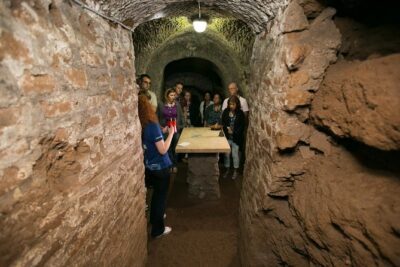
The Original Roman Crypts and Catacombs Tour with Transfers
Read our review →
Rome: Colosseum Underground Small Group Guided Tour
Read our review →
Rome: St. Peter’s Basilica, Dome Climb, and Underground Tour
Read our review →
Rome: Colosseum Underground, Arena & Forum Tour
Read our review →