
REVIEW · ROME
Rome: Guided Colosseum Underground Tour
The most unusual part of this Rome tour happens below the Colosseum, in the hypogeum, where animals and performers waited beneath the arena floor. You will see the old staging chambers and lifting mechanisms, then walk across the Arena Floor before continuing to the Roman Forum and Palatine Hill.
I like two things here. First, the underground ticket is difficult to obtain independently, so this tour removes a major planning headache. Second, guides such as Amanda, Renata, Lorenzo, and Sabrina are praised for lively storytelling, clear explanations, and good crowd management. The main consideration is the price, $163.11 per person, and the uneven surfaces make this a poor fit for wheelchair users or anyone with limited mobility.
Key points to know before booking
- The hypogeum is the heart of the visit: See the tunnels where performers, animals, and equipment were prepared before appearing in the arena.
- The Arena Floor adds useful perspective: You will look up at the seating tiers from the same level where ancient spectacles took place.
- Amanda and Renata are especially engaging guides: Their humor, energy, and Roman history knowledge receive repeated praise in the supplied feedback.
- The Forum and Palatine Hill are included: You are not limited to the Colosseum itself, and the ancient city unfolds across the second half of the tour.
- Skip-the-line entry saves time: This matters greatly at a site with several security and ticket checkpoints.
- Plan for uneven ground: Bring water and identification, and leave large bags, luggage, sharp objects, sprays, and glass items behind.
Why the Colosseum Underground changes the visit
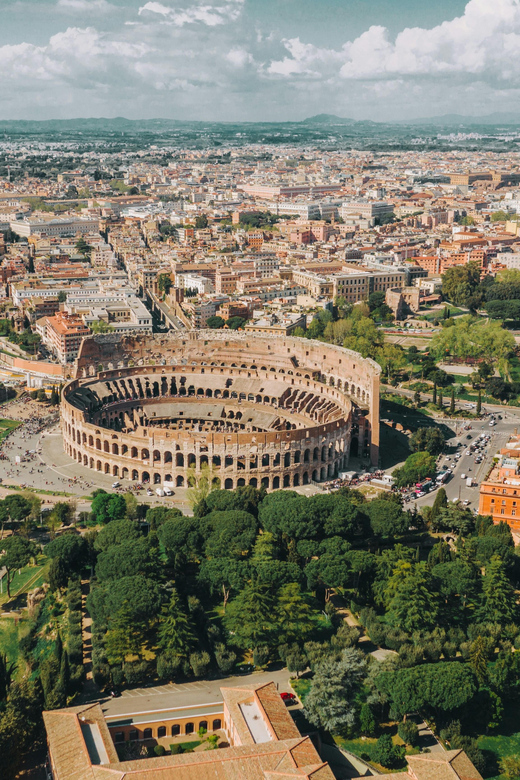
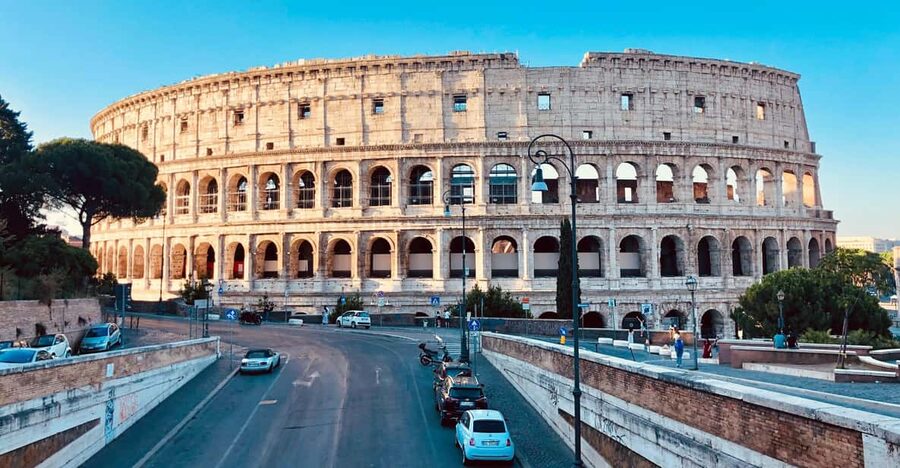
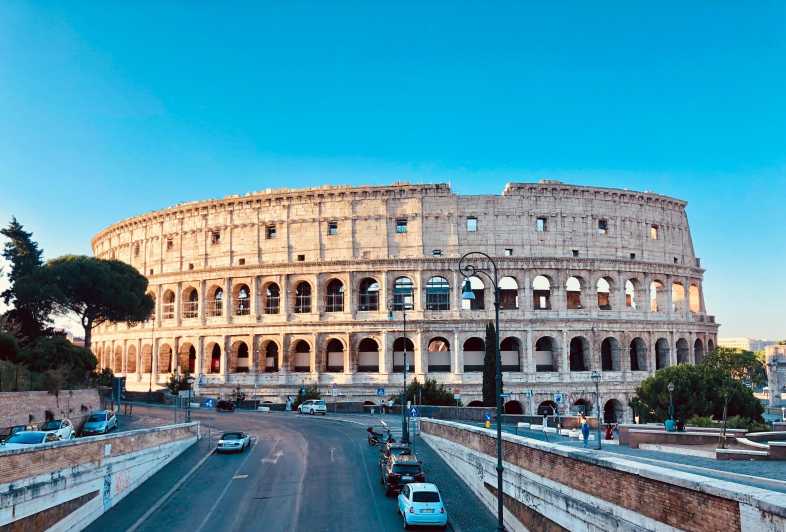
The Colosseum is easy to admire from the outside. Its arches, massive scale, and familiar oval shape tell only part of the story. The underground level explains how the building worked.
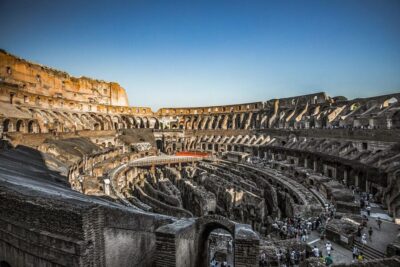
The hypogeum was the service area below the arena floor. Performers and animals waited there before being sent upward into view. The tour shows the chambers and mechanisms that supported this carefully managed spectacle. Instead of seeing only the finished monument, you get a look at the machinery behind it.
That distinction matters. From the upper seating, the Colosseum can feel like a grand shell. Below ground, you begin to understand it as a working entertainment complex, built to control movement, timing, entrances, and audience attention.
Your guide also places the underground rooms within the larger story of Roman public life. Expect discussion of cruelty, discipline, bravery, sacrifice, and clemency. These themes can sound abstract in a book, but they become easier to grasp when you are standing in the space where people prepared to face an arena audience.
The underground visit lasts about one hour. That is enough time to explain the main features without making the entire tour feel stuck in one section. Access to this level is also the part most difficult to arrange on your own, which gives this tour much of its practical value.
More Guided Tours in Rome:
- Expert Guided Tour of Colosseum Arena OR Underground, and Forum
★ 4.5 · 5,041 reviews - Rome: Colosseum Underground Small Group Guided Tour
★ 4.7 · 4,844 reviews - Rome: Catacombs of St. Callixtus Entry Ticket & Guided Tour
★ 4.6 · 3,037 reviews
Meeting beside the Arch of Constantine
The tour begins near the Arch of Constantine, beside the Colosseum. Look for the guide holding a red Trajan Tours sign. This is a busy area, so allow enough time to find the exact meeting point rather than arriving at the last second.
The tour operator has been praised for sending clear communication before the visit, and one guide, Phil, is specifically noted for helping people who were unsure about the meeting location. That kind of contact is useful in Rome, where a short walk around a major monument can quickly become confusing.
Start times depend on ticket availability. A scheduled morning time may shift if the special underground entry is not available then. One group was moved from 9:30 to 12:30 during a busy Easter and Jubilee period, with advance notice. The practical lesson is simple: keep some flexibility in your day and check your messages before setting out.
You will need a passport or identity card. A copy is accepted. Bring water, since the three-hour route includes outdoor walking and exposed archaeological areas. Large bags and luggage are not allowed, and the rules also exclude weapons, sharp objects, sprays, aerosols, glass objects, and pets, apart from assistance dogs.
Walking into the Colosseum and onto the Arena Floor
After meeting the guide, you enter the Colosseum grounds and pass through the required checks. Skip-the-line entry does not mean skipping security, but it can spare you from waiting in the main ticket queue.
A guide is particularly useful here because the Colosseum has several points where tickets and access are checked. Instead of guessing which way to go, you move through the process as a group. Several visitors also appreciated the provided audio equipment, since it helped them hear the guide over the surrounding noise.
The Arena Floor gives you a different view of the building. From this level, the surrounding tiers rise above you, and the crowd becomes easier to imagine. Your guide explains the construction and engineering that made such a large venue function.
This section is also a good place to notice how the building frames movement. Ancient audiences arrived, found their seating, watched the action, and left through a carefully organized structure. The tour connects that physical design with the Roman habit of presenting power in public.
Amanda is praised for combining humor with historical detail, including comic voices for certain Roman emperors. That approach will suit you if you learn best through stories and character. If you prefer a quiet, self-guided visit, a group tour with a talkative guide may feel less relaxed.
The guide also has to manage the crowd. One specific strength mentioned repeatedly is the ability to move the group through busy areas while still pausing for explanations. Amanda is praised for keeping people together and reminding other visitors to show basic courtesy around the monument. That may sound minor, but it makes a real difference at a crowded site.
The hypogeum, where the spectacle was prepared
The underground level is not simply a darker version of the main Colosseum. It reveals the practical work that took place out of sight.
Here, you can see where animals and performers waited before appearing above. The lifting systems helped bring them into the arena at the right moment. The effect was designed for surprise: the audience saw the arrival, not the preparation.
Your guide interprets this space through stories of the people involved. You hear about warriors preparing for combat, the discipline required of them, and the harsh choices built into Roman entertainment. The tone is not just about grand architecture. It also deals with the human cost of the shows.
That balance is important. The Colosseum is often treated as a postcard monument, but its meaning comes from the tension between technical achievement and violence. The underground area makes both sides visible.
The supplied feedback gives special attention to guides who use vivid examples and explain how one part of Roman society connected to another. Renata is praised for using physical clues and nearby remains to make the past easier to follow. Lorenzo is praised for adding details that other groups did not appear to receive. These comments suggest that the guide can shape the quality of the visit as much as the access itself.
You should expect some tight or uneven walking areas. The activity is not suitable for wheelchair users or people with mobility impairments, and anyone who is unsteady on rough surfaces should think carefully before booking.
A few more cave trips around Rome worth a look
- Colosseum: Underground and Ancient Rome Tour
★ 4.7 · 12,691 reviews - Rome: Capuchin Crypts and Catacombs Tour with Transfers
★ 4.6 · 6,456 reviews - The Original Roman Crypts and Catacombs Tour with Transfers
★ 4.5 · 4,896 reviews - Rome: St. Peter’s Basilica, Dome Climb, and Underground Tour
★ 4.8 · 3,404 reviews
The Roman Forum in 45 minutes
After the Colosseum, the tour continues through the Roman Forum, the old center of political, religious, and public life. The guided portion lasts about 45 minutes.
The Forum is a difficult place to understand without help. You see broken columns, foundations, arches, and scattered walls, but the original purpose of each space is not always obvious. A guide gives the ruins a sequence and explains how temples, basilicas, and government buildings related to one another.
The route includes major sights such as the Arch of Titus and the remains of the Temple of Saturn. Your guide traces the movement of emperors, officials, worshippers, and ordinary people through the ancient city. The emphasis is on power and politics, but the physical remains keep the story grounded.
I especially value the Forum portion because it prevents the Colosseum from becoming an isolated attraction. The arena was part of a larger civic world. By walking through the Forum afterward, you see where decisions were made, religious ceremonies took place, and Roman public life was organized.
Forty-five minutes is enough for an introduction, not a full study of every ruin. If you want to inspect each column base or read every sign, you may want extra time after the guided portion. One useful feature of the ticket is that you may be able to remain in the archaeological area and continue looking around independently, depending on the access terms provided on your visit.
The Forum is also exposed and uneven. Wear sensible shoes and keep water handy. The ground can make the route tiring, especially after the Colosseum stairs and underground access.
Palatine Hill and the Palace of Domitian
The final major stop is Palatine Hill, with about 45 minutes of guided explanation. This is where the tour shifts from public life to imperial power.
You visit the Palace of Domitian, one of the key areas connected with the emperors who lived above the Forum. The hill also gives you broad views across the ancient center of Rome. Those views help you understand why this high ground mattered, even when the ruins themselves take effort to interpret.
The guide connects the palace remains to the wider Roman story. You are not only looking at old walls. You are considering how emperors separated themselves from the political activity below and how the hill formed part of the city’s symbolic center.
This section can feel slower than the Colosseum. There is less of the immediate drama of the arena and more space, scattered remains, and open walking. I would not book this tour expecting three hours of nonstop spectacle. Its value comes from the guide explaining how the sites fit together.
The route is listed as ending at Via dei Fori Imperiali, while the meeting information also describes the activity as ending back at the meeting point. Since these details do not perfectly match, confirm the exact end point with the operator on the day. Either way, plan your next activity with a little time in hand.
The guides make a major difference
The experience is delivered in English by a live local guide. The names most often praised in the supplied feedback are Amanda and Renata, with Lorenzo and Sabrina also receiving strong approval.
Amanda is described as funny, energetic, and highly informed. Her style includes humor, animated storytelling, and quick handling of crowds. She also recommended two nearby restaurants to one group, which can be useful if you want to eat close to the Colosseum after the visit, though the tour does not include meals.
Renata is praised for connecting one piece of Roman history to the next and using visible remains to explain complicated ideas. That is a strong fit for you if you want the Forum and Palatine Hill to feel connected rather than like a collection of ruins.
Lorenzo is noted for offering extra details and showing real excitement about the subject. Sabrina is praised for bringing passion to the history and making the ancient world feel close at hand.
Guide assignments can change, so you cannot book with a guarantee of a particular person. Still, the pattern is clear: the company’s strongest asset is its guiding rather than any luxury feature.
Good group guiding also includes practical care. One guide made sure shorter people could see, while others kept the group within earshot and helped it move through crowded checkpoints. Those details are easy to overlook when booking, but they can decide whether a major site feels manageable or frustrating.
Is $163.11 good value?
At $163.11 per person, this is not a budget visit. You are paying for more than standard Colosseum admission, and the price deserves a careful look.
The strongest value is the underground access. Tickets for this area are limited and can be difficult to secure independently. The package also includes the Arena Floor, Roman Forum, and Palatine Hill, along with a live English-speaking guide.
You are also buying time and direction. The Colosseum complex has security points, restricted areas, and large crowds. A guide helps you move through the site, explains what you are seeing, and reduces the chance that you spend much of your visit simply finding the next entrance.
The price makes less sense if you only want quick photographs or prefer reading signs at your own speed. It is also less appealing if you have already arranged underground access and only need a basic admission ticket.
For a first visit to Rome, I think the cost can be justified if the underground level is a priority. The Forum and Palatine Hill add enough substance to make this a full ancient Rome outing rather than a short Colosseum stop. Just remember that the tour may run closer to four hours in practice, even though the stated duration is three hours, so avoid booking a tight appointment afterward.
Who should book this tour?
This tour suits you best if you want context, structure, and access to the Colosseum’s restricted underground areas. It is particularly useful for first-time visitors who do not want to work out the ticket system, site layout, and historical sequence alone.
Families and mixed-age groups may also benefit from the guides’ humor and crowd management. The comment about making sure shorter people could see is a small but welcome sign of attentive group handling.
History fans will appreciate the link between engineering, arena life, imperial power, and the Forum’s political role. You will get the most from it if you enjoy listening and asking questions as you move.
I would hesitate to recommend it to anyone who dislikes group tours, needs fully accessible paths, or wants to explore every ruin without a schedule. The terrain is uneven, the route covers a lot of ground, and the underground section requires physical confidence.
Cancellation is free up to three days before the activity for a full refund. That offers useful protection, but it does not remove the need to check the start time and meeting instructions close to the date.
FAQ
How long does the tour last?
The stated duration is three hours. The planned guided portions include about one hour in the Colosseum Underground, 45 minutes in the Roman Forum, and 45 minutes on Palatine Hill.
Where do I meet the guide?
Meet beside the Arch of Constantine, next to the Colosseum. The guide will be holding a red Trajan Tours sign.
What does the ticket include?
The ticket includes entry to the Colosseum Underground and Arena Floor, Palatine Hill, and the Roman Forum. A local English-speaking guide leads the visit.
Is the tour available in languages other than English?
The stated tour language is English.
What should I bring?
Bring water and a passport or identity card. A copy of your identification is accepted.
Is the tour suitable for wheelchair users?
No. The activity is listed as unsuitable for wheelchair users and people with mobility impairments because of uneven surfaces.
Should you book it?
Book this tour if the underground Colosseum is high on your Rome list and you want the Forum and Palatine Hill explained by a lively guide. The strongest reasons are the difficult-to-arrange hypogeum access, skip-the-line entry, and guides such as Amanda and Renata who bring energy to what can otherwise be a confusing group of ruins.
Skip it if $163.11 is beyond your budget, you prefer independent sightseeing, or uneven ground will make three hours uncomfortable. For everyone else, this is a well-organized way to see the Colosseum as both a monument and a working ancient arena, then place it within the political world around the Forum.
Just added around Rome
- St. Peter’s Basilica Full Guided Tour with Vatican Grottoes★ 4.6 · 286 reviews
- Rome: St Peter’s Basilica Express Tour & Grottoes★ 4.3 · 126 reviews
- St. Peter’s Basilica and Vatican Grottoes Tour★ 4.9 · 120 reviews
- Rome: Appian Way, Aqueducts, & Catacombs E-Bike Guided Tour★ 4.9 · 54 reviews
- Rome: Underground Trastevere Guided Walking Tour★ 4.8 · 87 reviews
- Rome: Tour of St. Clement’s Basilica Underground Temples★ 4.8 · 242 reviews
- Rome underground hidden temples, ruins, and secret basilicas★ 3.7 · 21 reviews
- Rome: St. Peter’s Basilica Tour with Vatican Grottoes★ 4.5 · 314 reviews
Rome Cave Tours, compared.
Colosseum: Underground and Ancient Rome Tour
Read our review →
Rome: Capuchin Crypts and Catacombs Tour with Transfers
Read our review →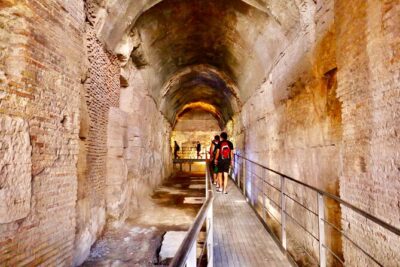
Expert Guided Tour of Colosseum Arena OR Underground, and Forum
Read our review →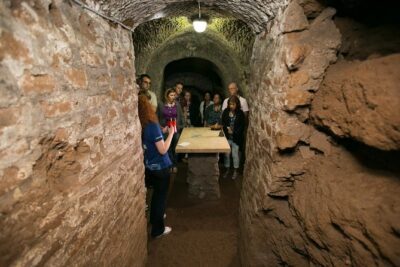
The Original Roman Crypts and Catacombs Tour with Transfers
Read our review →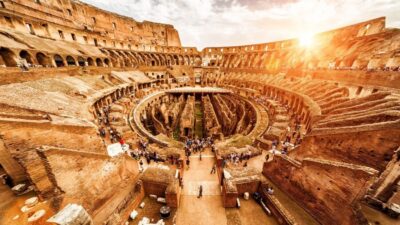
Rome: Colosseum Underground Small Group Guided Tour
Read our review →
Rome: St. Peter’s Basilica, Dome Climb, and Underground Tour
Read our review →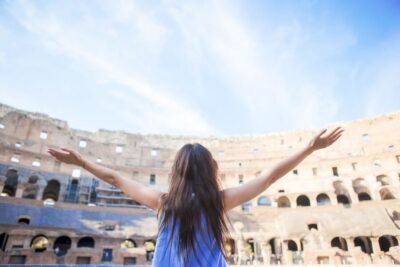
Rome: Colosseum Underground, Arena & Forum Tour
Read our review →
Rome: Catacombs of St. Callixtus Entry Ticket & Guided Tour
Read our review →Browse the lists this tour appears in