REVIEW · ROME
Rome: Catacombs of Priscilla Entry Ticket & Guided Tour
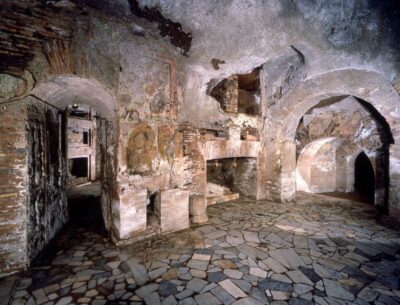
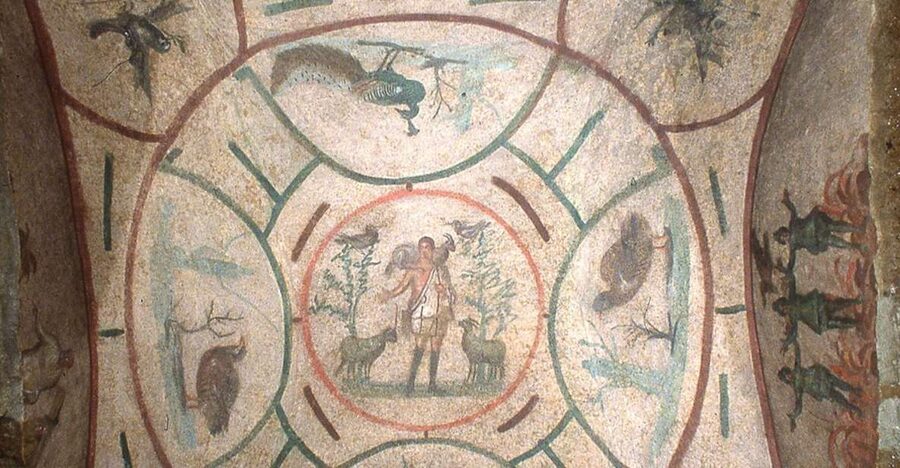
The most striking part of the Catacombs of Priscilla is not a grand monument, but the quiet network of burial passages beneath Via Salaria. Christians began using these old underground galleries in the early third century, leaving behind tombs, inscriptions, and some of the oldest Christian paintings in Rome. Ancient frescoes include scenes dated as early as 240 to 280 AD.
I like the tour’s small size, capped at 10 people, because narrow passages are much easier to manage when you are not packed into a large crowd. I also like the guides’ clear sense of purpose, especially guides such as Sister Lydia, Alexandra, and Clara, who explain both the archaeology and the faith behind the site. The main drawback is its short 45-minute duration. It gives you a strong introduction, but anyone hoping to explore every corner will want more time.
Key Points to Know Before You Go
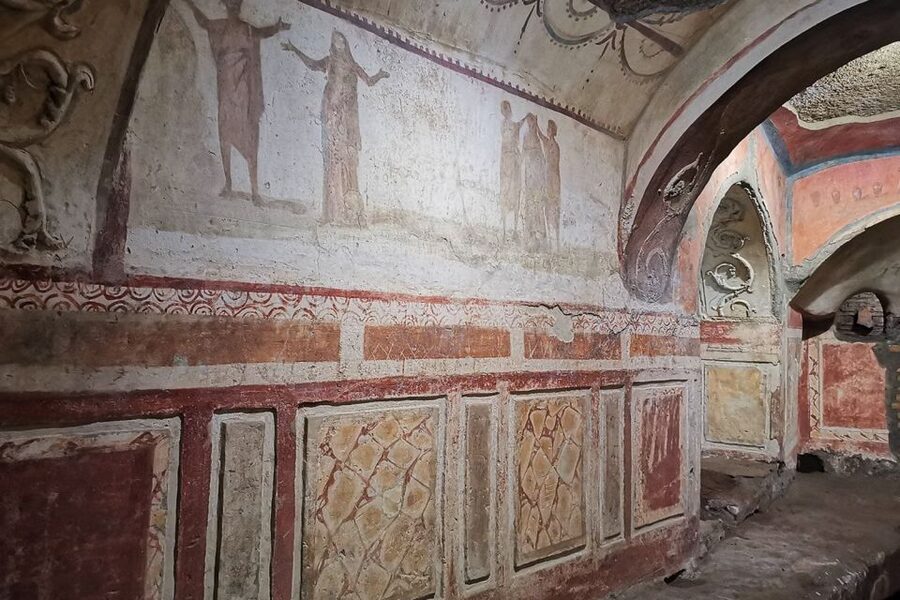
- See early Christian art: The catacombs contain remarkably old frescoes, including images associated with the Virgin Mary and Child.
- Walk through two underground levels: The site began as an abandoned sand quarry and later became a Christian burial ground.
- Expect a small group: Tours are limited to 10 participants, helpful in tight galleries.
- Allow extra travel time: The catacombs are on Via Salaria, away from the main ancient-center sights.
- Plan for a quiet, serious visit: This is a burial site and archaeological setting, not a theatrical attraction.
- Leave cameras and strollers behind: Photography is not allowed inside, and baby strollers cannot be used.
Why the Catacombs of Priscilla Feel Different from Rome’s Big Sights
Rome can fill a day with famous places: the Colosseum, Trevi Fountain, Pantheon, and Vatican Museums. Priscilla offers a different kind of history. Here, the important objects are underground, partly hidden, and tied to the private funeral life of Rome’s early Christian community.
The site is spread over two floors. Its name probably comes from Priscilla, a woman connected with the Acili senatorial family. Her name appears in an inscription in the hypogeum of the Acili, an underground burial area on the first floor.
The catacomb did not begin as a Christian cemetery. The underground space was first an arenarium, likely an area where sand was extracted. After it was abandoned, Christians began adapting its irregular galleries for burial around the start of the third century.
That origin helps explain the site’s shape. You are not walking through a carefully planned palace or a single grand tomb. You follow passages cut into the earth, with burial niches opening from the walls. Around 20 larger niche tombs were built, along with hundreds of smaller wall niches.
I find that setting more revealing than a polished monument. It shows how a community made use of an existing underground space and gradually turned it into a place for burial and remembrance.
More Catacombs and Underground City Tours in Italy
- Rome: Capuchin Crypts and Catacombs Tour with Transfers
★ 4.6 · 6,456 reviews - The Original Roman Crypts and Catacombs Tour with Transfers
★ 4.5 · 4,896 reviews - Rome: Catacombs of St. Callixtus Entry Ticket & Guided Tour
★ 4.6 · 3,037 reviews
What You See During the 45-Minute Tour
The visit begins at the catacomb ticket office on Via Salaria. You should arrive at least 10 minutes before your scheduled time and show your reservation there. The activity includes admission and a guided tour, but not transport to the site.
Once underground, your guide leads the group through the galleries and explains how the spaces were used. The passages can be narrow and irregular, so a small group matters. One guide may need to pause so everyone can see a painting or inscription, and a group of 10 gives you a fair chance to hear and look without being pushed along.
The first floor contains the earliest major galleries. Christians carved burial niches into the walls and created larger tombs for important members of the community. The guide helps you read the space, since an unaccompanied walk through repeated corridors could otherwise feel confusing.
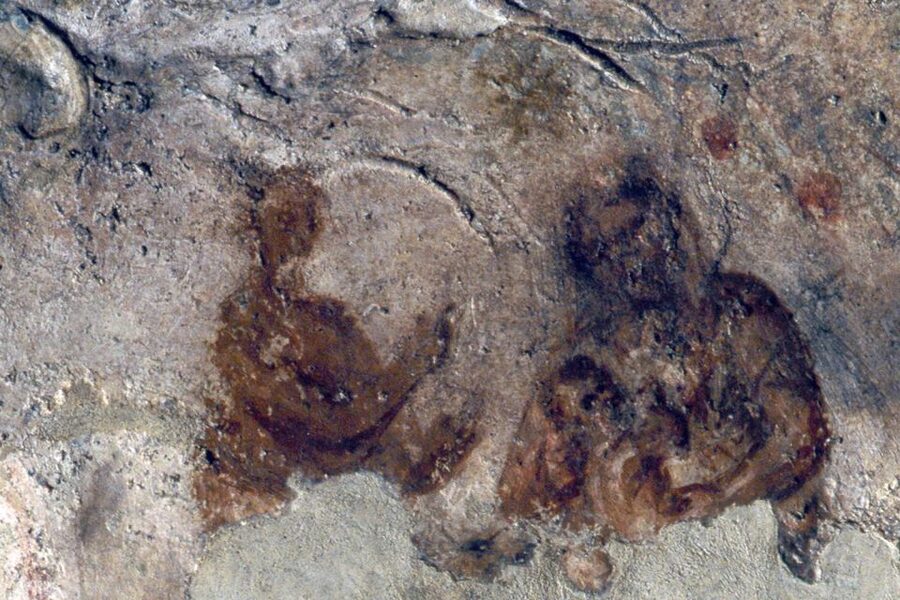
The tour then brings the art and inscriptions into focus. The paintings are valuable not simply because they are old, but because they show how early Christians expressed belief through images. You may see symbols, biblical scenes, and figures connected to Christian worship and burial customs.
One especially important feature is the image linked with the Virgin Mary and Child. Several visitors considered this one of the highlights, and the site is often associated with what has been described as the earliest known image of the Virgin Mary. You cannot photograph it, but postcard prints are available at the site, according to one visitor account.
The exact amount of time spent at each point depends on the guide and the group. Some tours finish close to 45 minutes, while especially detailed explanations can extend beyond that. That extra time is welcome if you are interested in art and archaeology, though you should not plan the rest of your day too tightly.
The Frescoes and Why They Matter
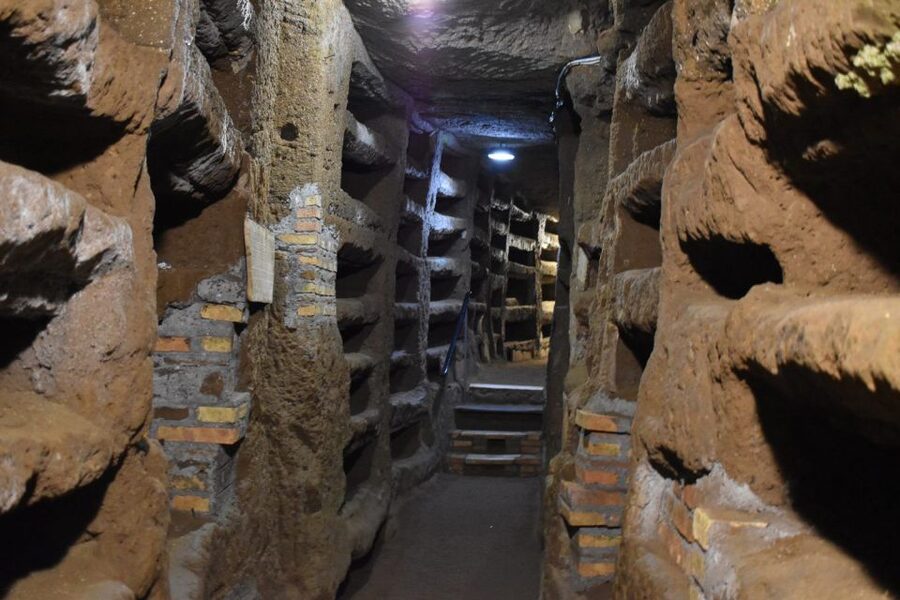
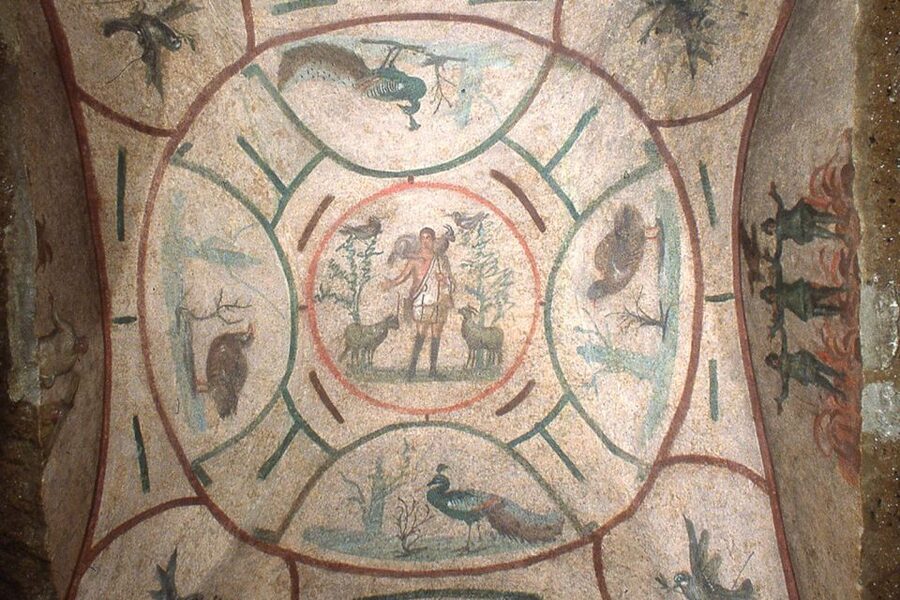
The paintings are the strongest reason to choose Priscilla over a generic underground walk. Some art is dated to roughly 240 to 280 AD, making it far older than most sights you will see during a standard Rome itinerary.
The frescoes are not displayed like paintings in a modern gallery. They remain in their original underground setting, surrounded by rough walls and burial spaces. That gives them a direct connection to the people who commissioned and viewed them, though it also means the art may be harder to see than a bright museum display.
Your guide provides the context that makes the paintings useful. You learn how early Christian communities marked graves, remembered the dead, and used familiar religious images in a world where Christianity was still developing its public identity.
The guides are one of the tour’s biggest strengths. Sister Lydia is repeatedly singled out for explaining the site with kindness, humor, and a strong grasp of both faith and archaeology. Alexandra and Clara are also mentioned for clear explanations and patient answers. The guide’s personality can shape the visit, particularly because the tour is short and much of the meaning comes through spoken interpretation.
One small concern is language clarity. Most English-language feedback is highly positive, but one person found the guide’s English less polished and wished the signs near the catacomb were better. If you need very precise historical wording, do not hesitate to ask questions during the visit.
The Greek Chapel and the Acili Hypogeum
Near the main galleries is a cryptoporticus with the Greek Chapel. This underground area was connected to the catacomb and appears to have begun as a noble family burial site.
The Greek Chapel is important because it shows that Priscilla was not only a simple network of common burial niches. Different parts of the site served different groups and purposes, and the underground complex changed over time.
The hypogeum of the Acili adds another layer. It was originally a water cistern, later used as an underground burial area. Inscriptions connected with the Acili family were found there and are now exhibited.
These details may sound technical, but they help you see the catacombs as a changing place rather than a single-purpose cemetery. The galleries were adapted, connected, and reused. Your guide’s job is to tie those changes together so the site does not become a blur of dark corridors.
More Catacombs and Underground City Tours in Rome
- Rome: Guided Roman Catacombs Tour with Transfers
★ 4.6 · 1,830 reviews - Rome: Catacombs Guided Tour with Transfer
★ 4.2 · 1,808 reviews - Rome EBike Tour: Appian Way, Catacombs & Roman Aqueducts
★ 5.0 · 1,766 reviews - Rome: Catacombs and Capuchin Crypt Guided Tour with Transfer
★ 4.6 · 1,606 reviews
Martyrs, Popes, and the Meaning of Priscilla
Priscilla is also connected with several early Christian martyrs. Among those buried here were the brothers Felice and Filippo, who were martyred, probably during the reign of Diocletian. Their mother, Saint Felicita, and their brothers Alessandro, Marziale, Vitale, Silano, and Gennaro are also associated with the site.
Several popes were buried at Priscilla as well, including Marcellino, Marcello, Silvestro, Liberius, Siricius, Celestine, and Vigilius. These names place the catacomb within the early history of Christian Rome, when burial sites were important places of memory and devotion.
The tour does not turn this material into a dramatic performance. That is a good thing. Priscilla works best when you take in the quiet and allow the guide to explain why these people mattered to the community.
Some tombs are now empty, and the remains were moved. That is worth knowing before you arrive. You are seeing the burial chambers and the setting, not an underground collection of untouched bodies.
The Museum and Area Above Ground
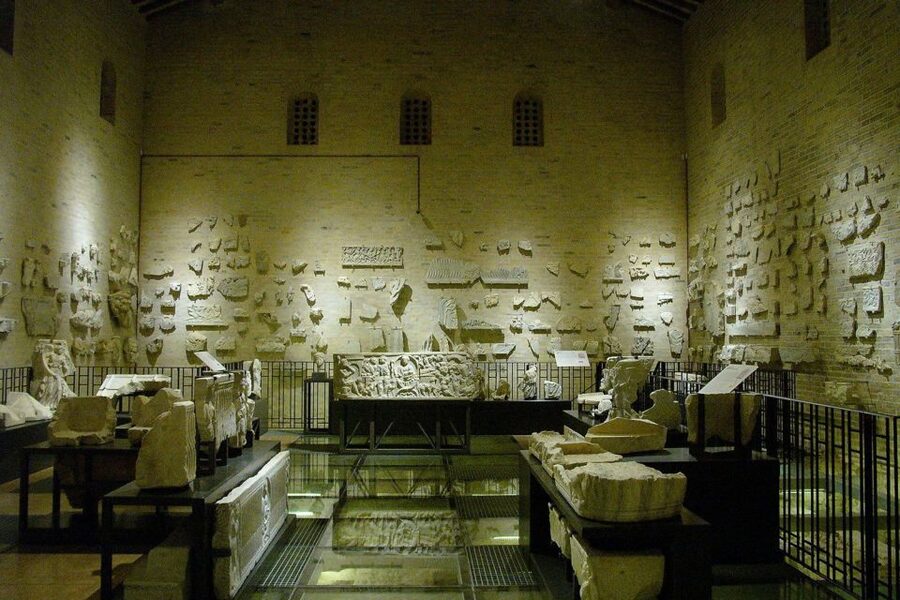
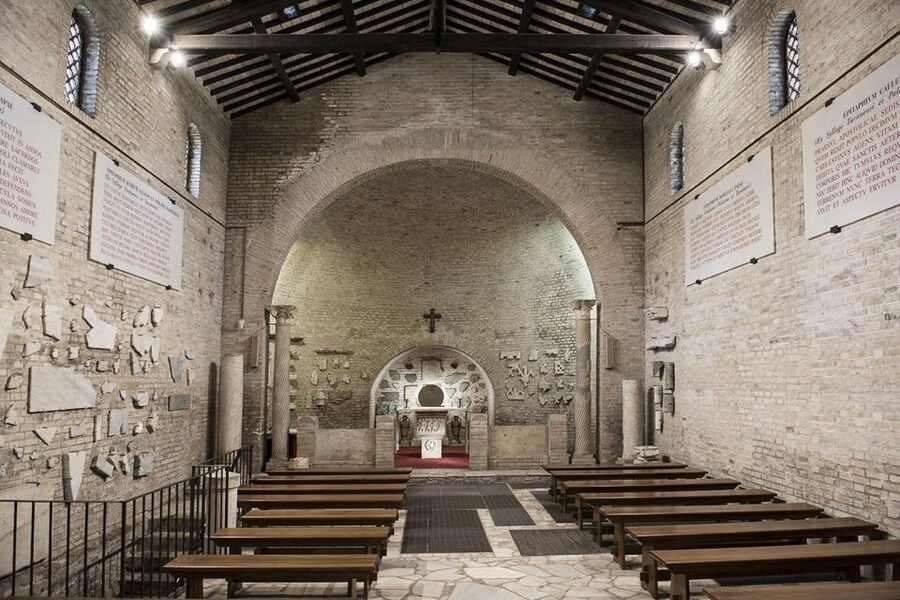
Near the basilica connected with Saint Felice and Saint Filippo is a museum containing hundreds of sarcophagus fragments found during excavations in the area. The information provided for this visit does not indicate how much time is included for the museum, so treat it as an additional feature rather than the core of the 45-minute guided walk.
The basilica itself was built by Pope Saint Silvester in the area associated with the tomb of Felice and Filippo. Its connection with the catacomb gives you a useful above-ground link to the underground site.
The wider setting is part of the experience. Priscilla is not right beside the Colosseum or the Trevi Fountain. One visitor found the bus a cheap and timely way to reach the catacombs, but you should allow more time than you would for a sight in the historic center.
This location can be a plus. After the crowds and noise of central Rome, the catacombs offer a slower hour. It is also a practical choice during hot weather, since the underground passages are cool. Bring a light layer, especially in summer.
Is $16 a Fair Price?
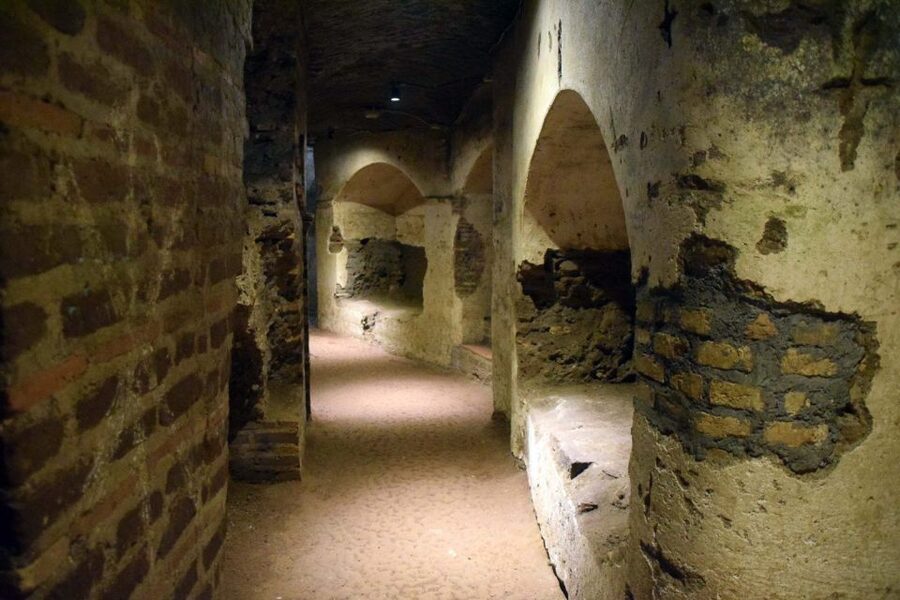
At $16 per person, the tour is reasonably priced if you want a guided introduction to early Christian Rome. Admission is included, and the group limit of 10 gives the experience a more personal feel than a large coach tour.
The value comes mainly from the guide. Without explanation, the galleries, niches, and faded paintings may be difficult to interpret. With a strong guide, the same spaces become a lesson in burial customs, ancient art, family status, and Christian belief.
The short duration keeps the price sensible, but it also limits the scope. You are paying for a focused visit, not an afternoon archaeological program. If you already plan to visit another Roman catacomb, Priscilla may feel similar in its underground layout, though its early Christian paintings and connections with famous popes give it a distinct identity.
Several people who had already visited San Sebastian still found Priscilla worthwhile. I would choose Priscilla if early Christian art interests you. I would be less certain if you want grand architecture or a long, self-guided exploration.
Practical Details That Affect Your Visit
The tour lasts 45 minutes and is available with a live guide in English, Italian, or Spanish. Groups are limited to 10 people, although one visitor found a particular group somewhat large in the narrow spaces. The small-group limit is still one of the better features of the booking.
Go directly to the catacomb ticket office rather than expecting hotel collection or a central meeting point. Show your reservation at least 10 minutes before the scheduled start.
The site is not suitable for people with mobility impairments. Baby strollers are not allowed, and the underground passages may be difficult for anyone who needs wide, level walking areas.
Photography is prohibited inside. That may disappoint you, especially when you see the old frescoes, but it also keeps the visit quieter and avoids the constant stop and start of camera use. You can buy postcard reproductions of some artwork.
The cancellation policy allows a full refund if you cancel at least 24 hours in advance. Starting times vary, so check availability before building the catacomb visit into a busy sightseeing day.
Who Will Enjoy Priscilla Most?
I would recommend this tour to you if you like archaeology, early Christian art, Roman burial customs, or quieter sights away from the main circuit. Teenagers can enjoy it too, especially if they are interested in unusual places rather than another large museum. Families with older children may find the 45-minute length just right.
The tour also suits anyone who has already seen the Colosseum and Trevi Fountain and wants a different view of Rome. You will not get a grand visual spectacle. You will get old walls, tight passages, ancient images, and a guide who explains why they matter.
I would think twice if you dislike enclosed spaces, need step-free access, or mainly want dramatic architecture. The catacombs are intentionally restrained. Their power comes from age, purpose, and atmosphere rather than size.
Should You Book the Catacombs of Priscilla?
Book it if you want a compact and affordable look at the Christian communities of ancient Rome. The early frescoes, Greek Chapel, Acili inscriptions, and links to martyrs and popes give the visit real substance.
The best reason to go is the combination of setting and guide. A short walk underground becomes far more useful when someone points out the art, explains the burial niches, and connects the site to Roman religious life. Sister Lydia, Alexandra, and Clara are among the guides praised for bringing that material to life.
Skip it if your schedule is packed with Rome’s major monuments or if you expect a large, dramatic attraction. Priscilla is quieter and more specialized. For $16 and 45 minutes, though, it is a strong choice for curious visitors who want to see a less polished, more intimate side of Rome.
FAQ
How long does the Catacombs of Priscilla tour last?
The guided tour lasts 45 minutes. Some visits may run longer when the guide spends extra time answering questions.
How much does the tour cost?
The listed price is $16 per person.
What does the ticket include?
The price includes entrance to the Catacombs of Priscilla and a guided tour.
Is transportation included?
No. Hotel pickup, hotel drop-off, and transportation are not included.
Where is the Catacombs of Priscilla?
The catacomb is located on Via Salaria in the Lazio region of Italy.
How early should I arrive?
Go directly to the catacomb ticket office and show your reservation at least 10 minutes before the scheduled tour.
What languages are available?
Live guided tours are available in Italian, English, and Spanish.
How large is the tour group?
The group is limited to 10 participants.
Can I take photographs inside?
No. Photography is not allowed inside the catacombs.
Is the tour suitable for people with mobility impairments or baby strollers?
The experience is not suitable for people with mobility impairments, and baby strollers are not allowed.
Can I cancel for a refund?
You can cancel up to 24 hours in advance for a full refund.
Just added around Rome
- St. Peter’s Basilica Full Guided Tour with Vatican Grottoes★ 4.6 · 286 reviews
- Rome: St Peter’s Basilica Express Tour & Grottoes★ 4.3 · 126 reviews
- St. Peter’s Basilica and Vatican Grottoes Tour★ 4.9 · 120 reviews
- Rome: Appian Way, Aqueducts, & Catacombs E-Bike Guided Tour★ 4.9 · 54 reviews
- Rome: Underground Trastevere Guided Walking Tour★ 4.8 · 87 reviews
- Rome: Tour of St. Clement’s Basilica Underground Temples★ 4.8 · 242 reviews
- Rome underground hidden temples, ruins, and secret basilicas★ 3.7 · 21 reviews
- Rome: St. Peter’s Basilica Tour with Vatican Grottoes★ 4.5 · 314 reviews
Rome Cave Tours, compared.
Colosseum: Underground and Ancient Rome Tour
Read our review →
Rome: Capuchin Crypts and Catacombs Tour with Transfers
Read our review →
Expert Guided Tour of Colosseum Arena OR Underground, and Forum
Read our review →
The Original Roman Crypts and Catacombs Tour with Transfers
Read our review →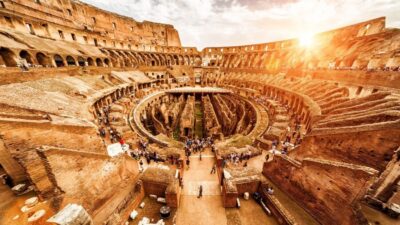
Rome: Colosseum Underground Small Group Guided Tour
Read our review →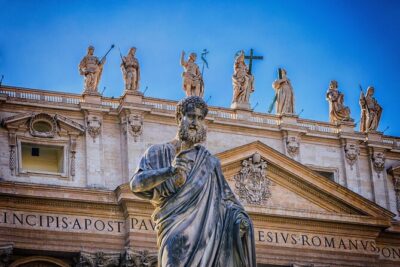
Rome: St. Peter’s Basilica, Dome Climb, and Underground Tour
Read our review →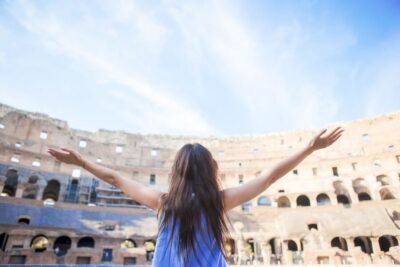
Rome: Colosseum Underground, Arena & Forum Tour
Read our review →