
REVIEW · AUSTRALIA
Augusta: Jewel Cave Fully-Guided Tour
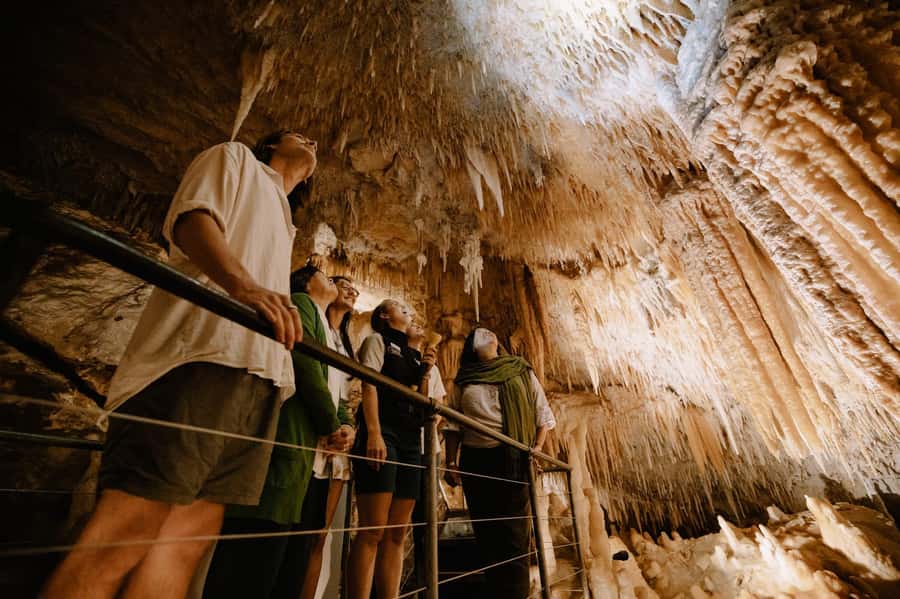
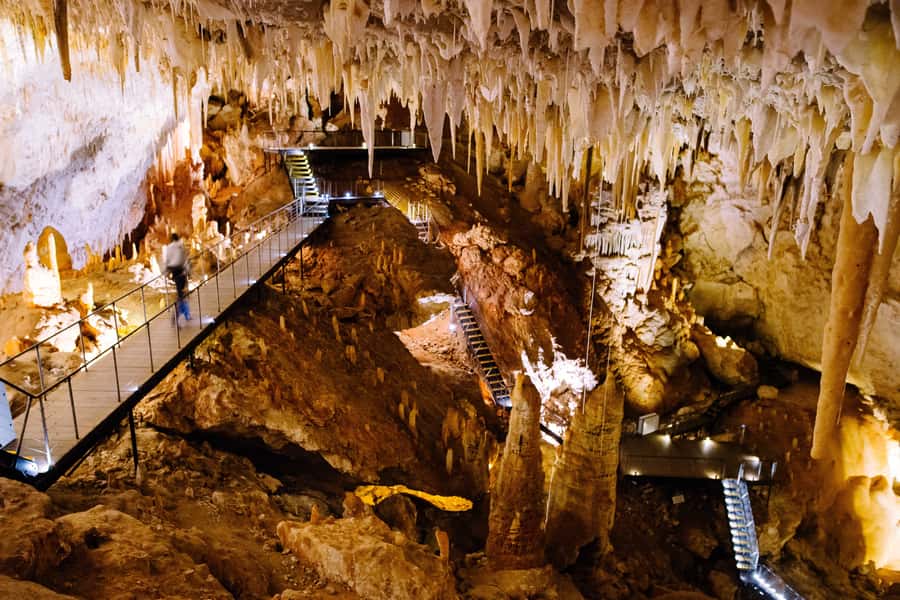
Jewel Cave’s first chamber is the star of the show: a huge underground room filled with crystal formations and one of Australia’s longest straw stalactites in a tourist cave. The scale is hard to judge from photographs, so your first sight of it should be a real wow moment.
I like the clear one-hour format and the way a live guide turns fossils, formations, and cave history into a story rather than a silent walk. I also like the optional karri forest walk after the tour, which leads past the cave’s small natural entrance.
The catch is simple: there are a lot of stairs. The descent is manageable for many people, but the climb back out can be tiring, and the one-hour schedule may feel brisk if you want to pause at every formation.
Key points at a glance
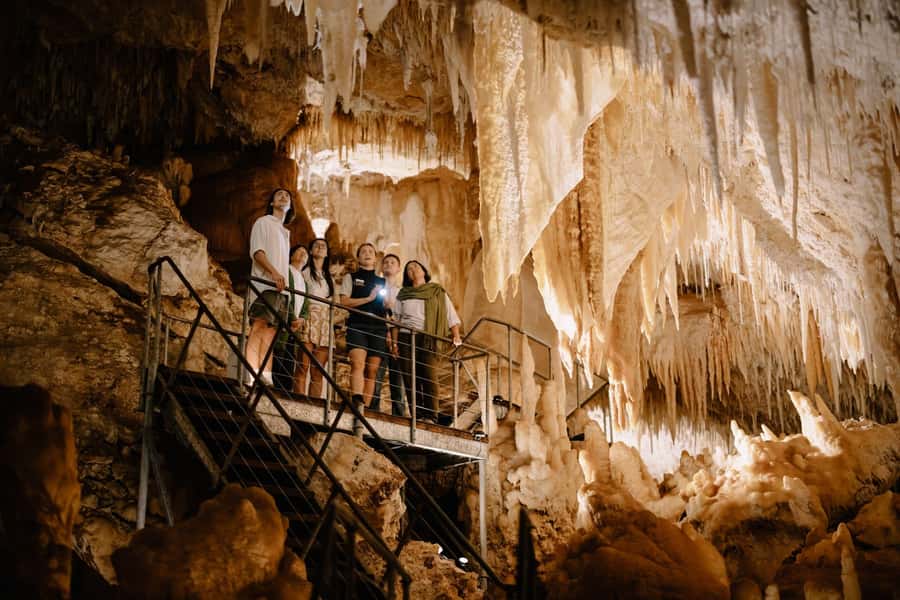
- Three enormous chambers: The tour takes you through Jewel Cave, Western Australia’s largest cave open to the public.
- A remarkable straw stalactite: The first chamber contains one of the longest examples found in an Australian tourist cave.
- Fossils with a strange story: Your guide explains how Tasmanian tiger fossils came to rest in the darkness.
- Strong guide-led experience: Guides such as Josh, Emma, Ava, Tom, and Sally have been praised for clear explanations, humor, and enthusiasm.
- Stairs are part of the deal: Several people found the return climb challenging, so comfortable mobility matters.
- Extra forest walk: After leaving the cave, you can take a self-guided walk through karri trees and see the natural entrance.
Why Jewel Cave makes such a strong first impression
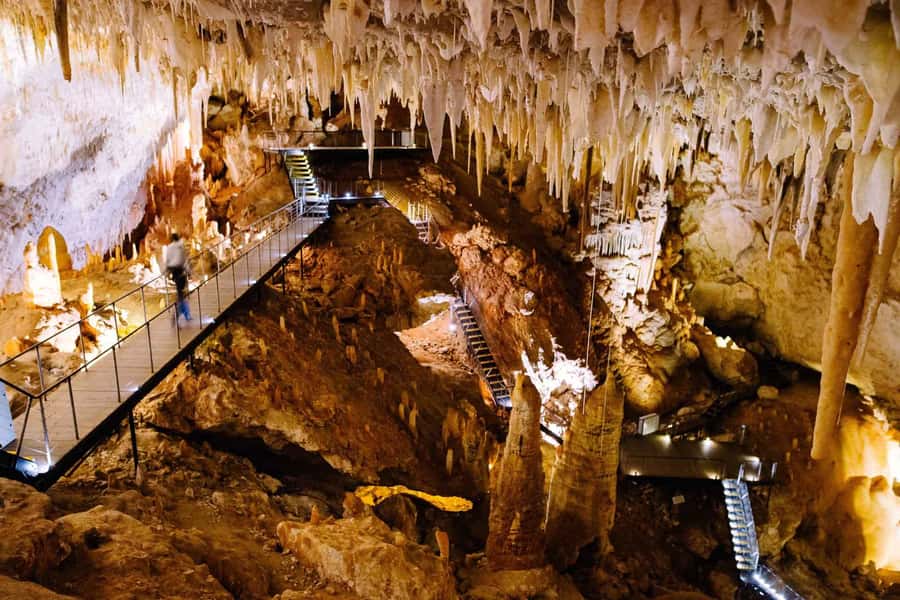
Jewel Cave is not built around a single small chamber with a few pretty rocks. The first chamber is described as massive, and that sense of size is central to the experience. You descend into a place that feels far larger than the forest opening above suggests.
I like this contrast. From the surface, the natural entrance is only a small vertical shaft in the forest floor. Underground, that modest opening gives way to towering crystal formations and broad chambers that have taken thousands of years to form.
The cave’s size also makes the tour feel different from a quick stop at a rock shelter or short cavern. You are not simply looking at one formation, taking a photo, and leaving. The route links three large chambers, giving your guide room to explain how the cave formed and why particular formations matter.
The one-hour length works well for most day plans. It is long enough to feel like a proper underground visit, but short enough to combine with other stops around Augusta and the Margaret River region. You should still allow extra time for arriving, meeting your guide, using the cafe, and taking the optional forest walk afterward.
More Guided Tours in the world:
- Naples: Naples Underground Entry Ticket and Guided Tour
★ 4.4 · 21,781 reviews - Naples: Catacombs of San Gennaro Entry Ticket & Guided Tour
★ 4.6 · 7,941 reviews - Krakow: Wieliczka Salt Mine Fast-Track Ticket & Guided Tour
★ 4.5 · 5,872 reviews
Meeting your guide at the reception desk
You begin inside at the Jewel Cave reception desk. The tour is conducted in English by a live guide, so the quality of the commentary matters. That is where this experience earns much of its value.
Guides named in the feedback include Josh, Emma, Ava, Tom, and Sally. Their styles may differ, but the consistent pattern is clear: expect explanations delivered with energy, humor, and a willingness to answer questions. Ava was singled out for her natural presentation, while Emma was praised for making the visit feel particularly engaging. Tom was also credited with making the tour enjoyable.
A guided cave visit is much better than wandering through without context. Crystal formations can blur together when you see them one after another. A good guide gives you something to look for, explains the odd names and shapes, and helps you understand that these features are still changing, even if that change takes thousands of years.
You should not expect transportation with the $17 admission. Make your own way to Jewel Cave, then check in at reception before the tour starts. Food and drinks are also not part of the ticket, though the Jewel Cave Cafe offers snacks and light refreshments.
Descending into three massive chambers
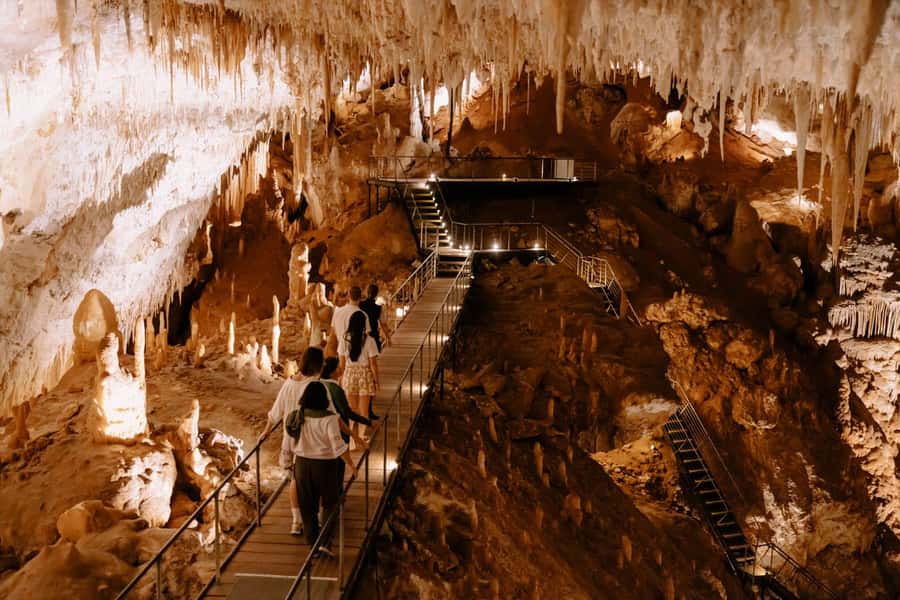
The route takes you downward into three chambers. The supplied details do not give an exact stair count, and that is probably for the best because the main practical point is simply that stairs are a major part of the visit.
Several people found the climb back up difficult. One person described the return as nearly ending them, while another recommended the tour mainly for able-bodied visitors because the stairs can be challenging. This is not a flat museum visit. If you have limited mobility or tire easily on stairs, consider that carefully before booking.
The descent itself is part of the drama. You leave the karri forest and move below ground, with the cave gradually taking over your attention. Platforms and stairways allow you to view the chambers, but you cannot stop everywhere for as long as you might like.
That timing issue is worth noting. One review praised the tour but found the one-hour allocation a little tight, especially because it was difficult to stop on the stairs and take in every view. Another found the tour slightly fast. If photography is important to you, take your main shots when the guide pauses rather than expecting to stop whenever you wish.
The first chamber and its long straw stalactite
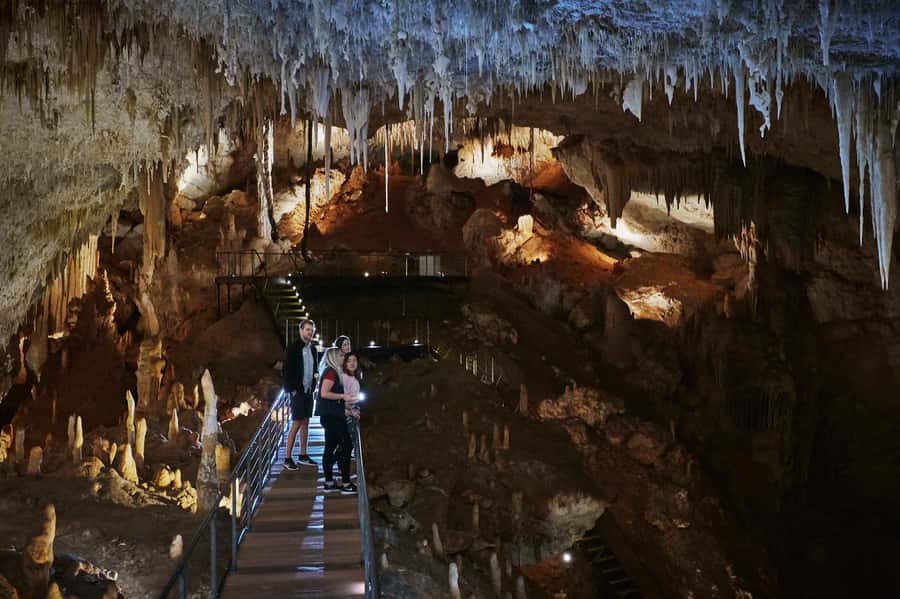
The first chamber is the main visual event. Its scale is the detail most likely to stay with you after the tour, especially if this is your first large cave.
The chamber also contains one of the longest straw stalactites found in any Australian tourist cave. A straw stalactite is a thin, hollow formation created as mineral-rich water leaves deposits along the inside edge of a small tube. It is delicate, slow-growing, and easy to damage, which makes it worth viewing from the designated route rather than trying to get close.
This is a good example of why the guide matters. Without an explanation, you may see a thin mineral feature hanging from the ceiling and move on. With context, you begin to notice its fragility, shape, and age.
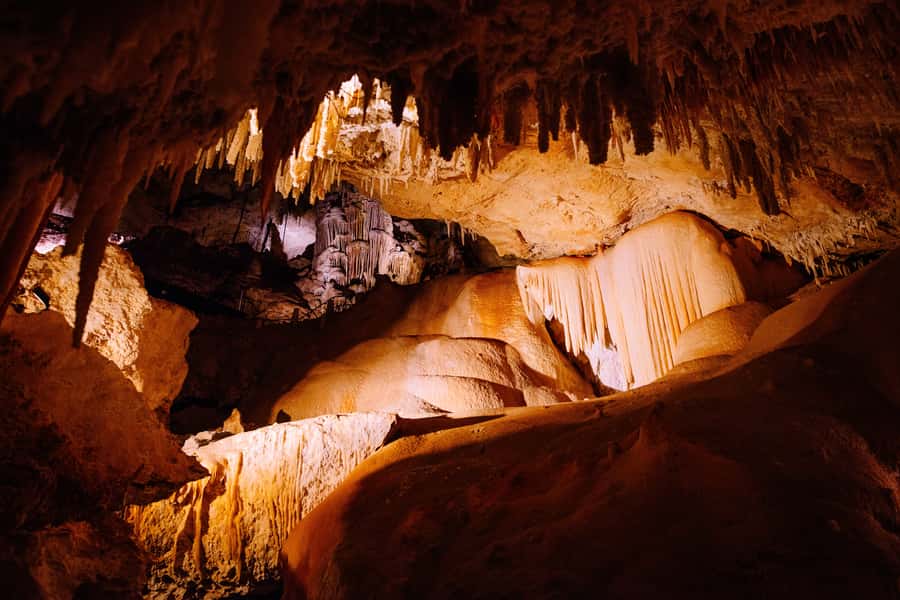
The crystal formations throughout the cave are another major draw. People who enjoy geology, natural features, or large-scale underground spaces should get plenty from the visit. You can take photos, but the cave’s size will likely come through better in memory than on a phone screen.
A few more cave trips around the world worth a look
- Chichen Itza, Cenote, and Valladolid Tour
★ 5.0 · 24,293 reviews - Chichen Itza, Cenote & Valladolid Tour with Tequila and Lunch
★ 4.5 · 15,789 reviews - Colosseum: Underground and Ancient Rome Tour
★ 4.7 · 12,691 reviews - Edinburgh: Underground Vaults Tour
★ 4.6 · 11,758 reviews
Fossils and the cave’s darker story
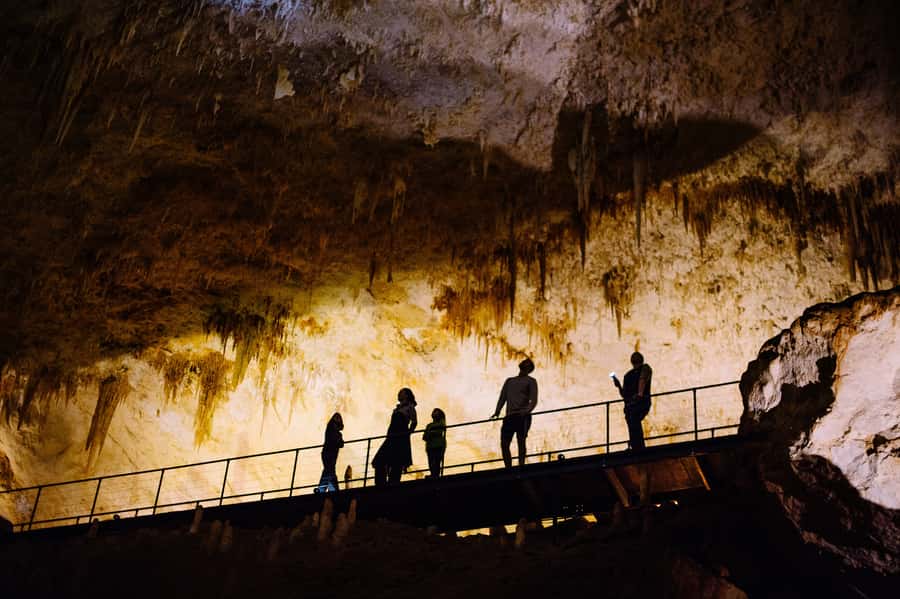
Jewel Cave is not only about beauty. Your guide also tells the story of fossils linked to the Tasmanian tiger, or thylacine. These animals fell into the cave thousands of years ago and died in the darkness.
That detail adds a strange, almost haunting layer to the visit. The cave was not just a place where water slowly made crystals. It was also a trap for animals moving through the forest above. Their remains help connect the underground space with the wildlife and history of the region.
I like this part because it gives the tour a stronger sense of place. You are not hearing a collection of disconnected geology facts. You are learning how the cave relates to the world above it, from the karri forest to long-gone animals.
The story is also suitable for visitors who might not normally choose a cave tour for the rock formations alone. Families, older children, and anyone interested in natural history can find a clear reason to pay attention beyond the visual spectacle.
Children under 16 must be accompanied by an adult, and unaccompanied minors are not allowed. Selfie sticks and tripods are also prohibited, which makes sense in a confined cave with stairways and other people moving through the route.
Making time for photos without holding up the group
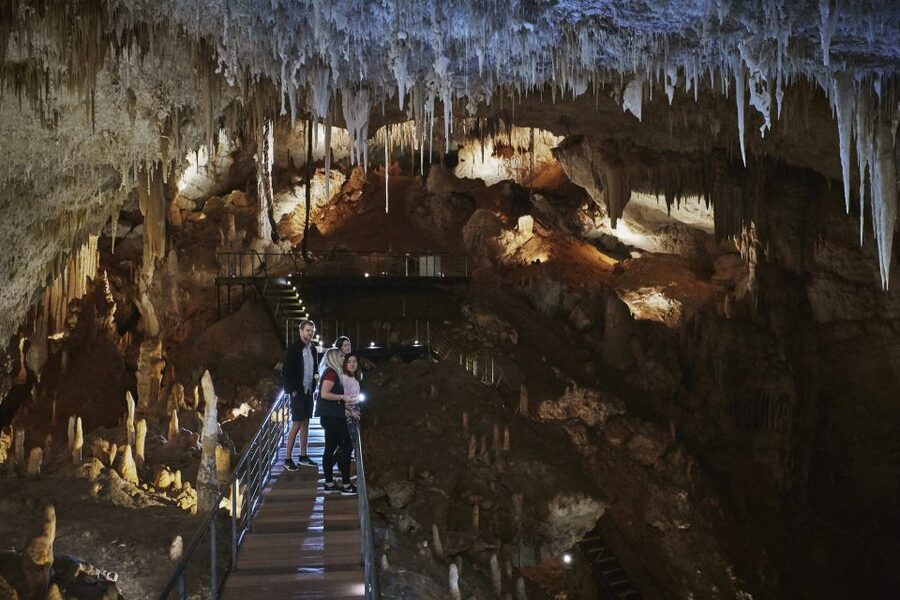
You are allowed time to take photos, and one person found the pace comfortable enough to photograph the cave without feeling rushed. Still, the tour has to keep moving, and another person found it hard to see everything between the platforms.
I would treat photography as a bonus rather than the main purpose. Use the pauses provided by the guide, keep your equipment simple, and avoid bringing a tripod. A phone or small camera is more practical than a large setup.
Flash photography is not addressed in the supplied information, so I would follow the guide’s instructions. In any case, the most useful photos will likely be the ones that show the size of the chambers, not close-ups of every small formation.
The restriction on selfie sticks is a minor inconvenience for some people, but it helps keep the walk safer and less cluttered. On stairs, a free hand can matter more than a wide-angle selfie.
The karri forest walk after the cave
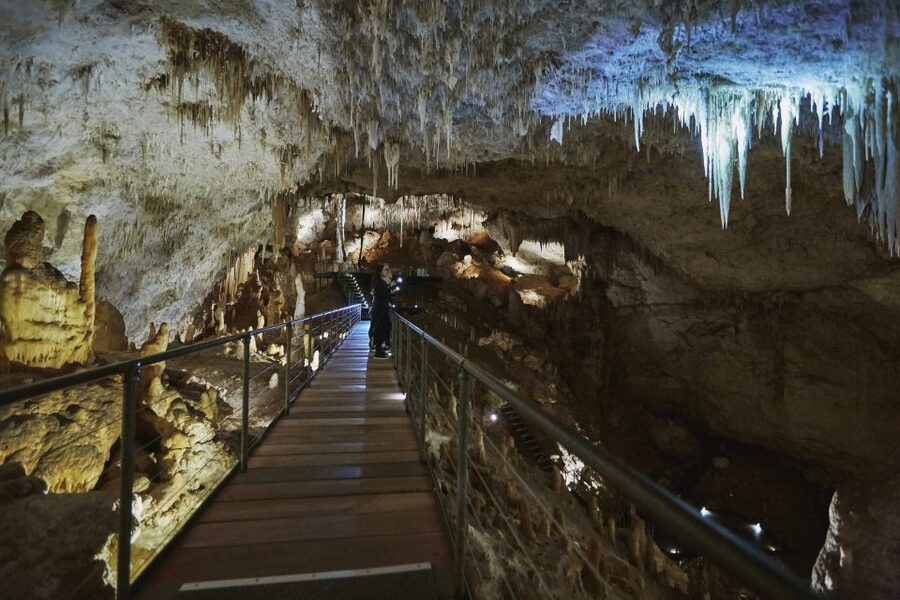
After the guided tour, you have the option to take a self-guided walk through the surrounding karri forest. This is an easy way to extend the visit without paying for another activity.
The walk passes the cave’s natural entrance, a small vertical shaft in the forest floor. Seeing that opening after visiting the large chambers below creates a useful sense of scale. It shows how a small feature at ground level can lead to a far bigger world underneath.
I would not rush away after the guided tour if you have time. The forest walk gives you a chance to reset after the stairs and see the entrance in its natural setting. It also adds variety to the visit: underground formations first, tall karri trees afterward.
The walk is self-guided, so do not expect the same commentary you receive below ground. Its value is in the setting and the chance to view the cave entrance from above.
Is $17 good value for one hour?
At $17 per person, this is a reasonably priced paid attraction, especially for a guided visit through three large chambers. You are paying not only to enter the cave but also for a live explanation of the formations, fossils, and underground setting.
The value is strongest if you appreciate interpretation. A self-guided route might show you the same shapes, but it would not give you the story of the Tasmanian tiger fossils or explain why the long straw stalactite matters.
The price also works well for a short itinerary. You do not need to give up an entire day, and the optional forest walk can add more time without another ticket. The cafe provides a convenient place for a snack or light refreshment, though those costs are separate.
One booking issue is worth checking before you pay: a senior discount was available directly at both tours but was not available through one online booking route. If you qualify for a concession, compare the available prices before finalizing your reservation.
Free cancellation is available up to 24 hours before the tour for a full refund. You can also reserve now and pay later, which may help if your Augusta plans are still shifting. Starting times vary, so check availability for the date you want.
Who will enjoy Jewel Cave most?
I would recommend this tour to anyone who wants a substantial cave experience without committing to a long expedition. It suits couples, families with supervised children, and visitors exploring the Margaret River region who want something different from wineries, beaches, and forest roads.
It is especially good for:
- People who enjoy large natural formations and geology
- Families with children who can manage stairs
- Visitors interested in fossils and extinct animals
- Photographers who are happy to work within a guided schedule
- Anyone looking for a one-hour activity with an optional extra walk
I would think twice if stairs are difficult for you, if you need frequent rest breaks, or if you want complete freedom to stop and photograph every detail. The cave may be beautiful, but the route is not designed as a slow, unstructured wander.
The tour is also less suitable for someone expecting transport, food, or a full-day outing. You need to arrange your own way there, and the ticket covers the guided cave experience only.
Practical tips for a better visit
Arrive ready for stairs. Comfortable shoes and a reasonable level of fitness will make the experience more pleasant, particularly on the climb back toward the surface.
Keep your camera kit light. Tripods and selfie sticks are not allowed, and bulky equipment will only make the platforms and stairs less convenient.
Plan a little spare time around the one-hour tour. That gives you room to check in, visit the cafe, take the karri forest walk, and enjoy the natural entrance without watching the clock.
If you are visiting with children under 16, stay with them throughout the activity. An adult must accompany them.
Finally, listen for the stories as much as you look at the formations. The huge chambers provide the visual impact, but the fossil story and the explanation of the cave’s slow growth give the visit its lasting interest.
Should you book the Jewel Cave tour?
Yes, if you can manage the stairs and want to see one of Western Australia’s largest public caves with clear, lively guidance. The first chamber, long straw stalactite, crystal formations, and Tasmanian tiger fossils give the hour plenty of substance.
The tour is not perfect for people who need a slow pace or easy access. Some parts may feel brisk, and the climb out can be demanding. But at $17, it offers strong value for a memorable underground visit, with a forest walk and cafe available to round out the stop.
FAQ
How long does the Jewel Cave tour last?
The fully guided tour lasts one hour.
How much does the tour cost?
The listed price is $17 per person.
Where does the tour begin?
Meet your English-speaking guide inside at the Jewel Cave reception desk.
How many cave chambers will I see?
The tour visits three massive chambers.
Is Jewel Cave the largest public cave in Western Australia?
Yes. Jewel Cave is described as Western Australia’s largest cave open to the public.
Are there many stairs?
Yes. Stairs are a significant part of the route, including the climb back out of the cave.
Can children join the tour?
Yes, but children under 16 must be accompanied by an adult. Unaccompanied minors are not allowed.
Are food and drinks included?
No. Food and drinks are not included, but snacks and light refreshments are available at the Jewel Cave Cafe.
Can I cancel the booking?
You can cancel up to 24 hours in advance for a full refund. Reserve now and pay later is also available.
Just added around the world
- From Hanoi: Hoa Lu, Mua Cave and Tam Coc Full-Day Trip★ 4.6 · 164 reviews
- From Hanoi: Ninh Binh, Bai Dinh, Trang An and Mua Cave Trip★ 4.7 · 20 reviews
- Hanoi: Halong Bay Day Trip with Titop Island, Cave, & Kayak★ 4.7 · 528 reviews
- From Hanoi: Ninh Binh Bai Dinh or Hoa Lu, Trang An, Mua Cave★ 3.7 · 32 reviews
- From Hanoi: Halong Bay 1 Day Trip Visit Cave, Island, Kayak★ 4.7 · 20 reviews
- From Hanoi: Hoa Lu/Bai Dinh-Tam Coc/Trang An-Mua Cave Tours★ 4.5 · 189 reviews
- Hanoi: Halong Bay Cruise, Amazing Cave, Titov Island & Kayak★ 4.2 · 39 reviews
- From Granada: Skip-the-Line Nerja Cave and Frigiliana★ 4.9 · 22 reviews
Australia Cave Tours, compared.
Byron Bay: Glowworms, Waterfalls & Rainforest Experience
Read our review →
Capricorn Caves, Australia: 45-Minute Cathedral Cave Tour
Read our review →
Brisbane: Rainforests, Waterfalls and Glow Worm Cave Tour
Read our review →
Brisbane: Daytime Glow Worm Caves Hop-on Hop-off Bus Tour
Read our review →
From Cairns: Chillagoe Caves and Outback Full-Day Tour
Read our review →
Queensland: 90 Minute Capricorn Caves Explorer Tour
Read our review →
Capricorn Caves: 120 Minute Capricorn Adventurer Tour
Read our review →Browse the lists this tour appears in