
REVIEW · FARMS
Kampot: Pepper Farm Tours, Salt, Lake & Phnom Chhngok Temple
The best part of this Kampot outing is the mix: you move from salt fields and rice country to a seventh-century Hindu temple tucked inside a limestone cave, then finish with pepper tasting at La Plantation. It is a useful way to see the countryside beyond town without arranging several separate trips.
I like the way the tour combines real agriculture with scenic stops, especially the pepper tasting and the peaceful break at Secret Lake. I also like the guides’ personal touch. Nak, Micki, Ali, Ly, and several others are praised for clear English, local stories, patient pacing, and help with photos.
The main drawback is physical and seasonal. The cave requires about 200 concrete steps, uneven footing, and some crawling or careful walking inside a bat cave. Salt production stops in the wet season, and cave access may also be restricted then, so the tour is best for active visitors who can handle changing conditions.
What makes this half-day tour worthwhile
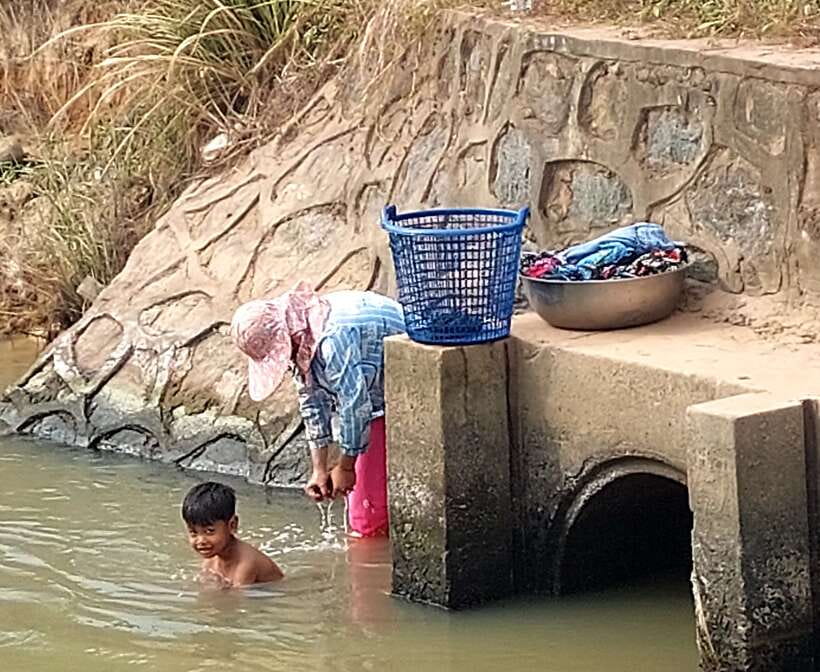
- A real look at Kampot’s countryside: Ride through Khmer villages, rice fields, vegetable farms, and rural roads between the main stops.
- A temple inside a limestone cave: Climb the stairs to Phnom Chhngok and explore a striking natural setting with an ancient Hindu shrine.
- Pepper tasting at La Plantation: Learn how Kampot pepper grows, is processed, and tastes in its different forms.
- Salt fields with a seasonal catch: See Cambodia’s major salt-producing area, but expect empty or inactive fields during the wet season.
- A quiet stop at Secret Lake: Relax beside Brateak Krola water dam with a soft drink included.
- Strong guiding at a sensible price: At $23 per person, the transport, entrances, drinks, guide, and several major sights make this good value for an active half-day.
Riding out from Kampot into the countryside
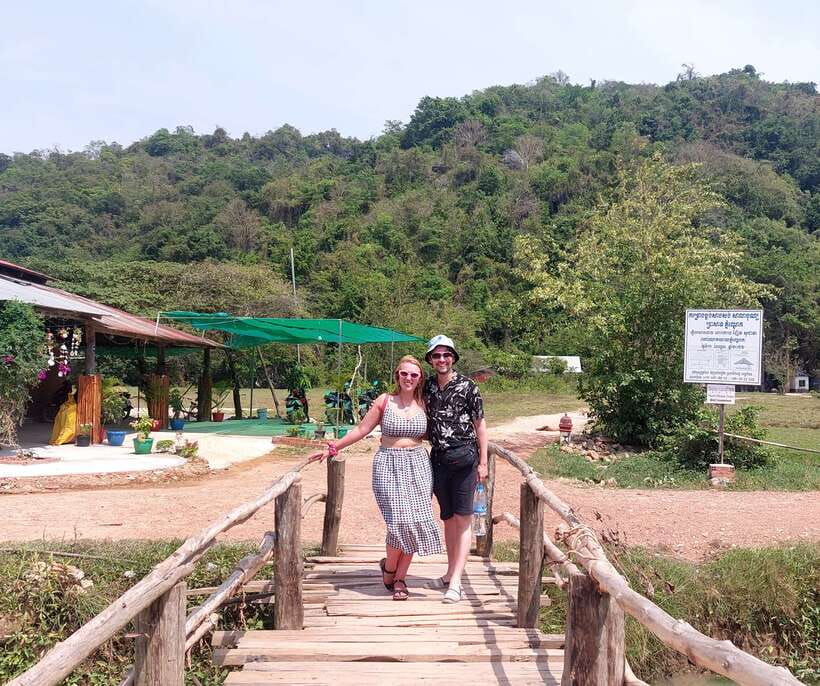
The tour lasts about 5.5 hours, with pickup in Kampot and return to town. If your hotel is within 3 kilometers of the city center, pickup and drop-off are included. Outside that zone, you can meet at the Kampot Tourist Information Center or request hotel pickup for an added fee starting at $2.
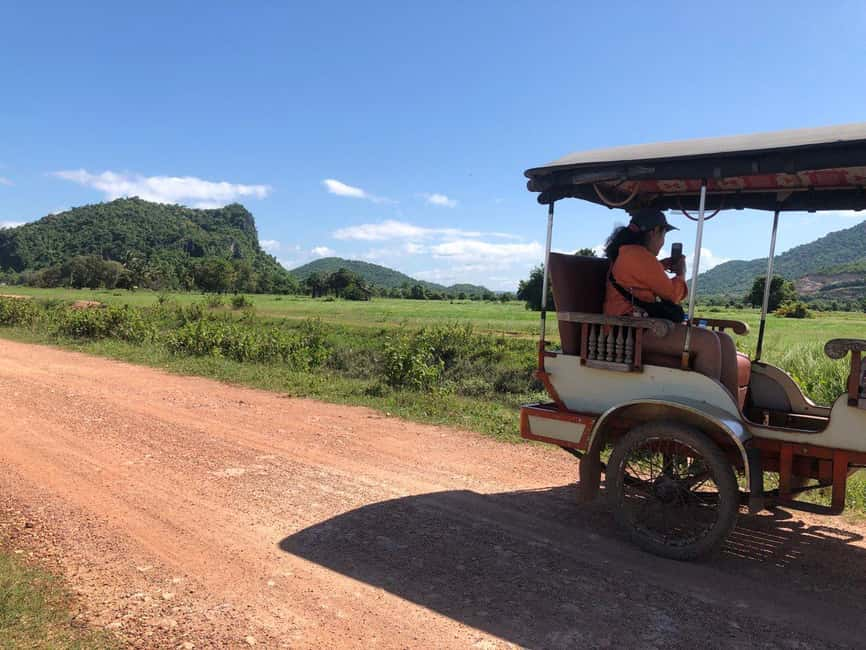
Your ride is a tuk-tuk, locally suited to these roads and far more open than a car. You get a better view of houses, palms, rice fields, gardens, and passing farm work. The tradeoff is exposure to sun, dust, heat, and rain. Bring sunscreen, and consider a light cover if the weather looks unsettled.
The first transfer is around 15 minutes, followed by a 30-minute ride to Phnom Chhngok after the salt stop. Later tuk-tuk rides take about 30 minutes to Secret Lake and 15 minutes to La Plantation. A final 45-minute transfer returns you to Kampot.
The guide is also the driver or works closely with the driver. Names frequently associated with the tour include Nak, Micki, Ali, Ly, Dak, Kary, Rany, Vandy, Chiet, and Pheary. The strongest part of their work is not simply pointing out stops. They explain rice, salt, pepper, Cambodian history, village life, and local plants, while leaving room for you to look around.
Communication before pickup matters. The driver or guide comes to the hotel lobby with the tour tickets, and you are asked to wait about 10 minutes before departure. Drivers wait no longer than 10 minutes, so keep your phone available and be ready at the stated time.
More Farm Visits in Cambodia:
- Kampot Countryside include Pepper farm, Salt field & Lake
★ 4.9 · 100 reviews - Kampot Pepper Farm Tour: Salt Fields, La Plantation & Cave
★ 4.8 · 18 reviews - Buggy Tour to Macao Beach and Water Cave with Organic Farm
★ 5.0 · 1,201 reviews
Salt Farm Coffee and Kampot’s salt country
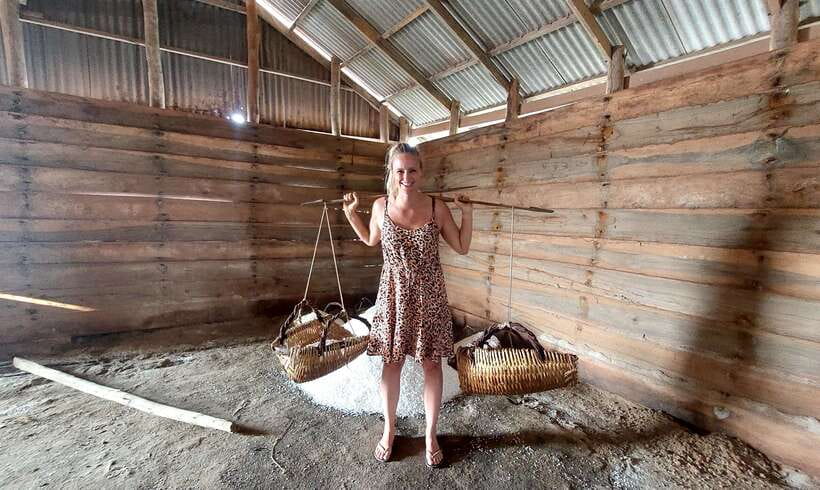
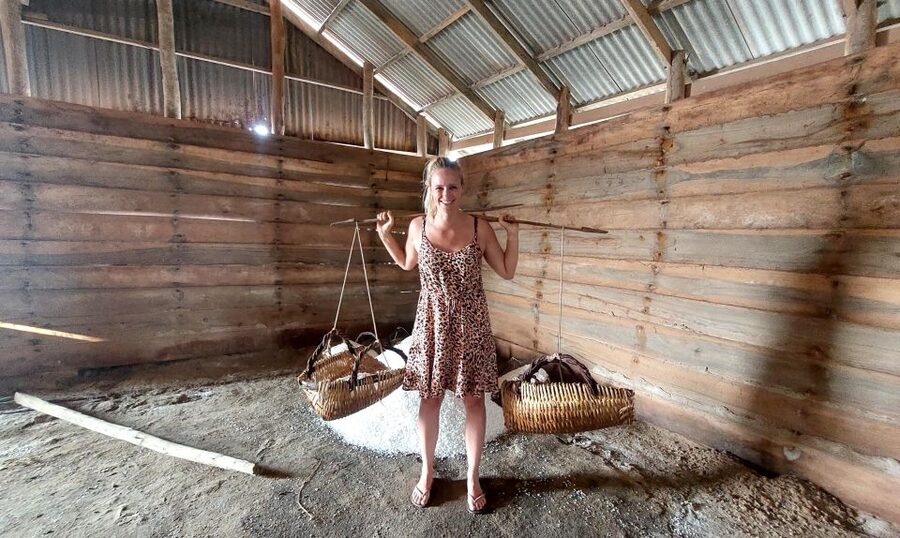
The salt stop is listed as Salt Farm Coffee, where you have around 30 minutes for a guided visit, photos, and a walk. The surrounding salt fields are among Cambodia’s biggest, and this is a good place to connect the countryside with everyday work rather than seeing only temples and viewpoints.
Salt production depends on dry weather. During the wet season, there may be no salt harvesting at all. You can still learn how the process works and hear about local agriculture, but do not expect rows of active salt pans every month of the year.
That seasonal point is important when you compare this tour with a standard sightseeing loop. If you visit in the dry season, the salt fields may be a strong visual stop. If you visit during heavy rains, they are more of an educational pause and photo break.
The tour gives you only about half an hour here, so this is not a long farm visit. I would treat it as an introduction to Kampot’s salt industry, not a full working demonstration. The short stop works well because the day has several other activities ahead.
Phnom Chhngok and the temple in the cave
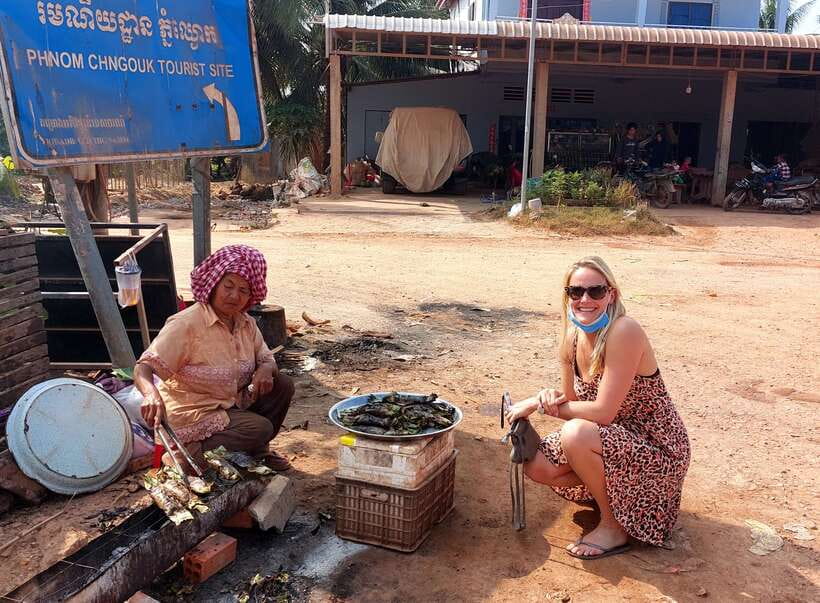
Phnom Chhngok is the most unusual stop. To reach the cave, you climb about 200 concrete steps. The climb is manageable for many active visitors, but it is still a real effort in hot weather, and there is no reason to rush it.
Inside, a limestone cave shelters a seventh-century Hindu temple. The setting does much of the work: rock formations, shadows, narrow passages, and the contrast between an old shrine and the natural cave around it. It is also the best stop for unusual photographs, although you should watch your footing rather than focus only on your camera.
The cave section is not a polished museum visit. Expect uneven ground and a more adventurous walk. Closed-toe shoes are important, and sandals with loose straps are a poor choice. The tour information also notes that entering the bat cave is not allowed during the wet season, so the exact cave experience depends on weather and safety conditions.
Your guide can make this stop much better. Nak, Micki, and other guides are praised for explaining the site, helping with photos, and guiding people carefully through the cave. A calm guide matters here, especially if you are unsure on steep steps or in darker sections.
Allow around 45 minutes for the visit. That is enough for the climb, temple, cave, and photos, but it is not a leisurely archaeological study. If you want time to linger at every detail, you may feel the schedule is brisk. For most people, the short visit gives a strong taste of the site without taking over the entire day.
Brateak Krola, the Secret Lake stop
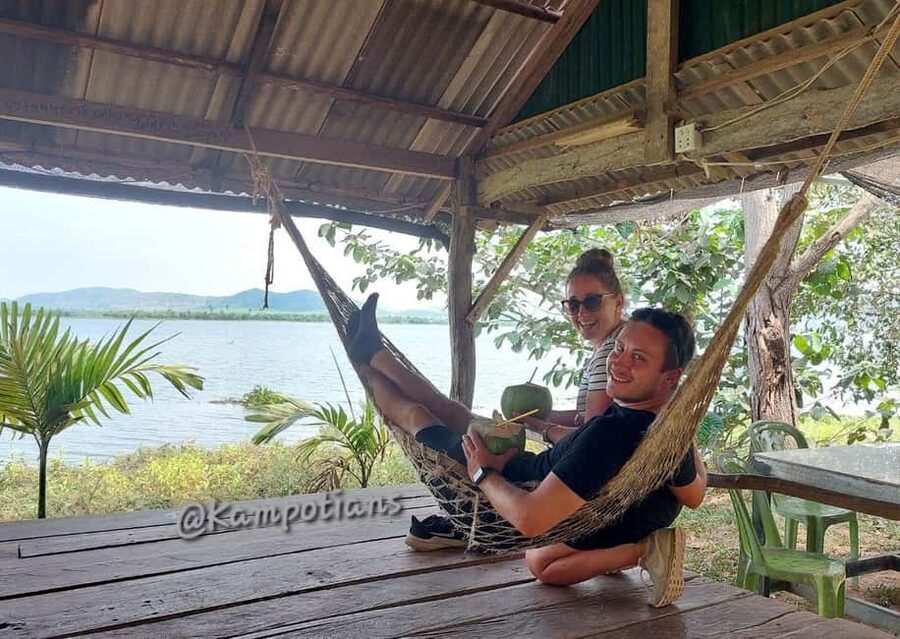
After the cave, the tuk-tuk continues to Brateak Krola, often called Secret Lake. The stop lasts about 45 minutes and is designed as a break as much as a sightseeing visit.
This is where the tour slows down. You can walk, take photos, look over the water, and enjoy the greenery around the dam. A soft drink is included, which is welcome after the stairs and the open-air ride.
The lake is not presented as a major monument. Its value is the quiet setting and the chance to see a less developed side of Kampot. Some guides add local stories about the place and Cambodia’s past. One guide even brought locally grown durian and mango for a group, but that is a personal touch you should not count on as part of the package.
The stop also shows the tour’s flexible side. Several guides have adjusted timing around rain, delayed roads, or group needs while still covering the main sights. That can make a difference in Cambodia’s wet season, when a sudden shower may change how long you want to stay outside.
Do not expect a long swim or a formal lakeside activity. This is a peaceful pause, not an attraction packed with facilities. I like it because it gives the day breathing room after the cave.
Same corner of the map, a different way in:
- Battambang: Tuk-Tuk, Bamboo Train, Killing/Bat Caves, Sunset
★ 4.9 · 1,436 reviews - Battambang Tuk Tuk tour: Bambootrain, Killing & Bat Caves,Sunset
★ 5.0 · 799 reviews - Afternoon tour by tuk tuk to bamboo train,bat cave,killing cave,countryside.
★ 5.0 · 344 reviews - Battambang: Bamboo Train, Bat Cave, Killing Cave by Tuk Tuk
★ 5.0 · 182 reviews
La Plantation and the pepper tasting
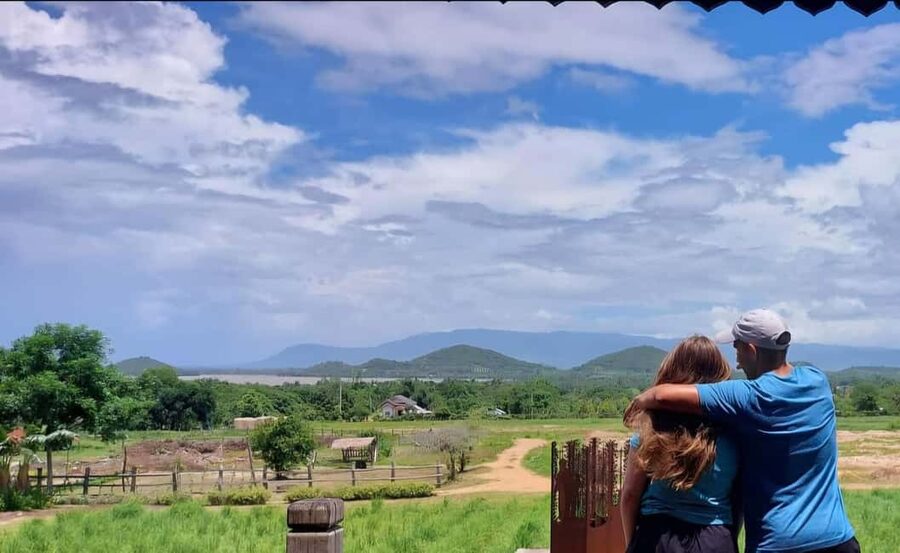
La Plantation is the longest stop, at about 105 minutes. For many people, this is the tour’s strongest section. You receive a guided walking tour, time to explore, and a pepper tasting that explains why Kampot pepper has such a strong local identity.
The visit covers the growing and processing of pepper. You can see how the crop is cultivated and learn about different types and uses. The tasting turns a farming lesson into something practical. Fresh pepper has a sharper, more immediate taste than the dried product many people know from a kitchen table.
The stop can include shopping, and you may find pepper products to take home. Pepper ice cream has also become a memorable part of the experience for some visitors. It sounds odd, but it gives you a simple way to notice how pepper can add fragrance and heat without taking over a dish.
La Plantation is more structured than the salt fields or lake. The free guided tour is available in English or French according to the supplied details, while this particular excursion is conducted in English. You have enough time to listen, taste, walk around, and browse rather than being rushed through a single sample.
I would save room in your bag and avoid buying pepper too early in your Cambodia trip if you still have flights or border crossings ahead. The tour does not include meals, but the plantation stop is long enough for you to consider food or drinks if available on site. Do not assume lunch is included.
This stop also gives the day a clear focus. The cave is about place and history, the lake is about rest, and La Plantation explains one of the products most closely linked with Kampot. If you are interested in food, farming, or buying a useful souvenir, this is likely to be your favorite section.
What $23 includes, and where the value lies
At $23 per person, the price covers the driver-guide, entrance fees, drinking water, soft drinks, and hotel pickup and drop-off within the stated Kampot zone. Meals are not included, and pickup beyond 3 kilometers costs extra, starting at $2.
The value is strongest if you want several sights in one outing. You would otherwise need to arrange transport to the salt area, cave, lake, and pepper farm separately. The tour also removes the need to negotiate each ride or work out the rural route yourself.
The group size can vary. Some departures feel small or semi-private, and late cancellations have occasionally left a person with a private outing. You should not book on the assumption that the tour will always be private, but a small group is possible.
The 4.8 rating from 432 reviews reflects a consistent pattern: visitors praise guides for being friendly, clear, patient, and good at adjusting to rain or individual pace. The most repeated guide names are Micki and Nak, but the quality is not limited to them. Ali, Ly, Dak, Rany, Chiet, Kary, Vandy, and others also receive strong praise.
The high transport score matters because rural roads can be rough, wet, or covered with puddles. One account describes rainy conditions and water on dirt roads, with the guide continuing carefully. A tuk-tuk will not give you a sealed, quiet ride, but a capable driver makes the open-air format enjoyable rather than tiring.
Who should book this Kampot outing?
I would choose this tour if you have one free half-day in Kampot and want more than the town center. It gives you countryside views, agriculture, a cave, a temple, a lake, and pepper in one compact route.
It suits you especially well if you enjoy:
- Small-scale cultural and agricultural visits
- Open-air tuk-tuk travel
- Short walks and scenic photo stops
- Food tastings and local products
- Guides who explain daily life, not only monuments
- A flexible schedule that can respond to rain
You should think twice if stairs are difficult, if you dislike uneven cave floors, or if you need a fully accessible route. The tour is specifically not suitable for people over 70 according to the supplied conditions, and baby strollers or carriages are not allowed.
The season also affects the balance. In dry weather, the salt stop should be more rewarding. In the wet season, salt production may be absent and cave access can be limited, though the countryside can still be attractive and guides may adjust the route.
Wear closed-toe shoes, use sunscreen, and carry water even though drinking water is supplied. The tour includes soft drinks, but not meals, so plan accordingly.
Free cancellation is available up to 24 hours before departure, and you can reserve now and pay later. Those policies help if your Kampot schedule is still shifting, but the practical issue remains the same: confirm your pickup point and be waiting in the lobby before the driver arrives.
Should you book it?
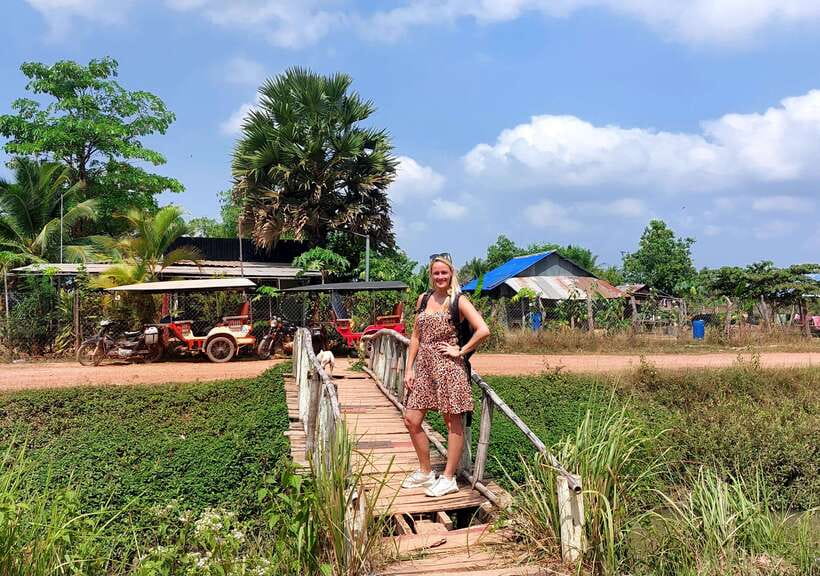
Book this tour if you want a well-rounded look at rural Kampot rather than a single major attraction. The cave temple is the most distinctive sight, Secret Lake supplies a calm pause, and La Plantation gives the outing its strongest food connection.
I would not book it solely for the salt fields, since wet-season conditions can leave them inactive. I would also skip it if the 200-step climb and cave footing sound uncomfortable.
For most active visitors, $23 is fair for the transport, entrances, drinks, guiding, and range of stops. The guides are the deciding factor, and names such as Nak, Micki, and Ali are associated with clear explanations, humor, safe driving, and useful flexibility. If you want a half-day that feels local, varied, and easy to arrange, this is one of Kampot’s better-value choices.
FAQ
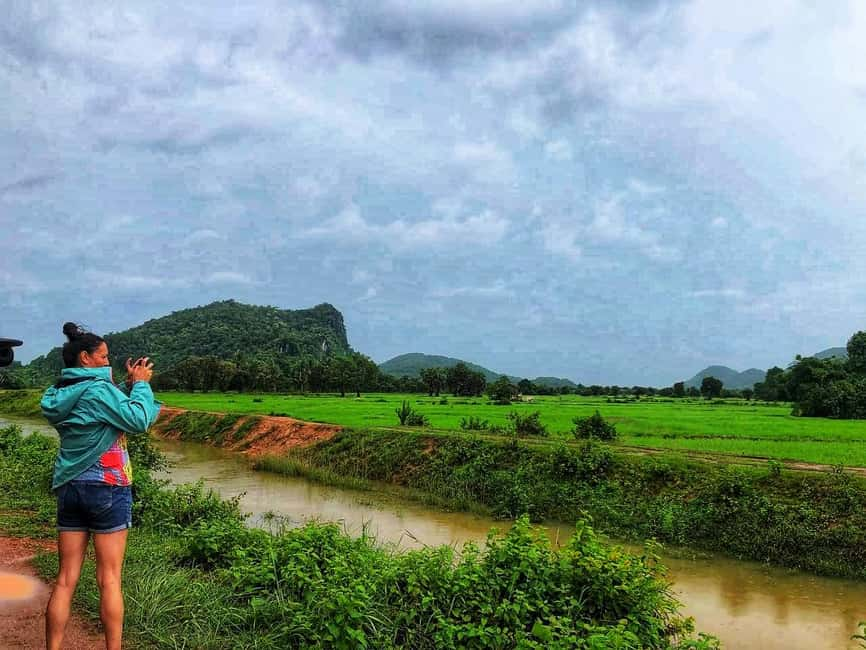
How long does the Kampot countryside tour last?
The tour lasts approximately 5.5 hours, including transport between Kampot and the countryside stops.
How much does the tour cost?
The price is $23 per person.
What stops are included?
The route includes Salt Farm Coffee and the salt fields, Phnom Chhngok Cave, Brateak Krola or Secret Lake, and La Plantation pepper farm.
Is hotel pickup included?
Pickup and drop-off are included for hotels within 3 kilometers of Kampot city center. Hotels farther away may incur an extra charge starting at $2, or you can meet at the Kampot Tourist Information Center.
What language does the guide speak?
The live guide speaks English. La Plantation also provides guided tours in English or French according to the supplied activity details.
Are entrance fees included?
Yes. Entrance fees are included in the tour price.
Are drinks included?
Yes. Drinking water and soft drinks are included. Meals are not included.
Is the salt farm active all year?
No. There is no salt production in the wet season, so the fields may be inactive during rainy months.
Is the cave suitable in the wet season?
Bat cave access is not allowed in the wet season. Weather and safety conditions may affect the cave portion of the visit.
What should I bring?
Bring sunscreen and closed-toe shoes. Closed shoes are especially useful for the 200-step climb and uneven ground inside Phnom Chhngok Cave.
Just added around Cambodia
- Afternoon tour to Original Bamboo train. Bat cave. Killing cave★ 5.0 · 25 reviews
- Afternoon Tour BambooTrain & Bat Cave★ 5.0 · 57 reviews
- Full Day tour .City tour.Countryside.Bamboo Train.Secret Bat Cave★ 5.0 · 178 reviews
- Full Day-Tour: Handicraft, Bamboo train, Killing cave. Bat cave★ 5.0 · 29 reviews
- AfternoonTour.Bamboo train.killing cave with Secret bat cave★ 5.0 · 41 reviews
- Full day tour by bicycle & tuk tuk,bamboo train,bat cave,villages★ 5.0 · 27 reviews
- Kampot Pepper Farm Tour: Salt Fields, La Plantation & Cave★ 4.8 · 18 reviews
- Half-day swing bridge, bamboo train, batcave & Killing cave★ 4.9 · 24 reviews
Farms, compared.
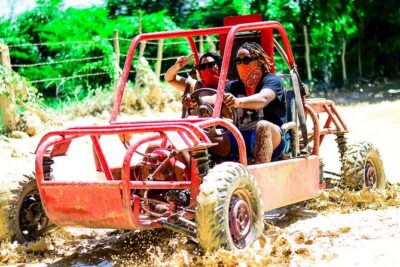
Buggy Tour to Macao Beach and Water Cave with Organic Farm
Read our review →
Crete: Road-trip to Lasithi, Zeus Cave & Olive Mill Farm
Read our review →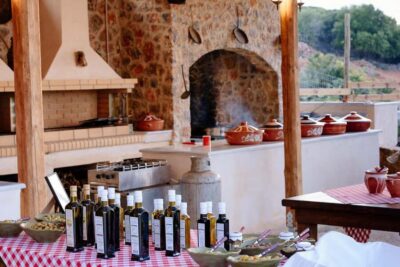
Lassithi, Zeus Cave, Olive Mill Farm & Knossos Combo Tour
Read our review →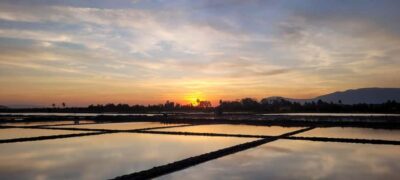
Kampot Countryside include Pepper farm, Salt field & Lake
Read our review →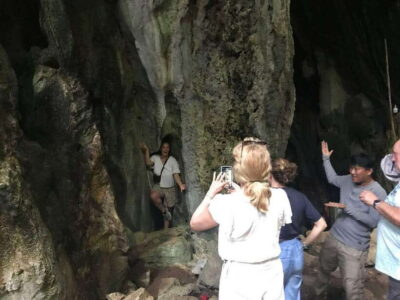
Kampot Pepper Farm Tour: Salt Fields, La Plantation & Cave
Read our review →Browse the lists this tour appears in